
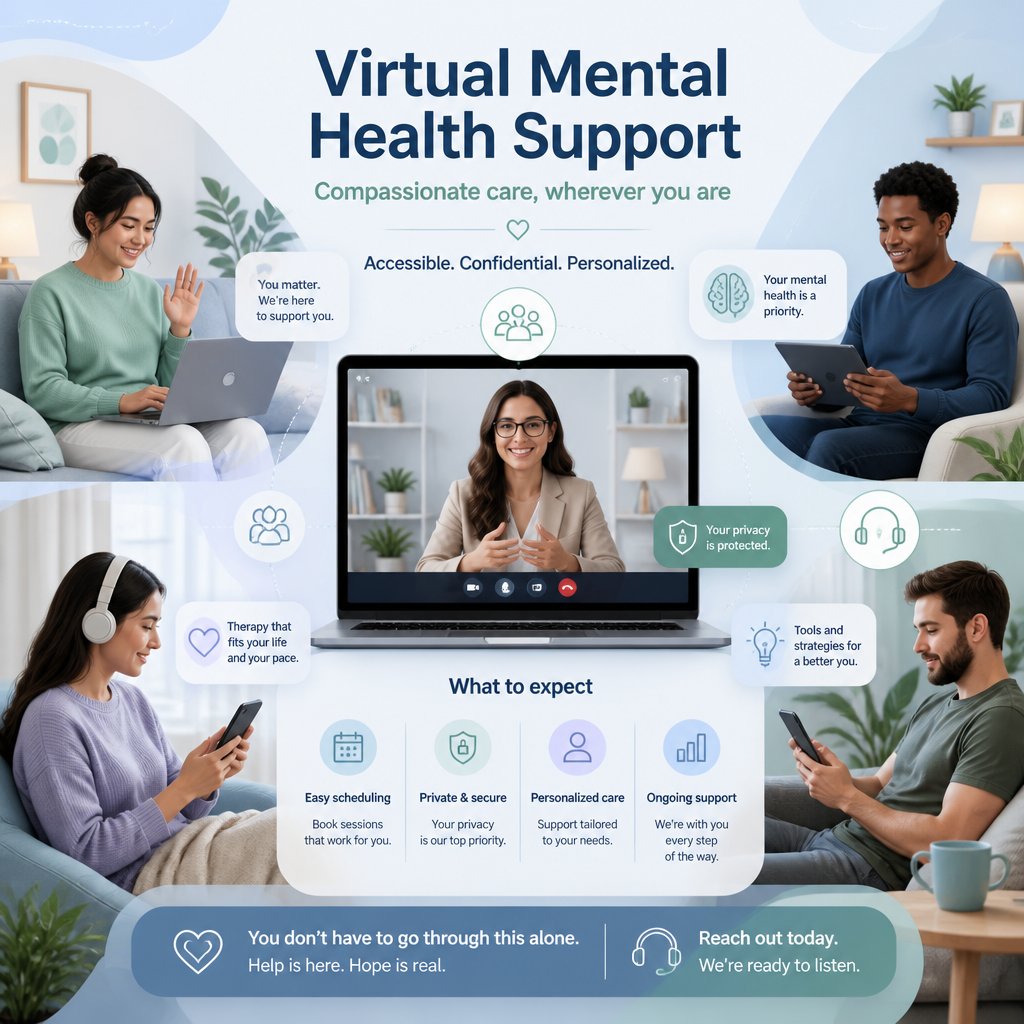
If you’ve been curious about virtual mental health services but aren’t sure what to expect, you’re definitely not alone. Lots of people feel a little hesitant the first time they think about meeting with a therapist or psychiatrist online. The upside? Virtual mental health care has become much more common, and for plenty of adults, it’s a genuinely flexible way to get help for anxiety, depression, relationship issues, burnout, and more.
Getting started with online mental health care is usually simpler than most people expect. The quality of care can be just as meaningful as what you’d find sitting in an office. Whether you’re facing a huge life change, feeling emotionally overloaded, or just sensing that something’s off, virtual care really can meet you where you are.
Online mental health support makes it easier to prioritize your wellbeing without turning your whole schedule upside down. You can connect with licensed therapists and psychiatrists right from home, at times that actually fit your life.
Key Takeaways
- Virtual care connects you with licensed professionals for therapy, psychiatry, and medication management, all from home.
- A wide range of concerns—anxiety, depression, trauma, relationship struggles—can be effectively treated online.
- Choosing a licensed, evidence-based provider is the key step in making virtual mental health support work for you.
How Virtual Care Works For Therapy And Psychiatry
Telehealth has changed how people access mental health support. Online therapy and psychiatry usually follow a pretty straightforward process, and most folks find it easy to navigate after that first step.
What A Telehealth Appointment Usually Looks Like
A telehealth appointment is a lot like an in-person visit, just without the drive or waiting room. You log into a secure, HIPAA-compliant video platform at your scheduled time and meet face-to-face with your provider on your phone, tablet, or computer.
Your first virtual visit usually starts with an intake conversation—your provider asks about what’s going on, your background, and what you’re hoping to get from therapy. Together, you’ll make a plan. Follow-up appointments for therapy typically run 45 to 60 minutes, while medication check-ins are shorter.
Most telehealth apps are designed to be user-friendly, even if technology isn’t your thing. You’ll get a link or login before your appointment and just need a steady internet connection and a private spot.
Types Of Support Available Online
Virtual appointments open up a lot of options, including:
- Individual therapy for things like anxiety, depression, trauma, or big life changes
- Couples counseling to work through relationship or communication issues
- Family therapy for navigating conflict, transitions, or supporting a loved one
- Online psychiatry for evaluation and medication management
- Therapist-led groups focused on shared experiences—grief, stress, burnout, and more
How Licensed Providers Deliver Care Remotely
Licensed therapists and psychiatrists use the same evidence-based approaches online as they do in person. Cognitive behavioral therapy, acceptance and commitment therapy, and other structured methods translate well to video.
Providers pay attention to what you say and how you express yourself, working to build that therapeutic relationship—even through a screen. Research shows online therapy can be just as effective as in-person care for many common concerns.
Who Can Benefit Most From Remote Support
Virtual mental health care isn’t a perfect fit for everyone, but it works well for a lot of people and situations. Understanding who tends to benefit most might help you decide if it’s right for you.
Common Concerns Treated In Virtual Settings
Many common mental health conditions respond well to virtual care, including:
- Generalized anxiety disorder—worry, social anxiety, panic
- Major depressive disorder—persistent low mood, fatigue, withdrawal
- Post-traumatic stress disorder (PTSD) and trauma-related stress
- ADHD care for adults dealing with focus, organization, emotional regulation
- Stress and burnout from work, caregiving, or life changes
- Relationship issues, communication struggles, and self-esteem concerns
When Online Support Can Be A Good Fit
Online care is especially useful if you have a packed schedule, limited local providers, or just feel more comfortable talking from your own space. If you’ve avoided getting support because in-person appointments felt overwhelming, virtual care can make things much more manageable.
It’s also a great choice if you live in a rural area, have mobility challenges, or value the privacy of being at home. A lot of people find they’re more relaxed and open when they’re in their own environment.
When In-Person Care May Be Better
Virtual care isn’t always the answer. If you’re in a mental health crisis, have active thoughts of self-harm, or need close physical monitoring, in-person care is usually safer and more appropriate.
Some people find it harder to connect emotionally through a screen, which can slow therapy’s progress. If you’re in the Chicago area and want in-person support, Tides Mental Health offers both options so you can choose what feels best.
What Services You Can Access From Home
One of the clearest perks of virtual mental health care is how much you can do without leaving home. From individual therapy to psychiatric evaluations, the range of online services has grown a lot.
Individual, Couples, And Family Support
Individual therapy is still the most common online service, covering depression, anxiety, trauma recovery, burnout, grief, and personal growth. Sessions are private, focused on you, and scheduled around your needs.
Couples counseling is also widely available through telehealth—it can make things easier, since neither partner has to travel. You each join from wherever you are. Family therapy works the same way, letting people join from different places or together at home.
Group Options And Therapist-Led Communities
Therapist-led groups are a surprisingly valuable part of virtual mental health care. These groups bring together people with similar experiences—anxiety, grief, life changes, relationship stress—and are run by a licensed provider.
Group therapy sessions can help ease the isolation that often comes with mental health struggles. There’s something quietly powerful about realizing others get it. Plus, groups are often more affordable than individual therapy.
Assessment, Psychiatry, And Ongoing Follow-Up
A mental health assessment is often the first step to figuring out what kind of support you need. Many practices now offer these evaluations virtually, so you can get answers without a long wait.
Online psychiatry lets a licensed psychiatrist evaluate your symptoms, talk about medication options, and manage prescriptions—all through secure telehealth visits. Follow-up appointments help keep your care consistent and allow your provider to adjust your treatment plan as needed. Medication management visits are usually shorter and can be scheduled more flexibly than full therapy sessions.
Benefits And Limitations To Consider
Virtual care comes with some real, practical upsides—and a few honest limitations. Knowing both sides helps you set yourself up for a better experience.
Convenience, Comfort, And Access
The big draw of virtual appointments is convenience. No commute, no waiting room, no need to take hours off work. You can join a telehealth visit from your living room, during your lunch break, or even a parked car if that’s your best private space.
If you’re nervous about stepping into a therapy office, being in a familiar environment can make it easier to open up. Virtual care also makes it possible to connect with licensed providers who might not be available locally.
Privacy, Technology, And Scheduling Challenges
Online support does have a few hurdles. You need a reliable internet connection and a private spot, which isn’t always easy. Tech issues—dropped calls, fuzzy video—can interrupt a session.
Privacy at home isn’t guaranteed, either. If you live with others, finding a truly private space for your telehealth visit might take some planning. It’s worth thinking through your setup before your first appointment.
Matching Care To Your Needs And Environment
The main thing is choosing a format that fits your real needs. Virtual care works well for many concerns, but your environment, comfort with technology, and what you’re working through all matter.
If you’re not sure, most providers are happy to talk through whether virtual or in-person sessions might fit better. For folks in Chicago, being able to switch between both can be the best of both worlds.
How To Choose A Provider You Can Trust
Finding a provider you actually feel comfortable with is one of the most important parts of starting therapy. Knowing what to look for can save you a lot of frustration.
Evidence-based care and proper licensing are two things you’ll want to confirm before you commit to anyone.
What Evidence-Based Care Really Means
Evidence-based care means your provider uses therapeutic methods that have been studied and proven to help. Think cognitive behavioral therapy (CBT), acceptance and commitment therapy (ACT), trauma-focused approaches, and so on.
You don’t need to know every approach, but it’s smart to ask if your provider uses evidence-based therapy. That way, you know your care is grounded in more than just intuition or casual conversation.
Questions To Ask Before Booking
Before scheduling, consider asking:
- What’s your license and what do you specialize in?
- Which therapeutic approaches do you use?
- Do you offer both virtual and in-person sessions?
- How do you handle situations where someone needs more intensive support?
- What’s your usual availability for ongoing appointments?
These questions help you find someone whose style and skills actually match what you’re looking for.
Checking Insurance, Licensing, And Availability
Always make sure your provider is licensed in your state before starting care. You can usually find licensing info on their website or through your state’s licensing board.
Check if they take your insurance and whether telehealth visits are covered the same as in-person care. Many insurers and Medicare plans do cover virtual visits, but it’s worth double-checking. Also, ask about availability—having a consistent schedule makes therapy more effective over time.
Finding The Right Fit For Ongoing Support
Starting virtual mental health care is an important step, but finding the right ongoing fit is just as crucial. Online care works best when you feel connected to your provider and keep a steady routine.
Building A Strong Therapeutic Relationship Online
A strong therapeutic relationship is key to good therapy, and yes, it can absolutely happen through virtual sessions. Being open, honest, and showing up consistently helps that relationship grow.
If things don’t quite click after a few sessions, it’s okay to talk about it or look for someone else. Telehealth makes it easier to find a provider who really fits your personality and needs, since you’re not limited to just local professionals.
Blending Virtual And In-Person Care In Chicago
For folks in Chicago, mixing virtual and in-person care is a practical option. Maybe you want in-person sessions for deeper connection or tough topics, but rely on telehealth when life gets busy or travel isn’t possible.
Tides Mental Health offers both, so you can move between formats based on what feels right. That kind of flexibility makes it easier to stick with mental health support, even as life shifts.
Knowing When It Is Time To Reach Out
Sometimes, the hardest part is just deciding to start. If you’re feeling stuck, overwhelmed, or like something’s off, that’s enough reason to reach out. You don’t need to be in crisis to benefit from mental health support.
Whether you’re exploring online care for the first time or thinking about returning after a break, reaching out to a trusted provider is a real, practical step forward.
Frequently Asked Questions
How do I find virtual mental health care near Cleveland, OH?
Start by searching online directories for licensed therapists and psychiatrists in Ohio who offer telehealth. You’re not limited to just your neighborhood—if they’re licensed in Ohio, you can meet with them virtually from anywhere in the state. It helps to double-check that they accept your insurance and hold an active Ohio license.
Are there online counseling options available near Lakewood, OH?
Absolutely. If you live in Lakewood, OH, you can access counseling online with any Ohio-licensed provider. Video sessions let you talk to a counselor from your own space, which can feel a bit more comfortable than heading into an office. It’s a good idea to look for someone who specializes in the issues you want to work on—that way, you’re more likely to click with them.
Do online therapy and psychiatry services accept Medicaid?
Some do, but it really depends on the provider and your specific Medicaid plan. Ohio Medicaid has expanded its telehealth coverage, so there are more options now than there used to be. It’s worth reaching out to providers directly to ask if they take your plan, and calling your Medicaid plan can help you figure out which telehealth mental health providers are in-network.
What insurance plans are commonly accepted for telehealth mental health visits?
Most major insurance plans—including Medicare and many private insurers—now cover telehealth mental health visits, often at the same rate as in-person appointments. Companies like Blue Cross Blue Shield, Aetna, Cigna, and United Healthcare usually include these benefits, but it’s always smart to check with both your insurance and the provider before you book anything. Sometimes the details can be surprisingly specific.
Can an online psychiatrist prescribe medication for anxiety or depression?
Yes, usually. Licensed online psychiatrists in most states can evaluate you and prescribe medication for anxiety or depression during a telehealth visit. There are some state-by-state differences, especially with controlled substances, which might require extra steps. Your psychiatrist will walk you through your options and any limits that might apply—it’s not as complicated as it sounds, but it’s good to ask questions if you’re unsure.
What are my options for getting remote mental health support without insurance?
Not having insurance can feel overwhelming, but there are still ways to find support. Some therapists offer sliding-scale fees, adjusting the cost based on what you can afford. Community mental health centers sometimes provide low-cost or even free services, and a few telehealth platforms have more affordable rates for those paying out of pocket. It might feel awkward, but asking a private practice if they offer reduced fees is pretty common—they hear it a lot. Platforms like Open Path Collective connect people with licensed therapists for virtual sessions at lower prices, which can make things a bit easier when money is tight.