
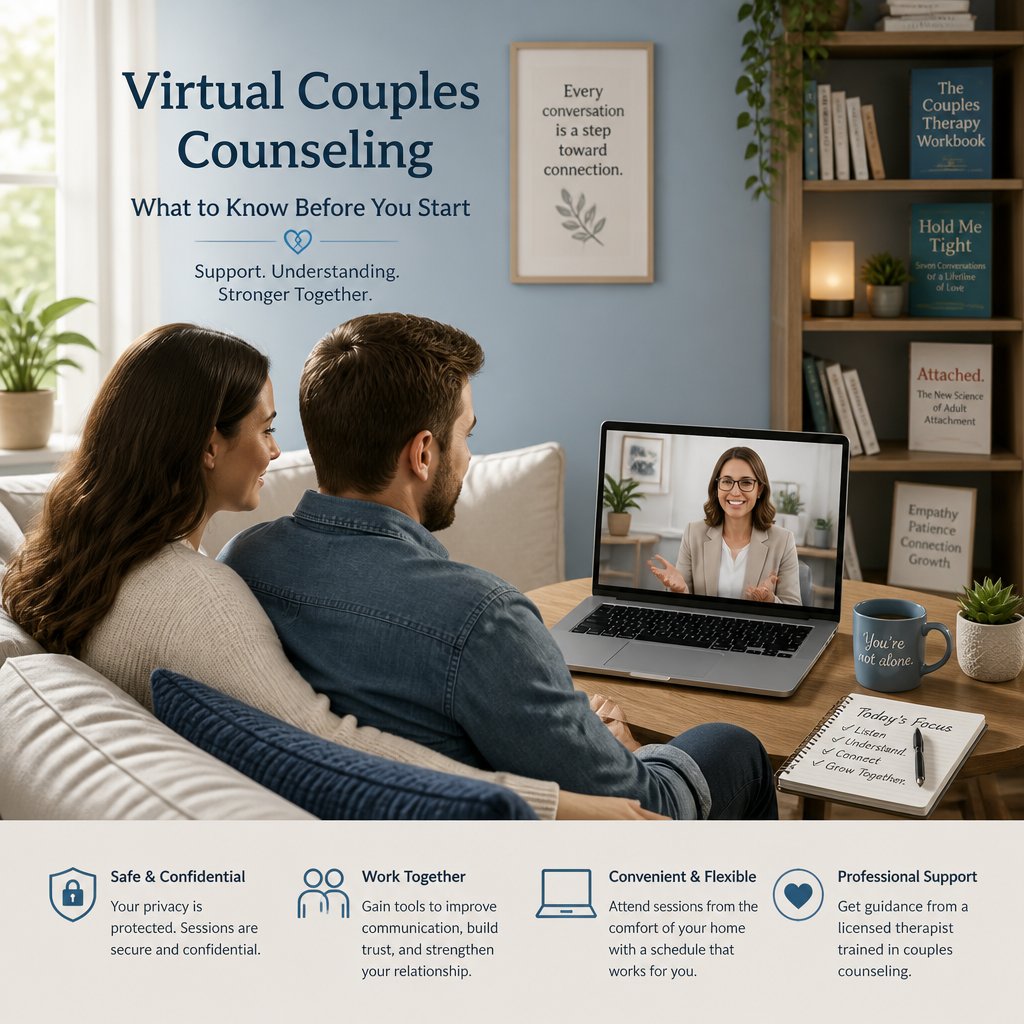
Thinking about starting virtual couples counseling? Not sure what you’re walking into? You’re definitely not alone. Plenty of couples reach out when things feel stuck—maybe the same fight keeps coming up, or life’s stress and distance have quietly built a wall between you. The upside? Support’s easier to get than ever, and starting doesn’t have to feel like climbing a mountain.
Virtual couples counseling connects you with licensed, professional relationship support through secure video sessions, using the same evidence-based approaches as in-person care. Whether you’re sharing a home or living in different cities, online couples therapy lets you prioritize your relationship without completely overhauling your routine.
Here’s a look at how online sessions actually work, what kinds of issues they can help with, how to pick a therapist, and a few practical steps to help you feel ready before you dive in.
Key Takeaways
- Virtual couples counseling is as effective as in-person therapy for most relationship struggles, like communication problems, conflict, and feeling disconnected.
- Choosing a licensed therapist who uses research-backed techniques really does affect the quality of care you get.
- It’s helpful to sort out things like insurance, tech setup, and privacy before your first session.
How Virtual Support For Relationships Works
Online couples therapy usually follows a clear, structured format. Most people settle in after the first session or two. You’ll meet through a secure video platform, and the work you do together is pretty similar to what you’d experience in an office.
What Happens In A Typical Session
You and your partner join a secure video call with a licensed therapist, usually for about 50–60 minutes. The therapist guides the conversation, focusing on your concerns—maybe it’s communication, trust, or navigating a big change.
Sessions have a loose structure. The therapist checks in, revisits previous goals, and brings in tools or exercises you can try between meetings. Sometimes you’ll get written prompts or short homework to keep the work going between sessions.
How Online Sessions Compare With In-Person Care
Research shows online couples therapy works about as well as in-person care for most relationship issues. Some couples even find it easier to open up from home, where things feel more relaxed.
There are a few differences, though. Therapists rely more on what you say directly, since body language is harder to read through a screen. Good therapists make up for this by checking in more intentionally with each partner and making sure both voices are heard.
When One Partner Joins From A Different Location
Long-distance couples, or those with clashing schedules, can both log in from wherever they are. The therapist runs the session just like they would if you were in the same room.
This works best if each person finds a private, quiet space and a solid internet connection. The therapist can help set some ground rules for taking turns and staying focused, so things don’t get chaotic.
What Issues It Can Help You Work Through
Online couples therapy can help with all kinds of relationship problems—old patterns that have built up, or new stressors that have thrown things off. Whether things feel urgent or just a little off, relationship therapy gives you a space to work through it together.
Communication Breakdowns And Repeated Arguments
Struggling to communicate is probably the top reason couples reach out. Maybe conversations escalate fast, or one person shuts down while the other pushes harder, or you’re stuck in the same argument on repeat.
Therapy helps you spot the patterns underneath those arguments. The therapist can teach practical ways to express needs, listen without getting defensive, and cool things down before they spiral. A lot of couples notice real improvement in communication after a few months of steady sessions.
Trust, Distance, And Ongoing Relationship Problems
Trust issues, emotional distance, and long-standing problems often need the steady, focused support that therapy brings. These don’t usually resolve just by waiting them out.
In therapy, both partners get a chance to feel heard (not attacked), with a neutral professional guiding the process. Working through betrayal, disconnection, or lingering resentment is tough, but with the right support, it’s absolutely possible—and online therapy makes it more accessible for busy couples.
Stress, Life Changes, And Emotional Disconnection
Big life changes—moves, new jobs, loss, becoming parents—can quietly chip away at your connection. Therapy helps you process these changes together, not just separately.
Stress and burnout can sneak up on a relationship. Problems rooted in exhaustion or overwhelm often respond to therapy that focuses on reconnection, shared coping, and rebuilding your sense of partnership.
Types Of Care Couples May Consider
Couples counseling isn’t one-size-fits-all. There are different types for different situations. Knowing what fits your relationship helps you find the right therapist and set realistic expectations.
Couples Counseling For Present-Day Challenges
General couples counseling is pretty flexible. It’s about the issues you’re facing right now—maybe a specific conflict, a pattern of feeling disconnected, or communication habits that aren’t working.
You don’t need to be married, or in crisis. Lots of couples start therapy while things are still manageable, using it to strengthen their relationship before small problems get bigger.
Marriage Counseling For Long-Term Commitment Concerns
Marriage counseling focuses on the unique challenges of long-term partnerships—things like shared finances, parenting, intimacy, dividing up responsibilities, or making big decisions.
Online marriage counseling looks a lot like general couples therapy but is often tailored to the realities of married life. If you and your spouse are struggling with issues that feel tied to the weight of a shared life, this kind of support is worth a look.
Premarital Counseling Before A Major Next Step
Premarital counseling is for couples getting ready for marriage or another big commitment. It’s less about fixing problems and more about building a strong foundation—clarifying values, developing communication habits, and setting yourselves up before married life begins.
Many couples who do premarital counseling feel more confident and connected heading into their next chapter. It’s a proactive step, not a sign something’s wrong, and it’s available virtually just like other couples support.
Choosing The Right Therapist And Approach
Finding a good fit matters more than finding the fastest option. You want a therapist with the right credentials, who uses research-backed methods, and who feels like someone both of you can talk to honestly.
Why Credentials And Licensure Matter
Not everyone offering relationship support is clinically licensed. Look for a licensed marriage and family therapist (LMFT) or a clinical psychologist with real training in relationship work. These credentials mean the therapist’s done supervised clinical hours and meets state standards.
Licensure also protects you. Licensed therapists follow ethical codes and professional guidelines that unlicensed coaches or counselors don’t. Before you book, confirm the therapist is licensed in your state—or both states, if you and your partner live separately.
Evidence-Based Methods Like Emotionally Focused Therapy
The approach your therapist uses really counts. Emotionally focused therapy (EFT) is one of the most researched methods for couples. It helps you spot negative patterns, understand the emotional needs underneath conflict, and build a more secure connection.
Other solid approaches include the Gottman Method and cognitive behavioral techniques adapted for couples. When you’re interviewing a potential therapist, ask what methods they use and how those fit your concerns.
Questions To Ask Before Booking A First Appointment
Before you commit, it’s smart to ask a few direct questions, like:
- Are you licensed in my state, and do you have specific training in couples work?
- What therapeutic methods do you use with couples?
- How do you handle sessions when partners have very different communication styles?
- What’s your availability like, and how long do people typically work with you?
- Do you take insurance, and what are your fees if not?
A therapist who answers these questions openly is likely to bring that same transparency to your sessions.
Practical Factors Before You Get Started
Before your first session, a few logistics are worth sorting out to keep things smooth and low-stress. A little prep helps both partners feel ready to dive in.
Privacy, Security, And Consent Online
Privacy is a big deal in couples therapy, especially when sessions happen at home. Good platforms use encrypted video that meets healthcare privacy standards. Before signing up, check the service’s privacy policy and tech setup.
Think about physical privacy, too. Find a spot where you won’t be overheard by kids, roommates, or neighbors. Headphones help. Some platforms use cookies and session data for admin stuff, so it’s worth reviewing consent agreements before you sign up.
Insurance, Scheduling, And Session Costs
Session costs for virtual couples counseling can range from $100 to $250 per session with private practice therapists, though some platforms offer lower rates or subscriptions.
Insurance coverage for couples therapy is hit or miss, but some plans do cover it—especially if one partner has a documented mental health diagnosis. Check with your insurer and ask your therapist about billing options before your first session.
Technology Comfort And Home Setup
You don’t need fancy gear. A smartphone, tablet, or laptop with a camera, microphone, and stable internet is usually enough. It helps to test your setup before your first appointment so you’re not scrambling during the session.
Good lighting and a quiet room make a surprising difference in how connected you feel. If technology feels intimidating, most therapists are happy to talk you through it before you get started.
When Virtual Care Fits Well And When To Consider Other Support
Virtual couples therapy works well for most couples, but it’s not the only option. Being honest about your needs helps you choose what fits best.
Signs Online Care May Be A Good Match
Online care is a strong fit when both partners are motivated, have reliable internet, and can carve out a private space at home. It’s great for couples with busy lives, those living apart, or anyone who finds in-person logistics overwhelming.
It’s especially helpful for communication struggles, ongoing stress, life transitions, or feeling emotionally disconnected—stuff that responds to steady, structured conversation with a skilled therapist.
When In-Person Support May Feel More Helpful
Some couples just do better face to face, especially at first when you’re building trust with a new therapist. If either partner is dealing with significant trauma, an active mental health crisis, or needs more intensive support, in-person care might offer a stronger foundation.
For couples in the Chicago area, meeting in person can feel grounding, especially during tough conversations. Choosing between virtual and in-person isn’t about which is “better” overall—it’s about what feels right for you right now.
Finding Thoughtful Next Steps With Tides Mental Health
If you’re curious about couples therapy but not sure where to start, Tides Mental Health offers both virtual and in-person support for couples and individuals working on relationship challenges. They work with adults facing communication struggles, relationship stress, life transitions, and emotional disconnection, among other issues.
Virtual sessions offer flexibility, and in-person options are available for clients in the Chicago area who want that face-to-face connection. Reaching out for questions or to schedule a consultation is a low-pressure way to see if it feels like a good fit for you and your partner.
Frequently Asked Questions
Is online couples therapy worth it?
For most couples, yes. Research shows that online couples therapy gets results similar to in-person care—if both partners are engaged and the therapist is well-trained. Many people find it easier to stick with sessions when the format fits their real lives.
How much does it usually cost per session?
Session costs vary, but you’ll usually see prices between $100 and $250 per session with a licensed therapist in private practice. Some online platforms might offer lower rates, and costs can drop if your insurance plan helps out with couples therapy.
Can we use insurance to pay for online couples therapy?
Insurance coverage for couples therapy really depends on your plan. Some policies help out if there’s a qualifying diagnosis, but others might not cover couples work at all. It’s usually best to just call your insurance provider and double-check what’s covered before booking your first session.
What should we look for when choosing the best online couples therapist?
You’ll want someone with a valid clinical license—think LMFT or licensed psychologist—who’s actually trained in couples work. It makes a big difference to find a therapist who uses proven methods and, honestly, who both of you feel comfortable opening up to. That comfort level isn’t just a nice-to-have; it’s pretty central to making progress.
Does online couples therapy work well for long-distance relationships?
Absolutely. Online couples therapy is a real lifesaver for long-distance couples, since each partner can join from wherever they are. A good therapist knows how to keep things productive, even if you’re a few time zones apart. It’s not always easy, but it’s definitely doable.
Can we find a licensed couples counselor who serves our area, like St. Paul, MN?
Absolutely. These days, a lot of licensed therapists offer virtual sessions, which really opens up your options. If you’re in St. Paul, MN—or honestly, pretty much anywhere—you can look for therapists licensed in your state who do telehealth appointments. That way, you aren’t stuck choosing only from people nearby. It just makes finding the right fit a bit easier.