
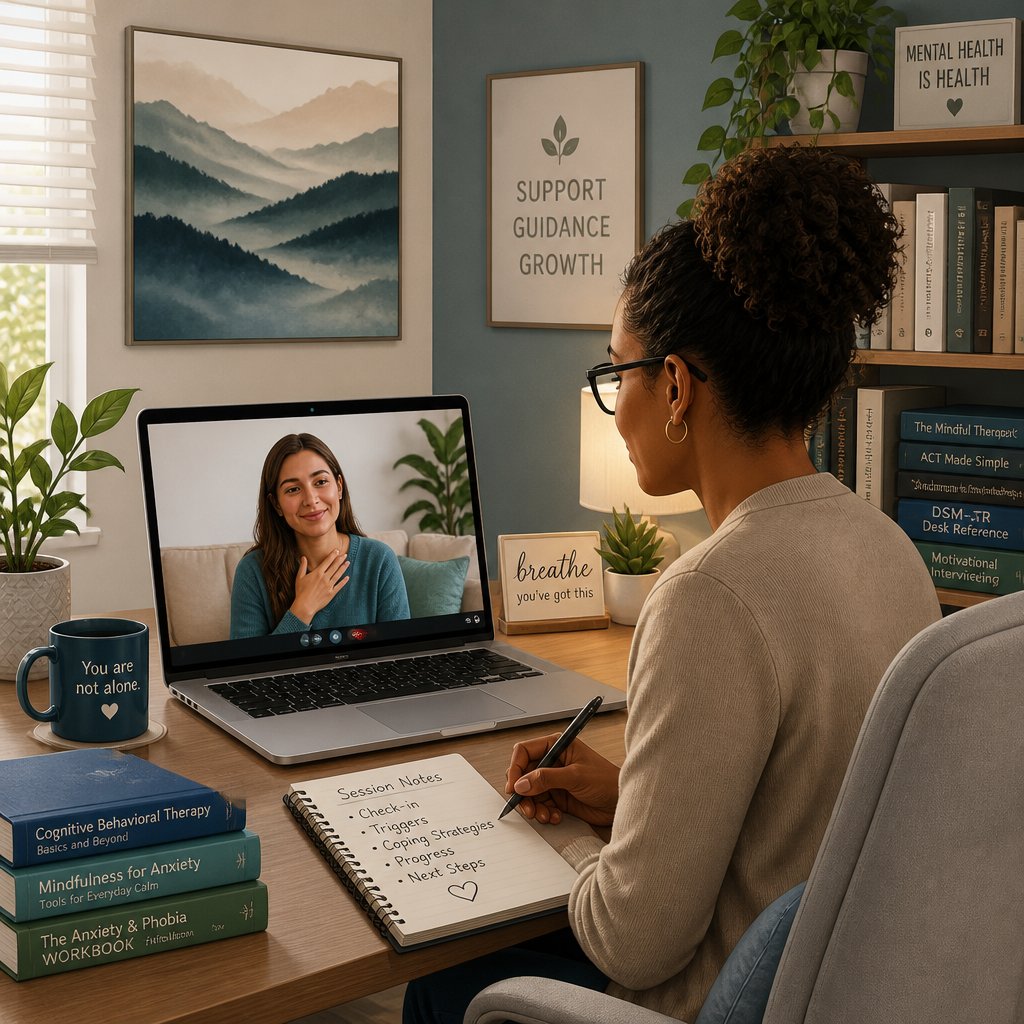
Anxiety can make even the simplest things feel heavy. Whether you’re wrestling with constant worry, panic attacks, or just a vague sense of dread you can’t quite shake, reaching out for support is a big step. Virtual anxiety counseling lets you get that support from wherever you’re most comfortable, minus the hassle of commuting or upending your routine.
Online therapy and virtual mental health care have really taken off in the past few years, and research shows that virtual care works just as well as in-person sessions for most anxiety issues. You don’t actually need to sit in a therapist’s waiting room to start feeling better.
If you’re wondering how virtual counseling actually works, what to expect, or if it’s even a fit for you, let’s walk through the basics—without making things more complicated than they need to be.
Key Takeaways
- Virtual anxiety counseling helps most people with mild to moderate anxiety and works as well as in-person therapy.
- You can access evidence-based approaches like CBT and ACT online, just like you would in a traditional office.
- Knowing your insurance, tech needs, and personal preferences ahead of time smooths the process.
How Virtual Anxiety Counseling Works
Getting started with online therapy is often simpler than people expect. From your first appointment to the tools that help you between sessions, virtual mental health care is designed to fit real life.
What A First Appointment Usually Looks Like
Your first session with a licensed therapist is really just a conversation. There’s no pressure to have it all figured out or to share more than you want.
The therapist will probably ask what’s been stressing you out, how long it’s been going on, and what you’re hoping to get from therapy. They might check in about your sleep, daily routines, relationships, and any past mental health support.
It’s a two-way street: you’re feeling out if this person is someone you can actually talk to, and they’re learning how best to support you. Feeling nervous is normal. Most people do, honestly, and a good therapist will meet you wherever you’re at.
How Therapy Sessions Happen Online
Online therapy usually happens over a secure video platform—think of it like a Zoom call, but private. Some therapists offer phone sessions if video isn’t your thing.
Sessions typically last around 45-50 minutes and happen regularly, often once a week. You and your therapist will set goals together and check in on your progress. The format’s flexible, and your therapist can adjust the pace based on your needs.
Virtual care uses encrypted, HIPAA-compliant platforms to protect your privacy, so your conversations stay confidential, just like in a physical office.
What Between-Session Support May Include
Therapy doesn’t have to end when the session does. Many therapists offer extra support between sessions, depending on their platform or practice.
This could look like:
- Worksheets or exercises to practice new skills
- Secure messaging for check-ins or quick updates
- Resources such as breathing exercises, journaling prompts, or coping tools
- Goal tracking to help you spot patterns and keep moving forward
These tools reinforce what you’re working on in therapy and give you something to lean on when anxiety pops up between appointments.
When Online Support Can Be A Good Fit
Virtual care works especially well for folks dealing with mild to moderate anxiety or mood struggles, and for anyone whose schedule, health, or location makes getting to an office a pain. The perks of online therapy really show up when it removes those common roadblocks to getting help.
Common Anxiety Concerns Addressed In Care
Online therapy can help with all sorts of anxiety issues, including:
- Generalized anxiety disorder, when worry just won’t quit
- Social anxiety, which can make work, relationships, or public situations feel impossible
- Panic disorder, including panic attacks and the fear of having them
- Stress and burnout, especially for people in demanding jobs or caregiving roles
- Life transitions, like moving, job changes, grief, or relationship shifts
- Emotional overwhelm tied to trauma, low self-esteem, or communication struggles
A lot of people also find online therapy helpful for depression that shows up alongside anxiety, since those two often go hand in hand.
Life Situations That Make Virtual Care Easier
Some situations make virtual care not just convenient, but honestly necessary. You might prefer online therapy if you:
- Have a packed work schedule or little flexibility
- Live far from a therapist’s office or don’t have reliable transportation
- Are a parent or caregiver who can’t easily leave home
- Experience anxiety that makes leaving the house tough
- Travel a lot or move between places
- Just feel more comfortable talking from your own space
Virtual care also works for people who’ve tried therapy before and want an easier way to continue, as well as for those seeking support for the first time.
When In-Person Support May Be Better
Virtual care fits most people, but there are times when in-person support is the safer or more effective choice. If you’re in a mental health crisis, have thoughts of self-harm, or need close medical monitoring, in-person or intensive care is usually the way to go.
In-person therapy can also help if you struggle with internet access, feel really uncomfortable on video, or are working through complex trauma that benefits from a more contained setting. A thoughtful therapist will talk through these options with you and help you land on the right level of care.
Approaches Therapists Use For Anxiety
Licensed therapists use a variety of treatment approaches for anxiety, and most work just as well virtually as in person. Evidence-based care means your therapist’s methods are backed by research.
CBT And Cognitive Behavioral Therapy
Cognitive behavioral therapy (CBT) is one of the most widely used and well-studied approaches for anxiety. The main idea? Your thoughts, feelings, and behaviors are all connected, and shifting your thinking can change how you feel and act.
CBT helps you spot when your thoughts are making anxiety worse—like expecting disaster or jumping to the worst-case scenario. You and your therapist challenge those patterns and practice more balanced ways of thinking.
Research shows CBT leads to real improvement for anxiety disorders, including generalized anxiety, social anxiety, and panic disorder. It’s often structured and goal-oriented, which a lot of people find grounding.
Behavioral Therapy And ACT
Behavioral therapy zeroes in on changing habits and behaviors that keep anxiety going. This might mean gradually facing things you’ve been avoiding, so your brain and body learn those situations aren’t as dangerous as they seem.
Acceptance and Commitment Therapy (ACT) takes a bit of a different tack. Instead of fighting anxious thoughts, ACT teaches you to notice them with some distance and focus on what truly matters to you. It builds psychological flexibility, or the ability to respond to tough emotions without letting them run the show.
Therapists can use both approaches in virtual settings and tailor them to your goals.
Care Plans Based On Your Goals
Everyone experiences anxiety a little differently, so therapy should reflect that. Your therapist will help you shape a care plan that fits your specific concerns, your schedule, and what you want to change.
A care plan might blend CBT, ACT, mindfulness, or other evidence-based tools, depending on what clicks for you. As therapy goes on, your plan can shift to keep up with where you’re at. The goal isn’t to follow a script—it’s to find what genuinely helps you feel better and build skills you can use in daily life.
Choosing The Right Type Of Support
Finding the right support starts with knowing what you want and what feels comfortable. Licensed therapists offer different formats: individual, couples, and group sessions.
Individual Therapy For Anxiety And Overwhelm
Most people start with individual therapy for anxiety. It’s dedicated one-on-one time with a licensed therapist to dig into what’s fueling your anxiety, learn coping tools, and work toward your own goals.
This setup works well for folks dealing with worry, overwhelm, burnout, trauma, self-esteem struggles, or big life changes. Sessions are private, focused on you, and move at your pace. Many people find that a steady relationship with a therapist is a huge part of feeling better.
Couples, Family, And Group Options
Anxiety rarely stays in its own lane. It can affect relationships, family life, and how you show up with others. Couples therapy helps when anxiety gets in the way of communication or closeness. Family therapy supports everyone when stress is creating tension at home.
Group therapy is another solid option. Being with others who “get it” can ease isolation and offer new insights. Therapists who run groups create a safe, structured space for real progress.
Working With A Therapist You Can Trust
The connection between you and your therapist matters—a lot. Research keeps showing that a good therapeutic relationship is one of the strongest predictors of progress.
When choosing a therapist, notice if their style feels natural, if you feel heard and not judged, and if their approach matches what you want to work on. It’s okay to ask questions before committing, and it’s fine to try more than one therapist before finding the right fit. Trust your gut, and let yourself look for someone who genuinely feels right.
Cost, Insurance, And Access
The cost of virtual anxiety counseling can vary a lot depending on your insurance, the platform, and where you live. Knowing your options ahead of time takes some of the stress out of getting started.
What Insurance Coverage May Include
Many insurance plans now cover online therapy at the same rate as in-person sessions. This shift happened with expanded telehealth access, and most major insurers have kept it going.
Your coverage might include:
- A set number of therapy sessions each year
- A copay per session after you meet your deductible
- Coverage for licensed therapists, psychologists, and clinical social workers
- Mental health parity, meaning your plan must cover mental health like physical health
It’s worth calling your insurance’s member services to double-check what’s covered before booking.
Medicare, Medicaid, And Private Plans
Medicare covers mental health care delivered via telehealth, including therapy with licensed providers. If you’re on a Medicare Advantage plan, check your specific coverage.
Medicaid coverage for virtual therapy depends on your state, but most states now include telehealth mental health services. If you’re on Medicaid, ask your provider or the therapy platform if they accept your plan.
Private plans through employers or the marketplace usually include mental health coverage, but copays and session limits vary. Ask if a practice is in-network before booking to avoid surprise bills.
Paying Out-Of-Pocket And Planning Ahead
If you don’t have insurance or your plan doesn’t cover therapy, you still have options. Many therapists offer sliding-scale fees based on income, making sessions more affordable.
Virtual therapy sessions generally cost around $80 to $200 or more per session without insurance. Planning and budgeting for a set number of sessions—even monthly—can help you make steady progress without extra financial stress. Some platforms have subscription models or lower-cost options for messaging-based support.
Getting Started With Care That Feels Comfortable
Taking that first step toward virtual care might feel daunting, but a little preparation can make the process smoother and help you get more out of your sessions right from the start.
Questions To Ask Before You Book
Before you jump in with a therapist or platform, it’s worth getting a few basics sorted out. Some questions that can help:
- Does this therapist actually focus on anxiety? What kinds of therapy do they use?
- Are they taking new clients, and how soon could you get started?
- Will they take your insurance, and what’s the out-of-pocket cost per session?
- Which video platform do they use, and is it private and secure?
- What’s their policy if you need to cancel or reschedule?
Tides Mental Health, for instance, makes it pretty straightforward to get these answers upfront. That way, you’re not left guessing or stressing about logistics before you even begin.
Preparing Your Space And Technology
A good virtual session doesn’t require a fancy setup. Just find a private, comfortable spot where you can speak freely. You’ll want a reliable internet connection and a device with a camera and mic—nothing wild.
Here are a few practical tips:
- Test your tech ahead of time so you’re not troubleshooting at the last minute.
- Headphones can help if you’re worried about privacy or background noise.
- Give housemates or family a heads-up that you’ll need some quiet time.
- Grab some water and try to log on a few minutes early to settle in.
Platforms like Headspace, Talkspace, and Brightside Health use secure video tools that work on most devices. If you’re squeezing in a session during work hours, maybe use PTO or a lunch break at first—see what fits your schedule best.
Finding Flexible Support In Chicago
If you’re in Chicago, you’ve got the choice of virtual or in-person therapy. A lot of people start online for convenience, then switch to in-person when they want more connection—or just a change of pace.
Tides Mental Health offers both options for adults in Chicago dealing with anxiety, depression, burnout, relationship stuff, and more. Whether therapy is new for you or you’re coming back after some time away, the goal is to find support that actually works for your life—not the other way around.
Frequently Asked Questions
How do I know if online counseling is a good fit for my anxiety?
Online counseling can work well if your anxiety is mild to moderate, you’ve got a private spot to talk, and you’re okay with video or phone. If leaving the house feels overwhelming or your schedule is packed, virtual therapy might make things a lot easier. Sometimes just having a quick consult with a therapist helps you figure out what’s right.
What should I expect during my first video session with a therapist?
The first session is mostly a conversation. Your therapist will ask about what’s bringing you in, what your days look like, and what you hope to work on. You don’t need to have all the answers or even know where to start—they’ll move at your pace.
How much does online therapy typically cost if I don’t have insurance?
Without insurance, online therapy usually runs somewhere between $80 and $200 per session, depending on the therapist and platform. Many therapists offer sliding-scale rates, which can make things more affordable. Some platforms have lower-cost options if weekly video sessions aren’t doable right now.
Which online counseling services accept insurance or Medicaid?
A lot of therapy platforms and private practices take insurance, including big commercial plans and sometimes Medicaid. The details really depend on your plan and where you live, so it’s best to double-check with the provider. If you’re in Chicago, Tides Mental Health can walk you through your options.
Are there any free options for talking to someone online about anxiety, including 24/7 chat?
The Crisis Text Line (text HOME to 741741) is always open for free, confidential support if things feel overwhelming. Some community mental health centers also have free or sliding-scale counseling. Mental health apps can help you manage anxiety between sessions, but they’re not a substitute for working with a licensed therapist.
How can I find a licensed therapist who offers virtual sessions in my area?
Start by checking your insurance provider’s directory—they usually let you filter for therapists who do telehealth. Psychology Today’s therapist finder is another solid option, and you can narrow down by specialty or virtual sessions there, too. If you happen to be around Chicago, Tides Mental Health connects folks with licensed therapists for both online and in-person anxiety support.