
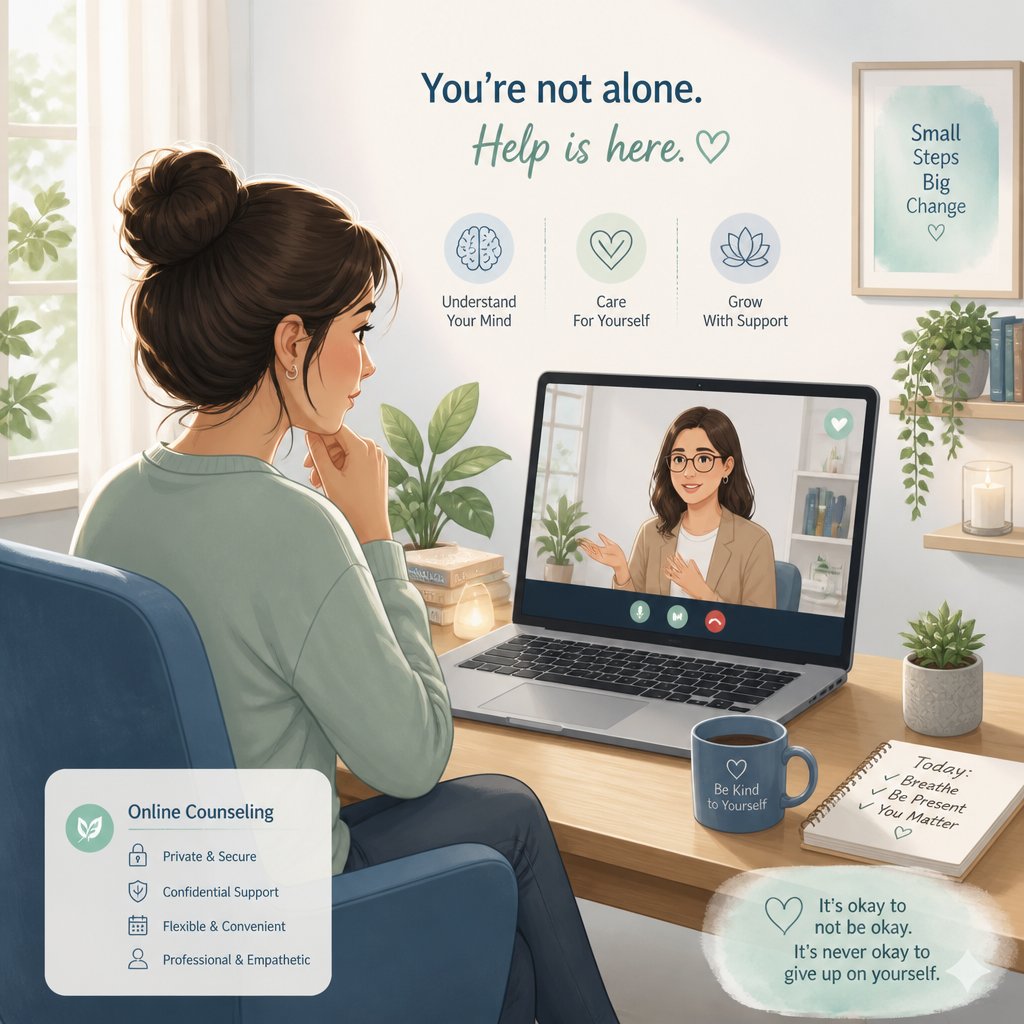
Anxiety can turn even the simplest moments into something heavy. Maybe your mind races before a meeting, or you get that knot in your stomach out of nowhere. Worrying about things you can’t control? It’s exhausting. Honestly, more people deal with this than you might think. Getting help shouldn’t be a maze.
Online counseling for anxiety lets you connect with a licensed therapist from home, on your schedule, without losing out on quality care. Whether you’re dealing with an anxiety disorder or just feeling overwhelmed by life, virtual mental health care can be a practical way forward.
Let’s walk through what you’ll want to know before diving in—how online therapy for anxiety works, what that first session might actually feel like, and how to find a therapist who gets you.
Key Takeaways
- Research backs online therapy for anxiety—it can work just as well as in-person sessions for many people.
- You can choose the session format, your therapist’s credentials, and whether medication support fits you.
- Knowing what to expect makes it less intimidating to get started—and stick with it.
How Virtual Support Helps With Anxiety
Online therapy has become a flexible, evidence-based way to tackle anxiety at the core. Therapists use approaches like cognitive behavioral therapy (CBT) and dialectical behavior therapy (DBT) online all the time, and research shows real results if you stick with it.
What Online Counseling Can Treat
Virtual therapy can help with generalized anxiety disorder, social anxiety, panic disorder, and trauma-related symptoms. It’s also useful for anxiety tied to major life changes, relationships, burnout, self-esteem, and communication issues.
If anxiety messes with your sleep, focus, relationships, or sense of stability, talk therapy can help you figure out what’s behind those symptoms and build tools to manage them. Online therapy gives you that support without turning your schedule upside down.
When It Can Be As Effective As In-Person Care
Turns out, internet-based CBT delivers results on par with in-person therapy for many anxiety conditions. What matters most? The strength of your relationship with your therapist, showing up regularly, and practicing what you learn between sessions—not whether you’re sitting across from each other.
Virtual care often removes hurdles like commuting, parking, or taking time off work. For folks with social anxiety, starting therapy from home can feel less daunting.
Therapists use evidence-based methods like CBT, DBT, and mindfulness online, guiding you through exercises and adjusting your plan just like they would in person.
When Anxiety May Need More Than Virtual Support
Online therapy isn’t always the answer. If you’re in crisis, having thoughts of self-harm, or your symptoms are severe and not improving, in-person or intensive care is safer. Some people simply connect better face-to-face, especially early on.
In Chicago, in-person sessions can add a sense of grounding. Really, the best approach is the one that matches your needs right now.
What To Expect From The Process
Starting online counseling can feel weird if you’ve never done therapy. Knowing what the process looks like—from getting matched to what sessions feel like—takes some of the edge off.
Getting Matched With A Therapist
Most online platforms start with a short intake questionnaire. You’ll answer questions about your symptoms, what you want to work on, and your schedule. Then, you’ll get paired with a licensed therapist whose specialty lines up with your needs.
You’ll see psychologists, LCSWs, and other licensed therapists. Credentials really do matter, and a good platform is upfront about who’s on their team and what they’re good at. If anxiety is your main concern, look for someone who’s got specific experience with it.
What A First Virtual Therapy Session Feels Like
Your first virtual therapy session is mostly about building connection and context. Your therapist will introduce themselves, ask what brought you in, and try to get a sense of your history and what’s happening now. It’s not an interrogation—think of it more as a structured conversation where you get to set the direction.
You don’t need to have everything sorted out before you show up. Most people feel a bit nervous at first, and that’s totally normal. Your therapist isn’t expecting you to have all the answers—they’re there to help you find them.
Expect the first session to last around 45 to 60 minutes. You might leave with some early insights or light homework, but mostly it’s about building rapport and laying a foundation.
How Ongoing Therapy Sessions Usually Work
After intake, sessions get more focused. Your therapist will help you work on specific patterns, triggers, and coping strategies for your anxiety. You might challenge unhelpful thoughts, look at how your past shapes your reactions, or learn grounding techniques for tough moments.
Most people meet with their therapist weekly or biweekly. Consistency helps more than occasional check-ins. Over time, therapy isn’t just about quick relief—it’s about building skills you can use in daily life.
Choosing The Right Type Of Care
Figuring out your care isn’t just about picking a platform. It’s about deciding if therapy alone is enough, which credentials matter, and knowing when you might need to make a change.
Therapy Only Vs Medication Support
For a lot of people, talk therapy alone is enough to manage anxiety. CBT and similar methods help break the patterns that keep anxiety going, and they can create lasting change if you stick with them.
Some people do better with therapy plus medication. If anxiety seriously impacts your day-to-day life, a psychiatric provider can help you figure out if medication could help. Psychiatrists can prescribe and monitor meds, and some nurse practitioners with psychiatric training can too, depending on where you live.
If therapy alone isn’t cutting it, combining approaches might be worth considering. Your therapist can help you decide if a referral makes sense.
Which Provider Credentials Matter
You’ll run into lots of titles when searching for a therapist. Licensed clinical social workers (LCSWs), licensed professional counselors, and licensed psychologists are all qualified to provide therapy. Psychologists with doctoral training can also do psychological testing if needed.
What’s most important? Your provider should be fully licensed in your state, have experience treating anxiety, and use evidence-based approaches. A good therapist will be upfront about their training and comfortable answering questions about their methods.
How To Know If You Should Switch Therapists
Not every therapist-client match clicks, and that’s okay. If you’ve given it a few sessions and still don’t feel a connection, or your anxiety isn’t budging after a few months, it might be time to try someone new.
One of the perks of virtual care is how easy it is to switch therapists. Most platforms make it pretty simple. Changing providers isn’t a failure—it’s just part of finding what actually helps.
Features That Make Care Easier To Stick With
The best therapy is the kind you actually stick with. Platforms and therapists who offer flexible options, between-session support, and accessible pricing make it easier to keep going, even when life gets chaotic.
Messaging, Video, And Flexible Scheduling
Most virtual therapy platforms offer video as the main session format, but you’ll also find phone sessions and messaging therapy for those who need more flexibility. Unlimited messaging between sessions can help you stay connected without waiting for your next appointment.
Flexible scheduling is a lifesaver if you’re juggling work, caregiving, or a schedule that’s all over the place. Being able to book evening or weekend sessions can make therapy possible when it otherwise wouldn’t be.
Between-Session Tools And Emotional Support
Many therapy apps include extras like guided meditations, mood tracking, journaling prompts, and psychoeducation. These tools help you practice what you’re learning and stay supported between sessions.
They’re not a replacement for therapy, but they do reinforce what you work on with your therapist. If you’re trying out grounding techniques or reframing thoughts, having those resources handy between sessions helps make them stick.
Insurance, Cost, And Accessibility
Cost is a real consideration. Many online counseling platforms take insurance now, including some that accept Medicaid, which can lower your out-of-pocket costs. Always check if your plan is accepted before signing up.
If you’re paying out of pocket, sessions usually range from about $60 to $200, depending on the provider and platform. Some services offer sliding scale fees based on income. Virtual care can be more affordable than traditional therapy when you factor in the time and money saved on commuting.
Who Online Counseling Fits Best
Online therapy for anxiety isn’t a cure-all, but it fits a lot of different situations and life stages. It’s especially helpful for adults who want consistent, accessible counseling that fits into a busy life.
Adults Managing Stress, Burnout, And Life Changes
If you’re dealing with work stress, parenting, a big move, or just feeling burned out, talk therapy gives you a place to sort through it all. Anxiety tends to spike during transitions, and having steady support during those times can make a real difference.
Online counseling is practical for people in this spot—you can squeeze in a session during lunch, after the kids are asleep, or from a quiet corner at home.
Relationship And Communication Challenges
Anxiety rarely stays in its lane. It can show up in relationships through avoidance, overthinking, conflict, or trouble expressing what you need. Virtual therapy can help you work through these issues, whether you’re going solo or with a partner.
If communication, self-esteem, or emotional overwhelm are tripping you up, counseling offers both practical strategies and a chance to understand yourself better. Working on these patterns in therapy often has ripple effects in other parts of your life.
When Virtual Or In-Person Care May Feel Better
Some people genuinely prefer virtual therapy. Others find being in the same room with someone helps them open up. Both are valid.
If you’re in Chicago, in-person sessions are an option if you want that face-to-face feel. Virtual care is always there too, so you can switch it up based on what works for you.
Finding Support That Feels Like A Good Match
The practical side of starting therapy matters as much as feeling emotionally ready. Knowing what to ask, what a good fit looks like, and having a next step in mind can make the whole thing feel less overwhelming.
Questions To Ask Before Booking
Before you commit to a therapist or platform, it helps to ask a few straightforward questions:
- What’s your experience treating anxiety?
- What therapy approaches do you use most?
- Do you take my insurance, or what are your fees?
- How do you handle communication between sessions?
- What’s your cancellation policy?
You’re not being difficult by asking these things—good therapists expect it. Honestly, transparent answers are a good sign you’re on the right track.
How Tides Mental Health Supports Anxiety Care
Tides Mental Health offers therapy sessions for adults working through anxiety, depression, burnout, relationship struggles, life changes, and more. You can meet with a therapist virtually or in person if you’re in the Chicago area, so there’s some flexibility—sometimes that’s half the battle.
Therapists here lean on evidence-based methods like CBT, along with other approaches that have real-world backing. They’ll help you build coping skills and tackle the patterns behind your anxiety, but always with a practical, down-to-earth focus. You won’t get lost in jargon or feel brushed off; the support feels grounded and genuinely compassionate.
Maybe you’re just starting to think about mental health care, or maybe you’re coming back after some time away. Either way, Tides tries to make the space feel calm and approachable—no pressure, just a place to figure things out at your own pace.
Next Steps If You’re Ready To Reach Out
Thinking about starting therapy? The first step is honestly just reaching out. You don’t need to have everything figured out, or even know exactly what you want to talk about. A good therapist will help you sort through the messier parts.
You can check out the Tides Mental Health website to see what they offer and set up an initial consultation. Sometimes just having that first conversation can make things a bit less foggy. And reaching out? It’s not about something being “wrong” with you—it’s more about listening to yourself, which takes a bit of courage.
Frequently Asked Questions
How do I know if online therapy is a good fit for my anxiety?
If anxiety is messing with your sleep, relationships, work, or just your general sense of calm, online therapy might be worth a shot. It tends to work well for most types of anxiety—generalized, social, panic, or that constant stress that won’t let up. But if things feel overwhelming or urgent, you might need more hands-on support.
What should I look for when choosing an online therapist?
Check that your therapist is licensed in your state and has experience working with anxiety. It helps if they use evidence-based approaches like CBT or DBT. You’ll probably also want to know if they take your insurance, what their schedule is like, and whether their style feels comfortable to you. Trust your gut on that last one.
How much does online therapy usually cost if I’m paying out of pocket?
Online therapy sessions usually run somewhere between $60 and $200 per session, depending on the therapist and platform. Some therapists offer sliding scale rates if cost is an issue, so it’s worth asking if that’s available.
Which online therapy services accept insurance or Medicaid?
A lot of online therapy platforms now accept major insurance plans, and some work with Medicaid. Coverage can really vary by state and plan, so double-check if a therapist or platform is in-network before you book anything.
Can I get medication support through telehealth along with therapy?
Yes, you can. Plenty of telehealth providers offer both therapy and psychiatric services, so you can get medication management and talk therapy in one place. A psychiatrist or psychiatric nurse practitioner can talk with you about whether medication makes sense as part of your care.
Are there free or 24/7 online chat options for anxiety support?
You can find a few platforms that connect you with peer support or volunteer listeners for free, though they’re not quite the same as talking with a licensed therapist. If things feel overwhelming or you’re in crisis, the 988 Suicide and Crisis Lifeline is always there—just call or text 988 anytime for immediate, free help.