
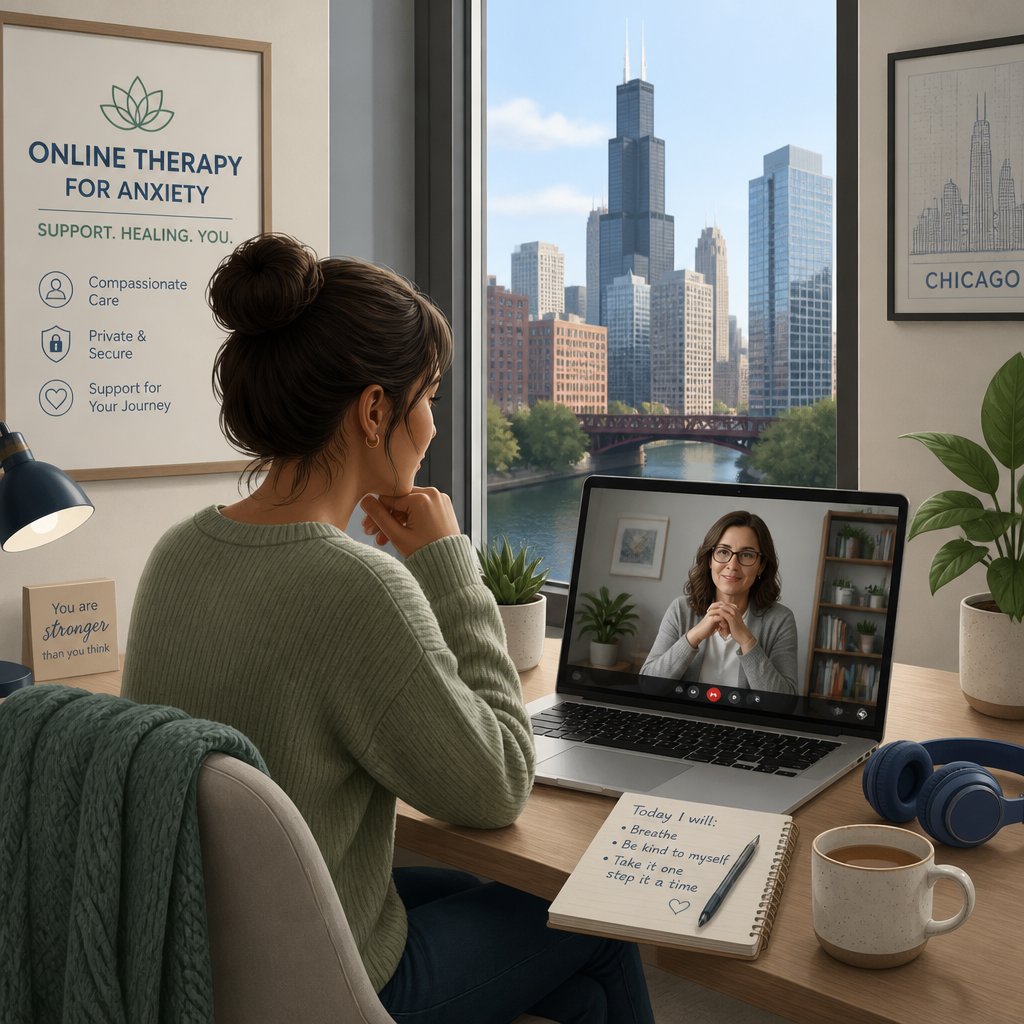
Living in Chicago means juggling a lot—work, commutes, relationships, and all those everyday responsibilities that never seem to pause. Anxiety can creep in quietly, sometimes becoming a steady background hum that starts to affect the things you care about most. If you’re searching for online therapy for anxiety in Chicago, you’re already moving toward something better, even if it doesn’t always feel that way.
Virtual therapy lets you get real, evidence-based anxiety support without adding another commute. You can talk to a licensed therapist from your home, office, or wherever you feel most at ease. Sessions aim to help you build practical coping skills, cut down on worry, and help you feel a little more like yourself again.
Maybe your anxiety shows up as constant overthinking, tension in your body, trouble sleeping, or just that vague unease you can’t quite shake. You don’t have to manage it all on your own. Help is more accessible now than ever.
Key Takeaways
- Virtual anxiety therapy is just as effective as in-person care and fits right into a busy Chicago lifestyle.
- Evidence-based approaches like cognitive behavioral therapy and mindfulness-based therapy are often used to treat anxiety online.
- Finding a therapist who feels like a good fit can really make a difference in how soon you start to feel better.
When Anxiety Starts To Disrupt Daily Life
Anxiety doesn’t look the same for everyone, but when it starts messing with your sleep, your work, or your closest relationships, it’s a sign that some extra support might help. A lot of people wait longer than they need to, wondering if their anxiety is “serious enough” to address.
Common Signs That Support Could Help
Maybe your mind races before bed, or you find yourself avoiding situations just to dodge that familiar worry. Sometimes even small decisions feel overwhelming. Physical signals—like a tight chest, restlessness, or headaches—can also be anxiety’s way of nudging you for attention. If these things start popping up more often, it’s probably time to consider some help.
A few signs it might be worth reaching out:
- Worry that just won’t turn off
- Avoiding people, places, or situations because of fear or dread
- Trouble focusing or finishing tasks
- Irritability or feeling on edge most days
- Sleep problems tied to racing thoughts
How Anxiety Can Affect Work, Relationships, and Sleep
Anxiety rarely stays in its own lane. At work, it might show up as procrastination, perfectionism, or missing deadlines because nothing feels good enough. In relationships, it can mean more arguments, pulling away, or needing a lot of reassurance. Sleep often takes a hit, too—your mind replays the day or fast-forwards to tomorrow’s worries.
The less you sleep, the harder it is to manage stress, and the more stressed you feel, the trickier relationships can get. Anxiety treatment gives you skills to break out of that cycle and actually use them in your day-to-day life.
Why High-Functioning Stress Still Deserves Care
Plenty of people with anxiety still show up, get their work done, and keep life running. On the outside, everything looks fine. But carrying that constant internal pressure can wear you down, even if no one else notices.
High-functioning anxiety is still anxiety. You don’t have to be in crisis to deserve support. If stress is quietly draining your energy, joy, or sense of calm, that’s already enough reason to see what anxiety treatment might offer.
How Virtual Care Works For Anxiety Support
Online counseling for anxiety happens through secure video sessions, letting you connect with a licensed therapist wherever you feel most comfortable. Teletherapy has grown a lot, and it’s usually more straightforward than people expect.
What Online Sessions Usually Look Like
Sessions usually happen on a secure video platform—think video call, but designed for privacy. You and your therapist meet at a set time, usually for 45 to 50 minutes, and work through topics, exercises, and conversations similar to what you’d cover in an office.
Most online counseling platforms make it easy to schedule or reschedule and join from your phone, tablet, or laptop. Before your first appointment, you’ll fill out some intake forms to help your therapist understand what you want to focus on.
Is Teletherapy Effective Compared With In-Person Care
Research shows teletherapy is just as effective as in-person care for anxiety. The quality of your relationship with your therapist matters much more than whether you’re in the same room. If you feel understood and supported, progress can happen.
For anxiety, virtual therapy lets you practice coping skills in the same places your anxiety tends to show up—your home, your desk, or wherever stress finds you. That kind of real-world practice can make the work stick.
Why Online Counseling Fits Busy Chicago Schedules
Chicago’s busy. Long hours, traffic, packed calendars—fitting in an in-person appointment can feel like another thing to stress over. Online counseling takes that hassle away.
You can fit a session into a lunch break, after the kids are asleep, or before your workday even starts. No commute, no parking, no lost time. For a lot of Chicago adults, this flexibility is what finally makes regular therapy possible.
Therapy Approaches Commonly Used For Anxiety
Good anxiety treatment draws from several proven approaches, each matching the different ways anxiety shows up in real life. Cognitive behavioral therapy, mindfulness-based therapy, and group therapy are some of the most common, and all work well online.
How Cognitive Behavioral Therapy Helps With Overthinking
Cognitive behavioral therapy (CBT) is one of the most well-supported treatments for anxiety. It helps you notice how your thoughts, feelings, and actions connect. When anxiety comes from patterns like catastrophizing or all-or-nothing thinking, CBT gives you practical tools to challenge and change those patterns.
You might start by picking out a recurring worry, looking at the evidence for and against it, and practicing a more balanced response. Over time, these skills get easier to use in real life.
Where Mindfulness-Based Therapy Can Be Useful
Mindfulness-based therapy helps you relate differently to anxious thoughts—seeing them without automatically believing or reacting to them. Instead of trying to erase worry, this approach teaches you to watch your inner experience with a bit more calm and distance.
It’s especially helpful if your anxiety snowballs fast or if you feel overwhelmed by physical symptoms like a racing heart. Mindfulness practices can also support better sleep, steadier emotions, and a more grounded feeling throughout your day.
When Individual or Group Support May Be A Good Fit
Individual therapy gives you a private space to dig into your anxiety. It’s a good fit if your concerns feel personal, complicated, or tied to specific experiences. Most people start here so they can build trust with their therapist at their own pace.
Group therapy can be a strong addition or alternative, especially if your anxiety involves social fears or feeling isolated. Hearing others share similar struggles can ease shame and help you feel less alone. Some folks find that mixing individual and group support gives them both private depth and a sense of community.
Choosing Between Virtual And In-Person Sessions
Both virtual and in-person therapy offer real support for anxiety. The right choice depends on what feels comfortable and sustainable for you. Some people’s preferences shift over time, or they combine both.
When Meeting From Home Feels Easier
For many, being at home makes it easier to open up. There’s no waiting room, no unfamiliar office, no need to hold it together on the way home after a tough session. You just show up as you are.
Online therapy also removes barriers like transportation, tricky schedules, or distance. If mobility, childcare, or work makes in-person visits tough, virtual sessions can open the door to consistent care in a way nothing else has.
When In-Person Care May Offer More Connection
Some people just feel more connected sitting across from their therapist. Non-verbal cues, the shared space, even the act of walking into a dedicated place for healing—it can all feel grounding. If virtual therapy feels a bit distant or hard to settle into, in-person might be worth a try.
In-person care can also help if screens make you anxious, video calls feel awkward, or you want a clear boundary between home and therapy space.
How Hybrid Options Can Support Flexibility
A lot of Chicago therapists now offer hybrid schedules, letting you switch between virtual and in-person sessions as life changes. This keeps your care consistent without locking you into one way of doing things.
Hybrid setups are handy during transitions—maybe your work schedule shifts, you’re traveling, or in-person just isn’t doable for a while. The idea is to make showing up for yourself simpler, not harder.
Finding The Right Fit In Chicago
Finding the right therapist really matters, and online counseling has made it so much easier to connect with someone who fits you. The relationship itself is a big part of what makes therapy effective.
What To Look For In A Therapist
Look for a licensed therapist who has real experience treating anxiety in adults. Training in evidence-based methods like CBT or mindfulness-based therapy is a good sign. You’ll also want someone whose style feels clear, warm, and easy to talk to.
Think about whether things like cultural background, lived experience, or specialties in life transitions, trauma, or relationships are important to you. The more specific you can get about what you want, the easier it’ll be to find a good match.
Questions To Ask Before Booking A First Appointment
Most therapists offer a short consultation before your first full session. It’s a great time to ask questions like:
- What’s your experience treating anxiety in adults?
- Which approaches do you usually use?
- What does a typical session with you look like?
- Do you offer both virtual and in-person options?
- How do you handle insurance or sliding scale fees?
Notice how you feel during the conversation. Often, a good fit is about feeling heard and at ease.
How Tides Mental Health Can Support Chicago Clients
Tides Mental Health offers both virtual and in-person therapy for adults in Chicago, focusing on anxiety, stress, life changes, emotional overwhelm, and more. Their sessions aim to feel accessible and grounded, meeting you where you are with compassion.
Whether you’re dealing with chronic worry, a big life transition, or just that sense of running on empty, support’s available. Tides Mental Health works with clients to build lasting coping skills in a space that feels safe and genuinely supportive.
Getting Ready For Your First Appointment
You don’t need to overthink preparing for your first session. A little planning—emotionally and practically—can help you feel more settled and ready to get started.
How To Prepare Emotionally For A First Session
It’s totally normal to feel nervous before your first appointment. You might wonder what to say, worry about getting emotional, or question if the therapist will “get” you. That’s all okay—a good therapist will help you ease in at your own pace.
Before your session, spend a few minutes thinking about what’s been weighing on you. You don’t need a perfect summary or a full history. Even saying “I’ve been overwhelmed and I’m not sure why” gives your therapist a helpful starting point.
Simple Tech and Privacy Tips For Video Visits
For online sessions, a steady internet connection and a quiet, private spot make a big difference. Headphones can help with sound and privacy.
A few quick tips before your session:
- Test your camera and mic ahead of time
- Close other tabs or apps to cut distractions
- Let others at home know you need some uninterrupted time
- Silence your phone or keep it nearby just in case of tech issues
Most teletherapy platforms are HIPAA-compliant, so your session stays private and secure.
What Progress Can Look Like Over Time
Progress in therapy just doesn’t move in a straight line. At first, you might feel a little less isolated or start to notice your patterns a bit more. Maybe after a few weeks, your reactions to stress don’t hit quite as hard, or you’re finally sleeping a bit better.
If you stick with online therapy, a lot of folks notice a real shift after a few months. The aim isn’t to wipe out anxiety completely—let’s be honest, that’s not realistic—but rather to get to a place where anxiety isn’t calling all the shots.
Frequently Asked Questions
How do I choose the right online therapist for anxiety?
Start by looking for a licensed therapist who’s worked with adult anxiety and knows their way around approaches like cognitive behavioral therapy or mindfulness-based therapy. Most therapists offer a quick consultation call—it’s a chance to get a feel for their style and see if you’re comfortable talking with them. Your gut reaction in that first chat says a lot.
Can telehealth sessions be effective for treating anxiety?
They really can. Research keeps showing that teletherapy works just as well as in-person sessions for anxiety. What matters most is your relationship with the therapist and how regularly you meet, not whether you’re in the same room. Honestly, a lot of people find it easier to stick with virtual sessions, which can make a big difference.
What types of therapy work best for anxiety in virtual sessions?
Cognitive behavioral therapy is probably the most tried-and-true method for anxiety, and it works well online. Mindfulness-based and acceptance-based therapies are also popular and easy to practice at home between sessions. Your therapist will help figure out what actually fits your style and experience—there’s no one-size-fits-all.
Does online therapy for anxiety accept health insurance, and how do I check coverage?
A lot of online therapists in Chicago do take insurance, but coverage really depends on your plan and the provider. It helps to call the number on your insurance card and ask about mental health benefits, out-of-network coverage, and whether they include telehealth. When you reach out to a practice, just ask directly which insurance plans they accept—it’s a basic, important question.
What are affordable options if I don’t have insurance for online therapy?
If you’re uninsured, don’t give up. Plenty of therapists offer sliding scale fees based on income, so sessions might be more doable than you think. Community mental health centers in Chicago sometimes have low-cost options for adults, too. When you contact a practice, it’s totally okay to ask about reduced-fee spots or payment plans.
Are there free or low-cost online resources I can use alongside therapy for anxiety?
Absolutely, there are some helpful options out there. Mindfulness and breathing apps can make it a little easier to practice the skills you’re learning in therapy. Some community mental health groups or university clinics might also offer free or sliding-scale support. These kinds of tools usually work best when you use them with your regular therapy, not instead of it.