
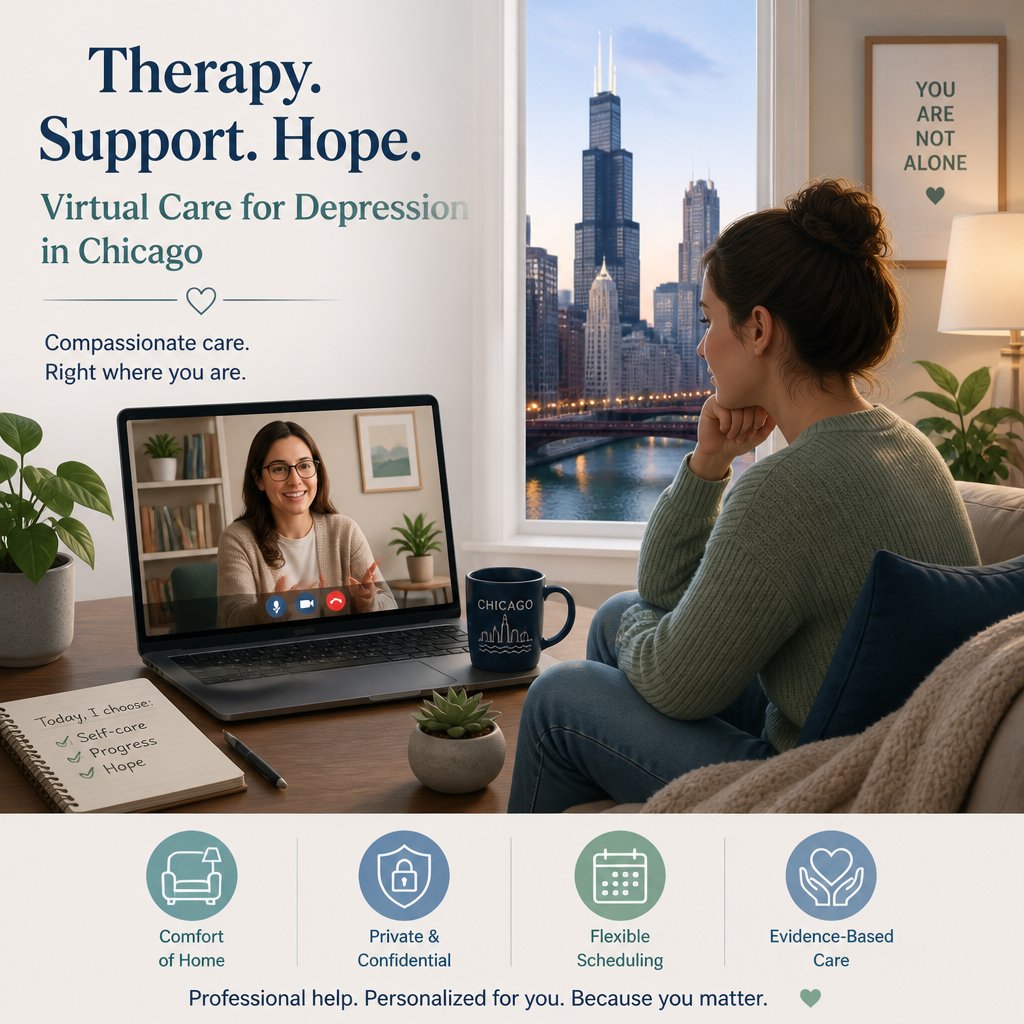
If you’ve been feeling stuck, exhausted, or just emotionally flat, you’re definitely not alone. Depression touches millions of adults, and reaching out for support is a real act of courage. These days, getting help is more accessible than ever—especially if you’re in Chicago or nearby.
Virtual therapy for depression lets you work with a licensed therapist from wherever you feel most at ease, without losing out on the quality of care you deserve. Maybe you’re a busy professional in Lincoln Park, a parent juggling family life in Oak Park, or someone who just can’t make it to an office—online sessions can actually fit into your real, messy life.
Let’s talk through what you can expect when starting virtual therapy for depression in Chicago, from that first appointment to what progress might actually look like.
Key Takeaways
- Virtual therapy is just as effective as in-person care for depression and is available to adults throughout Illinois.
- You can use insurance, HSA funds, or private pay to cover the cost of online sessions with a licensed Chicago-area therapist.
- Finding a therapist who feels like the right personal fit really does matter for your experience and your results.
How Online Sessions Can Support Depression Recovery
Online therapy has made it much easier for adults dealing with depression to get consistent, meaningful support. Sessions happen over secure video, and licensed therapists use the same evidence-based methods they would in person.
Common Signs That It May Be Time To Reach Out
Depression doesn’t always look like you might expect. It isn’t just sadness. Sometimes it feels like numbness, constant exhaustion, or losing interest in things you once loved.
Some signs that reaching out could be helpful:
- You feel drained most of the time, even after sleeping
- Activities that once brought joy now feel flat
- Trouble focusing at work or even in simple conversations
- Feeling irritable, hopeless, or emotionally disconnected
- Withdrawing from friends or family
- Relying on food, alcohol, or endless scrolling just to get through the day
These experiences don’t mean something is broken in you. They’re signals—sometimes loud, sometimes quiet—that deserve attention. A therapist can help you make sense of them.
Why Meeting From Home Feels Easier For Many Adults
Let’s be real: after a tough day, the idea of sitting in a waiting room or driving across Chicago can be enough to make anyone skip getting help. Being able to log into a video session from your couch, your home office, or even your car on a lunch break? That changes things.
For first-timers, therapy from home often feels less intimidating. There’s comfort in being in your own space. It makes opening up a little easier, especially when everything else feels hard.
And honestly, sticking with depression therapy can be tough when your motivation is low. Online sessions make it easier to keep appointments, even on the rough days.
When Remote Care May Not Be The Best Fit
Virtual therapy works well for most adults with mild to moderate depression, but it’s not always the answer. If you’re dealing with thoughts of self-harm, a mental health crisis, or symptoms that make it hard to function day-to-day, you may need a higher level of care.
Sometimes in-person therapy or a structured program like an intensive outpatient program is a better fit. If you’re unsure, a therapist can help you sort out the right level of support during your first conversation.
What Starting Care In Chicago Actually Looks Like
Getting started is often simpler than people expect. Usually, you’ll have a brief intake conversation, fill out some paperwork, and schedule your first session with a therapist who matches your needs.
Scheduling, Intake, And First Appointment Basics
Most Chicago-area practices let you schedule online or over the phone. Before your first session, you’ll fill out some intake forms—things like your symptoms, health history, and what you’re hoping to work on.
Your first appointment usually lasts around 45 to 55 minutes. The therapist will ask questions to get a sense of what you’re experiencing and what kind of support might help. You don’t need to have it all figured out. That first session is really about getting to know each other and finding a starting point.
After that, most people meet with their therapist once a week, but you can adjust the frequency as needed.
Illinois Licensing And Location Requirements
To do telehealth therapy, you need to be physically in Illinois during your sessions, and your therapist must be licensed in Illinois. That’s not just a Chicago thing—it’s the law everywhere.
Licensed clinical social workers (LCSWs), professional counselors (LPCs or LCPCs), and psychologists can all provide therapy in Illinois. When searching for a provider, it’s worth double-checking their licensure.
What matters is where you are during the session, not where you live. So if you’re traveling within Illinois, you can still log in for therapy.
Using Insurance, HSA, Or Private Pay Options
A lot of insurance plans in Illinois cover telehealth therapy—Aetna and Blue Cross Blue Shield, for example. Before your first session, it’s smart to call your insurance and ask about mental health and telehealth coverage specifically.
If you have a health savings account (HSA) or flexible spending account (FSA), you can usually use those for therapy, even if your insurance doesn’t cover the full cost.
Private pay rates for online therapy in Chicago generally run from $100 to $200 per session, but this varies. Some providers offer sliding scale fees if cost is an issue.
Approaches Therapists May Use In Sessions
Your therapist will tailor their approach based on your goals, your history, and what tends to work best for depression. Most therapists pull from more than one method and adjust as they get to know you.
Evidence-Based Support Without Heavy Jargon
You don’t need to memorize therapy jargon. What matters is that the approach is research-backed and fits your real-life struggles.
Some of the most commonly used approaches for depression include:
- Cognitive Behavioral Therapy (CBT): Focuses on noticing and shifting thought patterns that fuel low mood
- Acceptance and Commitment Therapy (ACT): Encourages accepting difficult emotions while moving toward what matters to you
- Mindfulness-based approaches: Teach you to observe your thoughts without getting pulled under by them
- Psychodynamic therapy: Looks at how past experiences shape current emotional patterns
A good therapist will explain what they’re doing and why, so you stay involved in your own care—not just following a script.
Working Through Burnout, Trauma, And Life Changes
Depression rarely shows up by itself. Often, it’s tangled up with burnout, grief, relationship stress, or big life changes like a job loss or move. In Chicago’s fast-paced world, these pressures can build up quietly.
Virtual therapy gives you space to slow down and look at what’s really going on beneath the surface. A therapist who understands how your environment and history affect your mood can make a big difference.
If trauma is part of your story, your therapist may use trauma-informed practices to help you feel safe while exploring tough experiences at your own pace.
Building Healthier Thought Patterns And Daily Habits
A practical part of depression therapy is learning to spot those thought loops that keep you stuck. Depression can twist your thinking—making you believe things won’t improve, that you’re a burden, or that effort is pointless.
Therapy helps you get some distance from those thoughts so they don’t control your choices. Over time, you’ll also work on small, sustainable habits that support your mood—like sleep, movement, social connection, and even how you talk to yourself on hard days.
Progress here can be slow at first, but the changes tend to stick because you’re building real skills, not just coping day-to-day.
Choosing Between Remote And Office Visits
Both virtual and in-person therapy work for depression. The best choice is really about what fits your life and helps you feel comfortable.
Benefits Of Flexible Care For Busy Chicago Lifestyles
Chicago life is busy—long commutes, packed workdays, family demands, and honestly, Midwest winters can be brutal. Getting to an office every week? Not always realistic.
Virtual therapy removes that hurdle. You can have a session on your lunch break, after the kids are in bed, or from any quiet space you can find. That flexibility makes it easier to keep up with therapy, which is key for recovery.
It also lets you prioritize your mental health during stressful times—when you probably need support most but have the least energy to get out the door.
Reasons Some People Prefer Face-To-Face Support
Some folks just connect better in person. There’s something about sharing a room, picking up on body language, and having a set space for therapy that feels grounding.
For many adults, physically going somewhere for therapy helps create a boundary between regular life and the work you do in session. That separation can make it easier to focus and open up.
If video calls feel awkward or your home is full of distractions, in-person sessions might be a better fit. Both options are valid; it comes down to what helps you feel safe and supported.
How Hybrid Care Can Offer The Best Of Both
You don’t have to pick one forever. Many practices, including Tides Mental Health, offer a hybrid model. You can come in person when you want, and switch to virtual when life gets hectic.
Hybrid care is especially handy during busy weeks, travel, or when leaving the house just feels impossible. It keeps your care consistent without blowing up your schedule.
It’s perfectly normal to talk with your therapist about which format works best for you each week.
How To Find A Good Personal Fit
The quality of your relationship with your therapist is one of the strongest predictors of how helpful therapy will be. Taking a little time upfront to find someone who feels right can make the whole process more effective.
Questions To Ask Before Booking
You can be choosy here. Most therapists are open to a short consultation call before you book, and it’s a great way to get a feel for their style.
Some helpful questions:
- What’s your experience working with depression?
- What therapeutic approaches do you usually use?
- How do you handle it if a client feels stuck?
- Do you offer both virtual and in-person sessions?
- What are the first few sessions typically like?
You don’t need to know exactly what you want going in. These questions just help you see if someone’s approach feels like a good fit.
Experience With Mood Concerns And Relationship Stress
Depression often overlaps with relationship struggles, communication issues, low self-esteem, or long-term stress. A therapist who understands these layers can offer more well-rounded support.
If your depression is tied to relationship dynamics—whether that’s a partner, family, or a pattern of people-pleasing—look for someone comfortable working with those areas alongside mood concerns. Some therapists also offer couples or family sessions that can complement individual work.
Why Feeling Safe And Understood Matters
You might find a therapist with a wall full of degrees and still not feel comfortable opening up. That’s not on you. Human connection is the heart of therapy, and sometimes the chemistry just isn’t there.
After that first session, check in with yourself. Did you feel genuinely listened to? Was the therapist actually interested in your story, or did they rush to offer solutions? Did you sense any judgment? These gut feelings can tell you a lot.
Trying out a few therapists before settling in with one is perfectly normal. Good therapists get it—they know trust takes time, and they won’t take it personally. Finding someone you actually trust is worth the extra effort.
Taking The Next Step With Confidence
Starting therapy can feel like a lot, especially when depression makes everything heavier. But breaking it into bite-sized steps can make the whole thing less overwhelming.
Simple Ways To Prepare For Your First Video Session
You don’t have to overthink your first appointment. A few small things can make it easier:
- Pick a quiet spot where you’re not likely to be interrupted.
- Headphones help if you’re worried about privacy.
- Keep a glass of water nearby—sometimes just having something to hold helps.
- Jot down a couple of things that have been tough lately. Even one sentence is enough.
- Give yourself a little buffer time before and after, so you’re not jumping in or out too fast.
Honestly, most first sessions feel a bit awkward. It’s rarely a big breakthrough. Usually, it’s about getting to know each other and building a sense of trust.
What Progress Can Realistically Look Like
Progress in depression therapy isn’t usually some dramatic movie moment. More often, it’s subtle. Maybe you sleep a little better. Maybe you notice a negative thought before it snowballs. Maybe you text a friend instead of shutting everyone out.
These small changes matter, even if they don’t seem huge at first. Over time, they can really add up.
A lot of people start to notice some shifts after six to ten sessions, but it’s different for everyone. It depends on your situation, how tough things have been, and how often you meet.
How Tides Mental Health Supports Adults In The Chicago Area
Tides Mental Health helps adults in Chicago who are dealing with depression, anxiety, burnout, relationship stress, big life changes—you name it. You can meet with a therapist online or in person, whichever feels easier.
They take a collaborative, personalized approach. No cookie-cutter plans. You and your therapist work together to figure out what’s keeping you stuck and what might actually help.
If you’re thinking about starting, reaching out to Tides Mental Health is a low-pressure first step.
Frequently Asked Questions
How can I find a licensed online therapist in Chicago who specializes in depression?
Try searching therapist directories online—you can filter by location, specialty, and insurance. Look for Illinois-licensed therapists (LCSW, LCPC, or licensed psychologist) who focus on depression. Tides Mental Health is one local option for both virtual and in-person sessions.
What types of insurance are commonly accepted for online therapy in Illinois?
A lot of therapy practices in Illinois accept major insurance like Aetna and Blue Cross Blue Shield PPO. Plans vary, though, so it’s a good idea to call your insurance provider and ask about mental health and telehealth coverage before you book anything.
How much does virtual therapy typically cost if I don’t have insurance?
If you’re paying out of pocket, virtual therapy in Chicago usually runs between $100 and $200 per session. Some therapists offer sliding scale rates based on income, so if cost is an issue, definitely ask.
Are there any free or low-cost online therapy options available for Chicago residents?
Some community mental health centers offer reduced-cost or income-based services. University training clinics sometimes provide lower-cost sessions with supervised grad students. If money’s tight, ask any therapist you contact if they have sliding scale options or can suggest more affordable resources.
Is EMDR available through telehealth, and can it help with depression?
EMDR (Eye Movement Desensitization and Reprocessing) is mainly used for trauma but can sometimes help with depression, especially if there’s unresolved trauma in the mix. Many EMDR therapists now offer it via telehealth using adapted methods, and there’s research showing it works well online, too.
How do I know if an online therapy platform or therapist is reputable and a good fit for me?
Start by checking if the therapist holds a valid license in Illinois and uses evidence-based methods. That’s a basic must. Take a look at their bio, sure, but don’t stop there—ask questions during a consultation call, and notice how you actually feel after that first chat. Do you feel heard? Pressured? A trustworthy therapist won’t rush you or dodge your questions about their approach or fees. You should feel comfortable taking your time.