
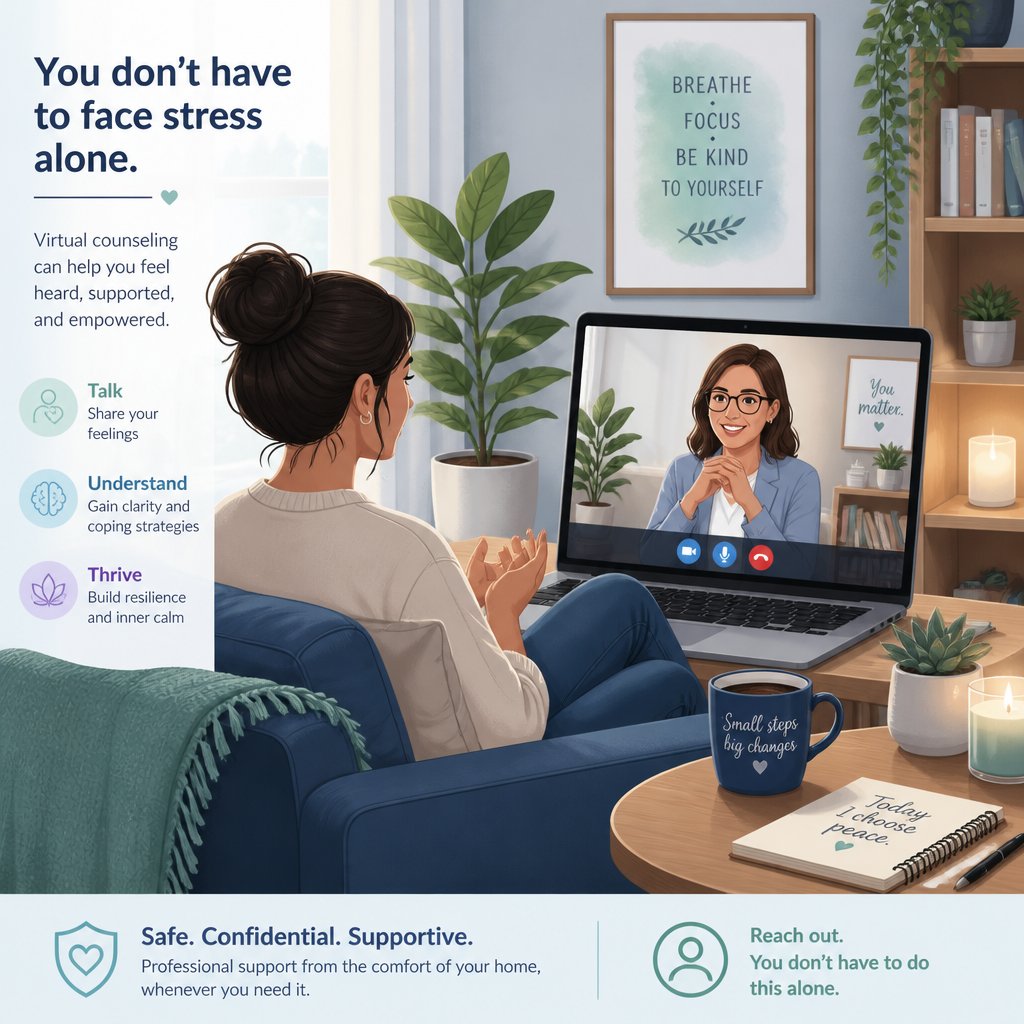
Stress has a sneaky way of creeping in. One week you’re juggling everything, and suddenly you’re running on fumes, snapping at people, wondering how things got so heavy. If that sounds familiar, you’re definitely not alone—and you don’t have to untangle it by yourself. Virtual counseling for stress lets you connect with a licensed therapist wherever you are, no extra commute required.
Online counseling has really taken off in recent years, and honestly, it makes sense. It clears away a lot of the old obstacles—like fitting appointments into a packed schedule, dealing with traffic, or just the awkwardness of a new office. With secure video, phone, or messaging sessions, you get real support from someone trained to help, right from your own space.
Here’s the thing: virtual therapy isn’t a watered-down version of care. For many, it’s exactly what fits. Whether you’re wrestling with long-term stress, burnout, a big life change, or just a stretch where everything feels like too much, working with a therapist can give you tools and perspective that actually help.
Key Takeaways
- Virtual counseling connects you with licensed therapists through flexible, accessible formats that fit into real life.
- Evidence-based approaches like CBT and DBT work just as well online as they do in person.
- Insurance, Medicare, or Medicaid may cover therapy sessions, reducing or even eliminating out-of-pocket costs.
How Virtual Support Helps With Daily Stress
Online therapy isn’t just a backup plan for traditional care. It’s a practical, structured way to tackle the patterns that keep stress stuck in your life. Through online sessions, you can spot triggers, shift unhelpful thinking, and build coping skills you can actually use.
When Stress Starts Affecting Work, Sleep, And Relationships
Stress doesn’t really stay in one lane. Once it builds, it spills over—maybe you’re snapping at loved ones, lying awake replaying awkward conversations, or struggling to focus at work. None of these are personal failings. They’re just signs your nervous system is maxed out.
Individual therapy through an online platform gives you a consistent, private space to slow down and look at what’s actually happening. You don’t need to be in crisis to get something out of it. A lot of people start therapy when the day-to-day just gets too heavy to carry alone.
Why Talk Therapy Can Help You Feel Less Overwhelmed
Talk therapy works because it gives your thoughts and feelings somewhere to go. When stress stays inside, it just loops. Saying things out loud to a therapist helps you sort through what you’re experiencing, see it with more clarity, and start to respond differently.
Therapy can also help you spot patterns you might miss on your own. Maybe you take on too much, have trouble setting boundaries, or spiral under pressure. A good therapist isn’t there to judge—they’ll help you figure out where those habits come from and how to shift them.
What Online Therapy Sessions Are Good For
Online therapy sessions are especially helpful for stress, anxiety, burnout, life transitions, and relationship struggles. They fit adults with packed schedules, caregiving duties, or limited access to in-person care. You get to have sessions on your terms, in a space where you feel comfortable.
You can use therapy to talk through what’s overwhelming you right now, build long-term coping strategies, or dig into deeper patterns that keep repeating. It’s flexible and can meet you where you are.
What A First Appointment May Look Like
Your first session isn’t a test. It’s a conversation—your therapist wants to understand what you’re going through, and you get to see if the fit feels right. Therapists who work through video are trained to make that first meeting feel warm and low-pressure.
Getting Matched With A Licensed Therapist
Most platforms or practices ask for some basic info before your first appointment. You might fill out a short intake form about why you’re seeking therapy, your background, and your availability. That helps match you with a therapist who actually gets what you’re dealing with.
At Tides Mental Health, the matching process is pretty thoughtful—they want you to connect with someone who really fits, not just whoever’s next on the list. If the first match doesn’t feel right, switching therapists is always an option, and it’s nothing to feel weird about.
What Happens In Video Therapy Sessions
The first video session is mostly about getting to know each other. Your therapist will ask what brought you in, what you’re hoping to get out of therapy, and some questions about your life and history. You don’t need to have it all figured out.
Live video therapy feels more like in-person sessions than most people expect. You see your therapist’s face, read their expressions, and have a real conversation. Any initial awkwardness usually fades fast once you get started.
How Between-Session Support Can Fit Real Life
Stress doesn’t stick to a schedule, and therapy doesn’t have to either. Many virtual providers offer between-session support—unlimited messaging or text therapy—so you can check in, share a concern, or ask a question without waiting until next time.
Between-session support isn’t a replacement for your sessions, but it’s handy when something pops up mid-week and you want to process it before it snowballs. It also helps keep the momentum going, so you’re not just waiting seven days to catch up.
Approaches Therapists Use For Stress And Burnout
Therapists use a range of evidence-based methods to help you tackle stress at its root—not just manage the surface symptoms. The specific approach depends on what you’re dealing with and what tends to work for you.
CBT And Cognitive Behavioral Therapy For Stress Patterns
Cognitive behavioral therapy (CBT) is one of the most well-studied ways to address stress, anxiety, and depression. CBT helps you notice how your thoughts, feelings, and behaviors connect. When stress is high, your thinking can get a bit warped, and those thoughts just fuel more stress.
In CBT, your therapist helps you spot those patterns and practice more balanced responses. It’s practical, skill-based work you can use outside of sessions. Many people notice real shifts after a few weeks of steady CBT work.
DBT Skills For Emotional Regulation And Anger Management
DBT (dialectical behavior therapy) started out for intense emotions, but its skills are useful for anyone facing stress, emotional overwhelm, or anger issues. DBT teaches concrete tools for tolerating distress, regulating emotions, and improving communication in relationships.
If you react strongly under pressure, struggle to calm down after conflict, or get flooded by emotions when stress peaks, DBT skills can help interrupt those cycles. A therapist trained in DBT will walk you through these tools in a way that feels doable—not overwhelming.
Evidence-Based Therapy For Anxiety, Depression, And Life Transitions
Evidence-based therapy just means approaches that have been studied and shown to work. Besides CBT and DBT, therapists might use acceptance and commitment therapy, mindfulness-based methods, or trauma-informed care depending on what’s going on.
Burnout and life transitions often bring a mix of anxiety, low mood, and feeling lost. Evidence-based therapy looks at all these layers together. Whether you’re coming out of a rough stretch, adjusting to a big change, or dealing with depression that snuck up on you, a skilled therapist will adapt their approach to fit your actual needs.
Choosing The Right Type Of Care
Therapy isn’t one-size-fits-all. The right fit depends on who’s involved and what you’re hoping to work through. Stress can hit you personally, but it can also shake up your relationships, family dynamics, and how you communicate with the people around you.
Individual, Couples, And Family-Focused Support
Individual therapy is a good place to start if your stress feels mostly personal. It’s private space to focus on your own patterns, history, and goals—without other people’s dynamics in the mix.
Couples therapy helps when stress is straining your relationship. Whether you’re stuck in communication ruts, repeating the same conflicts, or just feeling distant, working with a therapist together can shift things. Family therapy brings everyone into the conversation, helping family members understand each other and work through problems as a unit.
When Teen Therapy Or Family Therapy May Matter
Stress isn’t just an adult thing. Teens face academic pressure, social stuff, identity questions, and sometimes big family changes they can’t always express. Teen therapy gives young people a space to talk openly with someone who gets adolescent mental health.
Family therapy can really help when a child or teen’s struggles are affecting everyone at home. It helps parents understand what their child is going through and builds better communication patterns so household stress doesn’t keep piling up.
Virtual Care Versus In-Person In The Chicago Area
For a lot of people, virtual care just makes sense. It fits around work, skips the travel, and you can do it from home. Research shows virtual therapy is just as effective as in-person for most issues—stress, anxiety, depression, relationships.
That said, in-person connection has its own benefits, especially if you prefer face-to-face or need to work through something that feels easier in the same room. Tides Mental Health offers both virtual and in-person sessions for clients in the Chicago area, so you can choose what feels right for you.
Insurance, Cost, And Provider Access
Cost is a real concern for many people thinking about therapy. The good news? Coverage options have expanded, and many folks pay less than they expect.
How To Check If A Practice Accepts Insurance
Check the practice’s website or call their intake line. Most practices that take insurance list the plans they work with. You can also log into your insurance portal and search for in-network mental health providers.
When you reach out, ask if they’re in-network with your plan and what your copay or cost-sharing would be. Some practices will even verify your benefits during intake, so you don’t have to chase down the details yourself.
What To Know About Medicare And Medicaid Coverage
Medicare covers outpatient mental health services, including therapy with licensed providers. If you’re on Medicare, look for a provider who’s enrolled in the program and bills for mental health. Telehealth coverage under Medicare has grown, making virtual sessions more available for older adults.
Medicaid coverage varies by state, but most programs include therapy with licensed providers. In Illinois, Medicaid plans generally cover mental health. Double-check with your plan to confirm what’s covered and whether your provider is in-network.
Questions To Ask Before You Book
Before you schedule, a few practical questions can save you headaches later. Ask if the practice takes your insurance, what the session costs if you’re paying out of pocket, and if they offer sliding scale fees. It’s also smart to ask about session length, scheduling, and the cancellation policy.
You might want to ask about the therapist’s experience with your specific concerns, too. A good practice will answer honestly and without pressure—because finding the right fit matters more than just filling a calendar slot.
When Therapy Alone May Not Be The Whole Plan
For some people, therapy is just one piece of the puzzle. Stress, anxiety, and depression sometimes have a biological side that talk therapy alone doesn’t fully address. In those cases, working with a psychiatrist or other prescribing provider alongside a therapist can really help.
How Psychiatrists Support Medication Management
Psychiatrists are medical doctors who specialize in mental health. Their main job in outpatient care is medication management—figuring out if medication might help, prescribing it, and checking in on how you’re doing over time. They’re not the same as therapists, though some do both.
If your stress has tipped into clinical anxiety or depression that isn’t budging with therapy alone, a psychiatrist can help you decide if medication makes sense. For many, the right medication creates enough stability to get more out of therapy.
The Difference Between Counseling And Psychiatric Care
Counseling is all about talking things through. You and your therapist sit down—virtually or in person—and dig into your thoughts, feelings, and habits. Psychiatric care, on the other hand, focuses more on the biological side of mental health. Psychiatrists usually prescribe and manage medication, looking at how your brain and body play into what you’re experiencing.
These two approaches can actually work really well together. Sometimes a therapist and psychiatrist team up, each bringing their own strengths. A lot of online mental health platforms offer both services, which can make things less complicated for you.
Working With Psychologists, LCSWs, And Other Clinicians
A psychologist usually has a doctoral degree and specializes in assessment, diagnosis, and therapy. They don’t prescribe medication but might work alongside psychiatrists if that’s needed. Licensed clinical social workers (LCSWs) have a master’s degree and a strong background in therapy and case management. You’ll often find LCSWs in outpatient therapy settings, helping people manage stress, anxiety, depression, and plenty of other challenges.
Depending on where you live and what you’re looking for, you might also meet licensed professional counselors, marriage and family therapists, or other types of clinicians. What really matters? Your provider should be licensed, have experience with what you’re facing, and—maybe most important—be someone you feel okay opening up to.
Frequently Asked Questions
How much does online counseling typically cost, and are there affordable options?
Online counseling costs can swing pretty widely. If you use insurance, you might just pay your standard copay, or even nothing at all. Without insurance, sessions usually fall somewhere between $65 and $200, though some places offer sliding scale fees if money is tight.
Can I access a free 24/7 counseling chat online, and what should I expect from it?
There are a few platforms and nonprofits out there offering free or low-cost chat-based support around the clock. Just keep in mind, these aren’t the same as working with a licensed therapist. Crisis lines and peer support chats can be a lifeline when things feel overwhelming, but they’re not a replacement for ongoing therapy. If you’re in crisis, you can call or text the 988 Suicide and Crisis Lifeline any time.
Which online therapy services accept insurance, and how do I check my coverage?
Plenty of online therapy platforms now take major insurance plans, including employer or marketplace coverage. To check your coverage, you can log into your insurance portal, call the number on your card, or just ask the therapy practice if they’re in-network.
Are there online mental health services that take Medicaid, and how do I find them?
Some online therapy providers do accept Medicaid, but it depends on the state and your specific plan. For example, in Illinois, Medicaid covers outpatient mental health care with licensed providers. You can look up your state’s Medicaid provider directory or reach out to the practice you’re interested in to ask about Medicaid options.
How do I choose the best online therapy platform for my needs?
Start by asking yourself: Does this platform take my insurance? Does it offer the kind of therapy I want—individual, couples, teen, whatever fits? Are the therapists licensed in my state? Sometimes reading about how a practice works or what they value can help you figure out if it might feel right before you even book a session. And honestly, a little gut feeling goes a long way.
What is the 3-3-3 rule, and how can it help when I’m feeling stressed?
The 3-3-3 rule is a quick grounding trick for moments when stress or anxiety creeps in. Here’s how it goes: look around and name three things you can see. Next, listen and pick out three distinct sounds. Finally, move three different parts of your body—maybe wiggle your toes, roll your shoulders, or stretch your fingers. This little exercise draws your mind back to the present, which can break up that spiraling stress feeling. While it’s not meant to take the place of therapy, a lot of people find it’s a handy tool to have between sessions.