
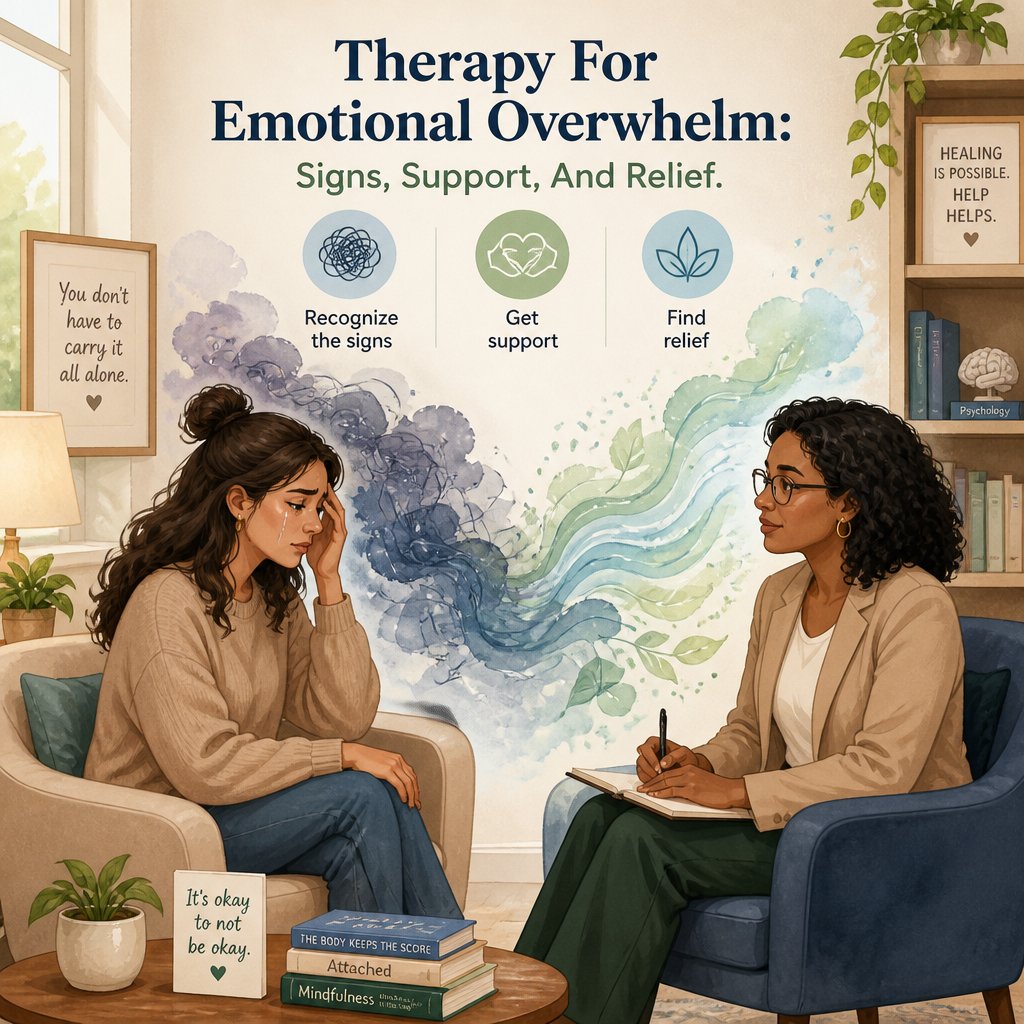
Feeling emotionally overwhelmed can drain you in ways that are hard to describe. Your thoughts race, your body tenses, and even the simplest choices suddenly feel impossible. If this has become your default lately, you’re definitely not the only one—and yes, there’s real help out there to get you back to steadier ground.
Therapy for emotional overwhelm gives you a place to slow down, untangle what you’re carrying, and learn ways to handle big feelings before they take over. Whether your stress is chronic, tied to a major change, or just seems to come out of nowhere, working with a licensed therapist can shift how you feel and function in daily life.
Let’s look at how to spot emotional overwhelm, what tends to set it off, and how therapy plus everyday coping tools can support your mental health when “overwhelmed” starts to feel like your new normal.
Key Takeaways
- Emotional overwhelm can hit your body, thoughts, relationships, and work, sometimes all at once.
- Therapy offers structured, evidence-based support to manage overwhelm and build resilience.
- There are practical tools you can use right away, and professional support is easier to access than ever—virtually, too, if you’re near Chicago.
How Emotional Overwhelm Shows Up In Daily Life
It’s not always a dramatic moment that tips you over. More often, overwhelm sneaks up, gradually stretching your coping skills thin. Spotting the early signs, both in your mind and body, is the first step toward getting help.
Emotional And Mental Signs To Notice
When overwhelm takes hold, your inner world can feel scattered and out of control. Some common signs:
- Racing thoughts that won’t slow down
- Trouble focusing on tasks you usually breeze through
- Mood swings that feel bigger than the situation calls for
- Irritability or snapping at people you care about
- Anxiety or a low, constant sense of dread
- Emotional spikes that take a long time to settle
- Wanting to isolate, pulling away from friends or family
- Hopelessness that starts to blur into depression
These are your nervous system’s way of waving a flag. Noticing them—without beating yourself up—is a big step.
Physical Symptoms That Often Accompany Overload
Emotional overwhelm doesn’t stay in your head. It shows up in your body, sometimes even before you realize you’re stressed. Physical symptoms might look like:
- Fatigue that sleep doesn’t fix
- Headaches or tight shoulders and neck
- Insomnia or disrupted sleep
- Rapid heartbeat or chest tightness
- Appetite changes—overeating, or forgetting to eat
- Stomach troubles or a general sense of unease
These responses are real. They’re your body’s way of letting you know something’s up.
How Overwhelm Can Affect Work, Relationships, And Routine
When emotions run high, they spill everywhere. At work, maybe you miss deadlines, can’t focus, or feel disconnected from things that used to come easily. Relationships can get rocky—arguments, withdrawal, or just feeling like you can’t communicate.
Daily routines often unravel. Skipping meals, letting self-care slide, or putting off responsibilities only adds to the overwhelm. It’s not a personal failure. It’s what happens when you carry too much for too long.
What Tends To Trigger A Breaking Point
Figuring out your own triggers is powerful. Emotional overwhelm rarely comes from just one thing; it usually builds up, layer by layer, so quietly you might not notice until you’re maxed out.
Common Stressors Behind Emotional Flooding
Some triggers are obvious—a job loss or breakup. But often, it’s the steady drip of:
- Information overload from news, social media, and constant notifications
- Work pressure, impossible expectations
- Relationship conflict
- Money worries
- Caregiving duties
- Feeling like your needs never get met
- Not enough sleep or physical care
Pile these up, and even small things can start to feel huge.
The Build-Up Effect Of Chronic Stress
Chronic stress is sneaky. When your nervous system stays amped up for weeks or months, your ability to handle new challenges tanks. You might snap over little things, cry out of nowhere, or just feel numb.
Stress doesn’t reset overnight. If you’re not refilling your emotional tank, the deficit grows. Most people get surprised by a breaking point, because each individual stressor felt manageable. It’s the slow build that tips you over.
When Burnout, Trauma, Or Life Transitions Add Weight
Some things just hit harder and need more than standard coping. Burnout—that deep exhaustion—can make even basic stuff feel impossible. Unresolved trauma keeps your nervous system on high alert, making emotional regulation tough even in everyday moments.
Big life changes—parenthood, loss, career shifts, divorce—can be overwhelming, too. These aren’t signs you’re weak. Sometimes, having a good therapist in your corner is what helps you move through it.
How Therapy Helps You Regain Steadier Ground
Reaching out for professional help when you’re overwhelmed isn’t a last-ditch move. It’s honestly one of the kindest things you can do for yourself. Therapy gives you structure, skills, and a relationship built on trust, so you can reconnect with your ability to cope.
What You Can Work On In Sessions
Therapy for overwhelm isn’t just venting into the void. With a good therapist, your sessions can help you:
- Spot your emotional triggers and patterns
- Dig into what’s really fueling your overwhelm—stress, trauma, life changes
- Learn emotional regulation skills you can actually use
- Challenge thought patterns that make things feel worse
- Clarify your values and set boundaries
- Build a plan for handling tough moments before they spiral
Each session offers a chance to gain self-awareness and real-life tools.
The Role Of The Therapeutic Relationship
The connection with your therapist isn’t just background noise—it’s a big part of the healing. A strong therapeutic relationship means you get a safe, steady space to be honest about what’s really going on.
When you feel heard and understood by your therapist, it’s easier to take emotional risks, talk about tough stuff, and try out new ways of handling stress. For a lot of people, just having someone show up with steady, compassionate attention is healing, especially if overwhelm has left you feeling alone.
Virtual And In-Person Support Options
Therapy is more flexible now than it’s ever been. Online therapy works just as well as in-person for anxiety, stress, and emotional regulation. If you like the idea of talking from home or need something that fits a busy schedule, virtual sessions can help you stay consistent.
If you’re in Chicago, in-person therapy offers face-to-face connection, which some folks find especially grounding when things get rough. At Tides Mental Health, you can choose what works best for you—virtual or in-person. The important thing is finding a format that makes it easier to show up.
Approaches Therapists Use To Support Regulation
There’s no one-size-fits-all answer for emotional overwhelm. A good therapist will tailor their approach to your needs and history. Still, a few evidence-based frameworks have a solid track record for helping people manage emotions and build resilience.
Cognitive Behavioral Therapy For Thought Patterns
Cognitive behavioral therapy (CBT) zeroes in on the link between thoughts, feelings, and behaviors. When overwhelm hits, distorted or negative thought patterns can make things feel even bigger.
With CBT, you’ll work to:
- Notice automatic negative thoughts that fuel emotional flooding
- Check those thoughts against reality
- Swap out unhelpful patterns for more balanced thinking
- Try behavioral strategies that reduce avoidance and boost confidence
CBT is practical and focused on skills, which suits people who want concrete ways to handle emotions.
Dialectical Behavior Therapy For Intense Emotions
Dialectical behavior therapy (DBT) was made for folks who feel emotions intensely and find them hard to manage. DBT mixes emotional regulation skills, mindfulness, distress tolerance, and better communication.
If your emotions go from zero to ten in a flash, or you have trouble settling down after, DBT offers specific tools to break that cycle. In DBT, you’ll learn to:
- Name and recognize emotions without letting them take over
- Use distress tolerance skills to get through tough moments safely
- Gradually build a life that feels meaningful
- Communicate more clearly and less reactively
DBT fits people who struggle with persistent or severe emotional ups and downs.
Mindfulness-Based Support For Nervous System Relief
Mindfulness-based approaches teach you to notice your emotions without reacting right away. Even a small pause between feeling and reacting can keep overwhelm from snowballing.
Therapists often use mindfulness to help you:
- Slow down and check in with your body and mind
- Stay present, instead of spiraling into “what ifs”
- Treat your emotions with a little more gentleness and less self-criticism
- Activate your body’s calming systems
With regular practice, mindfulness can make hard moments feel more manageable, not world-ending.
Coping Tools You Can Use Between Sessions
Therapy is powerful, but what you do between sessions matters just as much. Having a few go-to strategies can help you ride out emotional intensity before it turns into a crisis.
Grounding And Breathing Techniques In The Moment
When emotions spike, grounding techniques can pull you back to the present. Try the 5-4-3-2-1 technique: name five things you see, four you can touch, three you hear, two you smell, and one you taste. It’s simple, but it breaks the cycle of racing thoughts.
Mindful breathing helps, too. Box breathing—inhale for four, hold for four, exhale for four, hold for four—can calm your nervous system fast.
Progressive muscle relaxation (tensing and releasing muscle groups) is another way to let go of physical tension that comes with overwhelm.
Movement-Based Ways To Release Stress
Your body holds onto stress, and moving helps release it. Physical activity signals to your system that the threat’s over and it’s okay to relax.
Some approachable movement-based tools:
- Walking—even just ten minutes outside can lower stress hormones and lift your mood
- Yoga—blends movement, breath, and mindfulness for emotional balance
- Dancing—lets you shake off tension and, honestly, have a little fun
- Any repetitive movement—swimming, cycling, gentle stretching
You don’t need a hardcore workout. Regular, moderate movement is one of the most reliable ways to support your emotional wellbeing.
Small Daily Practices That Support Emotional Balance
Emotional balance doesn’t come from big, dramatic changes—it’s the little things we do each day that really add up. Here are a few simple habits that can help:
- Journaling for a few minutes, morning or night, just to sort through your feelings
- Limiting how much news or social media you scroll through each day
- Having a short wind-down routine before bed to help you sleep better
- Practicing self-compassion—talk to yourself like you’d talk to someone you care about
- Checking in with your body now and then to catch tension before it gets overwhelming
These habits won’t make tough emotions disappear, but they can keep things from piling up and help you feel a bit more grounded when life gets heavy.
Knowing When It’s Time To Reach Out
Sometimes, admitting you can’t carry everything on your own is actually the bravest move. Noticing that self-help tools aren’t cutting it doesn’t mean you’ve failed—it’s a sign you’re paying attention to yourself, and maybe it’s time to let someone else in.
Signs Self-Help May Not Be Enough
It’s not always obvious when you should take that next step. But there are some signs therapy might be a good idea:
- Emotional overwhelm that sticks around for weeks, not just days
- Coping strategies that aren’t working (or maybe never really did)
- Struggles with relationships, work, or even your physical health
- Anxiety or depression that feels heavier than just an off day
- Using alcohol, food, or other habits to numb emotional pain
- Feeling disconnected from yourself or like you’re just going through the motions
- Past trauma that still shapes how you react to stress
If any of this sounds familiar, reaching out to a licensed therapist could be a caring, practical next step.
What Starting Therapy Can Feel Like
Starting therapy often brings up a mix of relief and nerves. It’s totally normal to feel anxious about opening up, or to wonder if your problems are “serious enough” for help. Honestly, a lot of folks feel this way. If you can, try to say it out loud to your therapist—it’s a good place to start.
People often describe their first sessions as a kind of exhale. There’s something about finally saying the things you’ve been holding in and being met with warmth, not judgment. Not every session feels easy, and progress isn’t always a straight line. But over time, just showing up tends to build trust and a sense of steadiness.
Finding Support That Fits Your Life
Finding a therapist who fits your life and needs really matters. You’re much more likely to stick with support that matches your schedule, comfort level, and what you’re actually looking for.
If you’re in the Chicago area and want flexible, compassionate care, Tides Mental Health offers both virtual and in-person therapy for adults dealing with anxiety, depression, burnout, relationship stuff, and emotional overwhelm. Virtual sessions can make it easier to get started without rearranging your whole week, but in-person is there if you want that face-to-face connection.
Taking the first step is what counts. You don’t need perfect words or to feel “ready.” It’s enough to show up and let someone help.
Frequently Asked Questions
What are the most common signs that I’m emotionally overwhelmed?
You might notice racing thoughts, trouble focusing, mood swings, irritability, or wanting to pull away from others. Physically, it can look like fatigue, headaches, a pounding heart, or sleep that just won’t cooperate. If these things stick around and start messing with your daily life, it’s worth paying attention.
Can emotional overload cause physical symptoms, and what do they feel like?
Absolutely. Emotional overload often shows up in your body. Maybe you get tension headaches, tightness in your chest, a racing heart, stomach issues, or a kind of tiredness that rest doesn’t seem to fix. These are real physical responses to ongoing stress—your nervous system’s way of waving a red flag.
What can I do in the moment to calm down when my emotions feel too intense?
Grounding techniques and breathing exercises can really help. The 5-4-3-2-1 grounding exercise or box breathing (inhaling, holding, exhaling, and holding again for four counts each) are good places to start. These can settle your nervous system and take the edge off strong emotions, usually within a few minutes.
Why do I shut down during emotional overload, and how can I prevent it?
Shutting down is your nervous system’s way of protecting you when things get too intense—it’s called the freeze response, and it’s not something you choose. To make it less likely, try regular nervous system regulation practices like mindful breathing, gentle movement, and keeping a steady sleep routine. Over time, these habits can help lower your stress baseline.
How can emotional overwhelm affect relationships, and how can we talk about it kindly?
When overwhelm hits, you might become more reactive, distant, or hard to reach, which can put a strain on close relationships or even spark conflict (more on that here). Being honest but gentle helps—try naming what you’re feeling without blaming anyone. Even something simple like, “I’m feeling overwhelmed right now and need a little space to reset,” can go a long way toward staying connected.
When should I consider getting professional support for feeling overwhelmed?
If feeling overwhelmed just won’t let up, starts messing with your work or relationships, or you’ve tried some things on your own and nothing’s helping, it might be time to talk to a therapist. You don’t have to wait for a crisis—therapy isn’t just for emergencies. Sometimes, reaching out early can make things easier down the line and help you pick up a few coping tools before everything feels too heavy.