
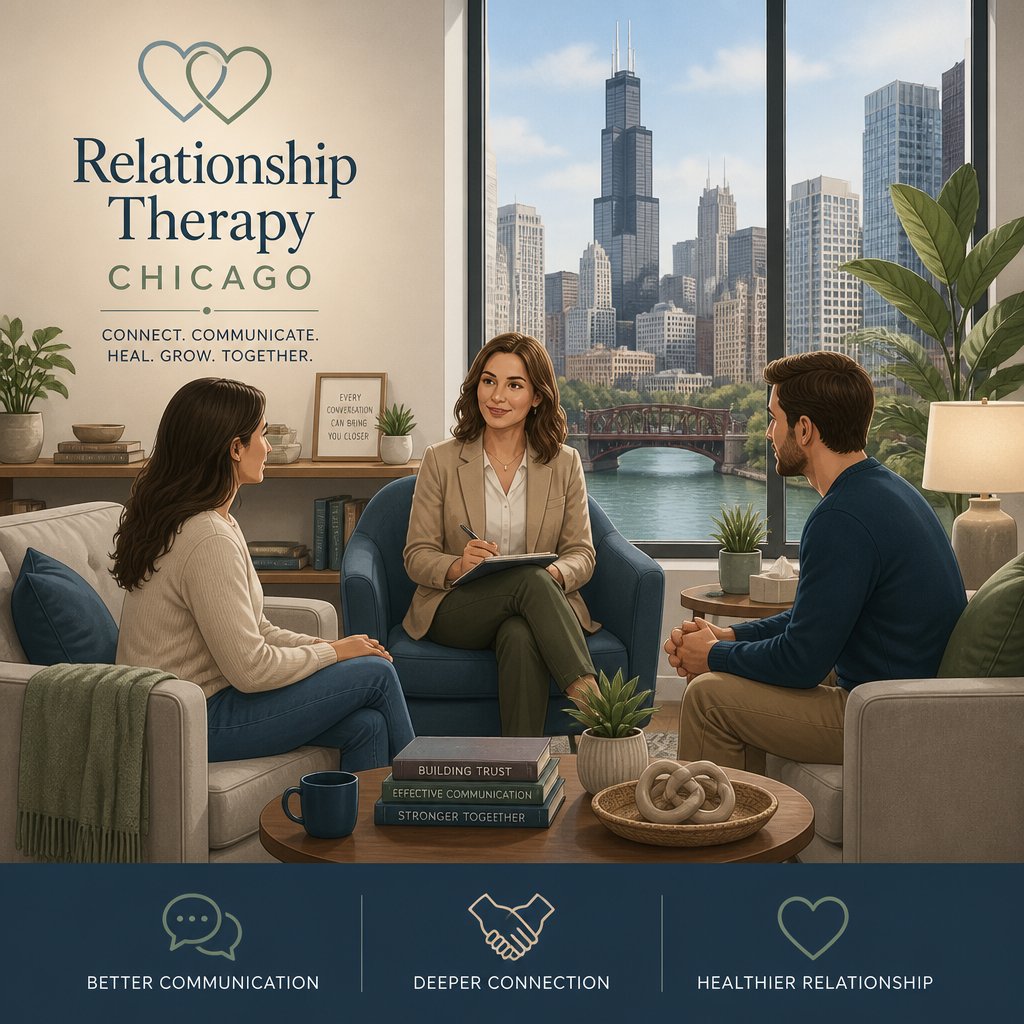
Relationships take real work, and sometimes that work feels overwhelming on your own. If you and your partner keep circling the same arguments, feeling distant, or struggling to reconnect, you’re definitely not alone. Plenty of couples in Chicago reach a crossroads where outside support makes a real difference—not because anything is “broken,” but because you both care enough to try.
Relationship therapy gives you and your partner a structured, safe space to slow down, be heard, and start building something better together. A skilled therapist helps you both get curious about what’s happening under the surface—maybe it’s unmet needs, old wounds, or just communication habits that keep tripping you up.
Seeking support doesn’t mean your relationship is doomed. If anything, it shows you’re invested in making it work. Whether you’re just starting out, facing big life changes, or years into a partnership that’s gotten complicated, therapy can offer practical tools and a bit more clarity.
Key Takeaways
- Relationship therapy helps couples spot and shift harmful patterns before they do real damage.
- Sessions focus on practical communication, rebuilding trust, and deepening emotional connection.
- Support is available both virtually and in-person for Chicago couples, making it easier to find a fit for your life.
When To Consider Support For Your Relationship
A lot of couples wait longer than they need to before reaching out. Spotting the early signs that your relationship could use a hand is actually one of the kindest things you can do for each other. If you’re noticing repeated conflict, growing distance, or just feeling weighed down by stress, it might be time to act before things snowball.
Signs Conflict Is Becoming A Pattern
Every couple argues. That’s just part of sharing a life. But it gets tricky when conflict stops feeling like something you work through and starts feeling like a loop you can’t escape.
Maybe the same fights keep cropping up, conversations escalate too fast, or one (or both) of you shuts down instead of talking it out. If arguments leave you both feeling worse and nothing ever changes, that’s a signal worth paying attention to.
Therapy can help you dig into what’s really fueling the conflict—not just the topic at hand, but the deeper needs or fears underneath. With support, you can learn to disagree in ways that actually bring you closer, not further apart.
Emotional Distance And Disconnection
Sometimes the issue isn’t too much conflict—it’s too little connection. Maybe you’re sharing a home and routines, but it feels more like being roommates than partners. That slow drift apart can be just as painful as fighting, and honestly, it’s often harder to put your finger on.
Emotional disconnection might show up as feeling unseen, unheard, or just not as close as you once were. You might find yourself missing the spark that used to be there, wondering how things got so quiet between you.
Therapy gives you a chance to explore what happened to that closeness. It helps you both reconnect with what matters about each other and start rebuilding the emotional bond that’s faded.
Stress, Burnout, And Life Changes Affecting The Partnership
Life throws all kinds of curveballs at relationships—job changes, money worries, health stuff, becoming parents, losing loved ones. All of it can shift the dynamic between you in ways that sneak up.
When you’re both running on empty, it’s tough to show up with patience and care. Stress and burnout don’t stay neatly in one part of your life; they spill over into how you talk, how available you are, and how safe the relationship feels.
A therapist can help you stay connected during rough patches, giving you tools to support each other instead of just coping on your own.
How Counseling Can Help Couples Reconnect
Couples counseling isn’t about picking sides or figuring out who’s right. It’s about helping you both understand each other better and finding new ways to move through hard stuff together. The work focuses on communication, trust, and the kind of empathy that makes a relationship feel like a real partnership.
Improving Communication Without Blame
One of the biggest hurdles for couples is saying what you mean without it turning into an attack. When you’re hurt or frustrated, it’s easy to speak in ways that put your partner on the defensive, which just makes it harder to actually listen.
In therapy, you’ll practice sharing your experience without blame—using language that says how something affects you, not what your partner did wrong. It sounds simple, but it really changes the tone of a conversation.
You’ll also get to practice active listening, which is about genuinely taking in what your partner says instead of gearing up your own response. These skills aren’t just for the therapy room; they spill over into daily life.
Rebuilding Trust After Hurt
Trust is delicate. Once it’s broken—whether from infidelity or a pile-up of little disappointments—it takes real, steady effort to repair. Deciding to “move on” isn’t enough.
Therapy offers a structured way to work through betrayal and rebuild safety. Both partners look at what led up to the breach, take accountability, and make real changes going forward. It’s rarely quick, but it can be done.
Having a neutral, supportive therapist in the room helps keep you from getting stuck in blame or despair. They hold the complexity of what happened, while helping you stay focused on where you want to go.
Strengthening Empathy, Intimacy, And Teamwork
A healthy relationship is about more than avoiding fights. You want to feel genuinely close—physically, emotionally—and to know you can count on each other when life gets tough.
Therapy can help you reconnect with your partner’s inner world: their worries, their needs, what makes them feel loved. That kind of empathy lays the groundwork for real intimacy instead of just coexisting.
A lot of couples also find that working with a therapist helps clarify shared values and goals. When you know you’re facing life together, not just as two people under one roof, everything feels a bit more solid and satisfying.
What Sessions Usually Look Like
If you know what to expect in therapy, starting out feels a little less intimidating. Sessions tend to be structured but flexible, shaped by what you and your partner need most. Most couples meet weekly or every other week, with sessions running about 50 minutes.
Early Conversations About Goals And Concerns
Your first few sessions are really about getting oriented. The therapist wants to understand your relationship history, what’s been happening lately, and what each of you hopes to get from the process.
Both partners get time to share their perspective. A good therapist pays attention to how you interact, not just what you say. You might talk about your communication style, what you’ve already tried, and what a better relationship would look like for each of you.
These early conversations aren’t meant to feel like an interrogation. They help your therapist get a real sense of where you’re starting from, so the work ahead is actually useful.
Creating Space For Both Partners To Feel Heard
One thing that makes therapy different from hashing things out at home: there’s someone there whose job is to make sure both of you feel heard. At home, conversations can spiral or stall when emotions get high. In therapy, a good therapist can slow things down and help each person feel seen.
This doesn’t mean the therapist picks sides. They just hold space for two different experiences to exist at the same time—which, let’s be honest, is tough to manage on your own.
Feeling heard by your partner can be one of the most healing parts of therapy. Your therapist works toward that, not only in sessions but by helping you build those skills for use between appointments.
Skills And Practices Used Between Appointments
What you do between sessions matters just as much as what happens in the room. Your therapist might suggest specific practices to try at home—structured check-ins, journaling, or ways to call a timeout when a conversation gets heated.
These aren’t “homework” in a stressful way. They’re just ways to keep the momentum going and actually use what you’re learning, not just talk about it once a week.
Over time, these tools start to feel more natural. You’ll catch yourself slipping into old patterns and, sometimes, choose a different response. That’s where real change starts to stick.
Common Issues Addressed In Care
Relationship therapy covers a wide range of challenges, and honestly, most couples show up with more than one thing on their minds. The issues often overlap, and a good therapist helps you see the bigger picture instead of treating each problem as totally separate.
Frequent Arguments And Misunderstandings
Constant arguments that never seem to go anywhere are a top reason couples seek help. Usually, it’s not really about the surface topic—it’s about deeper emotional needs that aren’t being met.
A therapist can help you look beneath the argument to figure out what each of you is really trying to say. When you both see the pattern, it gets easier to interrupt it instead of getting swept up in it again.
Infidelity, Secrecy, Or Broken Agreements
Finding out your partner has been unfaithful or hiding something big can shake a relationship to its core. The pain and confusion are real.
Therapy can’t promise a relationship will survive infidelity, but it does offer a thoughtful process for working through what happened. Both partners get a chance to understand the factors that led up to the breach and decide together what comes next—whether that’s rebuilding or separating with more clarity and care.
Parenting Pressure, Family Stress, And Boundaries
Parenting can be wonderful and, wow, also really tough on a partnership. Disagreements about parenting styles, feeling like you’ve lost your connection to the demands of raising kids, or tension with family members can all create friction.
Setting healthy boundaries—with in-laws, co-parents, or even your own kids as they grow—is something lots of couples find challenging. Therapy helps you get on the same page and approach those conversations as a team.
Mental Health Struggles Impacting The Relationship
When anxiety, depression, trauma, or burnout show up, the relationship feels it too. These aren’t character flaws—they’re real experiences that affect how present and patient you can be.
Couples therapy can work alongside individual therapy to help you both understand how mental health challenges shape your dynamic. With more insight, it gets a little easier to respond with compassion instead of frustration.
Choosing The Right Fit In Chicago
Finding the right therapist matters—a lot. The quality of your connection with your therapist actually affects how helpful the work is. Chicago has a strong network of mental health professionals, so it’s worth taking a little time to find someone who feels like the right fit.
Virtual Versus In-Person Options
Both virtual and in-person therapy can work well for couples. The best choice depends on your schedules, comfort, and what feels doable.
In-person sessions in Chicago give you a separate space to focus, which some couples find helpful for staying present. Virtual sessions, on the other hand, offer flexibility—you can meet from home, which makes it easier to stick with appointments.
Tides Mental Health offers both in-person and virtual options for Chicago-area clients, so you can pick what fits your life without sacrificing quality.
Questions To Ask Before Booking
Before you commit to a therapist, it helps to ask a few real questions:
- What approaches do you use with couples?
- How do you handle it if one partner is more hesitant about therapy?
- Do you have experience with the challenges we’re facing?
- What’s your availability like, and do you offer telehealth?
- How do fees and insurance work?
Most therapists are open to a quick consultation call before you book. That chat can tell you a lot about whether it feels like a good fit for both of you.
Finding An Inclusive And Evidence-Based Approach
It really matters that your therapist gets your specific relationship—your cultural background, your values, your identities. Chicago’s got therapists who work with LGBTQ+ couples, multicultural partnerships, and all kinds of family setups. You deserve care that fits your real life, not some generic mold.
A lot of couples therapists here use evidence-based approaches like the Gottman Method, emotionally focused therapy (EFT), or the psychobiological approach to couples therapy (PACT). These aren’t just buzzwords; there’s solid research behind them. When you’re looking for a therapist, it helps to ask about their training and which methods they use. That way, you’ll have a better idea of what working together will actually feel like.
Taking The First Step With Confidence
Reaching out for support isn’t easy, but honestly, it’s one of the best things you can do for your relationship. Deciding to invest in your partnership before things get overwhelming isn’t a sign of weakness—it’s just smart.
Starting Before Things Reach A Crisis Point
A lot of couples wait until they’re stuck in serious distress before reaching out. Sure, therapy can help in those moments, but starting sooner gives you more options. When you’re not in crisis, you both have more energy to actually show up for the process and strengthen what’s already working.
Couples therapy doesn’t have to be an emergency fix. Think of it more like routine maintenance. Relationships that last usually grow because both people put in the work, not just when things go sideways.
You don’t have to be on the verge of breaking up to ask for help. Maybe something just feels off, or maybe you want to feel closer and communicate better. That’s more than enough reason.
How Tides Mental Health Can Support Chicago Clients
Tides Mental Health offers relationship therapy and couples counseling for adults in Chicago, both virtually and in person. The approach is grounded and evidence-based, but also genuinely focused on helping you and your partner create something you actually want to be part of.
Sessions are set up so both of you get to speak and move toward the kind of partnership you’re hoping for. Whether you’re dealing with conflict, rebuilding after something tough, or just want to be more intentional, there’s room for all of it.
If you’re thinking about taking that first step, reaching out for a consultation is low-pressure and straightforward. No one expects you to have all the answers before you pick up the phone.
Frequently Asked Questions
How do I find a couples therapist in Chicago who’s a good fit for us?
Start by thinking about what matters most to you both—maybe experience with certain issues, cultural understanding, or a specific therapy style. Lots of therapists offer a free consultation call so you can get a feel for their approach before committing. Tides Mental Health is a solid place to start if you want thoughtful, research-backed care in Chicago.
What does couples therapy usually cost in Chicago, and do any therapists offer sliding-scale fees?
Couples therapy in Chicago usually runs between $150 and $300+ per session, depending on the therapist’s experience and location. Some do offer sliding-scale fees based on income, so it’s worth asking when you reach out. If your insurance covers behavioral health, that can help with costs too.
Are there any options for free or low-cost couples counseling in Chicago?
Some community mental health centers and nonprofits in Chicago offer low-cost or income-based counseling. University-affiliated graduate training clinics sometimes provide supervised couples therapy at a reduced rate. And again, it’s always okay to ask therapists directly about sliding-scale options if cost is a concern.
What’s the difference between the Gottman Method and other approaches to couples therapy?
The Gottman Method is grounded in decades of research on what makes relationships thrive or fall apart. It focuses on building friendship, managing conflict, and creating shared meaning. Emotionally focused therapy (EFT) is more about attachment and shifting negative emotional cycles. Both are evidence-based, and most therapists use a mix depending on what you need.
Can we do couples therapy in person in Chicago, and what should we expect in the first session?
Yes, in-person couples therapy is available all over Chicago—places like Lakeview, the West Loop, and Lincoln Park included. In your first session, you’ll probably talk a little about your relationship history and what’s been happening lately. Both partners get a chance to share. The therapist will also explain how they work and what you can expect as you move forward.
How can we find culturally responsive marriage counseling in Chicago, including support for Black couples?
Chicago’s home to more therapists these days who really get the importance of culturally centered care—especially for Black couples and those in multicultural relationships. When you’re searching, you might want to filter by specialty or look for identity-affirming practices on therapy directories. It’s also okay—maybe even necessary—to ask therapists directly about their experience with your background. Finding someone who actually respects and understands your culture isn’t just a nice-to-have; it’s pretty vital to getting support that feels right for you.