
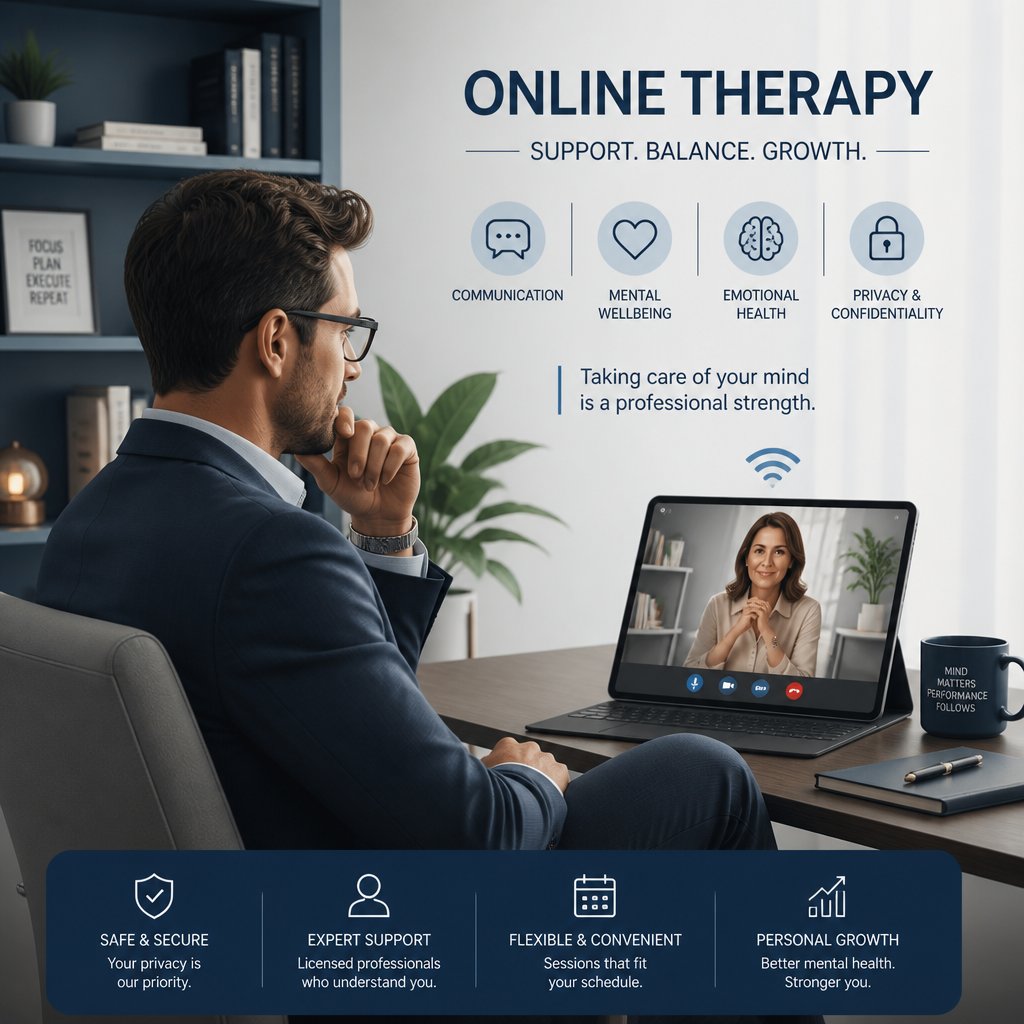
If you’re a working adult balancing deadlines, family, and what feels like a never-ending to-do list, making time for your mental health can seem… well, impossible. Maybe therapy’s crossed your mind, but the logistics? Ugh. Online therapy changes the equation—real support, no commute, no waiting rooms, no extra stress.
Virtual mental health care connects you with a licensed therapist through secure video, phone, or text-based sessions so you can get help from wherever you are. Whether you’re dealing with stress, burnout, anxiety, depression, navigating a life change, or working on relationships, teletherapy gives you a flexible way to get the support you need.
Here’s what to expect from online therapy: how it works for professionals, what to look for in a provider, ways to pay for it, and how to find someone who actually gets you.
Key Takeaways
- Virtual therapy is much easier to fit into a busy schedule than in-person care.
- Credentials, specialty, and personal fit matter just as much online as they do face-to-face.
- Insurance, workplace benefits, and sliding-scale options can make therapy affordable.
Why Busy Adults Choose Virtual Support
Telehealth has opened doors that used to be shut tight. Professionals who once skipped care because of packed calendars or long commutes now find therapy fits into real life—sometimes surprisingly well.
Common Reasons Professionals Start Therapy
Lots of adults reach out to a therapist when the weight of daily life starts to feel unmanageable. Chronic stress, burnout, anxiety, depression, relationship issues, and trouble setting boundaries at work are all common reasons. Sometimes it’s a big life event—a new job, a move, or becoming a parent—that pushes you to seek help.
But honestly, you don’t need a crisis to start. Sometimes you just want a confidential space to talk things through, sort out complicated feelings, or build better coping skills. Both reasons are valid.
How Flexibility Reduces Barriers To Care
Traditional therapy often means blocking off hours for travel, waiting, and the session itself. With telehealth, you can log in from your home office, a quiet space at work, or even your car. That convenience removes a huge barrier.
Many therapists offer early morning or evening slots, which helps if your days are already booked solid.
When Virtual Care Feels Easier Than Waiting
Therapy cost and long waitlists keep a lot of people from starting. Online platforms usually have shorter intake times and a bigger pool of therapists, so you can often start sooner. If you’ve been stuck waiting months for an in-person slot, a virtual session might get you help right away.
What Good Care Looks Like Online
Quality online therapy isn’t just about convenience. It’s about working with someone who’s well-trained, credentialed, and actually understands what you’re going through. The process of finding a therapist and getting started online is usually more organized than people expect.
Working With A Licensed Therapist
A solid online therapy experience starts with a licensed therapist who’s cleared to practice in your state. These providers are trained to help with anxiety, depression, trauma, relationship struggles, and more. They use evidence-based methods and follow the same ethical guidelines as in-person therapists.
Licensed therapists structure care around your needs and goals, adapting as things change.
Provider Credentials And Specialties To Look For
When searching, pay attention to license type and specialty. Common credentials:
- LCSW (Licensed Clinical Social Worker): therapy and case management
- LMFT (Licensed Marriage and Family Therapist): relationships and family work
- LPC or LCPC (Licensed Professional Counselor): individual therapy, mental health counseling
- Psychologist (PhD or PsyD): assessment and therapy at the doctoral level
Beyond letters after the name, look for someone who specializes in the issues you want help with—burnout, life changes, low self-esteem, communication struggles, whatever’s on your mind.
How Intake And Matching Usually Work
Most platforms start with a short questionnaire about your goals, schedule, and preferences. Based on your answers, you’ll get matched with therapists who fit your needs. Good systems let you read provider profiles, check out their approach, and pick someone you feel comfortable with.
Choosing The Right Format For Your Needs
Online therapy isn’t one-size-fits-all. The format—video, phone, or text—can really shape how sessions feel. Plus, you’re not limited to individual therapy; couples, family, group support, and psychiatry are all options.
Video, Phone, And Text-Based Options
Video sessions are the closest thing to in-person. You can see and be seen, which helps build trust and lets your therapist catch nonverbal cues. Most people find video works best for ongoing therapy.
Phone sessions are a good fit if you want privacy or can’t be on camera. They’re handy for check-ins or when you’re on the go.
Text-based therapy lets you message your therapist between sessions. Some platforms use text as the main way to communicate, others use it for support between video or phone sessions. If you’re new to therapy or want something less intense, text can be a gentle way to start.
Individual, Couples, Family, And Group Support
Online therapy covers more than just solo sessions:
- Couples therapy: works on communication, trust, and relationship patterns
- Family therapy: helps families navigate conflict or big transitions
- Group therapy and support groups: connect you with people facing similar things
- Teen therapy: increasingly available online, making support easier for families
EMDR, a structured trauma therapy, is also available virtually with many providers.
When Therapy And Psychiatry May Both Help
Sometimes talk therapy alone isn’t enough. If you’re dealing with anxiety or depression that just won’t budge, online psychiatry can offer evaluation and, if needed, medication. Many platforms combine therapy and psychiatry, so your care stays coordinated. You might not need both, but it’s good to know the option’s there.
Paying For Care And Using Benefits
Let’s be real—cost is a big concern for most people. The upside: there are ways to make therapy affordable, from insurance to workplace benefits that might surprise you.
Insurance, Out-Of-Pocket Costs, And Copays
A lot of insurance plans now cover online therapy at the same rate as in-person. Depending on your plan, you could pay nothing or just a small copay per session. It’s worth calling your insurer to check if teletherapy is covered and what your costs will be.
No insurance? Many platforms offer affordable online therapy at flat rates. Some therapists use sliding scales based on income.
How Workplace Mental Health Benefits Can Help
Your job might already offer therapy benefits, even if you haven’t heard about them. Employee assistance programs (EAPs) often include a set number of free sessions every year. These are confidential—your boss won’t know if you use them. Check with HR or your benefits portal to see if you have access.
Questions To Ask Before You Book
Before you commit, it’s smart to ask:
- Does this platform take my insurance?
- What will each session cost me?
- Are evenings or weekends available?
- Can I switch therapists if it’s not a match?
- What’s the cancellation or rescheduling policy?
Clear answers up front help you avoid surprises later.
How To Know If A Therapist Is The Right Fit
Finding a licensed therapist is just the start. Actually feeling comfortable with them? That’s what makes therapy work.
Signs You Feel Safe, Understood, And Challenged
A good therapist listens without judgment. You should feel able to share tough stuff—shame about work, relationship struggles, emotional overload—and get compassion, not criticism.
But therapy isn’t just about comfort. A strong therapist will gently challenge you, help you spot patterns, and encourage growth. If sessions feel both supportive and thought-provoking, you’re probably in the right place.
When It Makes Sense To Switch Therapists
Not every match clicks, and that’s okay. If after a few sessions you still feel misunderstood, dismissed, or stuck, consider switching. Maybe the therapist isn’t familiar with your issues, or you just don’t vibe. It’s not failure—it’s just part of finding what works.
Finding Culturally Responsive And Identity-Affirming Care
Your identity shapes your experience, and your therapist should get that. For many, it’s important to work with therapists of color, LGBTQ+-affirming providers, or someone who shares cultural context. Look for platforms that let you filter by background, language, or specialty so your values and lived experience get the respect they deserve.
Virtual Vs. In-Person Care In Daily Life
Choosing between virtual and in-person therapy isn’t about which is “better”—it’s about what fits your life right now. Both work, and your needs might change over time.
Benefits Of Meeting From Home Or Work
Teletherapy takes away the commute, the waiting room, and the scheduling headaches that make it tough to stick with care. You can log in between meetings, on your lunch break, or after the kids are in bed. That flexibility makes regular attendance more realistic, and that’s key for progress.
Research shows online therapy is just as effective as in-person for most issues—anxiety, depression, stress, relationships.
When In-Person Support May Feel Better
Some people just feel more connected face-to-face. If you’re working through trauma, struggle to open up over video, or want a clear boundary between home and therapy, in-person might feel better.
Being in the same room also allows for more nuanced reading of body language, which matters for certain therapy styles.
A Flexible Path Forward With Tides Mental Health
You don’t have to pick one format and stick with it forever. Tides Mental Health offers both virtual and in-person sessions, so you can get consistent care even as your life shifts. If you’re in the Chicago area, in-person is an option alongside teletherapy, and you can switch between them as needed. Whether you’re new to therapy or coming back after a break, the key is finding a path that feels doable and right for you—even if it takes a little trial and error.
Frequently Asked Questions
How do I know if a therapist is a good fit for my goals and personality?
Usually, you’ll get a sense within two or three sessions. You should feel comfortable being honest, see that your therapist “gets” your situation, and leave sessions with something useful to think about or try. If something feels off, it’s okay to ask for a different provider.
Can I schedule sessions outside of standard work hours?
Yes—many online therapy providers offer early morning, evening, and weekend slots to fit around demanding schedules. When browsing platforms, look for therapists who list availability beyond the usual nine-to-five before booking your first session.
Will my employer be able to find out that I’m in therapy?
If you use your health insurance or an EAP for therapy, your employer won’t know whether you accessed mental health benefits or what you talked about. EAP sessions stay confidential, and therapists have a legal and ethical duty to protect your privacy—unless there’s a rare, serious safety concern.
How does confidentiality work when I’m discussing workplace issues?
Therapists keep what you share private, even if it’s about your job, coworkers, or boss. The only exceptions come up in specific safety situations required by law, like if someone’s at risk of harm. So you can talk honestly about work stress, tricky team dynamics, or career worries without fear it’ll get back to your workplace.
What should I do if I need to reschedule because of a last-minute meeting or travel?
Most online therapy services have a cancellation or rescheduling policy—usually you can make changes up to 24 or 48 hours before your session. It’s worth asking about this before your first appointment. Therapists who work with busy professionals tend to understand that schedules shift, and many will do their best to accommodate when work pops up unexpectedly.
How quickly can I start, and what does the first session usually look like?
Most online therapy platforms can connect you with a therapist and get your first appointment set up within just a few days. That first session? It’s really more of a gentle introduction. Your therapist will ask about what’s bringing you in, maybe a bit about your background, and together you’ll talk through what you hope to get out of therapy. No need to stress or prep anything in advance—it’s meant to be relaxed, not an interrogation.