
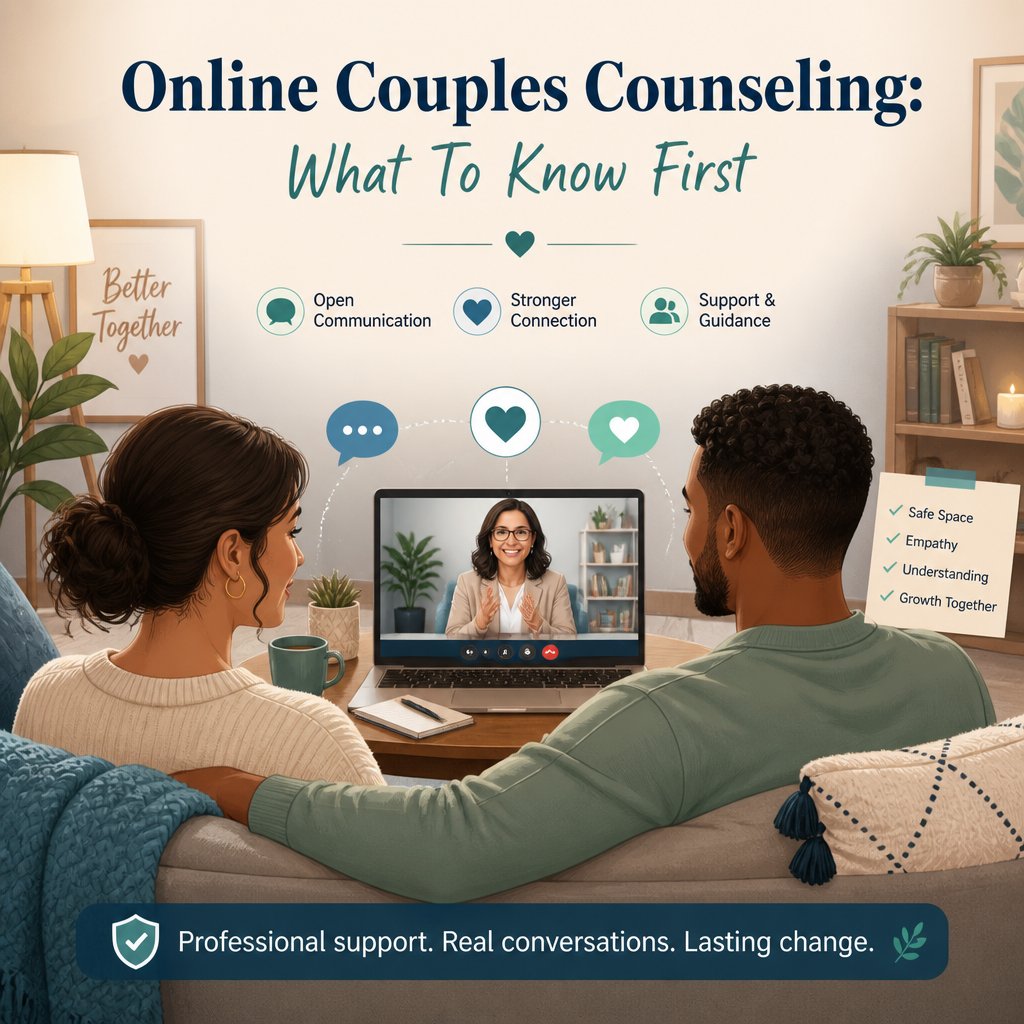
Reaching out for relationship support takes guts, and doing it online can make that leap feel a bit less intimidating. Online couples counseling lets you and your partner meet with a licensed therapist from wherever you feel most at ease—your living room in Chicago, your kitchen, or wherever life finds you. You log in, show up together, and do the work, just through a screen instead of across a desk.
Virtual couples therapy has really taken off because it gets rid of some big hurdles. Trying to coordinate schedules, dealing with traffic, or the awkwardness of walking into a new office—all of that can keep couples from ever getting started. Take those barriers away, and suddenly more people actually follow through.
Relationship counseling online isn’t all that different from in-person care. You and your partner talk with a therapist, lay out what’s been tough, and try to find a better way forward. The therapist uses the same evidence-based approaches they’d use in any office. The main difference? You’re sitting somewhere comfortable, not in a waiting room.
Key Takeaways
- Online therapy gives couples a flexible, accessible way to work on their relationship with a licensed professional.
- Couples often seek support for communication struggles, trust issues, and big life changes.
- Finding a therapist with the right training—and a format that actually fits your life—can really shape your experience.
How Online Support Works For Relationships
Online couples therapy works a lot like in-person sessions. You and your partner meet with a licensed therapist over a secure video call, talk through concerns together, and get practical tools to try between appointments. For many, being at home makes it easier to open up honestly.
What To Expect In A First Session
Your first session is mostly about getting to know each other. The therapist will ask about your relationship history, what’s brought you in, and what you both hope to get from therapy. There’s no rush to spill everything at once. The point is to help the therapist understand your dynamic and start building trust.
Some therapists let you each speak separately; others keep it all together. By the end, your therapist will usually set out some initial goals and explain what future sessions might look like.
Who It Can Help
Virtual therapy works for all kinds of couples—dating, engaged, newlyweds, long-term partners, married folks dealing with small annoyances or deeper wounds. Some couples come in mostly okay but wanting to grow; others are in real crisis.
Video sessions have shown strong results for things like communication problems, emotional distance, conflict cycles, and trust issues. Research suggests outcomes are comparable to in-person care for many common relationship challenges.
When Virtual Care May Not Be The Right Fit
Marital counseling online fits many situations, but not all. If one or both partners are in a mental health crisis, if there’s active domestic violence, or if one person just isn’t open to video sessions, in-person care might be safer or more effective.
A good therapist will help you sort out what makes sense for your situation. Being honest in that first conversation really matters.
Common Reasons Couples Reach Out
Couples seek relationship counseling for all sorts of reasons. You don’t have to be on the brink for it to make sense. Some come in after a big event; others just notice a slow drift and want to catch it early.
Communication Breakdowns And Repeated Arguments
Probably the top reason couples reach out: the same fight keeps happening. You talk, things get heated, nothing changes, and around you go. Couples therapy helps spot the patterns underneath—not just what you’re arguing about, but what’s getting triggered emotionally.
Learning to improve communication is a huge part of couples work. Therapists offer tools to help you slow down, actually listen, and respond in ways that connect rather than push each other away. Let’s be real, conflict resolution doesn’t come naturally to everyone, and there’s no shame in learning those skills together.
Trust, Distance, And Emotional Disconnection
Sometimes, the problem isn’t fighting—it’s silence. Emotional distance, lost intimacy, or feeling like you’re growing apart can hurt just as much as open conflict. Couples therapy gives you a space to talk about what’s missing and why.
Repairing trust after something like infidelity or another betrayal is a slow, tough process that really benefits from a skilled therapist. The goal isn’t to gloss things over, but to help both people understand what happened and figure out what comes next.
Premarital And Major Life Transition Support
Premarital counseling is honestly one of the smartest things a couple can do. Before the wedding, while things feel good, is the perfect time to build communication skills, get clear on values, and talk about expectations—money, family, intimacy, all of it.
Big life changes—having a baby, moving, job loss, grief, retirement—can throw even strong couples off balance. Therapy during those times helps you handle the changes together, instead of letting them quietly drive you apart.
Therapy Approaches You May See Online
The way your therapist works really does matter. Different approaches fit different couples and challenges, and most therapists blend more than one, depending on what you need. Evidence-based therapy means you’re getting tools that have actually been shown to help.
Emotionally Focused Therapy
Emotionally focused therapy (EFT) is one of the best-researched approaches for couples. It focuses on the emotional bond between partners and how attachment patterns shape conflict and distance. When you feel unheard or unsafe, you can end up reacting in ways that accidentally push your partner away. EFT helps you see that cycle.
With EFT, you learn to spot your deeper needs and express them in ways your partner can actually hear. Research shows strong outcomes, especially for couples dealing with emotional distance or repeated arguments.
The Gottman Method
The Gottman Method is built on decades of research into what makes relationships work or fall apart. It gives couples practical skills for friendship, managing conflict, and building shared meaning. Therapists may use Gottman-based assessments to pinpoint strengths and areas to grow.
This approach is great for couples who like clear tools and structure. It covers everything from starting a tough conversation to repairing after a fight. Many people find the specific nature of Gottman work easier to use between sessions.
When Individual And Couples Work Overlap
Sometimes, what’s happening in your relationship is tied to something one partner’s carrying—past trauma, anxiety, depression, or old patterns. In those cases, your couples therapist might suggest that one or both of you work with an individual therapist too.
Sex therapy can also overlap with couples work. If intimacy is part of the struggle, a therapist with training in that area can address it directly and without judgment. Good couples therapy makes space for all of it.
How To Choose The Right Therapist And Format
Finding the right therapist takes some digging, but it’s worth it. The connection between you, your partner, and your therapist matters more than any fancy technique.
Credentials And Special Training To Look For
When you’re searching for a couples therapist, check their credentials. A licensed marriage and family therapist (LMFT) has specific training in relationship and family systems. Licensed therapists with extra training in couples work are also solid choices.
Beyond the basics, look for therapists who’ve studied approaches like EFT or the Gottman Method. General therapy skills don’t always translate to effective couples work. Specialized training means they get the unique challenge of having two clients in the room.
Questions To Ask Before Booking
Before you book, it’s smart to ask a few direct questions:
- What approach do you use with couples?
- How do you handle it when partners have different goals?
- Do you offer individual sessions if needed?
- What’s a typical session like?
- What’s your experience with issues like ours?
A good therapist will answer openly and without getting defensive. If something feels off, trust your gut—it’s okay to keep looking. Couples work requires real trust in your therapist.
Virtual Vs In-Person Care In Chicago
If you’re in Chicago, you’ve got options. Virtual therapy offers flexibility, especially if your schedules don’t line up or you live far apart. Some couples prefer in-person sessions, especially when emotions are intense and being together in the same room matters.
Many therapists now offer a mix—virtual for most sessions, in-person when needed. Tides Mental Health offers both for Chicago-area clients, so you can pick what actually fits your life.
Cost, Insurance, And Practical Access
One of the first questions people ask: How much does couples therapy cost? It’s a practical thing to know, and it can help you plan ahead.
What Couples Therapy Cost Often Looks Like
In the US, couples therapy usually costs between $100 and $300 per session, depending on the therapist, location, and whether it’s a private practice or a bigger platform. Online platforms sometimes charge less since they have fewer expenses.
Most couples start with weekly or biweekly sessions. A few months of steady work is common before you start seeing real shifts, but the timeline depends on what you’re dealing with.
Insurance And In-Network Considerations
Insurance coverage for couples therapy is hit or miss. Many plans cover individual therapy but not couples or marriage work. If one partner has a diagnosed mental health condition, some insurers will cover sessions under that person’s plan.
It’s worth calling your insurance provider and asking directly about coverage for relationship counseling or online marriage counseling. Ask if they have in-network therapists who work with couples. Getting clear answers upfront can save a lot of headaches.
Affordable Therapy Options And Scheduling Flexibility
If cost is a challenge, there are ways to make therapy more affordable. Some therapists offer sliding scale fees. Online platforms can be cheaper per session. Community mental health centers and training clinics sometimes offer lower rates with supervised therapists.
Virtual sessions also tend to be more flexible. Evening and weekend times are easier to find online, which helps if you both work or have kids. The most important thing is finding something you can stick with—not something perfect on paper.
Finding Ongoing Support That Feels Sustainable
Sustainable support isn’t just about finding a therapist who looks good on a website. It’s about a setup you and your partner can actually keep up with for a while. Platforms like Growing Self, Couples Therapy Inc, OurRitual, Regain, and Talkspace all have different formats, prices, and approaches.
Signs A Service Is Built For Long-Term Progress
The best online couples therapy services have a few things in common. They use licensed, trained therapists—not just coaches or peers. You get to work with the same person every time, not a rotating cast. They also have a clear process for matching you with someone who actually fits your needs.
Look for platforms that ask real questions about your situation before matching you. If a service treats every couple the same, odds are it won’t help you move forward in a way that sticks.
How Tides Mental Health Can Support Chicago Couples
For couples in Chicago, Tides Mental Health offers support that feels thoughtful and genuinely human. You can do sessions virtually or in person—whatever works for your schedules and comfort. The focus is on building real skills together, not just talking in circles.
Whether you’re facing communication issues, trust problems, or a big life change, working with a therapist who understands relationships and uses evidence-based methods can make a big difference. The goal is to help you and your partner feel less stuck, more connected.
What Meaningful Progress Can Look Like
Progress in couples therapy doesn’t usually look like some big transformation. More often, it’s a conversation that goes a little better than before. Maybe one of you catches yourself before shutting down. Maybe you both feel heard after a tough talk.
Over time, those patterns start to shift. Couples often notice fewer fights, quicker recoveries, and a sense of closeness that wasn’t there before. It’s a quieter kind of progress, but it tends to last—and it keeps building long after therapy ends.
Frequently Asked Questions
Can we do couples therapy effectively through video sessions?
Absolutely, video sessions can work just as well as meeting in person for many couples. Studies show people see similar progress with things like communication struggles, recurring arguments, or feeling distant. What really makes the difference? Showing up regularly and being willing to talk honestly—no matter if you’re on a couch or a screen.
How do I choose the best therapist or platform for our relationship needs?
Start by looking for someone trained specifically in couples therapy—think EFT, the Gottman Method, or similar. Make sure they’re licensed (LMFT, for example). Before you book, ask about their experience with your particular concerns, and notice how both of you feel after that first conversation. Comfort matters here.
What should we expect in the first session, and how should we prepare?
The first session is usually about the basics: getting to know you both, hearing your story, and figuring out what you want to work on together. No need to bring anything formal. Just come ready to talk honestly and listen to each other. It helps to chat ahead of time about your hopes for therapy, even if it feels a bit awkward.
Are there affordable options if we’re on a tight budget?
Yes, there are ways to make therapy more affordable. Some therapists offer sliding scale fees, and training clinics or certain online platforms have lower-cost couples sessions. Don’t hesitate to ask about pricing—many therapists are open to these conversations. The important part is sticking with it, not which app or office you use.
Is there any way to find free support or low-cost counseling programs?
You might find low-cost or income-based couples counseling at community mental health centers. University training clinics, where graduate students work under supervision, are another surprisingly affordable option. Try searching for sliding scale therapy in your area—it’s a solid place to start.
Will insurance cover relationship counseling, and how do we check our benefits?
Insurance plans can be all over the place when it comes to couples therapy. Some just don’t cover it at all, while others might—there’s really no universal rule. The easiest way to get a straight answer is to call your insurance provider and ask if your plan covers relationship or marriage counseling. Sometimes, if one partner has a diagnosed mental health condition, insurance will cover sessions under that person’s benefits. It’s worth asking, even if the process feels a bit confusing.