
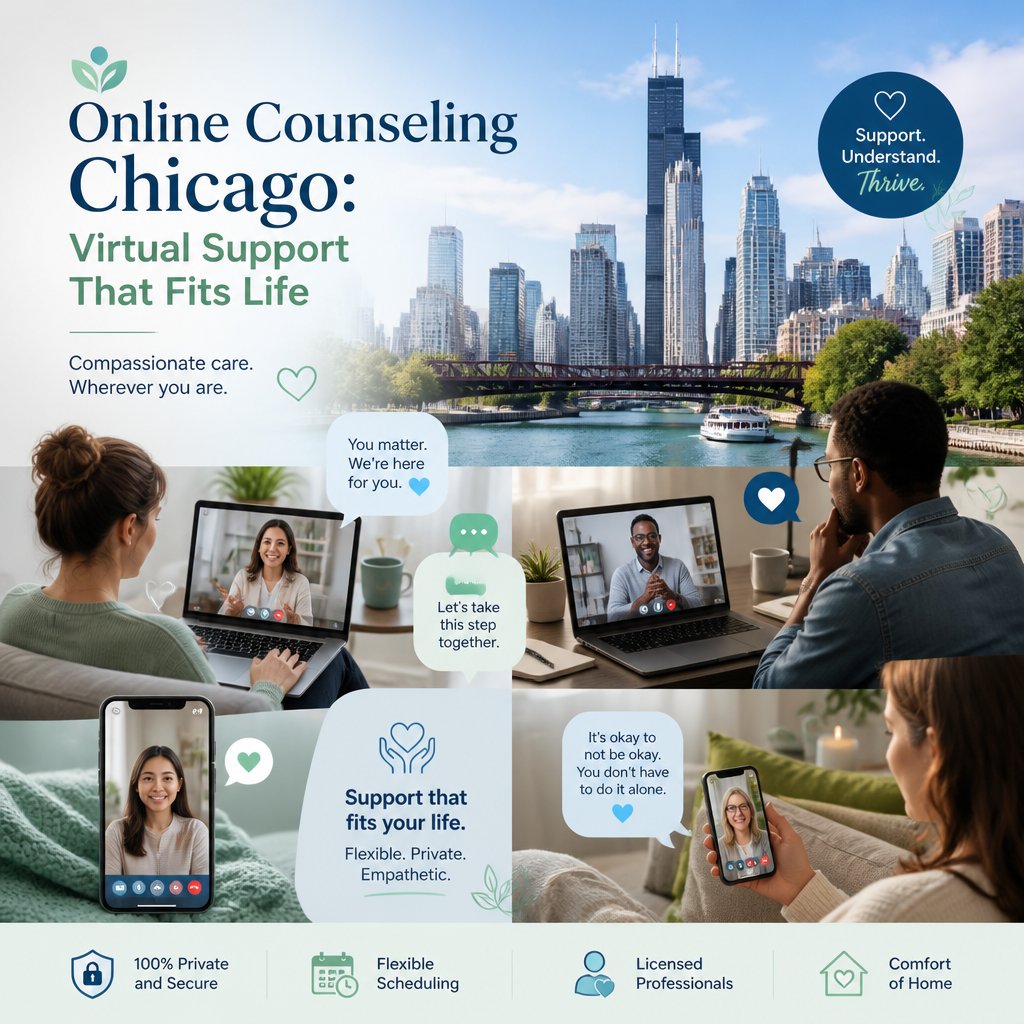
Chicago keeps you moving. Between the commute, the job, the relationships, and everything else vying for your attention, finding time for your mental health can feel like one more thing on an already full list. Online counseling in Chicago makes it a bit easier by bringing support right to you, wherever you are.
Whether you’re working through anxiety, navigating a tough season in your relationship, or just feeling worn down, virtual therapy offers a real path forward—without piling on extra stress. You can connect with a licensed therapist from your home, your car, or even a quiet office corner. The support stays the same. The convenience is real.
Mental health counseling isn’t just for crisis moments. Lots of adults in Chicago use therapy as a steady resource for self-awareness, emotional balance, and growth. Counseling services in the city have expanded a lot in recent years, and online therapy has made care more reachable for people all over Chicago and nearby areas.
Key Takeaways
- Virtual therapy sessions are just as effective as in-person care and can be accessed from almost anywhere.
- Online counseling is available for a wide range of needs, including anxiety, depression, relationship challenges, and burnout.
- Getting started is straightforward, and flexible options exist whether or not you have insurance coverage.
How Virtual Sessions Work for Chicago Clients
Virtual therapy breaks down the barriers that keep people from getting help. Sessions happen over secure video platforms, and your therapist comes prepared to support you, whether you’re across the city or out in the suburbs. Online therapists use the same research-backed approaches as in-person care, and you can still build a meaningful connection with your therapist.
What To Expect From a First Appointment
Your first virtual session is mostly a conversation. Your therapist will ask about what brought you in, what you’ve been experiencing, and what you hope to get out of therapy. You don’t need to have it all figured out before you show up.
You might talk about your daily life, your stress, your relationships, or the feelings that have been toughest to manage. That first appointment isn’t about solving everything—it’s about getting to know each other and starting to build a sense of direction together. Many people feel a bit lighter just from being heard in that first session.
You’ll also go over practical stuff, like scheduling, which platform you’ll use, and how to reach your therapist between sessions if you need to.
Telehealth Platforms, Privacy, and HIPAA Standards
People often wonder if virtual counseling is really private. The short answer? Yes, when done right. Reputable online counseling uses HIPAA-compliant video platforms, so your sessions are encrypted and protected by the same privacy standards as in-person care.
Before each appointment, you’ll get a secure link. No one else can join the call, and your conversation isn’t recorded unless you give explicit consent. Telehealth counseling with a licensed provider follows strict confidentiality rules, just like traditional therapy.
If privacy at home is tricky, you can join sessions from your car, a private office, or anywhere else you feel comfortable and won’t be interrupted.
When Virtual Care Feels Easier Than Commuting
Chicago traffic—enough said. The mental load of juggling schedules, finding parking, and blocking out two hours for a fifty-minute appointment can be overwhelming. Virtual therapy takes away most of that hassle.
For adults with demanding jobs, caregiving duties, or unpredictable routines, telehealth often makes it possible to stick with therapy when in-person appointments might get skipped. When showing up means just sitting down on your couch, it’s a lot easier to stay consistent. That kind of consistency can really matter over time.
When Remote Support Can Be a Good Fit
Online therapy works for a lot of different people and situations. Whether you’re dealing with ongoing stress, a tough relationship, or something you can’t quite name, virtual care can be both meaningful and effective. Psychotherapy and behavioral therapy both translate well to online sessions, and plenty of clients find that remote appointments feel just as connected as meeting face to face.
Support for Anxiety, Depression, and Stress
Anxiety and depression are common reasons adults reach out for therapy, and both respond well to online support for anxiety and other issues. If you’re stuck in cycles of worry, struggling to get through the day, or feeling a persistent heaviness that just doesn’t lift, therapy can help you understand what’s going on and start making changes that actually last.
Stress is often the thing that pushes people to try therapy. Work pressure, money worries, health concerns, or just the general weight of adult life can pile up until it’s hard to manage. A therapist will help you sort out what’s driving your stress and develop coping strategies that actually work for your life—not just in theory.
Life Transitions, Burnout, and Emotional Overwhelm
Life transitions can hit harder than you’d expect. A new job, a move, the end of a relationship, becoming a parent, or losing someone close can shake your sense of yourself and your direction. Virtual therapy gives you a steady place to process those changes, without having to figure it out alone.
Burnout is something a lot of Chicago adults know too well. It sneaks up, leaving you feeling detached, exhausted, and disconnected from things that once mattered. Emotional overwhelm often follows, making even small choices feel impossible. Therapy helps you slow down, figure out what you actually need, and begin to rebuild from a place of steadiness rather than just getting by.
Relationship Strain, Self-Esteem, and Personal Growth
Not every reason for therapy is a crisis. Plenty of people start therapy because they want to feel better about themselves, communicate more clearly, or break patterns that keep repeating in relationships. Those are real, important goals.
Low self-esteem can quietly shape how you move through the world—at work, in relationships, and in how you talk to yourself. Therapy offers space to look at those patterns with compassion and start shifting them. Personal growth is a valid reason to seek support, and virtual sessions make it easier to build that into your routine.
Types of Care Available Beyond One-To-One Sessions
Virtual counseling isn’t just for individual therapy. Many practices offer different formats so you can find support that fits your needs, whether you’re working on yourself, your relationship, or your family.
Individual Therapy for Adults
Individual therapy is where most people start. You meet one-on-one with your therapist and work through whatever’s most present for you—anxiety, grief, self-worth, or just the slow weight of daily stress.
Individual sessions give you time and space that’s just for you. Over time, these sessions help you build self-awareness and find better ways to respond to life’s challenges.
Couples Counseling and Communication Support
Couples therapy isn’t only for relationships in crisis. Many couples look for support when communication starts breaking down, when they feel emotionally distant, or when they want to handle a big life change together and need some guidance.
Virtual couples counseling works well because both partners can join from the same place or from different locations if needed. A therapist guides the conversation, keeps things structured, and helps both people feel heard as you work toward something better for your relationship.
Family Counseling for Relational Stress
Family counseling brings several members into the therapeutic space. This can be especially helpful when conflict, communication problems, or a big transition is affecting everyone. With virtual family therapy, people don’t have to be in the same room—or even the same house—to participate.
Family counseling helps each person feel seen while working toward shared understanding and healthier ways of relating. It can also support families when a younger member is struggling and everyone needs guidance on how to help.
Group Therapy and Shared Connection
Group therapy offers something individual sessions can’t: the experience of being understood by others going through something similar. Hearing someone else name a feeling you thought was yours alone can be quietly powerful.
Group therapy is usually led by a licensed therapist and focuses on a shared theme, like grief, anxiety, or life changes. It’s often more affordable than individual sessions and can work well alongside one-on-one care.
Therapy Approaches You May See in Treatment
The methods your therapist uses will depend on your needs and goals. Most are grounded in research, so they’ve been studied and shown to help with specific concerns. Knowing a few common options might help you feel a bit more prepared when you start looking for care.
CBT and Cognitive Behavioral Therapy
Cognitive behavioral therapy—CBT for short—is one of the most widely used approaches in mental health counseling. It focuses on how your thoughts, feelings, and behaviors connect. The idea is that by shifting unhelpful thought patterns, you can make real changes in how you feel and act.
CBT is usually structured and goal-oriented. Sessions often include practical exercises you can try between appointments, which makes it especially helpful for anxiety, depression, and stress.
DBT, Mindfulness, and Emotional Regulation
Dialectical behavior therapy (DBT) was developed for people who experience intense emotions. It blends cognitive strategies with mindfulness and focuses on emotional regulation and distress tolerance.
Mindfulness, even on its own, shows up in many therapy approaches. It’s about slowing down, noticing your thoughts without reacting, and building a steadier relationship with your inner world. For people who get overwhelmed or caught in emotional spirals, these tools can make a real difference.
ACT, Interpersonal Therapy, and Values-Based Change
Acceptance and Commitment Therapy (ACT) encourages you to accept tough thoughts and feelings instead of fighting them, while committing to actions that match your values. It’s especially useful for anxiety, burnout, or those nagging questions about meaning and direction.
Interpersonal therapy looks at your relationships and how they affect your mental health. It helps you spot patterns in how you connect with others and build more satisfying ways of relating. Both ACT and interpersonal therapy work well online and are available through many virtual therapy services.
ERP and PE for OCD, Phobias, and Trauma Recovery
Exposure and Response Prevention (ERP) is the top treatment for obsessive-compulsive disorder. It helps by gradually exposing you to fears while guiding you to resist compulsive responses. Over time, those triggers lose their grip.
Prolonged Exposure (PE) is used for trauma recovery. It helps people process traumatic memories by revisiting them, slowly and safely. Both ERP and PE need a skilled therapist and a trusting relationship, which can absolutely be built through virtual care.
Choosing Between Virtual and In-Person Support
Both online therapy and in-person care can be deeply effective. The right choice depends on your life, your preferences, and what kind of support feels most accessible and sustainable for you right now.
Reasons Some Adults Prefer Online Care
Online counseling is especially helpful for adults with busy or unpredictable schedules, those who live far from a therapist’s office, or people who feel more comfortable opening up from their own space. For many, skipping the commute isn’t just convenient—it’s the difference between getting care and putting it off.
Virtual therapy also means you’re not limited by geography, so you can focus on finding a therapist whose approach and style really fit.
When In-Person Sessions May Feel More Supportive
Some people just feel more grounded meeting a therapist face to face. Non-verbal cues, the presence of another person, even the routine of traveling to an appointment—all of that can add a sense of structure some clients really value.
In-person sessions might be best for people working through severe trauma, those who struggle with technology, or anyone who just feels more comfortable in a dedicated therapy space. Tides Mental Health offers both virtual and in-person options for clients in the Chicago area, so you don’t have to lock yourself into one or the other.
How To Find the Right Therapeutic Match
The relationship with your therapist matters more than almost anything else. A good match means you feel safe enough to be honest, respected enough to ask questions, and supported enough to do the hard work.
As you look around, check out a therapist’s areas of focus, the methods they use, and whether their communication style feels right for you. Many therapists offer a brief initial consultation so you can get a sense of the fit before committing. Trust your gut. If something feels off, it’s okay to keep looking.
Getting Started With Care That Feels Manageable
Starting therapy can feel like a big step—no way around it. But honestly, it doesn’t have to be overwhelming. Taking a few practical steps before your first session can help you feel a bit more grounded. Both wellness coaching and therapy tend to focus on small, intentional actions that add up over time.
Questions To Ask Before Booking
Before you schedule, it’s worth having a few questions in mind. You might ask:
- What experience do you have with the concerns I’m dealing with?
- What therapeutic approaches do you use most often?
- Do you offer a consultation call before the first full session?
- What’s your availability, and how flexible is scheduling?
- Do you accept my insurance, or do you offer a sliding scale?
These aren’t trick questions—they’re just a way to help you feel more informed and comfortable before you get started.
Preparing Your Space and Schedule
A good virtual therapy experience starts with a bit of setup. Try to find a spot where you feel private and relatively at ease. Headphones can help if you’re worried about anyone overhearing. Maybe close extra browser tabs, silence your phone, and give yourself permission to focus.
It helps to schedule your session at a time when you’re not rushing in or out. If you can, give yourself a few quiet minutes after the session before jumping back into the rest of your day. Treat that time as non-negotiable, like you would for a doctor’s appointment—it can make sticking with therapy a little easier.
Taking the Next Step With Tides Mental Health
If you’ve been thinking about therapy for a while but haven’t made the call, you’re not alone. Lots of people sit with the idea for months. The fact that you’re reading this probably means you’re already moving in a meaningful direction.
Tides Mental Health offers both virtual and in-person therapy for adults in the Chicago area. They focus on warmth and support. Whether you’re dealing with anxiety, relationship challenges, burnout, or something you can’t quite name, support is there. Reaching out is the hardest part for most of us, and honestly, it usually gets a bit easier after that.
Frequently Asked Questions
How do I choose the right online therapist for my needs?
Start by narrowing down what you’d like to work on—maybe anxiety, relationship stuff, or burnout. Look for therapists who mention those areas. Most online therapists offer brief consultation calls so you can get a feel for the connection before committing. Trust your instincts; if the fit feels right after that first chat, that’s usually a good sign.
Can I use my insurance to pay for virtual therapy sessions?
Many insurance plans now cover virtual therapy, but coverage really depends on your provider and specific plan. It’s worth calling your insurance company to check if telehealth counseling is included and whether you need a referral. When you reach out to a therapist or practice, they can often help you verify your benefits.
What are affordable options if I don’t have insurance coverage?
A lot of therapists offer sliding scale fees, so the cost adjusts based on your income. Group therapy is usually more affordable than individual sessions and can be just as helpful for many concerns. Some community mental health centers in Chicago also provide lower-cost therapy for adults who qualify.
Are there any free or low-cost online counseling resources available locally?
Chicago has several community-based mental health resources with free or reduced-cost services, including programs through the city’s Department of Public Health. Some university-affiliated training clinics offer therapy at reduced rates with supervised graduate students. Open Path Collective is a national directory that connects adults to lower-cost therapists—sometimes including providers in Chicago.
How much does an online counseling session typically cost?
Without insurance, virtual therapy sessions in Chicago usually cost somewhere between $100 and $250 per session, depending on the therapist’s credentials and experience. Sliding scale options can bring that cost down for those who qualify. Sessions are generally 45 to 60 minutes, and weekly appointments are pretty common, at least at first.
Can couples get virtual counseling, and how does it work?
Absolutely—virtual couples counseling is an option more people are turning to these days. Both partners log in through a secure video link, whether you’re sitting together on the couch or joining from separate places because, well, life gets busy. A licensed therapist runs the session, making space for each of you to talk things out, ask questions, and (hopefully) untangle those moments where communication gets messy. It’s not always easy, but it can be a surprisingly comfortable way to start reconnecting, even if you’re miles apart.