
5 Breathing Exercises for Stress Relief You Can Do Anywhere
Your heart races. Your thoughts spiral. Stress has a way of showing up at the worst times, before a big meeting, during a difficult conversation, or in the middle of a sleepless night. The good news? Breathing exercises for stress relief offer an immediate, accessible tool to help calm your nervous system. No app required. No special equipment needed.
At Tides Mental Health, we regularly teach these techniques to clients as part of a broader approach to managing anxiety and building resilience. While breathing exercises aren’t a replacement for therapy, they’re a powerful complement, something you can practice anywhere, whether you’re at your desk, on the L, or lying awake at 2 a.m.
Below, you’ll find five evidence-based breathing techniques, each with clear, step-by-step instructions you can start using today.
1. Belly breathing
Belly breathing, also called diaphragmatic breathing, shifts your breath away from your chest and into your abdomen. This technique activates your parasympathetic nervous system, the part of your body that signals safety and calm. When stress hits, your breathing naturally becomes shallow and chest-focused. Belly breathing reverses that pattern.
What it is and why it helps with stress
You engage your diaphragm, the muscle below your lungs, to pull air deep into your body. This creates slower, fuller breaths that send a direct signal to your brain: you’re safe. Research shows this type of breathing lowers cortisol levels and reduces heart rate within minutes. It’s one of the most accessible breathing exercises for stress relief because it requires no special position or setting.
Deep belly breaths interrupt the body’s stress response faster than almost any other technique you can do on your own.
How to do it step by step
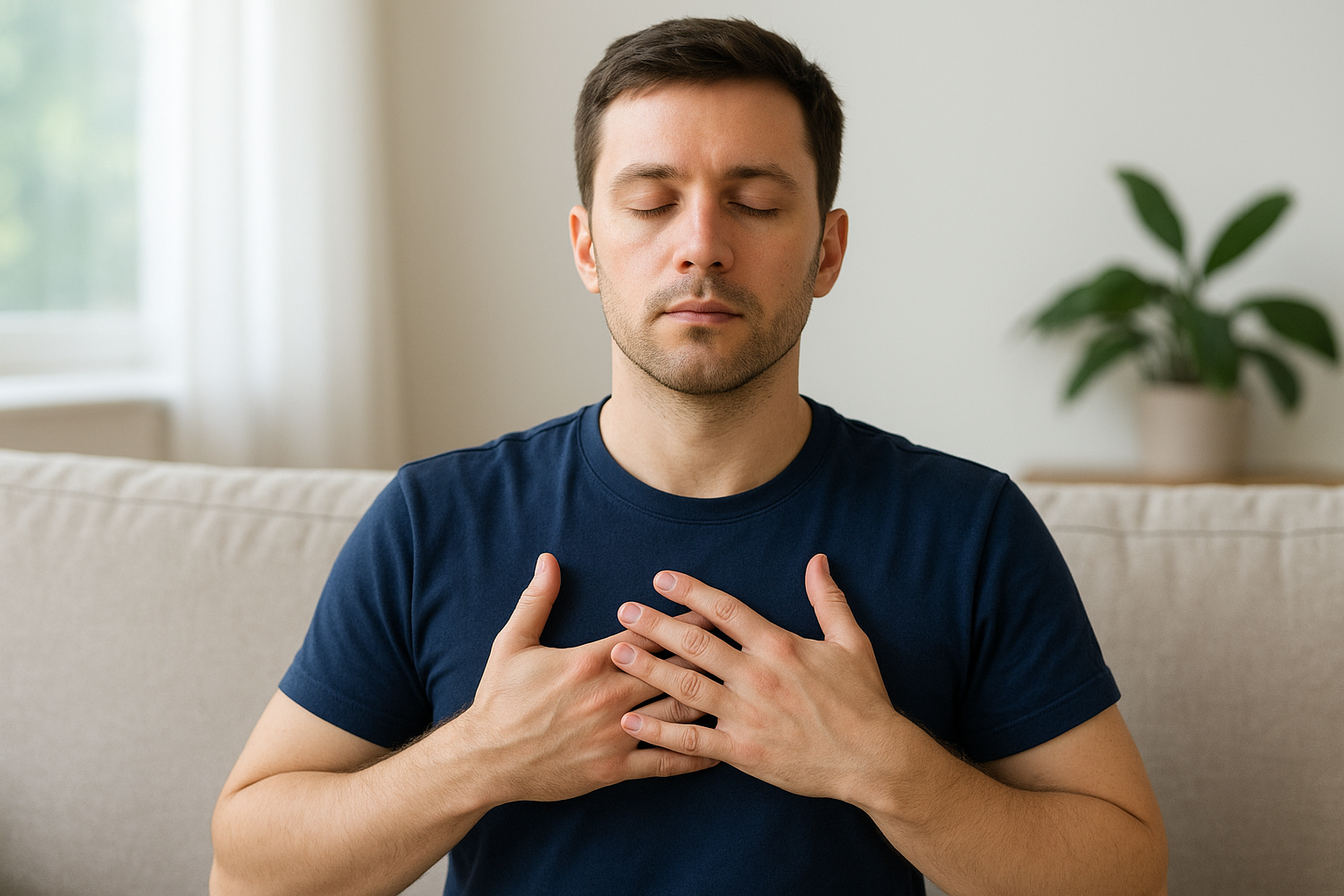
Place one hand on your chest and the other on your belly, just below your ribcage. Breathe in slowly through your nose for four counts, letting your belly rise while your chest stays relatively still. Your hand on your abdomen should move more than the one on your chest. Pause briefly at the top of the breath. Then exhale through your mouth for six counts, feeling your belly fall. Repeat for five to ten rounds.
Quick ways to use it at work, home, or in public
At your desk, you can practice belly breathing without anyone noticing. Drop your shoulders, place your hand on your stomach under the table, and breathe quietly. Before a stressful conversation at home, step into another room for two minutes of practice. On the train or bus, use the rhythm of the movement to time your inhales and exhales. You don’t need privacy or silence to make this work.
Common mistakes and how to fix them
Forcing your belly out creates tension instead of calm. Let the breath expand naturally as air fills your lungs. Another mistake is breathing too fast. Slow your inhale to a four-count minimum so your nervous system has time to register the shift. If you feel lightheaded, pause and breathe normally for a few cycles before trying again.
2. Box breathing
Box breathing, also called square breathing, uses equal counts for each phase of your breath. You inhale, hold, exhale, and hold again, all for the same duration. This technique creates a predictable rhythm that can ground you during moments of acute stress. Navy SEALs use box breathing before high-stakes operations, and it’s equally effective before a difficult phone call or a tense meeting.
2. Box breathing
When box breathing works best
This method shines in situations where you need immediate focus and a sense of control. Use it before public speaking, during a panic attack, or when your mind won’t stop racing. The equal intervals give your brain something concrete to track, pulling attention away from spiraling thoughts. It works particularly well when you can close your eyes for a minute or two, though you can practice it with your eyes open if needed.
How to do it step by step
Breathe in through your nose for four counts. Hold your breath for four counts. Exhale through your mouth for four counts. Hold empty for four counts. That’s one full cycle. Repeat for five rounds, or about two minutes total. You can visualize tracing the sides of a square as you count to help maintain your rhythm.
Tweaks for beginners and for high-stress moments
Start with a three-count if four feels too long. Your body needs time to adapt. During high-stress moments, extend the count to five or six to deepen the calming effect. Keep your shoulders relaxed throughout each cycle. If holding your breath feels uncomfortable, shorten the holds to two counts and focus on smooth inhales and exhales.
The structured pattern of box breathing interrupts your stress response by giving your mind a neutral task to complete.
Safety notes if you feel dizzy or panicky
Dizziness means you’re holding too long or breathing too deeply. Reduce your count by one or two and breathe more gently. If panic increases, stop the holds entirely and return to normal breathing. Box breathing works best when you’re already somewhat grounded, not in the peak of a panic attack. In those moments, simpler breathing exercises for stress relief like belly breathing may serve you better.
3. 4-7-8 breathing
The 4-7-8 technique follows a specific rhythm: inhale for four counts, hold for seven, exhale for eight. This method works as a natural tranquilizer for your nervous system, with the extended exhale creating a stronger calming effect than most breathing exercises for stress relief.
What the numbers mean and when to use it
The four-count inhale fills your lungs comfortably. The seven-count hold allows oxygen to circulate fully. The eight-count exhale triggers deep relaxation. Use this at bedtime, during acute anxiety, or when you need to shift from high alert to calm.
The extended exhale in 4-7-8 breathing creates a stronger relaxation response than shorter breathing patterns.
How to do it step by step
Press your tongue against the ridge behind your upper front teeth. Exhale completely through your mouth with a whooshing sound. Close your mouth and inhale quietly through your nose for four counts. Hold for seven counts. Exhale through your mouth for eight counts with the same whooshing sound.
How many rounds to do and how often
Practice four breath cycles at a time. More can make you lightheaded initially. Do this twice daily, morning and bedtime. After two months of consistent practice, you can increase to eight cycles per session if you want deeper effects.
Who should modify or skip this technique
Skip this method if you have respiratory conditions that make breath holding difficult. Pregnant individuals should consult their healthcare provider before practicing extended holds. If seven counts feels too long, start with a 4-4-6 pattern and build gradually.
4. Alternate nostril breathing
Alternate nostril breathing, called nadi shodhana in yoga traditions, involves closing one nostril at a time while you breathe. This practice balances both sides of your nervous system and creates a meditative state that many people find more calming than standard breathing exercises for stress relief. You use your thumb and ring finger to control airflow, creating a rhythmic pattern that quiets mental chatter.
4. Alternate nostril breathing
What it is and what it can feel like
You physically close one nostril with gentle pressure while breathing through the other, then switch sides. This creates alternating airflow that many people describe as deeply centering. Your attention naturally shifts to the physical sensation of your fingers on your nose and the subtle differences between each nostril. Some people feel slightly awkward at first, but most report a sense of focus within two or three rounds.
How to do it step by step
Sit comfortably with your spine straight. Rest your left hand on your lap. Bring your right hand to your nose, placing your thumb beside your right nostril and your ring finger beside your left. Close your right nostril with your thumb and inhale through the left for four counts. Close both nostrils briefly, then release your thumb and exhale through the right for four counts. Inhale through the right for four counts, close both, then release your ring finger and exhale through the left. That’s one complete cycle. Repeat for five rounds.
Alternate nostril breathing creates a focused state by giving your mind a specific physical task to track with each breath.
Easy modifications if you have congestion or feel awkward
Place your finger beside your nostril instead of pressing directly on it if you feel congested. You can also breathe more gently through whichever side feels partially blocked. If holding your arm up feels tiring, rest your elbow on a table or desk. Some people prefer using their left hand if their right feels strained.
Mistakes that make it less calming
Pressing too hard on your nose creates tension instead of calm. Use light pressure, just enough to close the nostril. Breathing too forcefully defeats the purpose. Keep your breath slow and steady throughout each cycle. Rushing through the counts or holding tension in your shoulders will reduce the calming effect significantly.
5. Extended exhale breathing
Extended exhale breathing focuses on making your out-breath longer than your in-breath. This technique activates your vagus nerve faster than almost any other breathing pattern, creating an immediate shift from fight-or-flight to rest-and-digest mode. You don’t need to memorize complex counts or hold your breath. Just exhale longer than you inhale.
Why longer exhales calm the body fast
Your exhale directly stimulates the parasympathetic nervous system, the part of your body that controls relaxation. When you extend the exhale beyond the inhale, you trigger a measurable drop in heart rate and blood pressure within seconds. This makes extended exhale breathing one of the fastest-acting breathing exercises for stress relief you can practice.
Longer exhales create an instant calming signal that your body can’t ignore, even during acute stress.
How to do it step by step
Inhale through your nose for a three-count. Exhale through your mouth for a six-count. Keep your breath smooth and steady, not forced. Your exhale should feel natural, not strained. Repeat for ten cycles, which takes about two minutes. You can adjust the counts to fit your lung capacity, but always make your exhale twice as long as your inhale.
Three “in the moment” versions for common stress triggers
Before a difficult conversation, practice five rounds while standing or sitting. During rush hour traffic, exhale for the length of two car lengths while inhaling for one. When lying awake at night, extend your exhale to an eight-count while keeping your inhale at four, letting your body sink deeper into the mattress with each breath.
How to build it into a daily routine in under 3 minutes
Practice extended exhale breathing for two minutes every morning before checking your phone. Set a reminder for your lunch break and complete ten rounds at your desk. End your day with one minute of extended exhales before brushing your teeth. These small sessions build your stress tolerance over time and make the technique more effective when you need it most.
breathing exercises for stress relief infographic
Next steps if stress keeps showing up
Breathing exercises for stress relief work best when stress is temporary and manageable. You practice, you feel calmer, and you move forward. But if anxiety keeps surfacing despite consistent practice, or if stress interferes with your daily functioning, breathing techniques alone won’t solve the underlying problem. Your body might be signaling that something deeper needs attention.
Therapy provides tools that go beyond immediate symptom relief. At Tides Mental Health, our therapists help Chicago residents build long-term strategies for managing anxiety, processing difficult emotions, and creating sustainable change. We combine evidence-based approaches with the kind of personalized care that matches your specific needs and life circumstances. If you’re ready to address stress at its root, schedule a consultation with our team to explore what support might look like for you.