
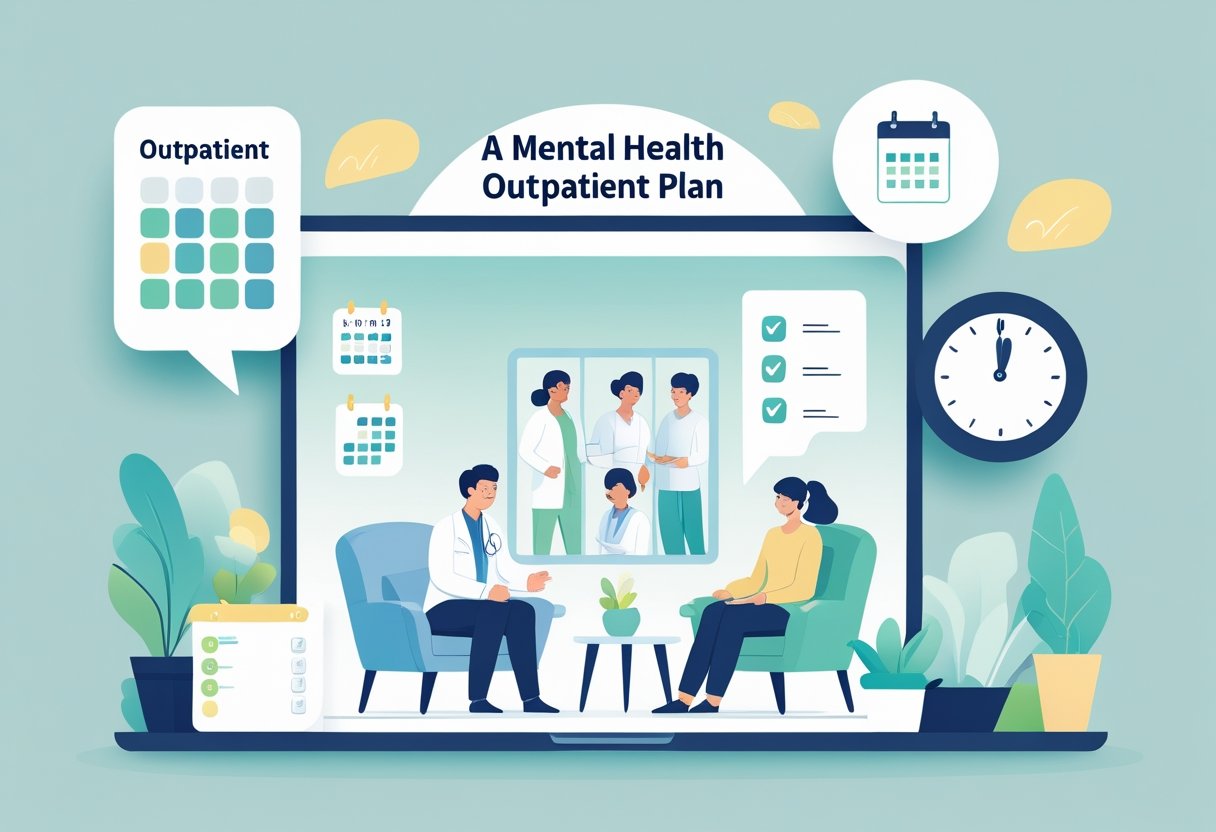
You can expect a clear plan that matches your needs, mixes therapy types, and fits your life. Most sessions are held online, with in-person care available in Chicago.
Your outpatient plan will start with an assessment, lead to a personalized schedule of therapy (like CBT, DBT, or couples work), and include follow-up and support to track progress.
You’ll meet with a clinician to set goals and pick the mix of virtual and in-person sessions that works for you. Expect regular check-ins, homework between sessions, and referrals if you need more intensive care or family involvement.
Tides Mental Health offers outpatient options for adults dealing with anxiety, depression, life transitions, and relationship issues. Plans are growing to include services for children and teens.
Understanding Mental Health Outpatient Plans
Outpatient plans give you regular, scheduled therapy while you live at home. They let you keep work, school, and family routines while getting care that fits your needs.
Definition and Purpose
An outpatient mental health plan provides ongoing therapy and support without overnight stays. You meet with licensed therapists for scheduled sessions that focus on symptom reduction, skill-building, and coping strategies.
Plans typically include individual therapy, couples or family counseling, and group sessions when helpful. Tides Mental Health offers adult-focused outpatient care emphasizing anxiety, depression, life transitions, and relationship issues.
Most services are virtual (about 60–70%), with the remaining in-person visits based in the Chicago area. The plan’s purpose is to help you manage daily life while improving mental health through consistent, evidence-based treatments.
How Outpatient Care Differs From Inpatient Treatment
Outpatient care keeps you at home and in your community. Inpatient treatment requires a hospital or residential stay and suits severe symptoms that need 24/7 supervision.
Outpatient programs let you apply therapy skills in real-life settings like work or family interactions. You’ll typically attend weekly or multiple weekly sessions rather than live at a facility.
This makes outpatient care more flexible and less disruptive to daily responsibilities. Tides Mental Health balances virtual and in-person visits so you can choose what fits your schedule and the level of support you need.
Common Conditions Treated
Outpatient plans treat a wide range of conditions you face in daily life. Typical focuses include generalized anxiety disorder, panic disorder, major depressive disorder, and adjustment or life-transition stress.
Therapists also work with relationship difficulties through couples and family counseling. They use evidence-based methods such as cognitive-behavioral approaches and skills training to reduce symptoms and improve functioning.
If your needs grow more complex, outpatient teams coordinate care or recommend a higher level of support. Tides Mental Health is expanding services to include child and adolescent therapy in the near future.
Who Can Benefit
You are a good fit for outpatient treatment if you can safely live at home and attend scheduled sessions. People balancing work, school, or family often prefer outpatient care because it fits into daily life.
You also benefit if you need regular therapy for anxiety, depression, or relationship issues rather than acute crisis care. Outpatient plans suit those stepping down from inpatient care or starting therapy for the first time.
Tides Mental Health offers flexible virtual appointments and Chicago-based in-person options to match your needs and location. If you need more intensive monitoring, clinicians will guide you to the right level of care.
Initial Assessment and Planning
You will start with a focused review of your current needs, symptoms, and daily challenges. This process sets the plan, people involved, and measurable goals you will follow during outpatient care.
Intake and Evaluation Process
During intake, you meet with a clinician who asks about your mental health history, current symptoms, medications, and any past treatments. Expect questions about sleep, appetite, substance use, work or school function, and crisis history.
You may complete standardized forms (for anxiety, depression, or trauma) and brief cognitive or risk screens. These tools help track symptoms over time and guide care choices.
If you already have records or past therapy notes, bring them. Tides Mental Health offers both virtual and in-person intake options; most clients meet remotely, while in-person slots are available in the Chicago area.
The clinician will explain confidentiality, consent, and billing during this visit.
Setting Treatment Goals
Your clinician will work with you to create clear, measurable goals tied to your daily life—like reducing panic attacks, improving sleep to six hours nightly, or managing conflict in a relationship. Goals often cover symptom reduction, skill-building, and functional targets such as returning to work or improving family communication.
You and the clinician decide on a timeline and how to measure progress, using symptom scales, homework completion, or behavior logs. Expect regular goal reviews every 4–8 weeks to adjust focus or methods.
If therapy, medication, or couples work isn’t helping, your plan will change.
Collaborative Care Team
Your care may include a primary therapist, a psychiatrist (if medication is needed), and occasionally a case manager for coordination. For couples or family therapy, two clinicians might join sessions to keep focus on communication and patterns.
Most coordination happens virtually. If medication management is required, a psychiatrist will evaluate and consult by video or in-person in Chicago.
You stay central to decisions. The team shares notes, tracks progress together, and schedules regular case reviews when multiple clinicians are involved.
Types of Outpatient Services
You can expect services that focus on adults with anxiety, depression, life changes, and relationship issues. Most care mixes virtual and in-person visits, with medication support when needed.
Individual Therapy Sessions
You meet one-on-one with a licensed therapist to work on symptoms and life goals. Sessions usually last 45–60 minutes and follow a treatment plan that targets anxiety, depression, or stress from life transitions.
Therapists use evidence-based methods like cognitive-behavioral therapy (CBT) and may add skills from dialectical behavior therapy (DBT) when needed. Most sessions are virtual (about 60–70%), which lets you fit therapy into work and family routines.
If you prefer face-to-face care, in-person sessions are available in the Chicago area. Your therapist will track progress with brief assessments and adjust goals every few weeks.
If you have relationship or family concerns, individual therapy can connect you to couples or family options later.
Group Therapy Options
Group therapy brings 6–10 people with similar concerns together for skill-building and support. Common group topics include managing anxiety, coping with depression, handling life transitions, and improving relationship skills.
Groups meet weekly for 60–90 minutes and are led by one or two clinicians. Groups blend teaching, practice, and sharing.
You learn coping strategies, practice them in the group, and get feedback. Virtual groups make attendance easier; about two-thirds of groups run online.
In-person groups meet in Chicago for those who want face-to-face interaction. Your clinician will help match you to a group that fits your needs and check in on progress regularly.
Medication Management
Medication management involves psychiatrists or psychiatric nurse practitioners who assess symptoms and prescribe as needed. Initial evaluations cover medical history, current symptoms, and prior medication trials.
Follow-ups are typically 15–30 minutes and focus on dose adjustments, side effects, and symptom tracking. Many medication visits are virtual, which eases scheduling.
In-person medication visits occur in Chicago when an exam or lab work is required. Clinicians coordinate with your therapist to make sure therapy and medications work together.
You keep clear records of prescriptions, side effects, and response. If medication doesn’t help, your provider discusses alternatives and may refer you to specialty care.
Structure of an Outpatient Treatment Plan
Your outpatient plan will list how often you meet with a clinician, the types of therapy you’ll use, and how progress will be tracked. It will show whether sessions are virtual or in person, who is on your care team, and the main goals for anxiety, depression, life transitions, or relationship work.
Frequency and Duration of Sessions
You will typically start with weekly therapy sessions that last 45–60 minutes. For anxiety or depression, weekly individual sessions help build skills and monitor symptoms.
Couples or family sessions often run 60–75 minutes and may be scheduled every one to two weeks based on need. Some people need more intensive care at first, like two sessions per week for a short period, then drop to weekly as symptoms improve.
Medication follow-ups with a prescriber usually occur every 4–8 weeks unless your medication or symptoms require closer monitoring.
Flexible Scheduling
You can expect a mix of telehealth and in-person visits. About 60–70% of sessions are virtual, which makes it easier to keep therapy during work or family commitments.
In-person appointments are available in the Chicago area when you need face-to-face work, assessments, or couples and family sessions that benefit from being together. Appointment times often include evenings and some weekend slots to fit school runs or work shifts.
If you need to change a time, clinics usually allow rescheduling up to 24–48 hours before the session.
Personalized Plan Adjustments
Your clinician will review progress every 4–8 weeks and adjust the plan based on symptoms, life events, or feedback. Adjustments can include changing therapy type (CBT, ACT, couples therapy), increasing or decreasing session frequency, or adding medication management visits.
The team documents measurable goals—like reduced panic attacks per week or improved mood scores—to guide changes. If you face new stressors—job change, moving, or a relationship shift—your plan will be updated quickly to address those challenges.
Patient Experience and Engagement
You will work with a care team, track progress, and play an active role in your treatment. Family or partners often join when helpful, regular check-ins measure change, and you’ll follow agreed tasks between sessions.
Role of Family and Support Systems
Family and close supports can help you practice skills and notice changes between sessions. You decide who joins care; many people name one or two trusted adults or partners to share updates and help with homework.
When you allow involvement, your clinician will set clear boundaries about what information is shared and when. Support people can attend joint sessions, help enforce routines, and remind you about appointments or medication.
For couples or family counseling, sessions focus on improving communication and solving specific problems. If you prefer limits, clinicians respect your privacy while still suggesting ways loved ones can support recovery.
Tides Mental Health offers guided family involvement for adults in the Chicago area and virtually. You can choose remote check-ins or occasional in-person family meetings to fit schedules and comfort levels.
Progress Monitoring
Your clinician will use specific tools to measure symptoms, function, and treatment response. Expect brief questionnaires on anxiety, depression, sleep, and daily functioning at intake and every few weeks.
These scores help guide changes to therapy type, frequency, or medication. Clinicians document session goals and track skill practice you complete between visits.
They may set measurable targets, like reducing panic attacks from three to one per week or improving sleep to six hours nightly. You’ll review these targets during regular care team check-ins.
Because 60–70% of sessions are virtual, you can use telehealth check-ins and digital symptom trackers. In-person monitoring is available in Chicago clinics when physical exams or lab work are needed.
Patient Responsibilities
You must attend scheduled sessions and complete agreed tasks to get the most from treatment. That includes filling out brief symptom forms, practicing coping exercises, and being honest about medications, substance use, and major life changes.
Missing sessions or skipping homework slows progress. Communicate clearly about goals and preferences.
Tell your clinician if therapy feels off track or if life events affect your availability. If you need in-person work, you can book sessions at Tides Mental Health in Chicago; otherwise, most care can happen virtually.
Keep emergency plans current. Know how to reach crisis services and inform your clinician about increases in risk.
Your active participation and honest updates make the care plan effective and safer.
Outcomes and Ongoing Support
You can expect clear ways to track progress, plans for stepping down care when ready, and a list of ongoing supports to keep you steady. The focus stays on measurable change, smooth transitions, and resources you can use after treatment.
Measuring Treatment Success
You and your clinician will set concrete goals at intake. These might include reduced panic frequency, fewer depressive days per week, or improved communication with a partner.
Expect regular check-ins that use brief symptom scales, mood logs, or progress notes to measure those goals. You will get specific markers of improvement, such as sleeping 6–8 hours most nights, lowering anxiety scores by a set amount, or meeting weekly relationship goals.
Review sessions happen every 4–8 weeks, or more often for higher-intensity plans, so you can see if therapy methods or medications need changing. Tides Mental Health uses both virtual and in-person tools to collect this data.
Your provider explains what the numbers mean and how they translate into practical steps. If progress stalls, your plan will change to target the weakest areas.
Transitioning From Outpatient Care
Your clinician creates a step-down plan when you reach stability. This plan lists the frequency of future sessions, warning signs of relapse, and emergency contacts.
It also sets milestones for reducing sessions, like moving from weekly to biweekly visits once symptom targets are met. You will get a written relapse-prevention plan.
It includes coping strategies you practiced in therapy, contact information for crisis support, and instructions for restarting care if symptoms return. For those who used medication, the plan notes who manages medication and how to schedule follow-up with prescribing clinicians.
If you live near Chicago, you can switch to in-person maintenance visits at Tides Mental Health. Most clients continue virtual sessions, and a hybrid schedule often maintains gains while fitting work and family life.
Long-Term Support Resources
Keep a toolbox of supports to prevent setbacks. This usually includes periodic check-ins, booster sessions, peer support groups, and self-help strategies like breathing exercises, sleep routines, and thought-record worksheets.
Your provider will recommend which tools fit your goals. You will also receive referrals when needed — for psychiatric medication management, couples or family counselling, or specialty care for life transitions.
Tides Mental Health offers continued virtual follow-up and Chicago-based in-person appointments for maintenance care. Use technology to stay consistent: mood-tracking apps, secure messaging with your clinician, and scheduled telehealth check-ins help keep momentum.
Make a simple plan for triggers and an easy calendar for follow-up so you know when to reach out.
Insurance and Cost Considerations
You will need to check what your plan covers and how much you must pay out of pocket. Know your in-network options, session limits, and any preauthorization rules before you book care.
Coverage Options
Most major plans cover outpatient mental health for adults, including therapy for anxiety, depression, life transitions, and couples or family counseling. Coverage differs by plan type: HMO plans usually require in-network providers and referrals, while PPO plans may let you see out-of-network clinicians at higher cost.
Medicare and Medicaid offer outpatient mental health benefits but have specific rules and provider lists you must confirm. Ask your insurer about the number of sessions covered per year, whether telehealth sessions count the same as in-person visits, and what diagnosis or treatment codes require prior authorization.
If you prefer in-person care in Chicago, confirm which local clinicians are in-network. Tides Mental Health accepts many plans and offers virtual care for about 60–70% of appointments, which often lowers costs and increases scheduling options.
Financial Planning for Treatment
Start by calling your insurer and your chosen clinic to get clear estimates for copays, coinsurance, and deductible status. Request a written benefits summary that lists session limits, out-of-pocket maximums, and whether medication management visits are billed differently from therapy sessions.
Keep receipts and EOBs (explanation of benefits) to track spending toward your deductible.
If cost is a barrier, ask Tides Mental Health about sliding scale options, package rates, or reduced fees for virtual-only care. Consider using an HSA or FSA to pay for eligible therapy costs tax-free.
If your plan balances bills for out-of-network care, compare the total cost of using an out-of-network clinician versus switching to an in-network provider.