
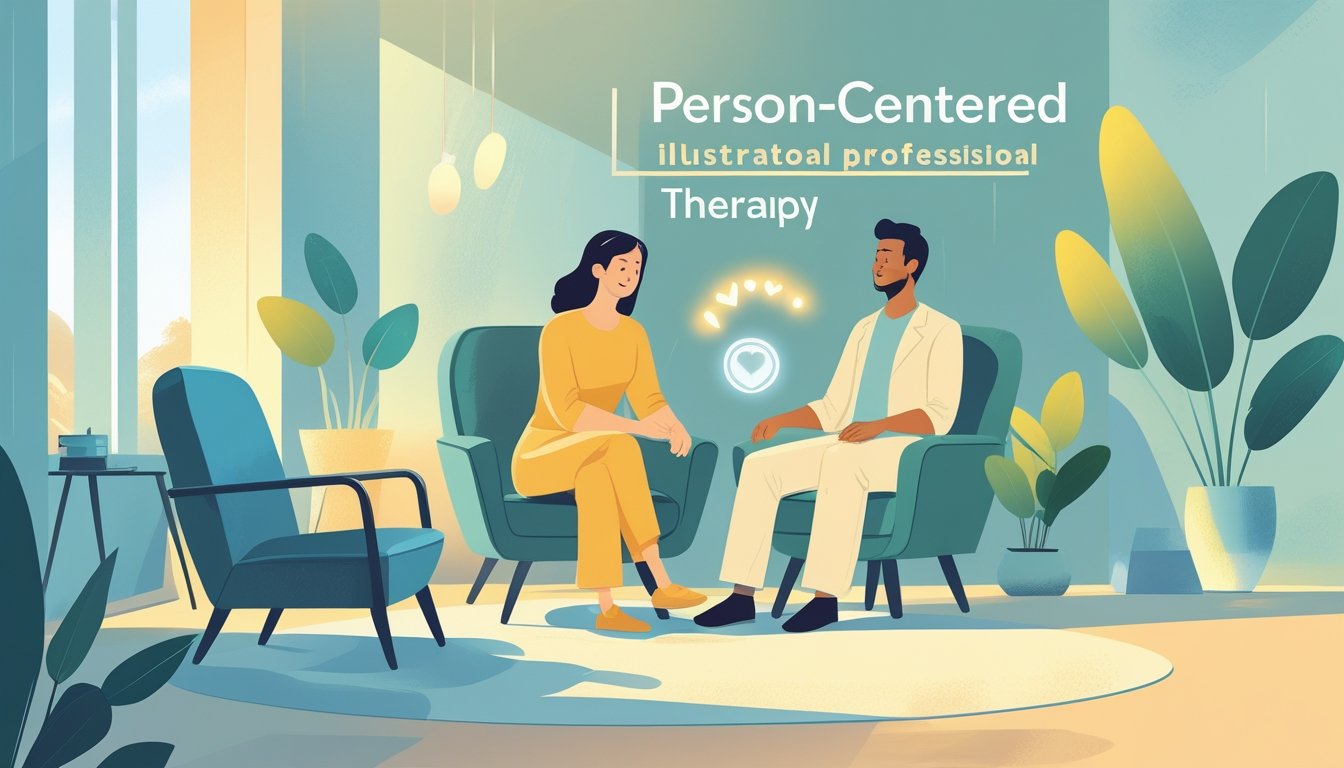
You can expect a calm, nonjudgmental space where you lead the work and the therapist listens to help you find your own answers. Person-centered therapy focuses on your experience, using empathy, acceptance, and genuine connection to help you understand yourself and grow.
This approach fits well if you face anxiety, depression, major life changes, or relationship strains and want a collaborative, respectful partnership. Tides Mental Health offers this option virtually for most people and in-person in the Chicago area if you prefer face-to-face care.
Core Principles of Person-Centered Therapy
Person-centered therapy rests on three main attitudes that shape how a therapist listens, responds, and guides. These attitudes help you feel safe, understood, and free to explore difficult feelings or life changes.
Unconditional Positive Regard
Unconditional positive regard means the therapist accepts you without judgment. They deliberately avoid criticizing your choices, thoughts, or feelings.
This creates a space where you can speak honestly about anxiety, depression, relationship problems, or major life transitions. You can test new ideas and admit mistakes without fear of disapproval.
That acceptance supports your confidence and self-worth. In couples or family sessions, the therapist still treats each person with respect while helping you notice patterns that harm relationships.
In practical terms, expect a calm, warm attitude in both virtual and in-person sessions. Tides Mental Health offers this approach across mostly virtual care, with in-person work available in Chicago.
Empathy
Empathy means the therapist tries to feel what you feel and then reflects that understanding back to you. They do more than paraphrase; they aim to grasp your emotions and context so you feel truly heard.
This helps when you’re coping with anxiety, depression, or navigating a major life change. You will often hear reflections like, “It sounds like you felt abandoned when…” which can help you name your feelings.
Naming emotions reduces their intensity and opens the door to new perspectives. Empathy also helps in couples work: a partner who feels understood is more open to change.
Therapists practicing empathy adapt whether you meet online or in person, matching tone and pacing to your needs. Tides Mental Health trains clinicians to use empathic reflection across settings.
Congruence
Congruence means the therapist is genuine and honest in the relationship. They do not act like an expert who fixes you from a distance.
Instead, they share appropriate reactions and stay real, which models healthy communication. This openness encourages you to be authentic too.
When a therapist says, “I hear you, and I don’t have all the answers,” you learn that honesty can coexist with support. That exchange matters in therapy for anxiety, depression, and relationship work, where hidden feelings often drive problems.
Congruence also sets clear boundaries and realistic goals. Whether sessions are virtual or in-person in Chicago, you should expect straightforward feedback and a reliable therapeutic frame.
Tides Mental Health emphasizes clinician sincerity to build trust and lasting change.
Key Elements of the Person-Centered Approach
This approach centers on how you experience yourself, your relationships, and your goals. It emphasizes a warm, accepting environment, a nondirective therapist role, and helping you move toward greater self-awareness and growth.
Client-Therapist Relationship
The relationship rests on three therapist qualities: empathy, unconditional positive regard, and congruence. Empathy means the therapist listens deeply and reflects your feelings and meanings without judgment.
This helps you feel truly understood and safe to explore painful thoughts about anxiety, depression, or life transitions. Unconditional positive regard means the therapist accepts you without conditions.
You can bring up fears, mistakes, or relationship struggles and still feel valued. Congruence means the therapist acts honestly and authentically, not as an expert dispensing answers.
This honest stance models openness and helps you practice self-acceptance. In practice, Tides Mental Health offers this kind of relationship in both virtual and in-person sessions in the Chicago area.
You decide the pace and focus, and the therapist follows your lead while holding a steady, accepting presence.
Non-Directive Stance
Non-directive means the therapist avoids giving direct advice or fixed solutions. Instead, they guide by asking open questions, reflecting your words, and clarifying your feelings.
This lets you explore options and discover what fits your values and life circumstances. You control session priorities.
If you bring anxiety, the therapist mirrors your experience and helps you notice patterns and choices. For couples or family work, the therapist balances multiple voices and helps each person express themselves without imposing outcomes.
For life transitions, the therapist supports your decision-making rather than prescribing steps. This stance works well in virtual formats, where sessions remain focused on your narrative.
Tides Mental Health uses non-directive methods to empower you, while offering structure when you ask for more guidance.
Self-Actualization
Self-actualization means moving toward a fuller, more authentic version of yourself. In therapy, this looks like increased self-awareness, clearer values, and actions that match who you want to be.
You learn to identify limiting beliefs and replace them with choices that reflect your true goals. Therapy focuses on practical changes: reducing depressive rumination, managing anxiety triggers, improving communication in relationships, and navigating career or family transitions.
You set small, achievable steps, test them, and adjust with therapist reflection and support. Tides Mental Health helps adults use person-centered methods to pursue these changes.
Most clients meet virtually, which lets you access consistent care from home or work. If you prefer in-person work, you can schedule sessions at the Chicago office to build the same growth through face-to-face connection.
History and Development of Person-Centered Therapy
Person-centered therapy grew from practical work with adults who face anxiety, depression, life changes, and relationship problems. It started with clear ideas about trust, empathy, and a nonjudgmental stance, and it still shapes many modern counseling practices you might use today.
Carl Rogers’ Influence
Carl Rogers developed the core ideas in the 1940s and 1950s. He argued that people have an innate drive toward growth and healing when the environment offers empathy, unconditional positive regard, and genuineness.
These three conditions form the backbone of the approach you will experience in therapy. Rogers tested his ideas in clinical settings and wrote widely on them.
His work shifted therapy away from directive techniques and toward listening and supporting your own self-direction. That change made therapy feel more collaborative and respectful of your experience.
Evolution Over Time
The approach began as “client-centered” and later became “person-centered” to emphasize the whole person beyond just symptoms. Practitioners adapted the model for group work, couples counseling, and conflict resolution.
Training programs added evidence-based practices while keeping Rogers’ relational core. Today, many therapists blend person-centered principles with other methods to treat anxiety, depression, and life transitions.
Clinics, including Tides Mental Health, offer mostly virtual sessions—about 60–70% online—with in-person options around Chicago for those who prefer face-to-face work.
Impact on Modern Psychotherapy
Person-centered therapy changed how you expect to be treated in therapy. Empathy and collaboration are now standard parts of most counseling approaches.
You can see its influence in shorter-term therapies and in how therapists prioritize your voice and goals. Research supports its effectiveness for many adults, especially for improving self-esteem and coping with depression and anxiety.
For couples and family work, the emphasis on genuine communication helps reduce conflict and build trust. If you want a supportive, nonjudgmental path, Tides Mental Health offers person-centered care tailored to your needs.
How Person-Centered Therapy Works
Person-centered therapy gives you a safe, nonjudgmental place to explore feelings. The therapist supports your choices, listens closely, and helps you find your own solutions.
Structure of Sessions
Sessions usually last 45–60 minutes and occur weekly at first. You can choose virtual or in-person; about 60–70% of clients meet online, while in-person sessions occur in the Chicago area.
Frequency may change as your needs shift. There is no set agenda the therapist follows.
You lead the conversation. If you want to focus on anxiety, depression, relationship issues, or a life change, the session centers on what matters to you that day.
Therapists avoid directing or interpreting your thoughts. Instead, they reflect what you say and ask open questions to help you clarify feelings.
Over time, this structure builds trust and lets you test new ways of thinking and acting.
Therapist’s Role
The therapist offers three core attitudes: empathy, unconditional positive regard, and genuine presence. They stay nonjudgmental and accept your experience without trying to fix or diagnose you.
They mirror and summarize your words to show understanding. This helps you hear your own thoughts more clearly and notice patterns.
The therapist may point out emotions you haven’t named yet, but they won’t impose interpretations. You remain in control of goals and pace.
The therapist supports your growth and helps you set practical steps if you ask. If you seek help for couples or family issues, the therapist creates space for each person to speak and be heard.
Client’s Experience
You do most of the talking and guide what gets explored. Many clients report feeling heard and less alone when they can speak without judgment.
That feeling often reduces shame and lowers anxiety. Expect the therapist to reflect back your feelings and restate key ideas.
This helps you organize thoughts and see choices more clearly. You may discover new self-understanding that leads to concrete changes, like trying a different approach in a relationship or testing small habits to manage depression.
If you want a provider, Tides Mental Health offers person-centered work with options for virtual care or in-person sessions in Chicago. You can start by describing your main concern—anxiety, depression, life transition, or family conflict—and the therapist will follow your lead.
Benefits of Person-Centered Therapy
Person-centered therapy helps you build confidence, understand what you feel, and set goals for change. It gives you a safe space to speak openly while a therapist listens without judgment and supports the choices you make.
Enhanced Self-Esteem
Person-centered therapy boosts your self-esteem by focusing on your strengths and choices. Your therapist shows unconditional positive regard, which means they accept your thoughts and feelings without criticism.
This acceptance helps you see your worth more clearly and reduces self-blame. You lead sessions and set the pace.
That control helps you practice decision-making and trust your own judgment. Over time, you notice small wins—handling an anxious moment, speaking up in a relationship, or completing a personal goal—which reinforce a more positive self-image.
Because the approach treats you as capable, you learn to value your opinions and reactions. This shift can lower social anxiety and improve how you present yourself at work and in relationships.
If you use Tides Mental Health, therapists tailor this process to your needs, using virtual or in-person sessions in the Chicago area.
Improved Emotional Awareness
Person-centered therapy helps you identify and name emotions you might avoid or ignore. Through reflective listening, the therapist helps you explore feelings behind actions, not just surface behavior.
You learn to spot triggers, bodily sensations, and thought patterns tied to emotions. This awareness makes anxiety and depression easier to manage.
Instead of reacting automatically, you pause and choose a response. That skill reduces panic, rumination, and impulsive decisions.
You also learn language for emotions, which improves communication with partners or family. Better emotional clarity leads to fewer misunderstandings and healthier boundaries.
Tides Mental Health offers this work mainly through virtual sessions, with in-person options available in Chicago.
Support for Personal Growth
Person-centered therapy centers your goals and values, so growth follows what matters to you. The therapist avoids telling you what to do.
Instead, they help you explore options, weigh consequences, and commit to steps you choose. This makes change more lasting.
You set practical aims—reducing daily anxiety, improving sleep, rebuilding a relationship, or navigating a life transition. The therapist uses empathy and reflection to keep you focused and accountable.
Progress often occurs in small, measurable steps you can track. This therapy suits adults facing depression, anxiety, couples or family challenges, and major life changes.
Tides Mental Health supports this work through mostly virtual care, with in-person sessions in Chicago when you prefer face-to-face contact.
Common Applications and Populations
Person-centered therapy helps you build self-awareness and make your own choices. It works well for people facing anxiety, life changes, or relationship issues and is offered mostly online with some in-person care in Chicago.
Individuals with Anxiety
Person-centered therapy gives you a calm, nonjudgmental space to talk about worry, panic, or social fears. Your therapist listens deeply and reflects your feelings so you can notice patterns and choose new responses.
Sessions focus on your present experience rather than probing past causes. You guide the pace and topics.
This matters when anxiety makes it hard to follow a strict treatment plan. The approach increases your sense of control and self-trust.
Tides Mental Health offers these sessions mainly online (about 60–70% virtual) with in-person options in Chicago (30–40%). You can use person-centered work alone or alongside skills-based methods if you need specific tools for panic or phobias.
Work with Children and Adolescents
With young clients, person-centered therapy adapts to developmental needs and uses play, drawing, or simple conversation. You, as a caregiver, may join some sessions to improve communication and support the child’s choices.
Therapists offer a warm, accepting stance so children feel safe to explore feelings like fear, sadness, or anger. This helps young people build self-expression and emotional regulation.
Tides Mental Health currently focuses mainly on adult care but plans to expand child and adolescent services. If you want in-person sessions for a child, Chicago-based appointments are available; most follow-up work can occur virtually.
Effectiveness and Research Findings
Research shows person-centered therapy helps many adults with anxiety, depression, and life transitions. Studies report steady improvements when therapists offer empathy, genuineness, and unconditional positive regard.
Clinical reviews and long-term evaluations find that person-centered approaches perform well in usual care settings. Outcome studies using measures like the CORE-OM note symptom reduction from referral to end of therapy.
Clients often name therapist warmth and trust as the most helpful parts of therapy. That fits with evidence showing relational qualities predict better outcomes across different problems and formats.
Tides Mental Health offers person-centered counseling mainly for adults, with plans to expand into child and adolescent services. About 60–70% of sessions are virtual, and 30–40% are in person, with in-person care based in the Chicago area.
Research supports using person-centered therapy alongside other approaches when needed. Combining methods can address specific symptoms while keeping the client’s goals central.
Comparison With Other Therapy Approaches
Person-centered therapy centers on your experience, emotional safety, and self-direction. It emphasizes a warm, nonjudgmental relationship where you set the pace and goals for work on anxiety, depression, life changes, and relationship issues.
Person-Centered vs. Cognitive Behavioral Therapy
Person-centered therapy lets you lead and explore feelings in a supportive atmosphere. The therapist shows empathy, genuineness, and acceptance to help you find your own solutions.
Sessions often focus on self-awareness, values, and emotional processing rather than on specific tasks. Cognitive Behavioral Therapy (CBT) is more structured and skill-focused.
CBT identifies distorted thoughts and teaches techniques—like cognitive restructuring and behavioral experiments—to change thinking and behavior quickly. CBT often uses homework and measurable goals, which can speed symptom relief for anxiety and depression.
Choose person-centered if you want a flexible, client-led space to build insight and self-trust. Choose CBT if you prefer clear strategies, step-by-step skills, and tracking progress.
Tides Mental Health offers primarily adult therapy with many virtual sessions and in-person options in Chicago to match either style.
Distinctions from Psychodynamic Therapy
Person-centered therapy keeps work in the here-and-now and trusts your capacity for growth. The therapist avoids interpretation and focuses on listening and reflecting your experience.
You drive the session, and change comes through feeling understood and accepted. Psychodynamic therapy explores unconscious patterns, early relationships, and how past events shape current behavior.
It often involves therapist interpretations, exploring defenses, and linking present problems to childhood experiences. Sessions can be longer term and more interpretive.
If you want to focus on current feelings, choices, and practical coping for life transitions or relationships, person-centered therapy gives a straightforward, collaborative approach. If you want to explore deep historical roots of your patterns, psychodynamic work aims to uncover those origins.
You can access both approaches through Tides Mental Health, with most clients choosing virtual sessions and some in-person care in Chicago.
Limitations and Considerations
Person-centered therapy works best when you can reflect and talk openly. It may feel too unstructured if you prefer clear strategies or direct guidance for problems like severe trauma or complex addiction.
This approach focuses mainly on adults. It often helps with anxiety, depression, life transitions, and couples or family issues.
If you need child or adolescent therapy, ask about providers who specialize in younger clients. You may need different methods for younger clients.
Many sessions at Tides Mental Health are virtual—about 60–70% online and 30–40% in person. If you live near Chicago, in-person care is available.
Tell your clinician if you prefer face-to-face work or a mix of formats.
Cultural differences and values can affect how well this therapy fits you. The emphasis on individual autonomy may clash with cultures that value family or community decisions.
Make sure your therapist understands and respects your background.
Person-centered therapy generally lacks structured tools like homework, behavior plans, or step-by-step techniques. You might combine it with other methods for measurable symptom change.
Ask your therapist how they track progress and adjust the plan.
Ethical and safety issues can limit this approach when you face self-harm or severe mental health crises. In those cases, your therapist should add more directive or crisis-focused care.
If you need help finding a safe, appropriate option, consider contacting Tides Mental Health for guidance.