
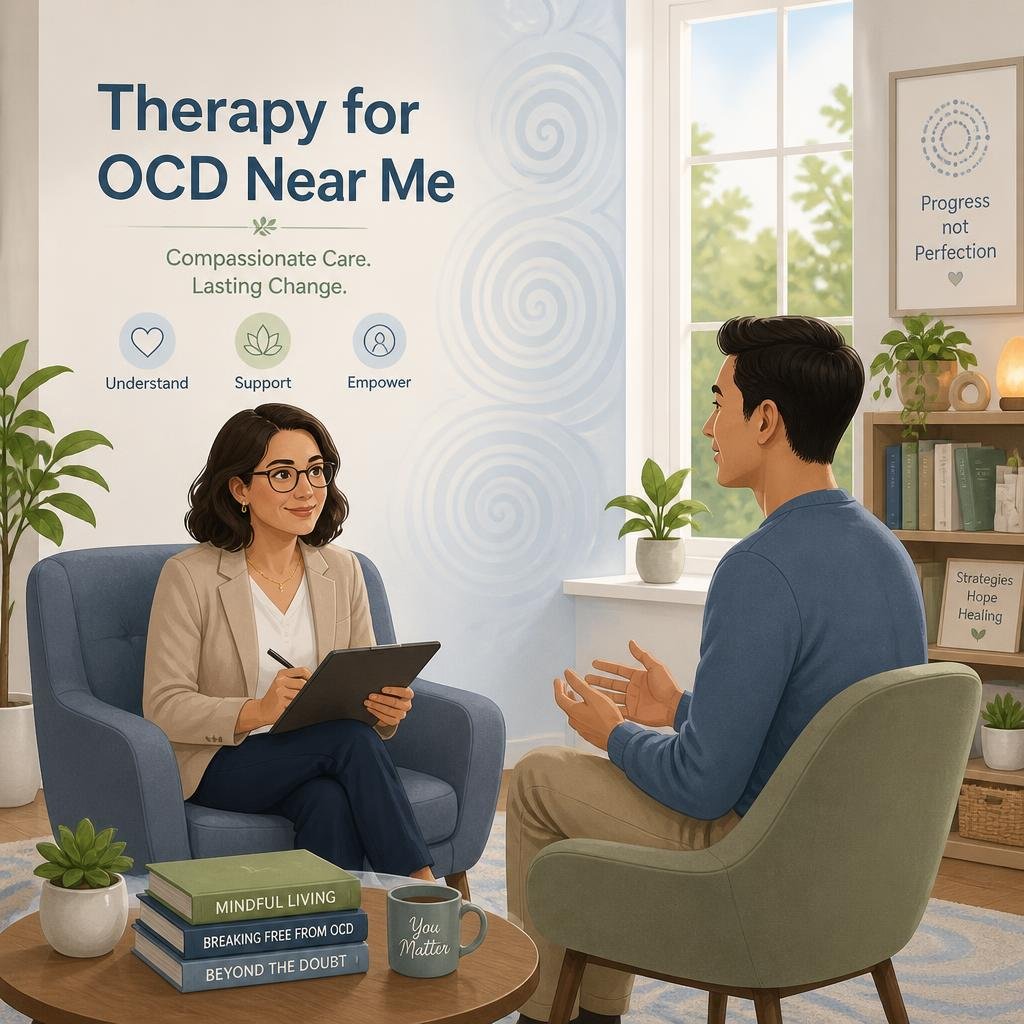
You may start your search for therapy for OCD near me by looking for a therapist who uses proven OCD methods, not just general talk therapy. The right care can make a real difference when intrusive thoughts and compulsive habits start to control your day.
The best fit is usually a licensed OCD therapist who offers evidence-based treatment, explains the plan clearly, and adjusts care to your symptoms and goals. In many cases, that can be local in-person care, online therapy, or telehealth, depending on what helps you stay consistent.
OCD treatment works best when it matches the way OCD shows up in your life. That may mean working with an OCD therapist who uses exposure and response prevention, coordinates medication management when needed, and understands how anxiety, depression, and life stress can make symptoms worse.
How To Find Therapy for OCD Near Me
A good search starts with the right credentials and the right approach. You want a therapist who treats OCD regularly, not someone who only mentions it once on a profile.
Local directories, insurance lists, and specialty OCD specialists can help you narrow your options. If you are comparing an OCD therapist, OCD therapists, or an OCD specialist, focus on training, licensing, and the treatment methods they use.
When To Choose a Local OCD Therapist
A local therapist can make sense if you want face-to-face care, need help staying grounded, or prefer a more personal connection. Local support can also help when your symptoms affect driving, routines, or leaving the house.
If you live near Chicago, an in-person option can be useful when you want regular sessions in the same office and a steady weekly routine. A licensed therapist, such as an LCSW, psychologist, or counselor with OCD training, can be a strong choice if they use evidence-based care.
When Telehealth May Be the Better Option
Telehealth can be a better fit if your schedule is full, your commute is long, or anxiety makes it harder to get to appointments. Online therapy also gives you more access to qualified OCD therapist options when local choices are limited.
For many adults, telehealth keeps care consistent. Missed sessions often slow progress, especially when you are starting OCD treatment.
What To Look for in a Qualified OCD Therapist
A qualified OCD therapist should name the methods they use and explain how they treat intrusive thoughts and compulsions. Look for someone who is licensed, has direct experience with OCD specialists, and can describe how treatment will work.
Useful signs include:
- Clear mention of ERP or CBT
- Experience with OCD, anxiety, and related disorders
- A calm, nonjudgmental style
- Willingness to explain treatment goals
- Comfort with both online therapy and in-person care
If the therapist mainly offers general counseling without OCD-specific methods, keep looking.
What Effective OCD Treatment Should Include
Effective OCD care is structured, active, and specific. It should focus on changing the cycle of obsessions and compulsions, not just talking about stress in general.
A strong plan often combines therapy for OCD, skill practice between sessions, and, in some cases, medication management. The best approach depends on symptom severity, your daily routines, and whether anxiety or depression is also present.
Why Exposure and Response Prevention Is the Gold Standard
Exposure and response prevention, often called ERP, is the core of modern OCD treatment. It helps you face feared thoughts, images, or situations in small steps while resisting the compulsions that keep OCD going.
Response prevention is the key part. If compulsions are reduced over time, your brain gets new evidence that the fear does not need to control your actions.
How CBT Supports OCD Recovery
Cognitive behavioral therapy, or CBT, helps you notice the thinking patterns that feed OCD. It can help you question overestimates of danger, perfectionism, and repeated reassurance seeking.
CBT works best when it is tied to action. For OCD, that usually means CBT plus ERP, not CBT alone.
When Medication Management May Be Part of Care
Medication management may help when OCD symptoms are severe, long lasting, or paired with depression or panic. A prescriber can review whether medication may reduce symptom intensity enough to make therapy easier.
Medication is not a replacement for therapy in most cases. It often works best as one part of a broader OCD treatment plan.
How OCD Symptoms Show Up in Adults
Obsessive-compulsive disorder can look different from person to person. Some adults have visible rituals, while others spend a lot of time doing mental checking, reviewing, or seeking reassurance.
OCD symptoms often feel exhausting and time-consuming. They can overlap with anxiety and depression, which can make the problem harder to spot at first.
Common Obsessions and Compulsions
Obsessions are unwanted thoughts, images, or urges that keep coming back. Common themes include contamination, harm, doubt, religion, morality, symmetry, and fear of making mistakes.
Compulsions are the actions or mental steps used to reduce distress. These can include washing, checking, repeating, counting, researching, confessing, or asking for reassurance.
How OCD Can Overlap With Anxiety and Depression
OCD often shows up with anxiety because the thoughts create constant tension and fear. Depression can follow when symptoms take up too much time or make you feel stuck.
A therapist should know how these conditions interact. If you are only treated for anxiety while OCD is missed, progress can be slow.
How OCD Affects Relationships and Daily Life
OCD can affect work, family time, intimacy, and routine tasks. You may avoid places, need extra time to complete tasks, or involve other people in rituals.
That pressure can strain relationships. Partners and family members may feel confused, worn out, or pulled into reassurance cycles.
How To Know if a Therapist Is a Good Fit for OCD
A good fit is more than a friendly conversation. You want a therapist who can explain OCD clearly, keep treatment focused, and work with you in a practical way.
The right OCD therapist should make you feel respected, but also challenge the habits that keep symptoms active. That balance matters.
Questions To Ask During a Consultation
Ask direct questions before you start:
- How often do you treat OCD?
- Do you use ERP?
- How do you handle mental compulsions?
- What is your approach if anxiety gets worse early in treatment?
- Are sessions available by telehealth and in person?
A qualified OCD therapist should answer without hesitation. Clear answers are a good sign.
Signs a Therapist Understands OCD Well
Good OCD therapists do not panic about intrusive thoughts. They know these thoughts are common in OCD and do not mean you want them to happen.
They also avoid giving endless reassurance. Instead, they help you build tolerance for uncertainty and reduce compulsions over time.
Red Flags To Watch for Before Starting Care
Be cautious if a therapist:
- Says OCD is just stress
- Focuses only on venting
- Does not mention ERP or CBT
- Tries to reassure you about every fear
- Seems uncomfortable with intrusive thoughts
Those signs often point to general counseling, not OCD-specific care.
Getting Diagnosed and Starting Treatment
The first step is to figure out whether your symptoms fit OCD and what else may be part of the picture. A careful evaluation helps you avoid the wrong treatment path.
From there, a therapist can build a plan that fits your symptoms, schedule, and goals. That plan should change as you improve.
Who Can Diagnose OCD
In the U.S., OCD can be diagnosed by a licensed therapist, psychologist, psychiatrist, or other qualified mental health professional within their scope of practice. If medication is part of care, a psychiatrist or other prescriber may also be involved.
A diagnosis is helpful, but you do not need to wait for a perfect label before getting help. If your OCD symptoms are disruptive, treatment can still begin.
What a First Therapy Session May Cover
Your first session often covers your symptoms, history, triggers, routines, and what you want to change. The therapist may ask how much time the rituals take and what situations you avoid.
This is also a chance to see whether the therapist feels like a match. You should leave with a basic sense of next steps.
How Treatment Plans Are Tailored Over Time
A strong therapist adjusts the plan as symptoms shift. Early goals may focus on tracking compulsions, then move into exposures, skills practice, and relapse prevention.
If anxiety, depression, couples stress, or family conflict is part of the issue, treatment should reflect that too. Your plan should fit your life, not the other way around.
Choosing Between Virtual and In-Person OCD Therapy
Both online therapy and in-person care can support OCD treatment. The better choice usually depends on your schedule, symptom severity, and comfort with the format.
In many cases, the best option is the one you can keep up with consistently. Consistency matters more than format alone.
Benefits of Online Therapy for Busy Adults
Online therapy works well if you need flexibility or want to avoid commute time. It can also make it easier to meet with a licensed therapist even when local OCD specialists are limited.
For adults balancing work, parenting, and other responsibilities, telehealth can remove a real barrier. That often makes follow-through easier.
When In-Person Support May Make Sense in Chicago
In-person sessions may make sense if you want more structure, prefer face-to-face contact, or need support with exposures that work better outside the home. If you are in the Chicago area, local care can also be useful when you want a steady office-based routine.
Some people do best with a mix. A hybrid model can support therapy for OCD while keeping scheduling manageable.
How Tides Mental Health Can Support OCD Care
Tides Mental Health offers adult therapy and counseling with a focus on anxiety, depression, life transitions, and couples or family counseling.
This can be a strong fit when OCD is part of a broader mental health picture.
You can also use Tides Mental Health as an option if you want mostly virtual care with some in-person support in Chicago.
With 60 to 70 percent virtual sessions and 30 to 40 percent in-person sessions, you can choose the format that best fits your life while working with a licensed therapist on effective OCD treatment.