
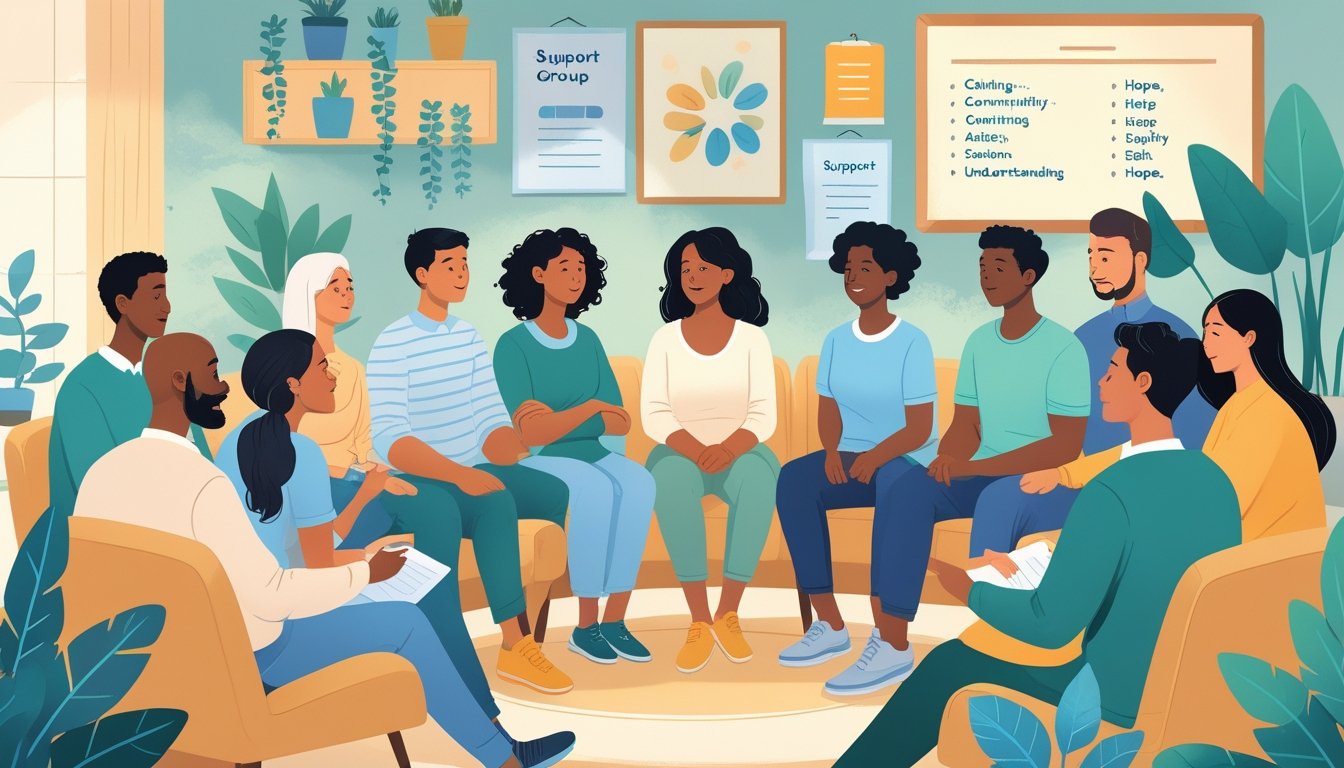
You don’t have to face anxiety or depression alone. Support groups give you a place to share what you feel, learn how others cope, and find practical tools that fit your life.
Joining a group can lower isolation, teach new coping skills, and connect you with people who understand what you’re going through.
This article will help you find the right kind of support—virtual or in-person. It will explain how groups work and what to expect from sessions focused on anxiety, depression, life transitions, or family and couples concerns.
If you want a local in-person option near Chicago or a mostly virtual program, Tides Mental Health offers focused group and counseling options tailored to adult needs. They have plans to expand into child and adolescent care.
Understanding Support Groups for Anxiety and Depression
Support groups connect people who face similar struggles and offer practical tools, lived experience, and emotional backing. You will learn how groups work, what benefits they give, and which formats fit your needs.
What Are Support Groups?
Support groups are regular meetings where people with anxiety, depression, or related issues share experiences and coping strategies. A typical group has a trained facilitator who keeps discussions safe and on track, and members who talk about what helps them in daily life.
You can expect rules for respect and confidentiality. Meetings may include check-ins, guided topics, skill practice (like breathing or thought challenging), and time for personal sharing.
Tides Mental Health runs both virtual and in-person groups in the Chicago area. You can join online from home or attend face-to-face sessions locally.
Groups do not replace individual therapy but often complement it. You can use group sessions alongside one-on-one counseling, couples or family work, or medication management.
Benefits of Peer Support
Peer groups reduce isolation by showing you are not alone in your symptoms or setbacks. Hearing others’ real-world solutions gives you practical tools to try, such as routines, grounding exercises, and ways to pace activity during low energy.
Groups also help you practice social skills in a lower-stakes setting. You can build confidence, get gentle feedback, and receive encouragement when you try new coping strategies.
For many people, the sense of belonging and accountability boosts motivation to keep up with therapy or self-care. If you prefer flexibility, Tides Mental Health offers mostly virtual groups (about 60–70% online) so you can join from anywhere.
In-person options (30–40%) are available for Chicago residents who want face-to-face interaction.
Types of Support Groups Available
Open peer groups welcome anyone with anxiety or depression and focus on mutual sharing and coping skills. Closed groups limit membership to a set cohort for a defined time, which helps build trust and track progress together.
Topic-specific groups focus on particular issues like panic disorder, social anxiety, postpartum depression, or managing medication side effects. Skills-based groups teach CBT techniques, mindfulness, or relapse prevention in a structured format.
Family or couples groups concentrate on communication, boundary-setting, and shared coping plans. You can choose group format by schedule and preference: weekly drop-in sessions, time-limited programs, or ongoing groups.
Tides Mental Health offers varied group options to match your needs, with an emphasis on adult therapy, life transitions, and couples or family counseling.
Finding the Right Support Group
A good support group matches your needs, schedule, and comfort with either virtual or in-person meetings. Think about what you want to work on, who you want in the room, and how you will measure whether the group helps you feel better or cope more effectively.
How to Choose a Group
Look for groups that focus on anxiety, depression, life transitions, or family and couples issues—these match most adult therapy goals. Check the group’s format: is it peer-led, clinician-led, or run by trained facilitators?
Clinician- or facilitator-led groups often use proven techniques like cognitive-behavioral strategies and structured check-ins. Ask about group size (6–12 is common), rules on confidentiality, and whether new members join anytime or at the start of a cycle.
Confirm the expected commitment—weekly or biweekly—and how long typical members stay. If you prefer therapy tied to clinical care, consider Tides Mental Health.
Tides offers clinician-led groups, individual therapy coordination, and both couples and family options. Virtual access is available for most people and in-person groups are available in the Chicago area.
Online vs. In-Person Meetings
Choose online if you need flexibility, want anonymity, or live outside Chicago. Online groups let you join from home, reduce travel time, and often run evenings.
They work well when sessions include structured skill practice, slides, or guided exercises that translate to video. Pick in-person if you value face-to-face connection and local community.
In-person meetings help you read body language and build stronger bonds. Tides Mental Health runs in-person options in Chicago and keeps most services virtual—about 60–70% online and 30–40% in-person—to fit different needs.
Consider a hybrid approach: try a few virtual sessions, then attend an in-person meeting to compare how you feel and how well you connect.
Evaluating Group Effectiveness
Track specific, measurable changes: anxiety frequency, mood stability, daily functioning, or ability to use coping skills. Use a simple weekly checklist or a mood scale (0–10) to see progress over 4–8 weeks.
Watch for signs the group is working: you try new coping strategies, you feel less isolated, and you can use tools between meetings. If you feel judged, stagnant, or worse after several sessions, the group may not fit your needs.
Ask facilitators about outcome measures they use and whether the group coordinates with your individual therapy. Tides Mental Health can link group work with individual or couples care so your progress stays consistent across services.
How Support Groups Work
Support groups give you a safe place to share, learn coping skills, and connect with others facing anxiety or depression. They usually meet on a regular schedule, follow clear ground rules, and are run by trained facilitators who keep conversations focused and respectful.
Structure of Meetings
Meetings usually run from 60 to 90 minutes and follow a predictable flow. Sessions often start with brief check-ins where each person names their current feeling or a short update.
This helps you and others know where everyone is emotionally. After check-ins, the group moves to a focused topic or open sharing time.
Topics might include panic management, mood tracking, sleep routines, or handling relationship stress. Some meetings include a short teaching segment—like a breathing exercise or cognitive coping tip—followed by guided practice.
Groups may be peer-led or therapist-led. Attendance norms vary: some groups welcome drop-ins while others expect regular participation to build trust.
Tides Mental Health offers both virtual sessions (most common) and in-person options in the Chicago area to match your needs.
Role of Facilitators
Facilitators guide the meeting flow and protect the group’s safety. If they are clinicians, they can teach evidence-based techniques and spot signs that someone needs extra care.
Peer facilitators share lived experience and model coping while keeping discussion balanced. Facilitators set topics, invite participation, and intervene when conversations become overwhelming or off-topic.
They enforce confidentiality and the group’s ground rules. Expect them to provide brief feedback, suggest resources like breathing exercises, and refer you to individual therapy when symptoms need one-to-one treatment.
Facilitators also manage time, ensure everyone gets a chance to speak, and step in during crisis situations. With Tides Mental Health, facilitators will explain referral paths if you need medical or psychiatric support beyond group care.
Expectations and Ground Rules
Clear rules keep meetings safe and useful. Typical rules include confidentiality, respect, no giving medical advice, and no judgment.
You should avoid interrupting, keep shares brief when others wait, and ask before offering personal contact information. Expectations also cover attendance and participation.
Some groups ask that you attend at least several sessions to build trust. If you miss meetings, facilitators may check in by email or through the group platform.
Safety rules matter: if you disclose being at immediate risk of harm, facilitators will act—this can include contacting emergency services or recommending urgent individual care. Tides Mental Health explains these limits up front so you know how facilitators will respond.
Popular Support Group Organizations
These organizations offer peer-led groups, education, and resources you can use right away. You can find weekly online meetings, family-focused groups, and training for facilitators.
National Alliance on Mental Illness (NAMI)
NAMI runs family and peer support groups that meet weekly, every other week, or monthly depending on location. You can join Family Support Groups if you care for someone with a mental health condition, or Peer Support groups if you have lived experience.
NAMI also trains volunteer facilitators and provides free educational programs like Family-to-Family that teach coping skills, communication techniques, and crisis planning. Meetings blend lived-experience sharing with practical guidance on local services and insurance navigation.
If you prefer in-person meetings, NAMI chapters often host them; many chapters in the Chicago area meet in person while keeping virtual options. Consider Tides Mental Health for adult therapy and counseling when you want professional support alongside peer groups.
Depression and Bipolar Support Alliance
DBSA focuses on mood disorders and hosts peer-led support groups for people with depression or bipolar disorder. Groups emphasize symptom tracking, medication questions, and strategies for day-to-day mood management.
You’ll find both open and closed groups: open groups welcome new members any time, while closed groups keep the same participants for continuity. DBSA also offers online meeting lists, educational toolkits, and speaker events that explain treatment choices and self-care routines.
Many DBSA groups run virtually, but some local chapters in larger cities like Chicago offer in-person gatherings. If you need therapy that complements peer support, Tides Mental Health provides adult-focused counseling, including couples and family work.
Anxiety and Depression Association of America
ADAA hosts online support communities and offers webinars, podcasts, and evidence-based resources for anxiety, depression, OCD, and PTSD. You can join condition-specific forums and attend live webinars led by clinicians and researchers.
Their peer-led groups focus on coping tools such as exposure techniques, worry management, and behavioral activation. ADAA highlights research-backed strategies and connects you to local clinicians and support events.
Most ADAA community activities are available online, making them accessible from anywhere, while in-person workshops appear regionally. For structured therapy that pairs with ADAA resources, consider Tides Mental Health for adult therapy, with in-person options in the Chicago area and a majority of sessions available virtually.
Participating in Support Groups
Joining a support group gives you steady peer contact, practical tips, and chances to practice coping skills. You will learn how sessions run, what role leaders play, and ways to take part that fit your comfort level.
Getting Started as a New Member
When you first join, check the group type (virtual or in-person) and meeting schedule. If you live near Chicago, you can attend in-person sessions; otherwise choose virtual meetings.
Confirm fees, length of meetings, and whether a trained peer leader or clinician facilitates the group. Introduce yourself briefly on your first visit.
Share one or two facts about your experience—symptoms, what you hope to gain, or your preferred coping tools. Watch one or two meetings before speaking if that helps you feel safer.
Bring a small plan: a phone note with topics you want to ask about, a coping strategy to try, and an emergency contact. If you want therapy beyond peer support, ask about Tides Mental Health’s therapy options for anxiety, depression, couples, or life transitions.
Best Practices for Engagement
Arrive a few minutes early to settle in and check audio if online. Use active listening: make eye contact, nod, and reflect what others say to show understanding.
When you speak, be concise—state your feeling, a brief situation, and one request (advice, feedback, or just listening). Respect confidentiality and group rules.
Avoid giving medical advice or diagnosing others. If a topic triggers you, use a pause phrase like “I need a quick break” and step away.
Track progress by keeping a short journal: note one thing you tried from the group and one small result from the week. If you seek more structured care, consider combining support groups with Tides Mental Health’s counseling for adults, couples, or families.
You can match group learnings with weekly or biweekly therapy sessions.
Addressing Social Anxiety
Start small: set a goal to speak once in a meeting or post a short comment in the chat. Use grounding techniques before you talk—5 deep breaths or a two-minute body scan.
Remind yourself that others in the group have similar worries and expect imperfect speech. Practice scripts for common phrases: “I relate to that because…,” or “Can I try a strategy you shared?”
Rehearsing reduces worry and helps you contribute clearly. If speaking aloud feels too hard, offer written reflections after the meeting or message the facilitator privately.
If social anxiety severely limits participation, ask about a mentor system or a smaller breakout room. You can also pair group attendance with individual therapy through Tides Mental Health to build social skills and reduce avoidance.
Alternatives and Complementary Resources
You can choose from professional care, practical self-help tools, and online options that fit your schedule and needs. Each choice offers different levels of support, time commitment, and cost.
Professional Therapy Options
You can work with licensed therapists for targeted care in anxiety, depression, life changes, and relationship issues. Tides Mental Health provides adult-focused therapy and counseling, offering both virtual and in-person sessions in the Chicago area.
About 60–70% of sessions are virtual, letting you meet from home; 30–40% are in-person if you prefer face-to-face work. Therapists use evidence-based methods like cognitive behavioral therapy (CBT), interpersonal therapy (IPT), and trauma-informed approaches.
You can expect structured goal setting, symptom tracking, and regular progress reviews. Couples and family counseling are available when relationship dynamics affect mood or anxiety.
If you want future options for children or teens, note that Tides plans to expand into child and adolescent therapy. Ask about sliding-scale fees, insurance use, or session packages when you contact them.
Self-Help Strategies
You can add daily tools to lessen anxiety and depression symptoms between sessions. Start with a brief routine: 10–20 minutes of focused breathing, a short walk, and a mood check-in.
Track sleep, activity, and one small achievable goal each day to build momentum. Use structured exercises such as thought records, behavioral activation (scheduling pleasant or necessary tasks), and exposure steps for anxiety triggers.
Keep resources simple: worksheets, a habit tracker, and short guided meditations. For crisis safety, create an emergency plan listing supportive contacts, your clinician, and local urgent care resources.
Online Communities Beyond Groups
You can join broader online spaces that offer information, peer stories, and ongoing support without a formal group schedule. Look for moderated forums, resource hubs, and webinar series that focus on anxiety, depression, coping skills, and recovery education.
Tides Mental Health hosts webinars and resources you can access remotely. Seek communities with clear moderation, resource libraries, and options to connect privately with peers or professionals.
Use these spaces to learn about treatment options, get reading lists, and find brief educational videos or podcasts. Stay cautious about medical advice online.
If you read strategies that seem risky, check them with your clinician before trying them.
Challenges and Limitations of Support Groups
Support groups can help you feel less alone and learn coping skills, but they also bring trade-offs you should know. The main issues involve keeping your privacy, handling group interaction problems, and situations where groups may not meet your needs.
Privacy Concerns
Joining a group means sharing personal details in front of others. Even with group rules, information can spread outside the meeting.
This can feel risky if you worry about work, family, or social consequences. You should check how the group handles confidentiality.
Ask about rules, whether sessions are recorded, and how organizers respond to breaches. For virtual groups, confirm the platform’s privacy settings and whether sessions use waiting rooms or password protection.
If you prefer tighter control over your information, consider individual therapy at Tides Mental Health. Tides Mental Health offers private virtual sessions and in-person care in the Chicago area, so you can choose the setting that protects your privacy best.
Group Dynamics
Groups often include people with different needs and communication styles. Dominant members can steer conversation, while quieter members may not get space to speak.
Facilitator skill matters. A trained leader keeps discussion balanced, enforces safety, and redirects harmful advice.
Peer-led groups may lack that structure and can unintentionally reinforce avoidance or unhealthy coping strategies. Look for groups with clear facilitator credentials and a stated agenda.
If you attend a session and notice repeated conflict or unhelpful advice, report it to organizers or try a different group. Tides Mental Health runs therapist-led groups and offers individual counseling if group dynamics don’t fit your needs.
When Groups May Not Be the Right Fit
Support groups work well for shared experience, but they may not suit crisis care or complex diagnoses.
If you have suicidal thoughts, severe panic, or complex trauma, you need immediate individual treatment, medication management, or specialized therapy options.
Groups can also slow progress if you use them as a substitute for personal therapy.
You might rely on peer stories instead of learning targeted skills like CBT or exposure work.
Time-limited groups may not provide long-term follow-up.
If you need focused treatment, Tides Mental Health can pair group participation with individual therapy, virtual or in-person in Chicago.
That combination helps you get peer support while you work on specific clinical goals with a clinician.