
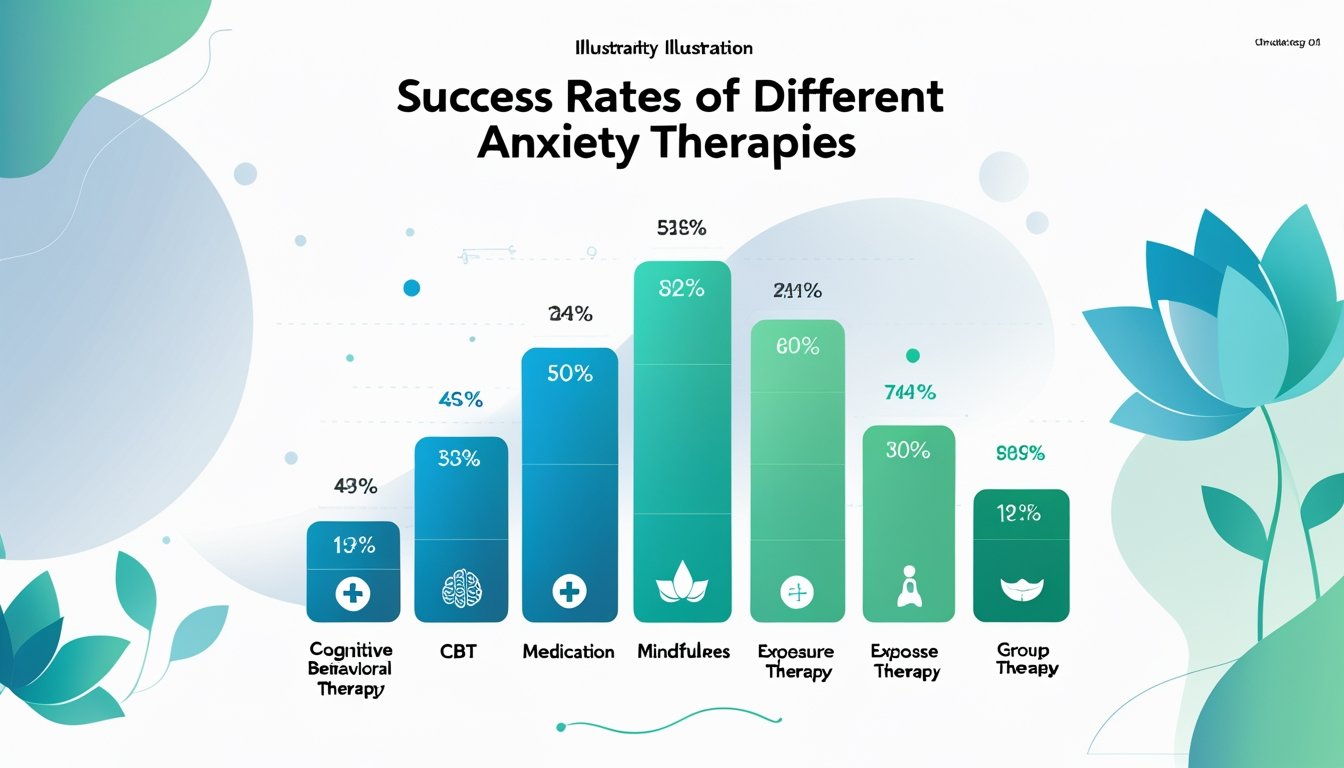
You want to know which anxiety therapies work and how likely they are to help you. Many people see meaningful improvement from therapy—CBT and exposure-based approaches often help a large share of clients, while medication and mindfulness can boost outcomes when used with therapy.
This article will walk you through success rates for different treatments. It will explain how factors like diagnosis and delivery (virtual or in-person) affect results, and point to practical options you can pursue now.
If you’re weighing choices for anxiety, depression, life transitions, or couple and family concerns, you’ll find clear data and guidance to help you decide what to try next.
Overview of Anxiety Therapies
You will find clear options for treating anxiety. Practical factors change how well therapy works, and results can vary by time frame.
Treatments include structured talk therapies, medication, and skill-based approaches you can use in daily life.
Types of Anxiety Treatments
Cognitive Behavioral Therapy (CBT) helps you identify and change anxious thoughts and behaviors. It often uses exposure work for phobias and panic and typically runs 8–20 sessions.
CBT has strong evidence for many anxiety disorders.
Medication options include SSRIs and SNRIs. These work on brain chemistry to lower symptoms and often take 4–12 weeks to show full effect.
You may combine medication with therapy for faster, larger gains.
Other therapies include Acceptance and Commitment Therapy (ACT), mindfulness-based therapy, and supportive counseling for life transitions or relationship stress. ACT focuses on values and acceptance.
Mindfulness teaches present-moment skills you can practice daily.
Practical delivery matters. Tides Mental Health offers both virtual (60–70% of sessions) and in-person care in the Chicago area (30–40% of sessions).
You can choose the format that fits your schedule and comfort.
Factors Influencing Therapy Outcomes
Your diagnosis and symptom severity shape outcomes. Specific phobias often respond faster than generalized anxiety.
More severe or long-standing symptoms usually need more sessions and combined approaches.
Therapist skill and fit matter a lot. You do better when your therapist uses evidence-based methods and you feel heard.
Track progress with clear goals and regular measurements, like symptom scales.
Your engagement changes results. Regular homework, consistent attendance, and applying skills between sessions speed improvement.
Social supports, life stressors, and medication adherence also affect how well therapy works.
Access and delivery format influence outcomes. Virtual therapy can match in-person results for many people and increases access.
If you prefer face-to-face work, Tides Mental Health offers Chicago-based in-person care.
Short-Term vs. Long-Term Effectiveness
Short-term gains often appear within weeks for some therapies. CBT and medication can cut symptoms significantly in 8–12 weeks for many people.
Exposure-based work can produce quick drops in specific fears.
Long-term effects depend on practice and maintenance. Skills learned in therapy—like thought restructuring, exposure, or mindfulness—help prevent relapse when you keep using them.
Booster sessions or ongoing check-ins can sustain gains.
Some approaches show durable benefits in research, especially CBT. Combining therapy with medication often gives faster relief.
Continuing therapy or periodic boosters supports lasting change.
Cognitive Behavioral Therapy Success Rates
CBT often reduces anxiety symptoms, improves daily functioning, and lowers the chance of relapse. You can expect measurable symptom drops, faster coping skill gains, and clear treatment milestones with CBT delivered in structured sessions.
Efficacy in Generalized Anxiety Disorder
CBT for generalized anxiety disorder (GAD) typically uses worry-focused techniques, cognitive restructuring, and behavioral experiments. Studies show many adults experience meaningful drops in worry and anxiety scores after 12–16 weekly sessions.
You can see symptom reduction by session 6 to 12, with roughly half of patients reaching remission or large clinical improvement in controlled trials. Progress often shows on standardized scales like the GAD-7.
Treatment works best when you practice skills between sessions. Tides Mental Health offers both virtual and in-person Chicago-area appointments, letting you continue homework and exposure tasks from home.
Effectiveness for Panic Disorder
CBT for panic disorder focuses on interoceptive exposure, breathing retraining, and correcting catastrophic thoughts about sensations. Many clinical trials report sharp drops in panic frequency and avoidance within 8–12 sessions.
You may notice fewer panic attacks and less fear of bodily symptoms after systematic exposure exercises. Controlled studies often find that 50% or more of patients reach remission criteria, with continued benefit at follow-up.
Relapse risk declines when you keep practicing exposure and use relapse-prevention plans. Tides Mental Health can guide you through virtual interoceptive exercises and in-person sessions to practice exposure safely in Chicago clinics.
Outcomes in Social Anxiety Disorder
CBT for social anxiety centers on exposure to feared social situations and cognitive work on negative self-beliefs. Typical courses last 12–20 sessions and show strong improvements in social avoidance and distress.
Clinical trials find substantial response rates; many people report meaningful drops in social fear and better workplace or school functioning. Gains often appear gradually as you complete exposure hierarchies and build social skills.
Combining group-format or individual CBT increases practice chances. You can use Tides Mental Health’s virtual sessions to rehearse skills and in-person sessions in Chicago for real-world exposures when you’re ready.
Success Rates of Exposure Therapy
Exposure therapy often reduces fear and avoidance by guiding you to face feared situations or thoughts in a controlled way. It shows strong effects for specific phobias, meaningful improvement for OCD, and solid benefits for many people with PTSD.
Impact on Phobias
Exposure therapy produces high success rates for specific phobias. Studies report success in 80–90% of cases, often after only a few sessions, when treatment is focused and repeated exposures are used.
You usually work through a hierarchy of feared situations, starting with easier steps and moving to harder ones.
Treatment can be done in vivo (real-life) or via imaginal or virtual methods. Many people regain normal functioning quickly and report large drops in avoidance and panic.
Tides Mental Health offers both virtual sessions and in-person care in the Chicago area if you prefer face-to-face work.
Progress in Obsessive-Compulsive Disorder
For OCD, exposure with response prevention (ERP) is the main evidence-based approach and gives substantial symptom reduction for many people. Typical outcomes show large decreases in compulsions and obsessions, though full remission is less common than for simple phobias.
ERP requires repeated, often challenging exposures while you resist rituals. Progress can take weeks to months and benefits grow with adherence.
Tides Mental Health provides ERP-focused treatment via virtual appointments and in-person therapy in Chicago to fit your needs.
Results for Post-Traumatic Stress Disorder
Exposure-based treatments for PTSD—using imaginal and/or in vivo exposure—produce meaningful reductions in re-experiencing, avoidance, and hyperarousal for many patients. Meta-analyses find exposure is more effective than waitlist and some control treatments, with moderate to large effect sizes.
Treatment length varies; some people see major gains after several months. Predictors of better response include stronger engagement in therapy and lower avoidance.
You can access exposure-based PTSD care through virtual sessions or in-person appointments with Tides Mental Health in Chicago.
Medication vs. Psychotherapy Outcomes
Medication and psychotherapy each change anxiety symptoms in different ways. Medication tends to reduce symptoms faster, while psychotherapy builds long-term skills to prevent relapse.
Comparative Recovery Rates
Studies show psychotherapy, especially cognitive-behavioral therapy (CBT), often matches or exceeds medication for many anxiety disorders. Recovery rates vary by disorder and study design, but you can expect substantial improvement with regular CBT delivered over weeks to months.
Medications such as SSRIs and SNRIs often reduce symptoms more quickly, within 4–8 weeks, which can help you function while learning therapy skills.
Effect sizes differ: psychotherapy usually shows durable gains after treatment ends. Medication may require ongoing use to maintain benefit.
If you prefer fewer side effects and lasting skill-building, therapy may be better. If you need faster symptom control or have severe symptoms, starting medication can be reasonable while you begin therapy.
Combination Treatment Success
Combining medication and psychotherapy often gives the fastest symptom relief and strong short-term recovery rates. Research finds that combined care can be particularly helpful when anxiety is severe, when you have co-occurring depression, or when rapid symptom reduction is critical for safety or functioning.
Practical points to consider:
- Start medication to reduce acute symptoms, then add CBT to teach coping skills.
- Some people get no added benefit from meds once CBT has taken effect, while others do better with both.
- Tides Mental Health offers combined virtual and in-person plans (Chicago-area in-person) so you can get medication management plus therapy in a coordinated way.
Mindfulness-Based Interventions
Mindfulness programs teach you to notice thoughts, body sensations, and emotions without judgment. Many adults use these programs to reduce anxiety, improve attention, and learn coping skills that fit daily life.
Success in Treating Anxiety Symptoms
Mindfulness-based programs like MBSR and MBCT often lower anxiety scores in adults with generalized anxiety, social anxiety, panic, and PTSD. Studies show moderate reductions in worry and physiological reactivity when you practice guided meditation, breathing exercises, and body scans regularly.
You typically attend 8 weekly sessions and do daily home practice. That structure helps you build skills in attention control and acceptance, which reduces avoidance and rumination.
Tides Mental Health offers these programs virtually and in-person in Chicago, so you can choose what fits your schedule. Expect gradual symptom change over weeks rather than immediate relief.
Sustaining Long-Term Benefits
Long-term gains depend on continued practice and follow-up. People who keep a simple daily habit — even 10–20 minutes — show better relapse prevention for anxiety and lower depressive symptoms over months to years.
Booster sessions or group follow-ups help maintain motivation and skill use. If you stop practicing, benefits often decrease.
Tides Mental Health supports sustained practice through virtual check-ins and periodic in-person workshops in Chicago, which helps you keep progress steady and reduces the chance of symptom return.
Alternative and Complementary Approaches
These options add tools you can use alongside therapy or medication. They focus on changing how you relate to thoughts, managing bodily symptoms, and building skills you can practice at home or in sessions.
Acceptance and Commitment Therapy Results
Acceptance and Commitment Therapy (ACT) teaches you to accept uncomfortable thoughts and feelings while committing to actions that match your values. Research shows ACT reduces anxiety by increasing psychological flexibility—your ability to act despite fear.
You can expect decreases in worry, avoidance, and panic symptoms over weeks to months with regular practice.
How ACT works for you:
- Skills taught: mindfulness, defusion (stepping back from thoughts), values clarification, and committed action.
- Typical format: weekly sessions with homework exercises; both virtual and in-person formats work well.
- Effect size: ACT often matches CBT for many anxiety conditions, and helps when avoidance and inflexibility keep anxiety going.
Tides Mental Health offers ACT in both virtual sessions (most common) and in-person in Chicago. You can use ACT alone or with medication and other therapies to target persistent anxiety.
Biofeedback and Relaxation Techniques
Biofeedback trains you to notice and control physical signs of anxiety, like heart rate and muscle tension, using sensors and real-time feedback. Relaxation techniques include deep breathing, progressive muscle relaxation, and guided imagery.
These methods reduce the body’s arousal and give you skills to lower anxiety during triggers.
Key points for using them:
- What you learn: recognize early physical signs and apply a chosen relaxation skill immediately.
- Formats: short practice sessions at home, plus guided biofeedback with a clinician for 4–10 sessions to learn control.
- Benefits: quick symptom relief for panic and somatic anxiety; best when paired with therapy for long-term change.
Tides Mental Health provides virtual instruction and in-person biofeedback training in Chicago. You can combine these techniques with ACT or CBT to reduce both physical symptoms and anxious thoughts.
Demographic and Individual Differences
Different factors like age, gender, and cultural background shape how well anxiety therapies work. Your age and gender can change which treatments fit you best, and cultural context affects your access, trust, and how therapy is delivered.
Age and Gender Variations
Younger adults often respond well to short, skills-focused therapies such as cognitive behavioral therapy (CBT) and digital or blended care. Older adults may need more time to adapt to digital tools; they often prefer steady, in-person sessions and benefit from therapies that address medical and cognitive issues alongside anxiety.
Women report higher rates of anxiety and are more likely to seek treatment, which can increase measured success rates. Men may underreport symptoms and delay help, reducing observed outcomes.
Pregnancy, menopause, and hormonal cycles can change treatment needs for women. Tailor therapy length, pacing, and homework to your life stage.
At Tides Mental Health, you can choose virtual sessions or Chicago-area in-person care to match your comfort and access needs.
Cultural Influences on Outcomes
Your cultural background affects how you describe symptoms and whether you view therapy as acceptable. Stigma, language barriers, and differing beliefs about mental health can lower engagement and completion rates.
Therapists who use culturally adapted approaches—like translating materials, including family when appropriate, and respecting spiritual or community practices—see better outcomes.
Minority groups often face access barriers such as cost and fewer local providers. You may do better with therapists who understand your cultural norms and values.
Tides Mental Health offers culturally aware therapists and mostly virtual options, which can reduce travel barriers and improve attendance for many communities.
Measuring Therapy Success
Measuring therapy success looks at real changes in your symptoms, daily functioning, and goals. You want clear numbers, reliable tests, and definitions that match your recovery goals.
Assessment Tools for Anxiety Improvement
Clinicians use standardized tools to track anxiety levels over time. Common measures include GAD-7 for generalized anxiety and panic symptom checklists for panic disorder.
These tools give you a score at each visit so you and your therapist can see progress. Clinicians also use session-by-session measures like brief questionnaires or mood diaries.
These capture short-term changes and guide session focus. Objective data can include sleep logs and activity levels if anxiety affects daily routines.
Expect providers to combine self-reports with clinical interviews. At Tides Mental Health, therapists compare baseline scores to ongoing scores and share results with you.
Both virtual (60–70% of sessions) and in-person (Chicago area) formats support regular measurement.
Defining Remission and Recovery
Remission means your symptoms drop below a clinical threshold on standardized tests. For example, a GAD-7 score moving from 15 (moderate) to under 5 often indicates remission.
Clinicians require sustained low scores across several assessments to confirm this. Recovery goes further: it means you regain daily functioning and meet personal life goals.
You might return to work tasks, social activities, or reduced medication use. Recovery often combines symptom measures, therapist judgment, and your self-report about functioning.
Reliable improvement is another term clinicians use. It means change exceeds measurement error and reflects true symptom change.
Barriers to Successful Outcomes
You may face practical barriers that slow progress. Cost, limited insurance coverage, and time constraints make regular sessions hard to keep.
Travel and work schedules also reduce consistency. Stigma and personal beliefs can block help.
You might doubt therapy’s value or worry about being judged. Those doubts often lower engagement and hope.
Therapy fit matters a lot. If your therapist’s style or experience doesn’t match your needs, progress can stall.
A weak therapeutic relationship reduces motivation and skill use between sessions. Treatment features can help or hinder you.
Highly structured approaches like CBT work well for many, but they may feel rigid to others. Severity and complexity of symptoms—such as co-occurring depression or trauma—often require longer or combined treatments.
System-level barriers exist too. Access to evidence-based therapies is limited in some areas, and waitlists can be long.
Many barriers stem from provider shortages and uneven training in community settings. Modes of care affect outcomes.
You can use virtual or in-person sessions; each has pros and cons. Tides Mental Health offers both options, with most care delivered virtually (about 60–70%) and in-person services available in the Chicago area (about 30–40%).
You can reduce barriers by advocating for your needs. Ask about treatment type, therapist experience, session format, and insurance options.
Keeping clear goals and committing to homework between sessions increases the chance of meaningful change.
Recent Advances and Future Directions
New treatments blend established approaches like CBT with innovations in medication and brain stimulation. You may see therapies that target different brain systems, such as glutamate pathways, or use transcranial magnetic stimulation (TMS) for stubborn anxiety.
Digital care keeps growing. About 60–70% of sessions now occur virtually, which makes accessing therapy easier if you live outside Chicago.
You can still choose in-person care. Our Chicago-based clinics offer 30–40% of sessions face-to-face.
Precision medicine and neuroscience aim to match treatments to you. Researchers study biomarkers and brain activity to predict which therapy will work best for each person.
Therapy types keep improving. CBT remains a top choice, but newer modalities—like mindfulness-based programs and acceptance approaches—show promise when combined with medication or neuromodulation.
If you need help now, Tides Mental Health offers adult therapy and counseling focused on anxiety, depression, life transitions, and couples or family work. You can expect mostly virtual options plus in-person care in the Chicago area.