
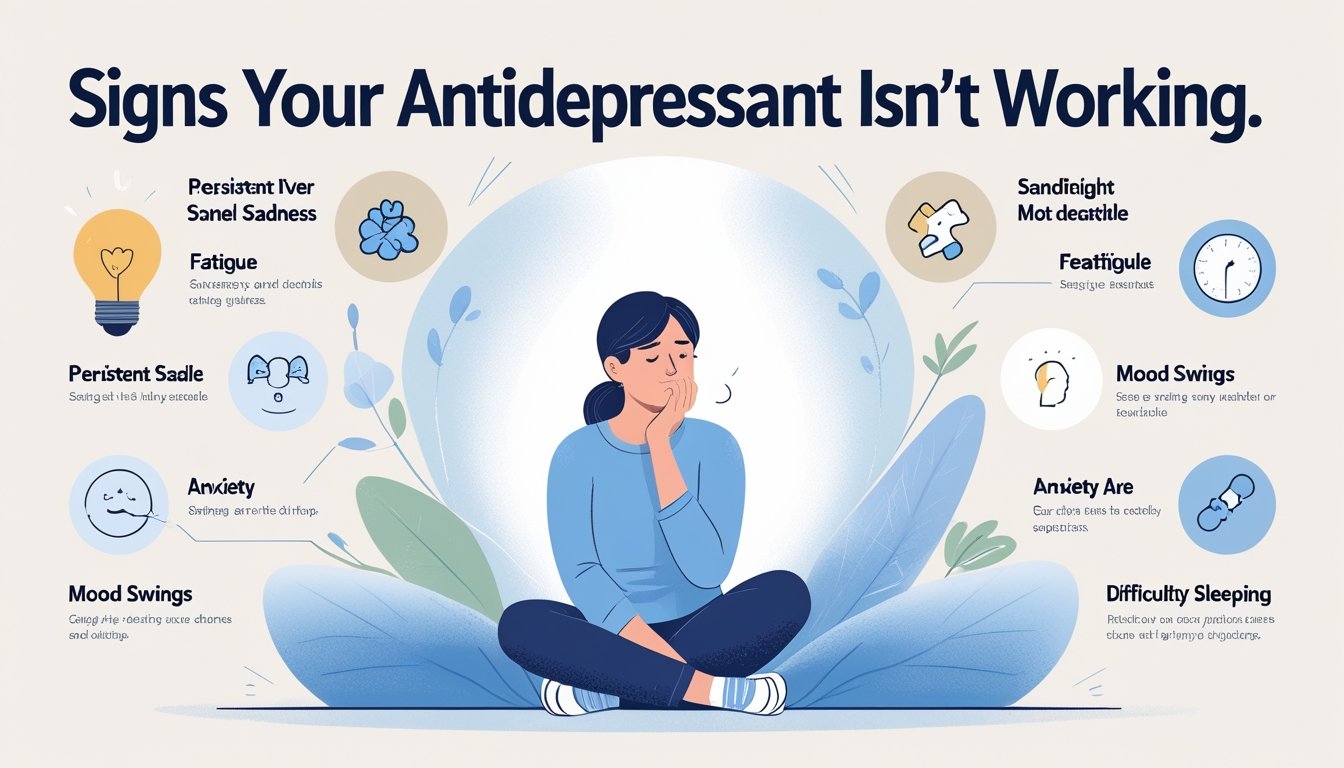
If your mood, sleep, energy, or daily habits haven’t improved after several weeks on medication, that’s a clear sign your antidepressant may not be helping.
If your core symptoms keep returning, get worse, or you notice new troubling side effects, that likely means it’s time to revisit your treatment plan.
You will learn how to spot physical, emotional, and behavioral warning signs that a medication isn’t working, when to contact a clinician, and what factors can reduce a drug’s effectiveness.
Tides Mental Health can help you explore next steps, whether you prefer virtual sessions or in-person care in the Chicago area.
Recognizing Ineffective Antidepressant Symptoms
You should watch for clear signs that your medication isn’t helping.
Look for ongoing low mood, rising anxiety, trouble with daily tasks, or a steady loss of interest in things you used to care about.
Persistent Low Mood
If you still feel sad, empty, or hopeless most days after 6–8 weeks on a steady dose, that is a key sign the antidepressant may not be working.
Track how many days each week you feel down. If the number stays high or increases, share that with your prescriber.
Notice changes in sleep, appetite, and energy that match the low mood.
Waking up early, losing weight, or feeling exhausted without reason are important details to report. Be specific: note times, duration, and any triggers.
If thoughts of self-harm or suicide appear or get worse, seek help immediately.
Call emergency services or a crisis line, and contact your provider right away.
Tides Mental Health can help you access urgent care and adjust treatment if needed.
Ongoing Anxiety or Irritability
Antidepressants should reduce anxiety for many people.
If you still feel tense, panicked, or overly restless most days, your medication may be insufficient.
Track panic attacks, racing thoughts, or constant worry, and share that record with your clinician.
Irritability, frequent anger, or snapping at others can signal poor response.
Note context and frequency—work stress, family triggers, or times of day when symptoms spike.
This helps your provider decide if dose changes, a different drug, or therapy may help.
Medication can sometimes increase agitation early on.
If agitation is severe or new, contact your prescriber.
Tides Mental Health offers virtual and Chicago-area in-person visits to review symptoms and plan next steps.
No Improvement in Daily Functioning
Pay attention to daily tasks you could manage before: going to work, caring for yourself, keeping up with chores, or social plans.
If these tasks stay hard or get worse after adequate time on medication, that suggests limited benefit.
Use a simple checklist each day for activities like showering, meal prep, arriving on time, or concentrating at work.
If your checklist rarely shows improvement, bring it to your appointment.
Concrete examples make it easier for clinicians to adjust treatment.
Work and relationship problems tied to poor functioning matter.
Tell your provider about missed work, conflicts at home, or lost motivation for responsibilities.
Tides Mental Health can help with medication review and practical coping strategies through therapy.
Lack of Interest or Motivation
A key sign of poor response is that hobbies and relationships feel flat or unimportant.
If you no longer enjoy activities you once did, or you cancel plans often, this emotional blunting needs attention.
Track how often you try new activities or follow through on plans.
If attempts drop steadily and you feel detached, note the timing and any side effects you’ve had.
Some antidepressants can cause blunting, and your clinician may offer alternatives.
Motivation affects self-care too.
If you stop exercising, skip meals, or neglect hygiene, document these changes.
Tides Mental Health provides therapy and medication review to address loss of interest and to plan steps that fit your life.
Physical And Emotional Warning Signs
You may notice changes in sleep, appetite, energy, or mood that point to a medicine that isn’t helping.
These changes can be gradual or sudden and often affect daily tasks, work, and relationships.
Disrupted Sleep Patterns
If you wake up before dawn, toss and turn most nights, or can’t fall asleep for hours, your antidepressant might be causing or failing to treat insomnia.
Some antidepressants initially worsen sleep; others help.
Track how many nights you sleep, how long it takes to fall asleep, and whether you wake feeling rested.
Nightmares, frequent early awakenings, or new daytime drowsiness are also important.
Write down any changes and share them with your prescriber.
You may need a dose change, timing adjustment, or a different medication.
Tides Mental Health offers virtual and in-person appointments in the Chicago area to review sleep problems and adjust treatment.
Unchanged Appetite or Weight
If your appetite and weight stay the same despite feeling more depressed, this can signal that the medication isn’t working.
Some people gain weight; others lose it.
What matters is a clear mismatch between your mood improvement and physical changes.
Notice sudden increases or drops in appetite, cravings, or unplanned weight change of more than a few pounds in weeks.
Track meals, portion sizes, and weight weekly.
Discuss patterns with your clinician so they can evaluate side effects or a needed medication switch.
Tides Mental Health can help you track these symptoms and plan next steps.
Increased Fatigue
Feeling more tired than usual or struggling to get out of bed most mornings can mean your antidepressant isn’t effective.
Watch for new daytime sleepiness, slowed thinking, or decreased motivation that interferes with work, family, or your routine.
Differentiate medication-related fatigue from depression-related tiredness by noting timing.
If fatigue began or intensified after a dose change, mention that.
Your clinician may lower the dose, change the timing, or try a different drug.
Tides Mental Health clinicians can assess fatigue through virtual sessions or in-person visits in Chicago.
Intensified Feelings of Hopelessness
If feelings of worthlessness, despair, or hopelessness grow stronger or return after initial relief, treat this as a warning sign.
Suicidal thoughts or planning require immediate contact with your prescriber or emergency services.
Keep a daily log of mood, thoughts, and any suicidal ideas.
Note if hopelessness spikes at specific times or after taking medication.
Your clinician may need to change treatment quickly.
You can schedule a rapid follow-up with Tides Mental Health for urgent medication review and safety planning.
New Or Worsening Side Effects
You may notice new or worse symptoms after starting or changing an antidepressant.
Watch for physical signs, changes in how you react to the drug, and clear shifts in mood that affect daily life.
Introduction of Unusual Symptoms
If you start having symptoms that you did not have before treatment, tell your clinician right away.
These can include sudden dizziness, persistent nausea, shaking, or unusual sweating that does not match other illnesses.
Pay attention to any new changes in sleep or appetite.
Trouble sleeping, nightmares, or a big drop or rise in appetite can signal the medication is not a good fit.
Keep a short daily log of when symptoms happen and how long they last to share at appointments.
Some rare but serious reactions, like severe agitation, confusion, or signs of serotonin syndrome (high fever, fast heartbeat, muscle stiffness), need urgent care.
If you experience these, seek immediate medical help.
Heightened Sensitivity to Medication
Heightened sensitivity means smaller doses cause strong effects or side effects get worse quickly.
You might feel overly emotional, irritable, or dizzy after just one or two doses.
This can happen when a medication interacts with another drug you take or when your body processes the drug differently.
Tell your prescriber about all medicines, supplements, and herbal products you use.
Age, liver function, and other health conditions can change how you handle drugs.
Your clinician might lower the dose or switch medications if sensitivity continues.
Pay special attention when you start a second medication or stop another one.
Even common cold medicines, some blood pressure drugs, or pain relievers can change antidepressant levels.
If you see sudden stronger side effects after adding or stopping something, contact your clinician.
Physical Discomforts
Common physical side effects include nausea, headaches, sexual problems, and mild tremors.
These may ease over two to six weeks, but if they persist or worsen, your medication might not be right for you.
Record how often these discomforts occur and how they impact daily tasks, like work or relationships.
For example, ongoing sexual dysfunction or constant fatigue can harm mood and cause you to stop taking the medicine.
If side effects limit your ability to work, care for family, or sleep, ask your clinician about dose adjustment, switching meds, or symptom-targeted treatments.
Tides Mental Health can help you review options and create a plan that fits your life, including virtual visits or in-person care in the Chicago area.
Unexplained Mood Changes
Worsening or new mood symptoms can mean the antidepressant is not working.
Watch for increased anxiety, sudden anger, panic attacks, or feelings of emptiness that are different from past episodes.
Also watch for sudden increases in suicidal thoughts, especially in the first few weeks or after a dose change.
This risk is higher for some people.
If you have new or worsening thoughts of harming yourself, call emergency services or a crisis line immediately.
Talk with your clinician when mood swings become more frequent or when you feel numb and disconnected.
Therapy plus medication adjustments often helps more than medication changes alone.
Tides Mental Health offers psychotherapy focused on anxiety, depression, life transitions, and couples or family issues, with most sessions available virtually and in-person care in Chicago.
Plateauing Progress Over Time
You may notice early gains that slow or stop later.
The next parts describe common patterns: an early lift that levels off, symptoms that come back after initial relief, and when you don’t reach the goals you and your clinician set.
Initial Response Followed by Stagnation
You may feel better after a few weeks, then improvement slows or stops.
This can happen with antidepressants that helped your sleep or appetite first but left mood symptoms stuck.
Track what improved and what did not.
Note dates, symptom changes, and any side effects so your clinician can see the pattern.
Biological tolerance, dose issues, or an incomplete treatment plan (no therapy or lifestyle support) often cause stagnation.
You can discuss options like dose adjustment, switching medications, or adding psychotherapy.
Tides Mental Health offers virtual and Chicago-area in-person sessions to help review progress and tweak treatment plans.
Action steps you can take now:
- Keep a symptom diary for 2–4 weeks.
- Share specific examples with your clinician (days you felt worse or better).
- Ask about combining therapy with medication for deeper gains.
Symptoms Returning After Early Relief
Early relief sometimes gives a false sense of recovery.
You might feel calmer for a month, then anxiety or low mood reappears.
Returning symptoms often show as shorter good days, renewed sleep trouble, irritability, or loss of interest in activities you recently enjoyed.
Look for patterns tied to stress, medication timing, or missed doses.
Report any recurrence promptly—especially if suicidal thoughts reappear.
Tides Mental Health can help you assess whether symptoms are relapse, withdrawal, or drug tolerance.
Adjustments might include a different antidepressant class, adding psychotherapy, or brief symptom-focused interventions.
Keep a simple checklist:
- When did symptoms return?
- What changed in routine, sleep, or stress?
- Any new medications or substances?
Failure to Reach Treatment Goals
You and your clinician likely set specific goals—sleeping 6–8 hours, returning to work, or enjoying hobbies.
If you’re not meeting these goals after several months, the medication may not be doing enough on its own.
Identify which goals remain unmet and which improved.
Discuss measurable targets at your next visit.
You might need a medication change, combined therapy, or more structured behavioral plans.
Tides Mental Health provides goal-focused therapy that pairs with medication management, offered mostly virtually with in-person care in Chicago.
Ask for a clear timeline and small, trackable steps so you know whether the plan is working.
Behavioral Changes And Daily Impact
You may notice specific shifts in how you act, relate to others, and manage daily tasks. These changes can show up at home, work, or in social life and often point to whether your treatment needs review.
Difficulty Maintaining Relationships
You might argue more with partners, family, or close friends even over small things. Irritability, sudden mood swings, or a flat emotional response can make it hard to connect or resolve conflicts.
When you stop sharing feelings or cancel plans often, loved ones can feel shut out or confused. Look for patterns: repeated fights, growing distance, or others saying you seem “different” or “not yourself.”
If you rely on criticism or withdrawal to cope, your mood may not be improving. Tides Mental Health offers counseling that focuses on communication skills, emotion regulation, and rebuilding trust.
You can access most services virtually, or schedule an in-person session in the Chicago area.
Problems at Work or School
You might miss deadlines, make more mistakes, or struggle to focus during meetings and classes. Fatigue, slowed thinking, or sudden worry can cut your productivity and raise stress with supervisors or teachers.
If you once handled your workload but now feel overwhelmed by routine tasks, that change matters. Track concrete signs: increased absences, poor performance reviews, or feedback about decreased engagement.
These are not just low energy — they affect your standing and future opportunities. Tides Mental Health provides targeted strategies for concentration, time management, and coping with performance anxiety through virtual therapy and local in-person care.
Social Withdrawal
You may stop attending events, avoid friends, or decline invitations more than usual. Pulling back from hobbies, skipping group activities, and feeling exhausted after short social interactions are common signs.
Notice if you cancel repeatedly, prefer solitude even when lonely, or feel too anxious to leave home. These behaviors often signal that your medication isn’t fully helping your daily functioning.
Tides Mental Health can help you reconnect through paced exposure, social skills work, and supportive counseling delivered mostly online with in-person options in Chicago.
When To Seek Professional Help
If your mood, sleep, or daily functioning get worse, act quickly. Get help when symptoms stop improving, you have harmful thoughts, or side effects make life harder.
Recognizing Red Flags
Watch for sudden changes in mood or behavior that feel dangerous or out of character. If you have new or increasing thoughts of hurting yourself or others, call emergency services or go to the nearest ER right away.
Suicidal thinking, severe panic attacks, psychosis, or an inability to care for yourself are urgent signs. Also note steady worsening over weeks despite taking medication as prescribed.
Markers include losing interest in daily activities, severe insomnia or sleeping all day, sharp weight change, or alcohol/drug misuse. Track these in a simple list so you can show your provider exact dates and examples.
If side effects like extreme agitation, uncontrollable restlessness, or severe nausea interfere with work or safety, seek immediate medical advice. Don’t stop medication suddenly; contact your prescriber or a clinic such as Tides Mental Health for guidance.
Communicating Openly With Your Provider
Be direct and specific when you speak with your prescriber. Say when you started the medication, the dose, and any missed doses.
Describe symptoms with concrete details—days missed at work, nights awake, panic episodes per week, or appetite changes measured in pounds. Bring a short symptom log and a list of current medications, supplements, and alcohol use.
Ask targeted questions: “Has this dose reached therapeutic range?” “Could side effects explain these symptoms?” “How long should I wait before we change treatment?” Use telehealth if you need faster access; Tides Mental Health offers virtual sessions that fit many schedules.
If you feel dismissed or confused after an appointment, request a follow-up or a second opinion. You deserve clear answers, safety planning if needed, and a plan with timelines for evaluating progress.
Considering Alternative Treatments
If an antidepressant isn’t helping, talk about concrete next steps. Options include adjusting dose, switching to a different antidepressant class, or adding a second medication for anxiety or sleep.
Ask about expected timelines—many changes need 4–8 weeks to judge effect, but side effects may appear sooner. Consider evidence-based non-drug options too.
Cognitive behavioral therapy, couples or family counseling for relationship stress, and targeted anxiety treatments can work with medication. Tides Mental Health provides both virtual and in-person therapy in the Chicago area, focusing on adult depression, anxiety, life transitions, and couples work.
Discuss combined plans so you know who manages medication and who provides therapy.
Contributing Factors To Poor Antidepressant Response
Several common issues can make an antidepressant seem ineffective. Problems often include a wrong diagnosis, other drugs that change how your medicine works, and daily habits like sleep, alcohol, or missed doses.
Incorrect Diagnosis
If your symptoms come from bipolar disorder, thyroid disease, or a side effect of another medication, an SSRI or SNRI may not help. Bipolar depression often needs a mood stabilizer or antipsychotic instead of—or in addition to—standard antidepressants.
If your doctor hasn’t checked your thyroid or screened for substance use, ask for those tests. Also consider whether anxiety, PTSD, or chronic pain drives your low mood.
These conditions can change how you respond to antidepressants and may need combined treatment with therapy or different medication types. Tides Mental Health clinicians assess mood history, family history, and medical labs during intake.
If your diagnosis changes, they can adjust your treatment plan, including offering nearby in-person visits in Chicago or virtual sessions if that suits your schedule.
Medication Interactions
Other prescriptions, over-the-counter drugs, and supplements can lower your antidepressant’s effect or raise side effects. For example, some blood pressure meds, antipsychotics, and certain antibiotics change liver enzymes that clear antidepressants.
St. John’s wort and some herbal products can also reduce drug levels. Mixing antidepressants with migraine medications or tramadol can raise serotonin too much and risk serotonin syndrome.
Alcohol and benzodiazepines can blunt antidepressant benefits and worsen mood or sleep. Keep a current list of everything you take.
Share it with your prescriber and pharmacist so they can spot interactions. Tides Mental Health reviews interactions during medication check-ins and coordinates with your prescriber when changes are needed.
Lifestyle Influences
Poor sleep, irregular eating, heavy alcohol use, and little exercise all weaken antidepressant effects. Sleep problems both cause and worsen depression, so treating insomnia can improve how well medication works.
High caffeine and nicotine can also affect anxiety and sleep quality. Stressful life events, unresolved trauma, and lack of social support reduce treatment gains.
Combining medication with therapy, like cognitive behavioral therapy or couples counseling when relationships matter, often boosts results. Make small, specific changes: aim for regular sleep times, limit alcohol, move 20–30 minutes most days, and keep a medication schedule.
If you need help changing habits or want combined care, Tides Mental Health offers therapy for anxiety, depression, life transitions, and couples or family counseling both virtually and in-person in Chicago.
Next Steps If Your Antidepressant Isn’t Working
If you think your medication is not helping, talk with your prescriber right away. Do not stop or change the dose on your own.
Your doctor can check for drug interactions, side effects, or a need for a dose change.
Keep a simple symptom log for two weeks. Note mood, sleep, appetite, anxiety levels, and any side effects.
This record helps your clinician see patterns and make informed adjustments.
Your provider may suggest one or more options: adjust the dose, switch medications, add a second medicine, or try non-drug treatments.
Evidence-based therapy often improves outcomes, especially for anxiety and depression.
Tides Mental Health offers adult-focused therapy, with both virtual and Chicago-area in-person options, to work alongside medication.
Consider adding or increasing psychotherapy while medication changes take effect.
Cognitive-behavioral therapy and targeted counseling for life transitions or relationship issues can reduce symptoms and build coping skills.
Couples or family sessions may help if interpersonal problems affect your mood.
If symptoms are severe, new, or you have suicidal thoughts, get immediate help.
Emergency services or crisis lines can provide urgent care.
For ongoing care, ask your provider about a clear follow-up plan and how you will track progress over time.