
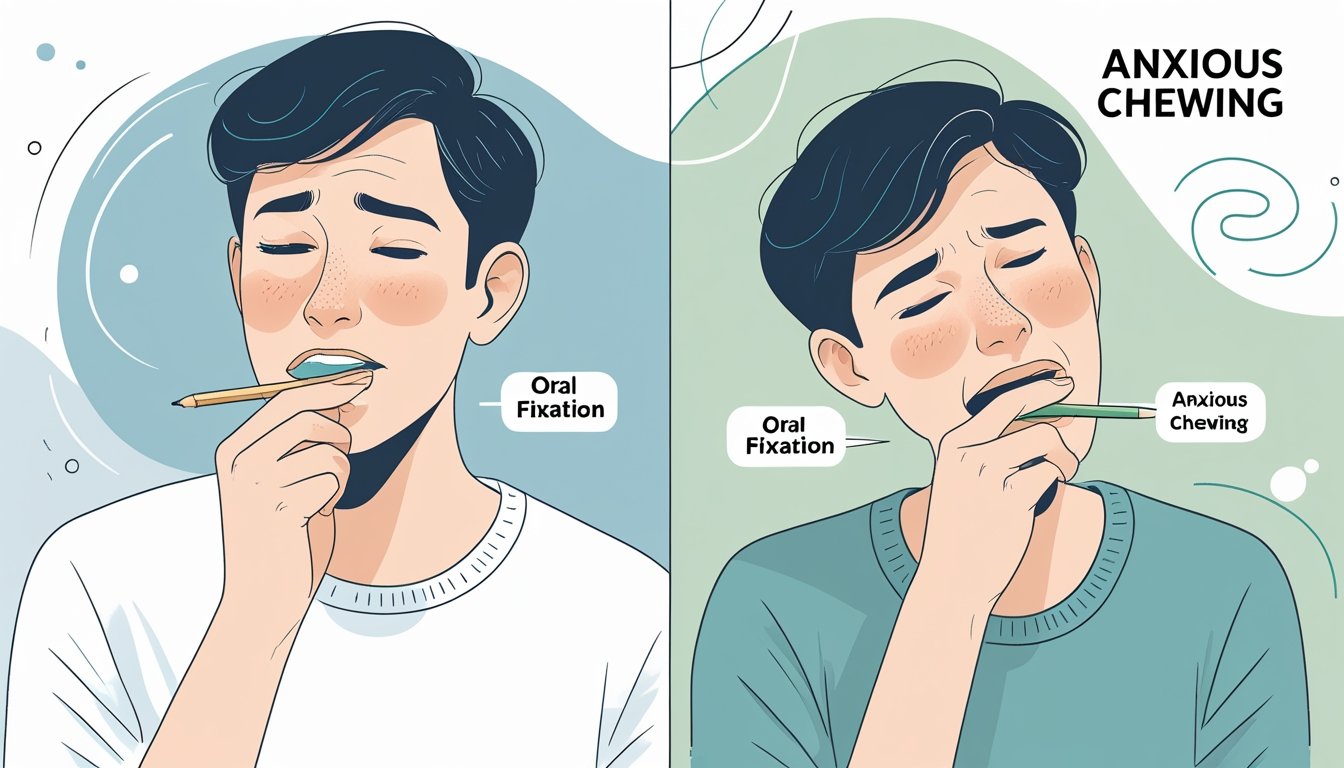
You may chew, bite, or suck without thinking, especially when you feel stressed or bored. Anxious chewing often comes from an oral fixation — a habit your mouth uses to calm nerves.
This article will show how oral fixation and anxiety connect, how to spot anxious chewing, and practical steps you can try right away. If you want lasting change, you’ll also see when to seek professional help and how Tides Mental Health can support you with virtual or Chicago-area in-person therapy options.
Understanding Oral Fixation
Oral fixation links certain mouth-centered habits to stress, early development, and coping needs. You will learn what it is, why experts think it develops, and how it shows up in daily life.
Definition and Origins
Oral fixation describes a lasting urge to keep the mouth busy through chewing, sucking, biting, or placing objects in the mouth. You might chew pens, bite nails, or overuse gum to calm nerves or fill an emotional need.
The idea comes from early childhood development. If an infant’s oral needs — feeding, soothing, or attention — were inconsistent, that stage can leave a pattern of seeking oral comfort later in life.
This does not mean every habit stems from childhood, but developmental history often helps explain persistent oral behaviors. Practical causes also matter.
Stress, boredom, dental issues, or sensory needs can trigger the same mouth-focused actions. Knowing the root helps you choose whether behavioral strategies, therapy, or dental care will help most.
Psychological Theories
Psychoanalytic theory links oral fixation to unresolved issues in the oral stage of development. Freud suggested unmet oral needs can create a lasting focus on the mouth.
Modern clinicians use that idea selectively, not as a universal explanation. Behavioral and learning theories focus on reinforcement.
If chewing reduces your anxiety, the action repeats. Over time the habit becomes automatic.
Cognitive approaches add that certain thoughts — “I need something to feel calm” — keep the behavior going. Attachment and stress models show how relationships and current anxiety shape oral habits.
If your stress, depression, or life transitions increase, you may rely more on oral behaviors. Therapy can target the thoughts, triggers, and coping skills that maintain the pattern.
Common Manifestations
You will see oral fixation in clear behaviors: nail-biting, pen chewing, gum overuse, constant snacking, and smoking. Some people grind teeth (bruxism) or chew inside their cheeks.
These actions can wear down teeth, cause jaw pain, and raise your dental risk. Oral habits often rise with anxiety, boredom, or routine change.
They can also serve as self-soothing during arguments, work stress, or sleep disruption. If you want to change them, start by tracking triggers and moments of highest use.
The Connection Between Oral Fixation and Anxiety
Oral habits often show up when you feel stressed, bored, or overwhelmed. Chewing, nail biting, and sucking can help you manage tension and feel more in control.
How Anxiety Triggers Oral Habits
Anxiety raises your body’s alertness and creates excess nervous energy. You might notice your jaw clench, your hands fidget, or your mouth search for something to do.
These reactions come from the body’s attempt to lower arousal and regain calm. Early life experiences also matter.
If you learned to soothe yourself with oral actions as a child, stress in adulthood can bring the same habit back. Situations like public speaking, conflict with a partner, or work deadlines commonly prompt the behavior.
If the habit helps in the moment, it becomes more likely to repeat. That repetition builds a pattern: stress leads to chewing, chewing reduces stress briefly, and the brain cues chewing the next time you feel anxious.
Behaviors Associated With Anxious Chewing
Anxious chewing includes chewing gum constantly, gnawing on pens, biting your inner cheek, or chewing clothing and fabric. Nail biting and hair chewing often occur alongside oral chewing.
These behaviors can appear during meetings, while watching TV, or when you lie awake worrying. Physical signs may include sore jaw muscles, worn teeth, or chafed skin around the mouth.
Social and professional effects can follow, such as embarrassment or avoiding situations where the habit shows. Tracking when and where the behavior happens helps you spot triggers and take action.
Why Chewing Provides Relief
Chewing changes hormone and brain activity linked to stress. It can lower short-term cortisol spikes and shift attention away from anxious thoughts.
The repetitive motion gives a sensory input that feels grounding and predictable. The mouth also has many nerve endings, so oral activity sends strong signals to the brain that override worry for a moment.
That immediate relief makes chewing a quick coping tool, even if it does not solve the underlying anxiety.
Recognizing Signs of Anxious Chewing
You may notice patterns in how and when you chew that point to anxiety or stress rather than simple habit. Look for repeated behaviors, clear triggers, and ways these actions change your day or health.
Physical Cues and Behaviors
You might chew on pens, gum, clothing, or fingernails almost constantly. Your jaw may feel tight or sore by evening.
You could wake with headaches or tooth sensitivity from clenching while chewing. Watch for small mouth injuries: sore spots, cuts, or calluses on your lips or tongue.
Dental wear, chipped or flattened teeth, and enamel loss can appear over months. If you carry objects to your mouth when stressed, that is a clear behavioral sign.
Note how long each episode lasts. Short, frequent bites during meetings suggest nervous chewing.
Longer sessions when alone can point to self-soothing tied to anxiety or low mood.
Situational Triggers
You may chew more during specific situations like meetings, waiting rooms, or social gatherings. Performance pressure, awkward silences, and long drives often prompt chewing.
Identify emotional triggers: worry about work, relationship conflicts, or major life changes can increase chewing. Boredom and fatigue also raise the chance you’ll reach for something to chew.
Track timing and context for a week. Mark what you felt and what happened before each chewing episode.
Impact on Daily Life
Chewing can affect your social and professional life. Others may notice and react, which can increase embarrassment or anxiety in meetings or dates.
You might avoid close-up conversations to hide the habit. Physical effects include dental issues that require treatment and chronic jaw pain that limits eating or speaking.
You may also spend money replacing chewed objects or dental care.
Underlying Causes of Anxious Chewing
Anxious chewing often links to early experiences, current emotional stress, and learned habits. Understanding these specific drivers helps you spot why you chew and find practical ways to change the behavior.
Childhood Development Factors
Early feeding and soothing patterns can shape oral behaviors that persist into adulthood. If you were soothed with constant feeding, pacifiers, or frequent nursing, your nervous system may have learned to use oral contact for comfort.
That learned pattern can resurface when you feel uneasy. Attachment matters.
Children who had inconsistent comfort or emotional needs met may develop self-soothing habits—chewing or sucking—to manage distress. These habits can become automatic and carry into adult life as a way to calm anxiety without conscious thought.
Developmental differences such as sensory processing sensitivities or neurodevelopmental conditions (for example, ADHD) also raise the chance of oral fixation. In those cases, chewing provides sensory input that helps you focus or regulate arousal levels in stressful situations.
Stress and Emotional Regulation
When your body activates the stress response, chewing can reduce tension by engaging jaw muscles and providing rhythmic motion. This physical action temporarily lowers physiological arousal, which explains why you reach for a pen, gum, or clothing when anxious.
Repeated use of chewing as an emotion-regulation tool reinforces the behavior. Each time chewing eases your anxiety, your brain tags it as a useful coping strategy.
Over time, you rely on it instead of other tools like breathing exercises, grounding, or talking therapies. If anxiety co-occurs with depression, major life changes, or relationship stress, chewing may increase.
Addressing the root emotional triggers through therapy can reduce the urge to self-soothe orally.
Habitual Patterns
Habits form through repetition and context. If you chew during meetings, while driving, or when waiting, those situations become cues that trigger the behavior automatically.
The more often you chew in a given context, the stronger the habit loop becomes. Practical habit-change steps include identifying triggers, substituting safer oral options (sugar-free gum, chewy mints, or a mouthguard), and using environmental cues to interrupt the loop.
Tracking when and where you chew helps reveal patterns quickly. Therapy can help break entrenched habits by combining behavior change techniques with emotional work.
Risks and Health Implications
Anxious chewing and oral habits can harm your mouth and affect your mood and daily life. You may face tooth damage, infections, more stress, and strain on relationships if the behavior continues.
Effects on Oral Health
Chewing on pens, ice, or fingernails wears down enamel and can cause small cracks or chips in teeth. These breaks make teeth more sensitive and raise your risk of cavities.
Frequent gum or toothpick chewing can change how your teeth sit together, causing jaw pain and bite problems that may need dental treatment. Chronic nail-biting and chewing introduce bacteria into your mouth and around the gums.
That raises the chance of gum inflammation and infections. In some cases, repeated pressure on teeth leads to root problems or loose teeth that require professional care.
If you already have dental work, anxious chewing can loosen crowns, fill gaps in fillings, or fracture veneers. Tell your dentist about the habit so you both can watch for early signs and avoid bigger procedures later.
Potential Psychological Impact
Anxious chewing often links to stress and anxiety. You may use chewing to calm yourself, but it becomes a cycle: chewing reduces stress briefly, then worry returns and you chew more.
This pattern can make anxiety harder to manage over time. The habit can also affect how you feel about yourself.
You might feel embarrassed or self-conscious if others notice chewing or if it damages your smile. That can reduce confidence and make social situations feel harder.
Effective Approaches to Managing Anxious Chewing
You can reduce anxious chewing by using clear behavior changes and targeted therapy. Practical tools and professional support work best when you match them to your triggers and daily routine.
Behavioral Strategies
Use safe, chewable alternatives like silicone chew tubes or oral fidgets when you feel the urge to chew. Keep one in your pocket or at your desk so it’s available during stressful calls or long meetings.
Track when chewing happens. Note time, mood, and situation for a week.
This helps you spot patterns—boredom, caffeine, or specific social settings—and pick the right moments to use alternatives or take breaks. Build short, concrete habits.
Swap chewing for a 60–90 second grounding exercise (deep breaths or a cold splash of water). Gradually replace chewing with a new routine, and reward small wins to keep momentum.
Change your environment. Remove small chewable hazards, keep water nearby, and schedule short movement breaks.
If medication or nicotine is a factor, reduce those triggers with a plan from your clinician.
Therapeutic Interventions
Work with a therapist to address the anxiety behind chewing. Cognitive-behavioral therapy (CBT) helps you spot and change the thoughts and habits that lead to chewing.
A therapist will also teach exposure and response techniques when chewing links to specific fears. Consider habit-reversal training.
It teaches you to notice the urge, tense alternate muscles, and do a competing action that blocks chewing. This practice shows clear reductions in oral behaviors over weeks when you practice daily.
If anxiety, depression, or major life transitions drive chewing, therapy can include skill-building for coping and stress management.
When to Seek Professional Help
If your chewing or oral habits cause pain, get in the way of daily life, or last for months, professional care can help. Practical options include virtual counseling and in-person therapy in Chicago through Tides Mental Health.
Indicators for Assessment
You should consider assessment if chewing causes physical harm, such as chronic jaw pain, tooth damage, or mouth sores. Also seek help when the behavior increases anxiety, disrupts work or relationships, or you can’t stop despite trying multiple strategies.
Look for mental health signs that often accompany oral fixation: worsening anxiety, new or deeper depression, sleep problems, or rising panic attacks. If you have trouble concentrating, or the habit appears with major life changes (divorce, job loss, new parenthood), an evaluation is important.
If the behavior started in childhood but worsens in adulthood, or if you notice it alongside substance use, ask for a full assessment. Request screening for ADHD when oral habits are frequent and tied to restlessness or impulse control.
Available Resources
You can start with a virtual intake so a clinician can review your history, symptoms, and any physical issues. Tides Mental Health offers remote sessions for most adults and in-person appointments in Chicago when an exam or hands-on care is needed.
Therapy options include cognitive-behavioral therapy to change patterns and skills-based work for anxiety management. Medication review is available when anxiety or depression need medical treatment.
Family or couples sessions can help when chewing affects relationships. If you prefer a staged approach, ask for a short-term plan: initial assessment, two to four sessions of focused skill-building, then a follow-up to track progress.
Tides Mental Health can tailor this plan to your needs and shift between virtual and in-person care as needed.
Coping Tools and Alternative Habits
You can replace anxious chewing with tools and routines that reduce stress and protect your teeth. Use simple, repeatable options that fit your daily life and can be done at home, at work, or during therapy.
Practical Self-Help Tips
Start by identifying when you chew: note time, mood, and trigger for a week. This helps you pick the best replacements and plan short-term fixes.
Keep small oral substitutes on hand: sugar-free gum, hard candy, or crunchy vegetables. These satisfy the mouth without damaging teeth.
Use a clean, chew-safe object like a silicone chew ring if gum is not allowed. Use quick grounding exercises when you notice the urge: 5 deep breaths, press your feet to the floor, or count backward from 30.
These lower immediate anxiety and interrupt the chewing reflex. Protect your teeth at night with a custom or over-the-counter mouthguard if grinding or unconscious chewing occurs.
For hands-on support, contact Tides Mental Health for virtual or in-person options. Chicago clients can access in-person fittings and guidance.
Developing Healthier Behaviors
Build a routine that reduces overall anxiety so the need to chew decreases. Schedule regular meals, short walks, and 10–15 minute breaks every 90 minutes to lower stress buildup.
Swap oral habits for hand-based fidgets: stress balls, textured rollers, or a small fidget cube. Keep one at your desk and another in your bag so you always have an option.
Learn and practice a calming skill daily: progressive muscle relaxation, paced breathing (4-4-8), or chewing sugar-free gum for 10–15 minutes after stressful tasks. Make these skills part of a plan you review with a therapist.
If chewing links to deeper anxiety or depression, seek counseling. Tides Mental Health offers mostly virtual therapy and in-person care in Chicago to help you create a tailored plan and track progress.
Long-Term Outlook and Prevention
If you keep anxious chewing or other oral habits, they can affect your teeth and jaw over time. You might get worn tooth surfaces, gum irritation, or jaw pain.
Therapy can help you change habits and reduce anxiety. Tides Mental Health offers adult therapy focused on anxiety, depression, life changes, and family or couples issues.
You can choose mostly virtual sessions (about 60–70%) or in-person care in the Chicago area (about 30–40%).
Try habit-focused steps you can use daily:
- Replace chewing with a safe item like sugar-free gum or a chewable stress device.
- Practice short grounding or breathing exercises when you feel the urge.
- Track triggers in a journal to spot patterns and prevent relapses.
Medical and dental checks help catch damage early. Your dentist can treat wear or ulcers and suggest protective guards.
Your therapist can teach skills to manage anxiety and reduce the need to chew.
Set realistic goals and expect gradual change. Small, steady steps—combined with therapy—usually work best.