
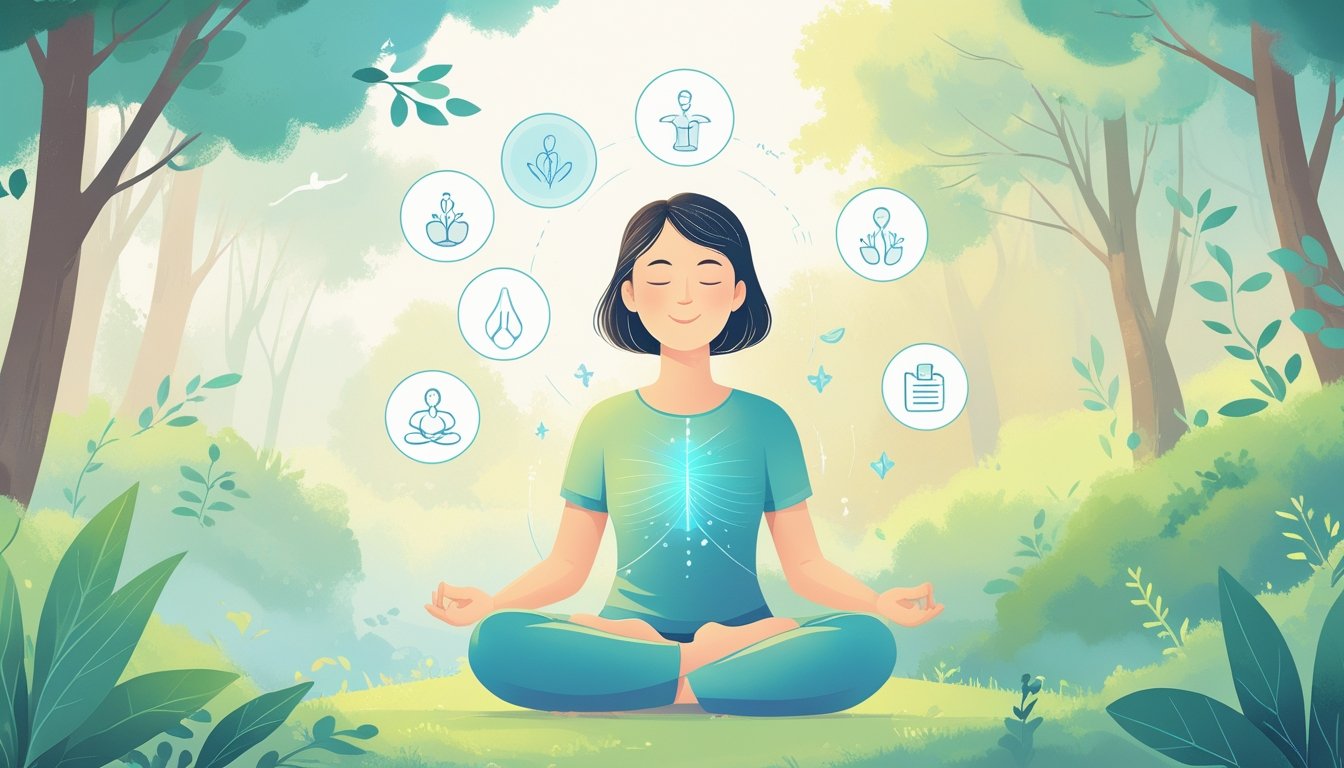
You can learn simple mindfulness steps that lower anxious thoughts and calm your body within minutes. Practice will help you notice stress sooner, slow your breath, and choose a calmer response instead of getting swept up in worry.
This post will show clear, practical techniques—breathing practices, body-focused exercises, and short guided meditations—you can use at home, at work, or between sessions. If you want guided support, Tides Mental Health offers therapy options both online and in-person in the Chicago area to help you apply these practices through anxiety, depression, or life transitions.
Understanding Anxiety
Anxiety is a natural response to stress that can show up as worry, restlessness, or physical tension. You can learn what causes it, how it affects your body and mind, and how to spot the signs so you can get help that fits your needs.
Common Causes of Anxiety
Anxiety often starts from specific triggers you can name. These include job stress, money problems, relationship conflict, and major life changes like moving or divorce.
Past trauma or ongoing caregiving responsibilities can also keep anxiety active. Biology plays a role.
Family history, brain chemistry, and hormonal changes can make you more likely to feel anxious. Substance use and some medical conditions — like thyroid problems or heart issues — can create or worsen anxiety symptoms.
Daily habits matter. Poor sleep, high caffeine intake, and isolation increase anxiety.
If you’re juggling multiple stressors, the effects add up and make it harder to cope.
How Anxiety Affects the Mind and Body
Anxiety activates your body’s stress response. You may notice faster heartbeat, shallow breathing, sweating, or muscle tension.
These reactions are normal short-term, but ongoing activation wears on your body and energy. In the mind, anxiety narrows focus.
You might fixate on worst-case outcomes, struggle to concentrate, or have repeating negative thoughts. This makes problem solving harder and can lower your confidence.
Anxiety also affects behavior. You might avoid places or tasks that trigger fear, which can reduce opportunities and increase isolation.
Over time this avoidance can worsen both anxiety and low mood.
Recognizing Symptoms of Anxiety
Anxiety shows up in thoughts, feelings, and actions. Watch for persistent worry that’s hard to control, racing thoughts, and excessive fear about everyday situations.
Panic attacks — sudden intense fear with chest pain or dizziness — can occur too. Physical symptoms include headaches, stomach upset, muscle pain, and trouble sleeping.
You may feel restless, easily startled, or chronically tired despite resting. If these symptoms interfere with work, relationships, or daily life, consider reaching out.
Tides Mental Health offers virtual therapy and in-person sessions in the Chicago area to help you address anxiety with evidence-based techniques.
Core Principles of Mindfulness
Mindfulness rests on clear habits you can practice: noticing what happens now, observing without labeling, and treating yourself with kindness when hard feelings arise. These habits change how you respond to anxiety and make stress easier to manage in daily life.
Present Moment Awareness
Present moment awareness asks you to focus on what is happening right now — your breath, body sensations, sounds, or tasks. When anxiety pulls you toward past regrets or future worries, bring attention back to one simple anchor like the feeling of air entering and leaving your nose.
Practice short checks: name three sounds, feel your feet on the floor, or count five breaths. These quick exercises interrupt worry cycles and give your nervous system a break.
Use cues in your day to prompt awareness: a phone vibration, a doorway, or the start of a meeting. Aim for brief moments several times a day rather than long sessions only once.
Over time, noticing the present becomes automatic and reduces the power of anxious thoughts.
Non-Judgmental Observation
Non-judgmental observation means watching thoughts and feelings without calling them good or bad. Notice an anxious thought, then label it simply as “thinking” or “worry” and let it pass.
This reduces the habit of arguing with your mind or adding shame, which often increases anxiety. Try the “clouds in the sky” image: let each thought float by without reaching for it.
When you catch yourself judging, gently reframe with curiosity: “What is this thought saying?” or “Where do I feel this in my body?” These moves decrease reactivity and help you choose calmer actions instead of automatic responses.
Acceptance and Self-Compassion
Acceptance means allowing feelings to exist without force or escape. It does not mean you like the feeling or resign yourself to it.
Instead, you stop fighting and use steady breathing and kind self-talk to sit with discomfort. This reduces the extra stress created by resisting anxiety.
Pair acceptance with self-compassion. Speak to yourself as you would a friend: “This is hard right now, and I can handle it.”
Simple phrases and gentle touch on the chest can soothe your nervous system. If you want guided support to build these skills, Tides Mental Health offers virtual and in-person options in the Chicago area to help you practice acceptance and compassion in therapy.
Mindful Breathing Techniques
These practices help you slow your body and focus your mind. Each technique gives clear steps you can use when anxiety rises, whether at home or during a break at work.
Diaphragmatic Breathing
Diaphragmatic breathing (belly breathing) uses the diaphragm to move air deep into your lungs. Sit or lie down with one hand on your chest and one on your belly.
Inhale slowly through your nose for 4 seconds, feeling your belly rise under your hand while your chest stays still. Pause 1–2 seconds, then exhale through pursed lips for 5–6 seconds, letting your belly fall.
Repeat for 5–10 breaths. Use this when your heart races or you feel tight in your chest.
Practice twice a day for 5 minutes to make it easier during stressful moments. If you have lung or heart conditions, check with your clinician first.
Tides Mental Health can guide you in adapting this safely during virtual or in-person sessions in Chicago.
Box Breathing
Box breathing organizes breath into equal counts to steady your nervous system. Sit upright with feet on the floor and shoulders relaxed.
Follow four steps on a 4-count rhythm: inhale 4, hold 4, exhale 4, hold 4. Repeat 4–6 cycles or until you feel calmer.
You can change the count to 3 or 5 if 4 feels hard. Use this before a meeting, after a panic spike, or when you need quick focus.
Box breathing works well in short bursts and during tense moments because the predictable pattern reduces mental chatter. Ask Tides Mental Health if you want a therapist to coach you through timing or variations during a virtual session.
Counting the Breath
Counting the breath adds simple mental focus to steady anxiety and distract racing thoughts. Sit comfortably and breathe naturally.
On each exhale, silently count “one.” Next exhale count “two.” Continue until you reach five, then start again at one.
If your mind wanders, gently return to one without judgement. Aim for 5–10 minutes.
This method lowers reactivity by giving your attention a task and reducing rumination. You can combine counting with slow exhalations (e.g., count on a 5-second out-breath) to deepen the calming effect.
For personalized plans to build this habit into therapy, Tides Mental Health offers both virtual coaching and Chicago-area in-person support.
Body-Focused Mindfulness Exercises
These practices help you notice and ease physical tension tied to anxiety. They teach you to breathe, scan, and release tightness so your body can signal safety to your mind.
Body Scan Meditation
Lie down or sit comfortably and close your eyes. Start by taking three slow, deep breaths.
Bring gentle attention to your toes, then move upward through your feet, ankles, calves, knees, and so on. At each spot, notice sensations: warmth, tightness, tingling, or no feeling.
If your mind wanders, gently return to the last body part you were observing. Spend 10–20 seconds on small areas and 30–60 seconds on larger regions like the torso.
Use neutral, curious language in your mind: “I notice tension” or “I notice ease.” Finish by taking three mindful breaths and opening your eyes slowly.
Practice 3–4 times a week to reduce baseline tension and interrupt anxious loops.
Progressive Muscle Relaxation
Find a quiet place and sit or lie down. Starting with your feet, tense a muscle group for 5–7 seconds, then release suddenly and relax for 15–20 seconds.
Move up through calves, thighs, glutes, abdomen, chest, hands, arms, shoulders, neck, and face. Notice the contrast between tightness and relaxation.
Breathe steadily while you tense and release. If a muscle hurts when tightened, skip it and simply focus on releasing.
Do one full cycle in 10–20 minutes or shorter mini-sessions when anxiety spikes. You can practice virtually or in person with Tides Mental Health in the Chicago area if you want guided sessions.
Regular practice helps you spot early signs of tension and calm your nervous system quickly.
Guided Meditation Practices
These practices help you shift attention away from anxious thoughts and toward supportive feelings and images. They use steady breath, simple phrases, and visual scenes you can return to when stress rises.
Loving-Kindness Meditation
Begin seated or lying down with relaxed breath. Close your eyes and take three slow, full breaths to settle your body.
Bring to mind yourself and silently repeat short, warm phrases such as: May I be safe. May I be peaceful. May I be free from suffering. Say each phrase slowly and feel the intention.
After a few minutes, expand the focus to someone who cares for you. Use the same phrases for them.
Then include a neutral person and finally someone with whom you have difficulty. Keep the tone gentle and nonjudgmental.
Practice for 5–15 minutes. If strong feelings appear, notice them without trying to fix them and return to the phrases.
Try it daily to strengthen self-compassion and reduce harsh self-talk tied to anxiety.
Visualization for Calmness
Start by finding a quiet place and settling into steady, even breaths. Picture a specific, calm scene—like a quiet lakeshore at dusk, a sunlit room, or a safe childhood spot.
Focus on concrete sensory details: the color of the water, the texture of the bench, the warmth on your skin. Move through the scene slowly.
Name what you see, hear, smell, or feel. If your mind drifts to anxious thoughts, gently bring it back to a single sensory detail.
Use a simple anchor phrase such as soft, steady, safe as you inhale and exhale. Practice 7–12 minutes when anxiety spikes or before stressful events.
Keep the scene ready in your mind so you can access it quickly. Tides Mental Health offers guided sessions you can use if you want structured support and in-person options in the Chicago area.
Incorporating Mindfulness Into Daily Life
Start small and choose practices that fit your routine. Focus on specific actions you can repeat each day to reduce anxiety and improve focus.
Mindful Walking
Take a 5–15 minute walk where you focus on your breath and steps. Walk at a natural pace and notice how your feet lift and touch the ground.
Count each step up to ten, then start again if your mind wanders. Use your senses: name three things you see, two things you hear, and one thing you feel.
This anchors you to the present and breaks loops of anxious thinking. If strong thoughts come, note them as “thinking” and return to your feet and breath.
Try a short daily routine: breathe in for four steps, breathe out for four steps, repeat for 2–5 minutes. Do this before a meeting or when anxiety spikes.
If you’re near the Chicago area, consider joining an in-person mindfulness walk through Tides Mental Health.
Mindful Eating
Choose one meal or snack each day to eat without screens. Sit down, breathe for one minute, and look at your food.
Notice colors, textures, and smells before taking a bite. Take slow, deliberate bites and chew fully.
Put your fork down between bites and pay attention to tastes and sensations in your mouth. Aim for five to ten mindful chews per bite.
Use simple prompts: “What does this feel like?” or “Is this satisfying?” Practice mindful eating during breakfast or a mid-afternoon snack.
If you need support adding mindful routines to your life or managing anxiety, Tides Mental Health offers virtual and in-person therapy in Chicago.
Digital Detox Strategies
Set short, defined times each day when you turn off notifications and put devices away. Start with 30–60 minute blocks: during meals, the first hour after waking, or the last hour before bed.
Use Do Not Disturb or airplane mode to prevent alerts. Create tech-free zones, like the bedroom or dining table.
Replace scrolling with a brief mindfulness habit—three deep breaths, a two-minute body scan, or a quick walk. Track progress with a simple checklist to build consistency.
If you feel overwhelmed by digital use, schedule a virtual session with Tides Mental Health to develop tailored limits and coping tools.
Reducing Anxiety Through Mindful Self-Talk
Mindful self-talk helps you notice harmful thoughts, change their tone, and choose kinder, clearer phrases that ease anxiety. The steps below show how to spot common thinking traps and replace them with balanced statements you can use in stressful moments.
Identifying Negative Thought Patterns
Start by tracking your thoughts for a few days. Write down situations that spike your anxiety, the exact words you use in your head, and how intense the worry feels on a 0–10 scale.
Look for patterns like all-or-nothing thinking, catastrophizing, mind-reading, or overgeneralizing. Use this simple table to sort what you find:
| Thought example | Pattern type | Anxiety level |
|---|---|---|
| “I’ll mess up the meeting.” | Mind-reading | 7 |
| “If I’m anxious, I’m weak.” | All-or-nothing | 8 |
Noticing triggers and common phrases gives you real targets for change. Bring these notes to therapy or sessions with Tides Mental Health if you want guided work on specific patterns.
Reframing Anxious Thoughts
When you spot a negative thought, pause and test it with evidence. Ask: “What facts support this?” and “What facts oppose it?”
Then create a balanced statement that’s true, calm, and useful. For example, change “I’ll fail” to “I’ve prepared and can handle parts I don’t know by asking questions.”
Use short scripts you can say aloud:
- “This feeling is uncomfortable, but it will pass.”
- “I can take one step right now.”
Practice these scripts in low-stress moments so they come easily during high anxiety. If you want personalized practice, Tides Mental Health offers virtual and Chicago-area in-person therapy to help you build and rehearse reframes that fit your life.
Tracking Progress with Mindfulness
You can measure small steps that matter. Track how often you practice, which techniques you use, and how your anxiety changes over days and weeks.
Keeping a Mindfulness Journal
Keep a simple, dated journal to record each practice. Note the date, technique (for example, body scan, focused breathing, or mindful walking), length of practice, and a one-line mood rating before and after.
Use a number scale like 1–10 for mood so you can spot trends easily. Also jot down triggers, context, and what helped.
For example: “Worked breathing for 5 minutes after a meeting; anxiety dropped from 7 to 4.” Review entries weekly to see patterns.
If you prefer digital tools, use a note app or a meditation tracker to add tags (work, sleep, panic). Tides Mental Health can help you set up a logging habit and review entries in virtual or Chicago-area in-person sessions.
Setting Realistic Goals
Set clear, measurable goals that fit your schedule. Start small: aim for 3–5 minutes of daily practice for two weeks, then increase to 10 minutes.
Write goals as actions, not outcomes. For example: “Do a 5-minute breathing exercise each morning” rather than “feel less anxious.”
Break larger aims into weekly steps and mark them in your journal. If you miss days, note why and adjust the plan—consistency beats perfection.
Share goals with a counselor at Tides Mental Health for accountability during virtual or in-person sessions in Chicago. Review and reset goals monthly based on your journal trends.
When to Seek Additional Support
If your anxiety keeps getting worse despite practicing mindfulness, you should reach out for more help. You might need extra support if symptoms interfere with work, school, or relationships.
Notice if you start avoiding things you used to do. Seek help right away if you have thoughts of harming yourself or others.
Call emergency services or a crisis line in that moment. Tell a trusted person and get immediate care.
Consider professional care when anxiety comes with strong depression, panic attacks, or trouble sleeping. These often need targeted treatment like therapy or medication.
Tides Mental Health offers adult therapy and counseling that focuses on anxiety, depression, life transitions, and relationship work. You can use virtual or in-person sessions depending on what fits you.
About 60–70% of sessions are virtual, while 30–40% are in-person in the Chicago area. This flexibility makes it easier to get consistent care.
If you’re helping a teen or child, we are planning to expand into child and adolescent therapy. Meanwhile, seek a clinician experienced with young people.
Family or couples counseling can also help when anxiety affects close relationships. When you decide to seek support, ask about treatment goals, session format, and how progress will be measured.
Clear expectations help you pick the right care and get better results.