
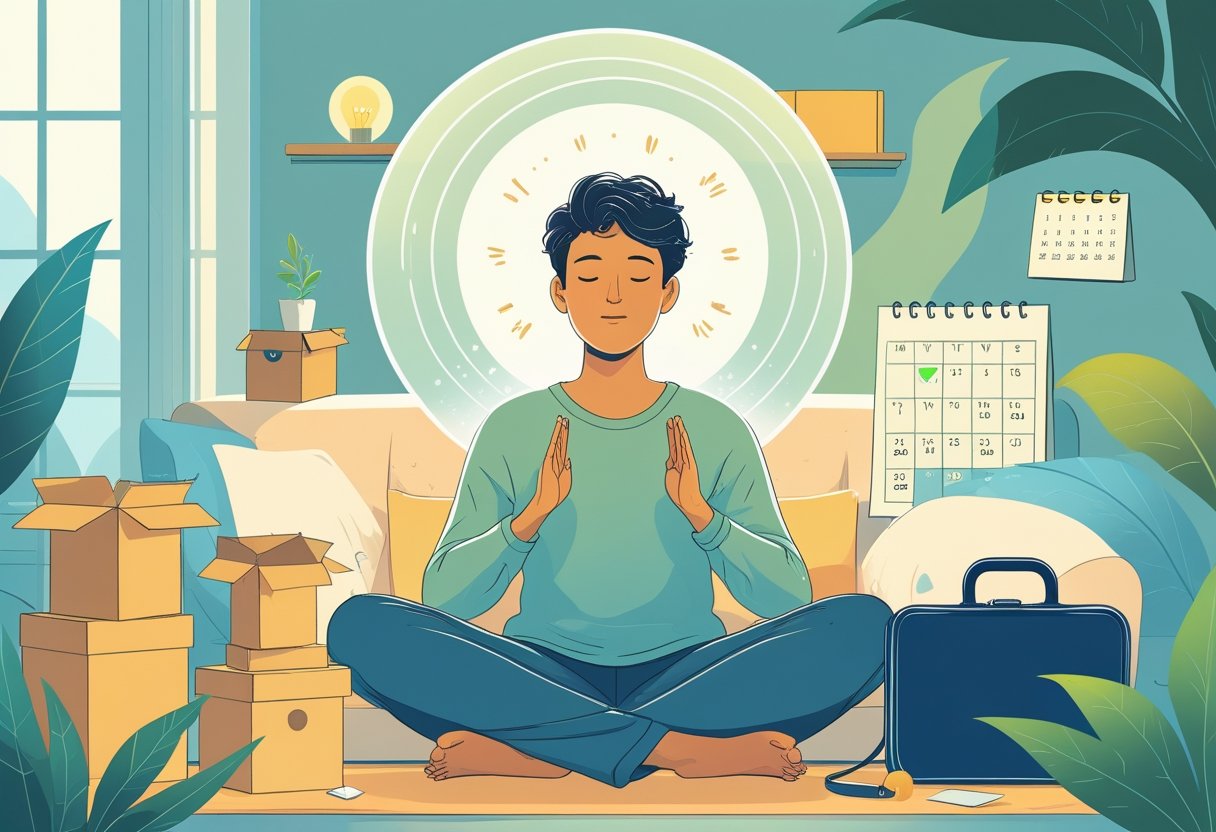
Major life changes can shake your sense of stability and spike your anxiety, but you don’t have to feel out of control. You can learn practical steps to reduce anxiety, spot your personal triggers, and move through transitions with more confidence and calm.
This article will show clear strategies you can use right away—from lifestyle shifts and building stronger support to knowing when to seek professional help. If you want guidance tailored to adults, couples, and families, Tides Mental Health offers virtual and Chicago-area in-person options to support you through the change.
Understanding Anxiety During Major Life Transitions
Major life changes often trigger worry, uncertainty, and physical tension. You can learn what drives that anxiety, how it shows up in your body and mind, and when short-term stress becomes a long-term concern.
Common Causes of Anxiety in Transition Periods
You feel anxious when routines or roles shift, because your day-to-day predictability changes. Examples include starting a new job, moving cities, becoming a parent, ending a relationship, or caring for an aging parent.
Each change brings new tasks, decisions, and unknowns that demand energy and planning. Loss of identity or status can add pressure.
If your job title, social circle, or parental role changes, you may doubt your abilities. Financial strain and housing moves increase practical worries, while relationship shifts create emotional stress.
Lack of social support makes these stressors worse. Tides Mental Health offers therapy that helps you sort these specific causes and create practical plans for coping.
Psychological and Physical Symptoms
Anxiety shows up in thoughts, feelings, and the body. You might replay worst-case scenarios, feel irritable or on edge, or struggle to make simple choices.
Sleep often suffers; you may have trouble falling asleep or wake early with racing thoughts. Physical signs include a tight chest, shallow breathing, stomach upset, headaches, or muscle tension.
Panic attacks can occur when anxiety peaks, with sweating, heart racing, and shortness of breath. If you notice mood shifts or increased alcohol or substance use to cope, reach out for support.
Tides Mental Health provides both virtual and in-person sessions in Chicago to help you manage these symptoms.
Short-Term vs. Long-Term Effects
Short-term anxiety often helps you prepare and adapt. In the weeks after a change, you may feel alert and focused, or you might struggle with sleep and concentration.
These effects usually ease as you build routines and solve immediate problems. Long-term anxiety lasts months or becomes a persistent pattern that interferes with work, relationships, or daily tasks.
Chronic worry can lead to depression, ongoing insomnia, or health problems like high blood pressure. Early treatment lowers that risk.
Major Life Transitions That Commonly Trigger Anxiety
Major changes often bring uncertainty, loss of routine, and new responsibilities. These shifts can affect your sleep, mood, focus, and sense of control, which raises anxiety.
Career Changes and Job Loss
Losing a job or starting a new role affects your income, identity, and daily structure. You might worry about paying bills, finding new work, or proving yourself in a different workplace.
Those worries can lead to trouble sleeping, frequent panic, or withdrawing from others. Practical steps help reduce anxiety: update your resume, set small daily job-search goals, and reach out to professional contacts.
Therapy can help you reframe setbacks and build coping skills. Tides Mental Health offers virtual and Chicago-area in-person sessions to support career-related stress, including anxiety and depression tied to job transitions.
Moving or Relocation
Relocating changes your social network, commute, and living setup all at once. You may feel uncertain about housing, navigating a new area, or fitting into a community.
That uncertainty often causes constant planning, sleeplessness, or a sense of overwhelm. Break the move into clear tasks: pack by room, schedule utility transfers, and map out local services before you arrive.
Maintain routines like regular meals and exercise during the move. Tides Mental Health provides mostly virtual counseling, plus in-person care in Chicago, to help you manage relocation anxiety and rebuild routines.
Relationship Changes
Starting or ending a relationship, or changing family roles, reshapes daily life and emotional support systems. You may fear rejection, financial fallout, or being alone.
Those fears can show up as persistent rumination, anger, or physical stress symptoms. Set clear boundaries, communicate needs directly, and use practical problem-solving for shared issues like finances or childcare.
Couples and family counseling can improve communication and decision-making during transitions. Tides Mental Health offers therapy focused on relationship shifts, available virtually and in Chicago for in-person work.
Major Health Events
A new diagnosis, surgery, or chronic illness alters plans and creates uncertainty about the future. You might worry about treatment side effects, costs, or your ability to work.
This can lead to constant health monitoring, catastrophizing, or withdrawal from activities you used to enjoy. Manage anxiety by learning about your condition from reliable sources, preparing questions for your care team, and keeping a simple symptom log.
Combine medical care with psychotherapy to address fear and mood changes. Tides Mental Health can support you with therapy for health-related anxiety and depression through virtual sessions or in-person visits in Chicago.
Identifying Personal Triggers and Warning Signs
You will learn practical ways to spot what sets off your anxiety and the early signals your body and mind give you. Use simple tools and daily checks to find patterns, so you can act sooner and get help from Tides Mental Health if needed.
Self-Assessment Techniques
Start with a short, honest checklist you use once a week. Ask yourself: what events or thoughts made me anxious?
Rate each one 1–5 for intensity and note how long the feeling lasted. Keep answers brief—one line per item.
Try a short guided journaling habit after stressful moments. Write the trigger, your immediate thought, and one action you took.
Over two weeks, review entries to see repeated triggers like work deadlines, relationship talks, or big decisions. Use a quick values vs. reality test.
List what matters to you (stability, family, growth) and compare recent choices against that list. Discrepancies often point to hidden triggers tied to identity or expectation.
If you prefer help, ask a clinician at Tides Mental Health for a focused assessment. They can guide you through tailored questions in virtual or Chicago-area in-person sessions.
Tracking Emotional Patterns
Track moods with a simple table or app. Record date, time, mood (anxious, sad, calm), trigger, and coping used.
Do this daily for 3–4 weeks to reveal patterns tied to sleep, caffeine, conversations, or specific places. Look for cycles: do anxieties spike before meetings, after family calls, or at bedtime?
Mark repeating times or events and note intensity changes. This helps you plan coping steps before the peak.
Use color codes—red for intense anxiety, yellow for mild worry, green for calm. A quick scan will show clusters that deserve attention.
Share these logs with a Tides Mental Health therapist to make a focused plan.
Recognizing Physical Signs
Your body often signals anxiety before your mind does. Notice heart rate changes, shallow breathing, tight chest, digestive upset, sweaty palms, or tremors.
Write each symptom next to the situation it appeared in. Track sleep shifts and headaches too.
If you consistently wake at 3 a.m. or get tension at the base of your skull after a specific call, that’s a clear warning sign. Treat these as data, not weakness.
Use breathing checks: pause and take three slow breaths when a sign appears. If symptoms persist or worsen, contact Tides Mental Health for immediate support, either virtually or at a Chicago clinic.
Effective Strategies for Managing Anxiety
You can use targeted techniques to reduce worry, calm your body, and build steady habits. The options below give clear steps: change unhelpful thoughts, practice focused attention, and create a predictable daily plan.
Cognitive Behavioral Techniques
CBT helps you change thoughts and behaviors that fuel anxiety. Start by tracking specific anxious thoughts for a week.
Note the situation, the thought, the emotion, and the intensity (0–10). This makes patterns visible.
Next, test those thoughts. Ask: “What evidence supports this?” and “What would I tell a friend?”
Replace extreme predictions with balanced statements. Practice short behavioral experiments.
For example, if you fear rejection, reach out to one person and record the result. Use structured breathing or a 5-minute grounding exercise after a distressing thought to stop escalation.
If you need guided work, Tides Mental Health offers CBT-focused therapy virtually and in-person in Chicago to help you build these skills.
Mindfulness and Meditation Practices
Mindfulness trains you to notice thoughts without reacting. Start with 5 minutes of guided breathing daily.
Sit comfortably, count breaths to five, and return when your mind wanders. Use a simple body scan to reduce physical tension.
Move attention slowly from toes to head, naming sensations without judgment. For acute anxiety, try the 5-4-3-2-1 grounding method: name five things you see, four you can touch, three you hear, two you smell, one you taste or a positive memory.
Combine formal practice with micro-practices: breathe deeply before a meeting, or do a 60-second focus on your senses when stress spikes. Tides Mental Health provides online mindfulness sessions that fit a busy schedule.
The Role of Routine and Structure
A consistent routine stabilizes mood and lowers daily uncertainty. Set three daily anchors: wake time, a midday activity (walk, lunch, or short therapy homework), and a bedtime routine.
Keep sleep and meal times within 30–60 minutes each day. Break big changes into concrete steps and schedule them.
If you’re moving or changing jobs, list tasks and assign specific days. Small wins reduce rumination.
Include brief physical activity, even 10 minutes, to shift your nervous system. If you prefer guided planning, Tides Mental Health offers virtual and Chicago-area in-person sessions to help you build a routine that fits work, family, and therapy goals.
Building a Strong Support Network
A clear support plan helps you share stress, get practical help, and find steady care when transitions feel heavy. Focus on people who listen, professionals who treat anxiety, and options for virtual or in-person help near Chicago.
Engaging Family and Friends
Tell one or two trusted people what you need. Say specific things like “I need a 15-minute check-in twice a week” or “I’d like help sorting mail for a month.”
Clear requests make it easier for others to help without guessing. Set boundaries about topics or timing.
If certain conversations make you more anxious, name them: “Please don’t ask about the job hunt during dinner.” Ask for small actions that reduce daily stress, for example rides to appointments or help with childcare.
Use regular check-ins to track how you’re doing. A weekly text, short call, or shared calendar helps friends stay connected without long visits.
Let people know when their support helps so they keep doing it.
Seeking Professional Guidance
Look for a licensed therapist who treats anxiety and life transitions. Ask about experience with adults, couples, or family work.
Mention if you prefer virtual sessions—about 60–70% of care can be virtual—or in-person visits in the Chicago area.
Prepare for your first session with specific goals: sleep improvement, coping with change, or managing panic. Bring a short list of symptoms and recent stressors.
That lets the therapist recommend tools like CBT, behavioral activation, or couples strategies right away.
If you need flexible options, consider Tide’s Mental Health services for scheduling and combined virtual/in-person care. Confirm insurance, sliding scale, and how the therapist handles crises before you start.
Lifestyle Adjustments to Reduce Anxiety
Small daily habits can lower anxiety during big changes. Focus on what you can control: what you eat, how you move, and how you sleep.
These choices affect your mood, energy, and ability to cope.
Nutrition and Physical Activity
Eat regular, balanced meals to keep blood sugar steady and your mood stable. Aim for three meals and one healthy snack each day that include protein (eggs, chicken, beans), whole grains (brown rice, oats), and vegetables.
Limit caffeine to one 8–12 oz cup in the morning and reduce sugary drinks that spike anxiety. Stay hydrated; carry a water bottle and set reminders to drink every 1–2 hours.
Move your body most days of the week. Try 30 minutes of moderate activity like brisk walking, cycling, or a home circuit five times weekly.
If time is tight, do three 10-minute bursts of activity. Include strength work twice weekly—bodyweight exercises or light weights—to boost confidence and reduce tension.
End sessions with 3–5 minutes of deep breathing or gentle stretching to signal your nervous system to calm down.
Prioritizing Sleep Hygiene
Set a fixed wake time and aim for 7–9 hours of sleep each night. Consistency helps reset your body clock, even on weekends.
Create a wind-down routine that begins 30–60 minutes before bed: dim lights, turn off screens, and do a quiet activity like reading or light journaling.
Make your bedroom cool, dark, and quiet. Use blackout curtains, a fan or white noise, and remove phones from the nightstand.
If you struggle to fall asleep, try a short relaxation exercise: inhale for 4 seconds, hold 4, exhale 6, repeat for 4 minutes. Avoid heavy meals, nicotine, and alcohol within three hours of bedtime.
If anxiety wakes you at night, get up and do a calm task for 10–20 minutes until you feel sleepy again. For ongoing sleep problems tied to life changes, consider virtual or in-person support from Tides Mental Health; Chicago-area in-person care is available.
Navigating Setbacks During Transitions
Setbacks are normal during big changes. You can learn practical steps to recover, rebuild routine, and reduce anxiety so the next step feels more manageable.
Building Resilience
Resilience is a set of skills you can practice. Start by keeping a short list of coping tools you can use when a setback hits: one breathing exercise, one physical activity, one person to call, and one small task you can finish in 10–20 minutes.
Use that list the first few times you feel overwhelmed so the response becomes automatic. Maintain a simple daily routine for sleep, meals, and movement.
Consistent habits lower anxiety and give you predictable wins even when other things are uncertain. If worry spikes, try a 10-minute walk or a two-minute breathing break before making decisions.
Consider working with a therapist from Tides Mental Health. You can choose virtual sessions for flexibility or in-person visits in the Chicago area.
A clinician can help you practice resilience techniques and track measurable progress.
Learning From Past Experiences
Look back at previous transitions and identify one thing that helped and one thing that made things harder. Write those two items down and use them as rules for your current change.
Turn each setback into a short action plan. Note what happened, why it mattered, what you tried, and what you will try next.
Keep plans to three steps so they stay doable: one immediate action, one support contact, and one follow-up task within a week. If patterns repeat, bring them to therapy.
Your clinician at Tides Mental Health can help you spot hidden triggers and build specific skills to change those patterns. Regular check-ins—virtual or in person—help you test new strategies and adjust quickly.
When to Seek Professional Help
If your anxiety keeps you from doing everyday things — like working, sleeping, or caring for yourself — you should get help. Persistent worry, panic attacks, or constant sadness that lasts weeks are signs that therapy can help.
You do not have to wait until things get worse. If your anxiety leads to risky behavior or you think about harming yourself, contact a professional right away.
These are urgent signs that require prompt care. You can call a crisis line or reach out to a provider who offers immediate support.
Look for help when your relationships suffer. If arguments, withdrawal, or parenting stress grow worse during a transition, couples or family counseling can provide tools to repair connections.
Therapy can also help you manage role changes like becoming a parent, divorcing, or retiring. Consider professional support when self-help steps don’t work.
If breathing exercises, routine changes, and social support do not reduce your anxiety, evidence-based therapy such as CBT can change unhelpful thought patterns. Tides Mental Health offers adult-focused anxiety, depression, and life-transition care with virtual and in-person options.
Practical next steps:
- Contact a licensed therapist for an intake or consultation.
- Ask about virtual sessions (60–70% availability) or in-person care in the Chicago area (30–40%).
- Check if the provider offers couples or family counseling, if that fits your needs.
You deserve care that fits your situation. Tides Mental Health can help you find a clinician and schedule an appointment.
Looking Ahead: Embracing Change With Confidence
Change looks uncertain, but you can build steps that make it manageable. Start by naming one small goal you can reach this week.
Small wins lower anxiety and remind you that progress is possible. Keep routines that ground you, like sleep, meals, and short movement breaks.
Routines don’t stop change; they give you steady ground while you adapt. Let them anchor your days when things feel unstable.
Practice a growth mindset: view setbacks as learning chances, not proof you can’t handle this. That shift helps you try again without harsh self-judgment.
Use support wisely. Talk with someone who listens and helps you plan next steps.
If you want professional help, consider Tides Mental Health for therapy focused on anxiety, depression, life transitions, and couples or family concerns. Many clients use virtual sessions; in-person care is available in the Chicago area.
Create a simple action plan with three parts: one calm habit, one practical task, and one check-in with support. Keep it flexible and revisit it weekly.
Take steady actions, reach out when you need help, and let each step build your ability to handle what comes next.