
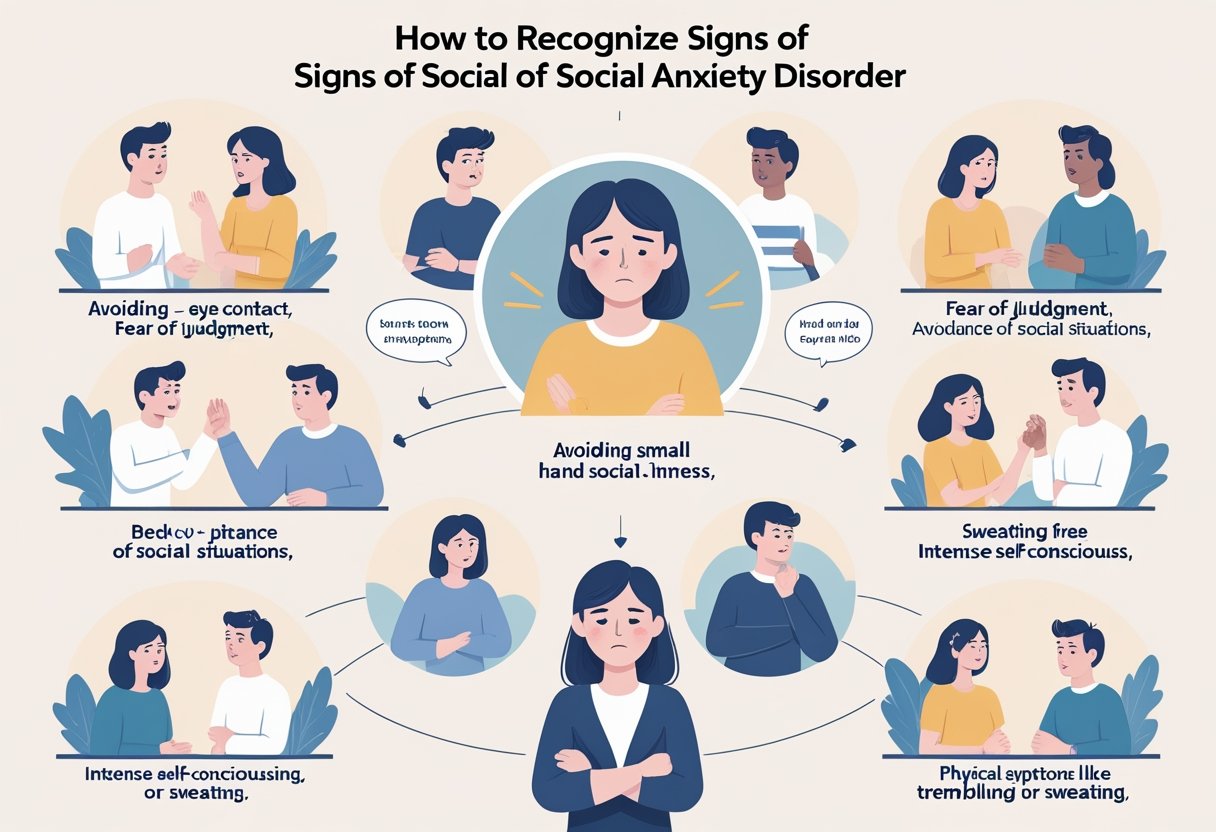
You might think nervousness in social situations is just shyness, but social anxiety disorder looks different and can quietly shape your choices, relationships, and daily life.
This article will help you spot the signs so you can decide whether to seek support and take practical steps forward.
Social anxiety disorder shows up as intense fear of being judged or embarrassed in social settings, repeated avoidance of situations, and strong physical and mental reactions that interfere with work, relationships, or daily activities.
Noticeable patterns include negative self-talk, consistent avoidance, panic-like symptoms, and ongoing tension before or after social events.
As you keep reading, you will learn clear signs to watch for—from behavior and thoughts to physical symptoms.
You’ll also see when it makes sense to reach out for professional help like therapy from Tides Mental Health, available virtually and in-person in the Chicago area.
Understanding Social Anxiety Disorder
Social anxiety disorder involves strong fear in social situations, physical symptoms like sweating or a racing heart, and behaviors such as avoiding events or over-preparing for interactions.
You can learn what causes it, how it looks different from shyness, and when to seek help from professionals like Tides Mental Health.
Definition and Overview
Social anxiety disorder (SAD) is an anxiety condition where you fear being judged, embarrassed, or humiliated in social or performance situations.
That fear is intense and persistent, not just normal nervousness before a presentation or date.
You may worry for days before an event, avoid speaking up, or skip gatherings entirely.
Physical signs often include blushing, trembling, sweating, nausea, or a fast heartbeat during social contact.
SAD can affect work, school, and relationships.
If your fear stops you from doing things you want or need to do, that level of interference suggests a clinical problem that benefits from therapy and possibly medication.
Common Causes
Social anxiety usually arises from a mix of factors, not a single cause.
Genetics can make you more prone to anxiety, so if family members have anxiety or depression, your risk can be higher.
Brain differences in how you process fear and social information also play a role.
Past experiences matter too: bullying, public embarrassment, or harsh criticism in childhood or adulthood can trigger or worsen symptoms.
Learned behavior from parents who are overprotective or avoid social situations can influence you.
Life transitions like starting college, a new job, or relationship changes can spark symptoms, especially if you have other mental health concerns such as depression.
How Social Anxiety Differs From Shyness
Shyness is a personality trait that makes you feel reserved or quiet around others, but it does not usually stop you from living your life.
Social anxiety disorder goes further: fear is intense, lasts a long time, and leads to avoidance that disrupts daily routines.
With shyness you might feel nervous but still attend events; with SAD you may cancel, leave early, or stay silent to avoid attention.
People with SAD often know their fear is excessive but feel powerless to change it.
Treatment, like therapy from Tides Mental Health, can reduce symptoms.
Many people improve with cognitive-behavioral therapy, skills training, and virtual or in-person counseling in the Chicago area, depending on your needs.
Core Signs of Social Anxiety Disorder
You may notice clear patterns in how you feel, how your body reacts, and how you act around others.
These signs often repeat and interfere with work, school, or relationships.
Persistent Fear of Social Situations
You feel intense worry before, during, or after social events.
This might include fear of speaking in meetings, eating in front of others, or meeting new people.
The fear often centers on being judged, embarrassed, or looked at awkwardly.
This fear is more than nerves.
It lasts for months and shows up even when a situation seems low-risk to others.
You might rehearse conversations, avoid eye contact, or mentally plan exits long before the event.
You may overestimate how much others are watching you.
Thoughts like “They’ll notice I’m shaking” or “I’ll say something stupid” repeat and make it harder to join group activities or accept invitations.
Physical Symptoms in Social Settings
Your body reacts strongly during social stress.
Common signs include a racing heart, sweating, trembling, dry mouth, or a tight throat.
These symptoms can appear before you even enter the situation.
Muscle tension and stomach upset are frequent.
You might notice blushing or shortness of breath when you try to speak.
These reactions can make you feel more self-conscious and worsen the anxiety.
Physical symptoms often feed negative thoughts.
When your hands shake or your voice wavers, you may assume others notice, which increases avoidance and worry about future interactions.
Avoidance Behaviors
You skip events, turn down invitations, or arrive late to leave sooner.
Avoidance can be direct—refusing to attend—or indirect—staying on the edge of a crowd or remaining silent in meetings.
You might use safety behaviors to cope, like rehearsing lines, staying on your phone, or only speaking to people you know well.
These tactics reduce short-term fear but keep anxiety strong long-term.
Avoidance can limit career growth, friendships, and learning.
If you find you often decline opportunities that involve people, that pattern likely signals social anxiety rather than simple shyness.
Impact on Daily Life
Social anxiety can affect many parts of your life.
At work, you may avoid speaking up in meetings or skip networking events.
In relationships, you might fear dating or sharing feelings, which creates distance.
Daily tasks like shopping, using public transport, or calling a service can feel daunting.
These limits add stress and can lead to low mood, missed opportunities, or isolation.
If you want help, Tides Mental Health offers adult therapy focused on anxiety, depression, life transitions, and couples or family counseling.
You can choose mostly virtual sessions or visit our Chicago-area offices for in-person care.
Behavioral Patterns to Watch For
These behaviors often show up in daily life and can make routine tasks feel risky or exhausting.
Spotting them early helps you get the right support and skills to manage social situations.
Avoiding Eye Contact
You may look away, stare at objects, or keep your gaze low during conversations.
This can happen in one-on-one talks, meetings, or when meeting someone new.
Avoiding eye contact often comes with a racing heart, sweating, or a need to leave the room.
Avoiding eye contact can make others think you’re uninterested or shy.
You might catch yourself rehearsing what to say instead of listening, which raises your stress and makes social interactions harder.
Try small, concrete steps: practice short, steady eye contact (one to two seconds) during brief chats.
If avoidance feels overwhelming, consider therapy.
Tides Mental Health offers virtual and in-person sessions in the Chicago area to help you build practical skills and confidence.
Reluctance to Speak in Groups
You might freeze when a group asks for your opinion, stay silent in meetings, or let others speak for you.
This reluctance shows up as long pauses, soft speech, or avoiding roles that require talking, like presentations or team updates.
Fear of judgment or saying the wrong thing often causes this.
Your mind may go blank, or you might overprepare and still avoid speaking.
This pattern reduces your visibility at work and can stall relationships or career growth.
Work on short, low-stakes speaking goals: ask one question in a meeting or share a quick comment.
If it stays hard, therapy can help you practice speaking and reduce the physical anxiety that blocks your voice.
Tides Mental Health supports adults with virtual sessions and Chicago-based in-person care to help you regain your voice.
Emotional and Cognitive Indicators
You may notice patterns in your thoughts and feelings that repeat across many social situations.
These patterns often drive how you prepare for events, react during interactions, and review what happened afterward.
Excessive Worry About Judgement
You often predict negative outcomes before social events.
You might rehearse conversations, imagine criticism, or expect people to notice every minor mistake.
This worry can start hours or days before an event and leave you physically restless or unable to sleep.
In the moment, your attention narrows to what others think.
You scan faces for disapproval, replay past conversations, and feel certain you looked awkward even when others show no sign of noticing.
That anticipation can make you avoid speaking up, decline invitations, or leave early.
Practical signs to watch for:
- Persistent “what if” thoughts about how you’ll be judged
- Overplanning or over-rehearsing what you’ll say
- Avoidance of group settings, meetings, or dates because of fear of judgment
Negative Self-Perception
You judge your own actions harshly and assume others make the same harsh judgments.
Small mistakes feel catastrophic to you, like forgetting a name or stumbling over a sentence.
Those moments stick in your mind and shape your view of yourself.
Your inner voice often uses absolute language: “I’m awkward,” “I’m boring,” or “I always mess up.”
You may compare yourself to others and feel you fall short, even when you perform well.
This pattern lowers your confidence and increases isolation.
Signs that point to negative self-perception:
- Frequent self-criticism after social events
- Belief that compliments are insincere
- Difficulty accepting that others see you positively
If you want help learning skills to change these thought patterns, Tides Mental Health offers therapy focused on anxiety and depression, with most sessions available virtually and in-person options in the Chicago area.
Physical Manifestations of Social Anxiety
Physical signs of social anxiety often show up suddenly and strongly during social interactions.
You may notice changes in your body that feel hard to control.
These signs can include visible reactions, fast heart rate, or trembling.
Blushing and Sweating
Blushing happens when blood vessels in your face dilate from stress or fear.
It can make your cheeks, neck, or ears flush red and feel hot.
Many people say blushing feels uncontrollable and brings more self-consciousness, which can worsen the anxiety.
Sweating commonly appears on the palms, forehead, or underarms during social events.
You might find your hands become damp when you shake hands or your shirt shows wet spots.
These signs can make you avoid close interactions or public speaking.
Practical steps help manage these reactions.
Wear breathable, dark clothing and carry a small towel or handkerchief.
Practice breathing techniques and grounding to lower arousal before entering a stressful situation.
If physical signs disrupt your life, consider therapy; Tides Mental Health offers virtual and in-person options in the Chicago area to help you learn coping skills.
Rapid Heartbeat
Your heart can race when you face social situations that feel threatening.
You may feel pounding, fluttering, or a fast pulse in your chest.
This can happen during conversations, presentations, or even while waiting to speak.
A rapid heartbeat often comes with shortness of breath, lightheadedness, or chest tightness.
These sensations can make you think you will lose control, increasing avoidance of social settings.
Tracking when the racing occurs can help you see patterns and triggers.
To reduce heart rate spikes, try paced breathing: inhale for four counts, hold one, exhale for six.
Regular aerobic exercise also improves baseline heart regulation.
If your symptoms feel severe or new, seek professional help; Tides Mental Health can assess physical anxiety symptoms and provide therapy tailored to adults and couples.
Trembling or Shaking
Trembling can affect your hands, legs, or voice when you feel anxious.
You may notice shaky hands when holding objects, quivering legs while standing, or a shaky voice when speaking.
These symptoms can feel embarrassing and lead you to avoid certain tasks.
Tremors happen because your body releases adrenaline during stress.
The shakiness may last minutes or longer, depending on how intense your anxiety is.
You might also feel internal trembling even if outward signs are small.
Simple tactics reduce trembling: steadying techniques like planting your feet, gripping an object, or using slow, deep breaths.
Practice speaking in low-stakes settings to build confidence.
If trembling interferes with work or relationships, reach out; Tides Mental Health provides counseling focused on anxiety, depression, and life transitions, with most sessions available virtually.
How Social Anxiety Impacts Relationships
Social anxiety often makes it hard to trust yourself in social moments and to feel safe sharing your needs.
You may avoid meetings, dates, or group chats because you dread judgment, which can strain friendships and work ties.
Difficulty Making Friends
You might want friends but find starting or keeping friendships hard. You may avoid parties or skip coffee invites because you fear saying the wrong thing or being judged.
That can make others think you’re uninterested, even when you’re not. When you do meet people, you might speak quietly, avoid eye contact, or agree with others to reduce conflict.
These behaviors can stop people from getting to know the real you. If you cancel plans often or take a long time to reply to messages, friends can misread that as rejection.
Practical steps include planning short, low-pressure interactions and practicing small talk scripts. Using one-on-one meetups instead of large groups can also help.
Tides Mental Health offers adult therapy that focuses on social skills, anxiety management, and building steady social routines. Virtual sessions are available, as well as in-person care in the Chicago area.
Challenges in Workplace Interactions
Social anxiety can make routine work tasks feel risky. Speaking up in meetings, giving presentations, or asking for feedback may cause intense worry.
You might avoid volunteering for visible tasks or stay quiet in team discussions to avoid potential mistakes. This can affect promotions, performance reviews, and your sense of belonging.
Coworkers may misinterpret silence as lack of interest or engagement. You may also spend extra time preparing to avoid surprises, which can lead to burnout.
Try setting small goals like asking one question in meetings or offering a short update. Use written communication when it feels safer, then gradually add brief verbal contributions.
Tides Mental Health provides therapy focused on workplace confidence and coping skills for anxiety and depression. Strategies for smoother team interactions are offered through mostly virtual sessions and Chicago-area in-person appointments.
When to Seek Professional Help
If your anxiety stops you from doing things you need or want to do, or if it causes deep physical distress, get help. Quick action can reduce symptoms and improve your daily life.
Recognizing Severe Symptoms
Seek professional care if your worry makes you avoid work, school, or social events most days. If you cancel important plans, miss deadlines, or skip conversations because you fear judgment, these are signs the anxiety is affecting functioning.
Also watch for intense physical reactions—heart racing, trembling, fainting, or panic attacks—during social interactions. Suicidal thoughts, self-harm, or severe depression that comes with anxiety require immediate attention.
Tell a clinician about how long symptoms have lasted and what situations trigger them. Tides Mental Health offers adult-focused therapy for social anxiety, including virtual sessions and in-person care in the Chicago area.
Barriers to Treatment
You might delay help because you think anxiety is just shyness or a personality trait. Stigma and fear of judgment also stop many people from reaching out.
Practical barriers include work schedules, lack of local providers, or cost concerns. Tides Mental Health provides mostly virtual care (60–70% of sessions) to fit work and family life, plus 30–40% in-person appointments in Chicago to reduce travel barriers.
If you worry therapy won’t help, ask about short-term plans, goals, or a trial session to see a fit. Insurance, sliding scale fees, or payment plans can also lower financial barriers—ask when you contact a provider.
Self-Assessment and Next Steps
Start by checking how often your anxiety shows up and how much it interferes with daily life. Notice situations you avoid, physical signs like shaking or a fast heart rate, and how long these feelings last.
Use a simple checklist to guide you:
- Do you avoid social events or feel intense fear before them?
- Do physical symptoms (sweating, trembling, nausea) occur in social settings?
- Do these problems hurt at work, school, or relationships?
If you answer “yes” to several items, consider taking a validated screening tool or talking with a professional. Screenings can help but don’t replace a diagnosis from a clinician.
Try one exposure practice: attend a short social event and stay for a set time. Use breathing and grounding exercises before and during stress.
Track progress in a journal for two weeks to show a therapist concrete examples.
If you decide to seek therapy, Tides Mental Health offers adult-focused care for anxiety, depression, life transitions, and couples or family concerns. We provide mostly virtual care (about 60–70%) and in-person sessions in the Chicago area (about 30–40%).
Ask about plans for adolescent services if you need family or teen support.
Call or book a virtual visit with Tides Mental Health to discuss assessment, treatment options like cognitive-behavioral therapy, and a personalized plan.