
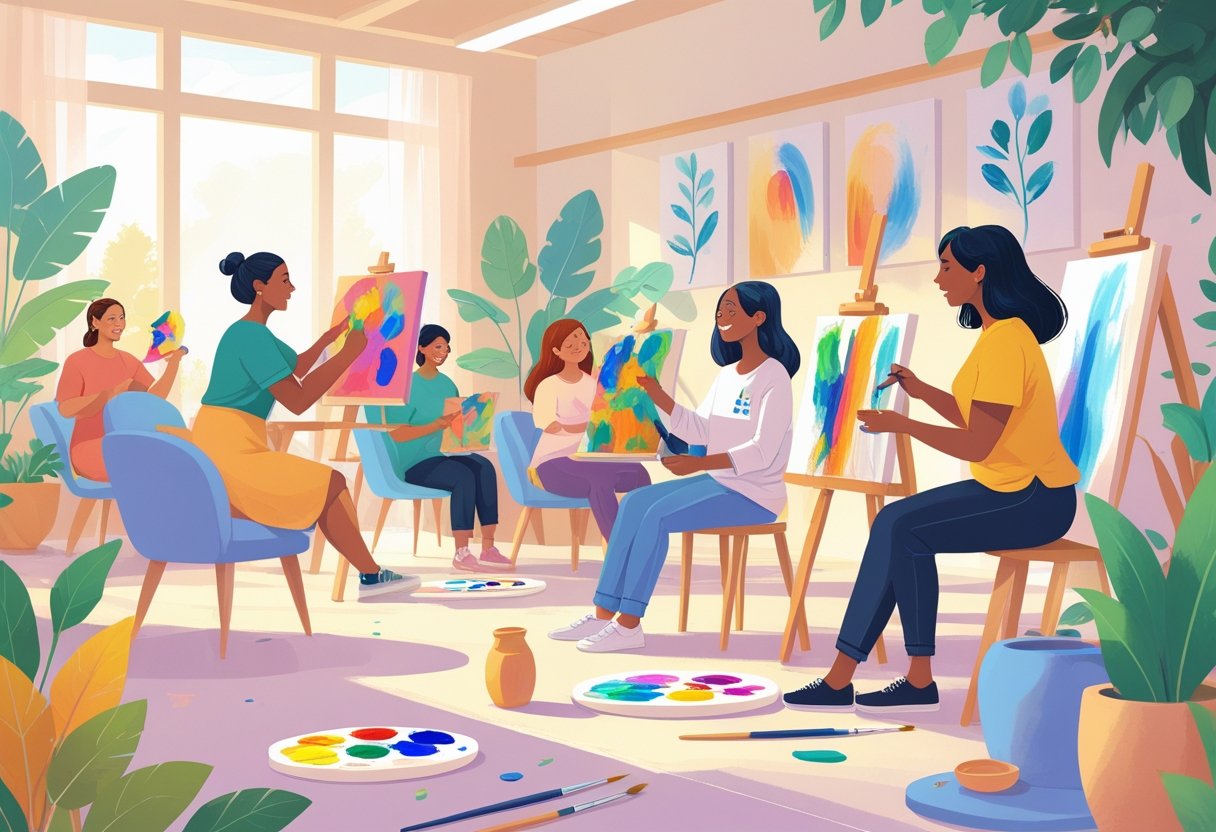
You can use art to make sense of feelings that feel too big or too confusing to say out loud. Creating images, textures, or simple marks helps you notice patterns in your mood, lower strong anxiety, and work through depression and life changes in ways words alone might not reach.
Art therapy gives you a nonverbal path to explore emotion, build coping skills, and move forward in recovery.
If you want support that blends creativity with clinical care, art therapy fits into many treatment plans—individual, couples, or family work. It can complement virtual or in-person sessions.
Tides Mental Health offers adult-focused art therapy options, with most care available online and in-person support in the Chicago area. You can choose the format that fits your life.
What Is Art Therapy?
Art therapy uses creative work to help you understand feelings, find new ways to cope, and improve mental health. It blends art-making with psychological support so you can explore emotion, manage stress, and build skills in therapy sessions that are often virtual or in person in the Chicago area.
Definition of Art Therapy
Art therapy is a type of psychotherapy where you make visual art—drawing, painting, collage, clay—to express thoughts and emotions that can be hard to say in words. A trained art therapist guides the process, helps you reflect on what you created, and links the artwork to your goals for anxiety, depression, life changes, or relationship issues.
You do not need art skill. The focus stays on meaning and process, not on producing a “good” image.
Sessions can be one-on-one, with couples, or in groups. Many clients use art therapy alongside talk therapy or CBT to deepen insight and practice emotion regulation.
Core Principles of Art Therapy
Art therapy rests on a few practical principles you’ll encounter in sessions. First, creative expression acts as a safe channel for feelings—this helps with emotional release and reduces overwhelm.
Second, the artwork becomes a concrete object you and the therapist can reflect on to track progress and spot patterns. Therapists emphasize collaboration and choice.
You set goals—reducing panic, handling grief, navigating a life transition, or improving family communication—and the therapist adapts materials and prompts to fit those goals. Confidentiality, respect, and a nonjudgmental stance are standard, whether your session is virtual or in-person at our Chicago location.
Different Art Therapy Modalities
Art therapy uses several approaches depending on your needs. Common modalities include:
- Visual art (drawing, painting, collage) for emotional expression and processing.
- Clay and sculpture to work with tactile sensations and grounding.
- Mixed media and digital art for flexibility in virtual sessions.
Group art therapy builds social skills and belonging, useful for couples or family work. Individual sessions focus on your personal history and symptom management.
At Tides Mental Health, therapists tailor the modality to your goals and the session format—virtual or in-person—so you get tools that fit your life and recovery plan.
How Art Therapy Aids Mental Health Recovery
Art therapy gives you ways to express hard feelings, learn about yourself, lower stress, and build strength through practice and support. It uses simple creative tasks—drawing, painting, collage, or sculpture—to make emotions visible, test new behaviors, and practice coping skills you can use in daily life.
Emotional Expression and Processing
Art makes feelings easier to show when words feel limited. You can use color, shape, and texture to represent anger, sadness, or relief, which helps you and your therapist identify specific emotional patterns and triggers.
Creating a visual record—sketches or a series of pieces—lets you track change over weeks or months. During sessions, your therapist guides you to notice what you made and what it might mean.
That process lets you process painful memories more slowly and safely than talking alone. You then practice naming emotions and linking them to real events, which reduces emotional intensity over time.
Tides Mental Health offers both virtual and Chicago-area in-person sessions where art tasks are tailored to anxiety, depression, life transitions, and family or couples issues. Your therapist helps turn images into concrete goals and steps you can try between sessions.
Building Self-Awareness
Art therapy helps you see parts of yourself you might miss in conversation. When you make something, you reveal preferences, recurring themes, and relationship patterns.
These clues point to values, strengths, and areas needing change. Therapists use focused prompts—like “draw a safe place” or “create a worry map”—to reveal how you think and solve problems.
You then reflect on choices you made during the process: color, size, placement. That reflection translates into clearer self-talk and better decision-making.
This work supports therapy for depression and life transitions by showing where you get stuck and where you already cope well. Whether you meet virtually or in Chicago, Tides Mental Health integrates your art discoveries into a clear plan for next steps.
Stress and Anxiety Reduction
Making art calms the body by shifting focus from ruminating thoughts to sensory activity. Simple repetitive actions—mixing paint, cutting paper—lower heart rate and reduce physical tension.
This calm state helps you access clearer thinking and reduces panic or overwhelm during sessions. Art tasks also create a safe, contained space to face anxiety-provoking material.
You can externalize worries onto paper, then change them—shrink, erase, or reframe—giving you a practical sense of control. Therapists teach short creative exercises you can use at home when anxiety spikes.
With most sessions available virtually, you can practice these grounding art exercises from home. If you prefer in-person care, Tides Mental Health offers guided sessions in Chicago that pair art-based breathing and body-awareness techniques for immediate relief.
Promoting Psychological Resilience
Art therapy builds resilience by encouraging small, repeatable acts of problem solving and self-care. Each successful art task—finishing a piece, trying a new technique—strengthens your sense of competence.
Over time, those wins add up and boost confidence in facing life changes. Therapists use art to rehearse coping strategies for future stressors.
Role-play with figure-drawing, storyboard difficult conversations, or visualize recovery steps. These practices make adaptive responses more automatic when real challenges occur.
You leave sessions with tangible tools: a calming collage, a step-by-step visual plan, or a creative ritual to use during couple or family stress. Tides Mental Health weaves these tools into your therapy plan, whether you meet online or at our Chicago location, and helps you apply them to anxiety, depression, and relationship work.
Key Benefits of Art Therapy for Recovery
Art therapy helps you express feelings you can’t always say out loud. It gives you tools to manage stress, rebuild self-worth, and practice new ways of coping.
Improved Communication Skills
Art offers a nonverbal way to show what you feel, which can be easier than talking when anxiety or depression make words hard. You can use drawing, collage, or clay to share a mood, memory, or conflict without needing perfect sentences.
That artwork becomes a bridge in therapy sessions—helping you point to parts of your experience and talk about them more clearly. Working with a trained art therapist helps you name emotions and describe patterns you might miss on your own.
Over time, your ability to explain feelings improves in both virtual and in-person sessions. Tides Mental Health supports this process whether you meet remotely or at our Chicago location.
Enhanced Coping Mechanisms
Creating art activates focused attention and reduces rumination. When you paint or sculpt, your brain shifts from repetitive worry to a task that grounds you in the present.
This provides an immediate way to lower stress and calm physical symptoms of anxiety. Art projects also let you practice healthy responses to triggers.
For example, you might make a small mixed-media piece to represent a worry, then use that piece to practice breathing and reframing techniques taught in therapy. These skills transfer to daily life—helping you manage panic, resist avoidance, and handle life transitions with clearer steps.
Building Confidence and Self-Esteem
Completing an art piece gives you visible proof of progress, which strengthens self-trust. Small successes—finishing a sketch, experimenting with color—build a sense of mastery that counters feelings of helplessness common in depression.
Group art sessions foster support and constructive feedback, so you learn to accept both praise and critique. That social practice boosts confidence in relationships and in family or couples work.
At Tides Mental Health, you can access both virtual groups and in-person workshops in Chicago to build these skills within a supportive setting.
Integrating Art Therapy Into Mental Health Treatment
Art therapy can fit into many care plans to help with anxiety, depression, life changes, and relationship work. You can access sessions mostly online, with in-person art therapy available in the Chicago area through Tides Mental Health.
Collaborative Care Approaches
You work with a team that may include a licensed therapist, psychiatrist, and an art therapist. The art therapist shares notes and treatment goals with the rest of your care team so interventions stay consistent.
Teams often use clear role definitions: the psychiatrist manages medication, the therapist works on talk-based strategies, and the art therapist focuses on creative processes that reveal emotions or coping patterns. You get coordinated plans and regular reviews to measure progress and adjust methods.
Expect practical tools like brief joint sessions, shared treatment plans, and progress tracking. These help you see how art tasks link to symptom changes, such as reduced anxiety after expressive painting or improved mood after art-based behavioral activation.
Complementary Use With Other Therapies
Art therapy pairs well with cognitive-behavioral therapy (CBT), psychodynamic work, and couples or family counseling. You might use art to externalize difficult thoughts during CBT, then apply cognitive techniques to reframe them.
In couples or family sessions, creating art together helps reveal roles and patterns without relying only on words. For depression or life transitions, art tasks can spur small, achievable actions that build momentum toward recovery.
Most clients use art therapy alongside talk therapy and medication when needed. At Tides Mental Health, you can schedule hybrid care—virtual sessions for weekly check-ins and periodic in-person art-making for hands-on guidance in Chicago.
Inpatient and Outpatient Settings
In inpatient settings, art therapy offers structured studio time, group projects, and crisis-focused exercises. You benefit from daily or several-times-weekly sessions that emphasize stabilization and emotional regulation.
Staff coordinate art goals with discharge planning to support smoother transitions back to outpatient care. Outpatient programs use shorter, goal-focused sessions that fit your schedule.
Virtual art therapy works well for skill practice, symptom monitoring, and homework assignments between visits. When you need tactile guidance, book an in-person art therapy visit at Tides Mental Health in Chicago to work directly with materials and techniques.
Who Can Benefit From Art Therapy?
Art therapy helps people express feelings, learn coping skills, and rebuild routine. It can fit into short-term treatment or longer recovery plans and works whether you attend virtually or in person.
Individuals With Depression
If you struggle with low mood, loss of interest, or trouble starting daily tasks, art therapy gives a low-pressure way to act on feelings. You use simple materials—drawing, painting, or collage—to externalize emotions.
That process can make thoughts less heavy and let you notice patterns you might miss in talk therapy. Sessions often include guided prompts and rhythm-based exercises to rebuild small habits like sitting for 20–30 minutes, which supports motivation.
Your therapist helps you link images to feelings and sets goals such as completing one piece between sessions. Tides Mental Health offers remote sessions and in-person options in the Chicago area, so you can choose what fits your energy and schedule.
People Experiencing Trauma
When memories feel overwhelming or words fail, art therapy creates a safer path to process trauma. You work at your own pace and use symbolic images to represent events, which reduces the need to give a full verbal account.
This can lower distress during recall and help you regain a sense of control. Therapists use techniques like grounding art tasks and stepwise exposure through imagery to reduce flashbacks and anxiety.
Sessions prioritize safety, predictability, and gradual pacing. You can start online with Tides Mental Health or book an in-person session in Chicago if you prefer face-to-face support.
Clients With Anxiety Disorders
If worry, panic, or avoidance limit your daily life, art therapy teaches concrete skills to calm the nervous system and shift attention. You practice short, focused art exercises—breathing-and-drawing, textured collage, or repetitive mark-making—to interrupt rumination and lower heart rate.
Therapists combine those exercises with measurable goals, such as reducing panic episodes or increasing exposure to feared situations. Visual work gives immediate feedback: you can see progress across sessions.
Tides Mental Health offers these interventions virtually for flexibility. In-person appointments are available in the Chicago area when hands-on guidance feels important.
The Process of an Art Therapy Session
An art therapy session follows a clear structure: you will get assessed, set goals, and use specific creative techniques guided by a trained therapist. Sessions focus on your needs, such as anxiety, depression, life transitions, or relationship work.
Sessions can occur virtually or in person in the Chicago area.
Assessment and Goal Setting
Your first session usually starts with a clinical intake. The therapist asks about your history, current symptoms, and what you hope to change.
Expect questions about mood, stressors, family, and any prior therapy. This helps the therapist decide if art therapy fits your needs.
Together you set measurable goals tied to everyday life. Goals might include reducing panic attacks, improving emotional expression, or repairing communication with a partner.
The therapist notes how often you will meet, whether sessions are virtual (common) or in person in Chicago, and how progress will be tracked. You will sign consent and confidentiality forms.
The therapist explains limits of confidentiality and how artwork will be handled. This step helps you feel safe and clear about what to expect.
Creative Techniques Used
Art therapy uses simple, accessible media: drawing, collage, painting, and clay. You do not need art skills.
The therapist chooses materials that match your goals—soft pastels for calming, collage for exploring identity, clay for body-based work. Each medium targets different responses.
Sessions use structured prompts and open-ended projects. Structured tasks help with skill-building.
Evidence and Research on Art Therapy
Research shows art therapy can reduce symptoms of anxiety and depression, help with life transitions, and support couples and family work. Studies include controlled trials, program evaluations, and detailed case reports that track symptom changes, coping skills, and social functioning.
Clinical Studies and Findings
Clinical trials report that structured art therapy programs often lower anxiety and depressive symptoms when added to standard care. Randomized and non-randomized studies measured outcomes with validated scales for mood, stress, and emotion regulation.
Many trials used group art sessions to build social connection and individual sessions to explore trauma or relationship patterns. Studies in day-hospital and community settings found improvements in emotion regulation and social functioning after several weeks of art therapy.
Outcomes were stronger when therapists combined creative work with verbal processing. Many programs reported benefits for adults facing life transitions, couples stress, and family conflict.
Tides Mental Health offers both virtual and in-person art therapy in Chicago. You can expect a blend of creative tasks and talk therapy that mirrors evidence-based approaches used in the trials above.
Personal and Case Studies
Case reports show how art-making reveals emotions and memories that clients struggle to name in words. In individual sessions, clients often use images to map relationship dynamics or to externalize anxiety.
Therapists then guide reflection to build insight and coping strategies. Group case studies highlight gains in belonging and social skills, especially for people recovering from depression.
In couples work, collaborative art tasks helped partners see each other’s perspectives and practice communication. These kinds of reports give clear examples of change even when large trials are limited.
You can access similar formats with Tides Mental Health in both virtual sessions (60–70% of offerings) and in-person meetings in Chicago (30–40%). Those options let you try methods shown helpful in real-world case studies.
Limitations of Current Research
Research on art therapy has limits you should know. Many studies have small sample sizes, varied methods, and diverse therapy models, which makes it hard to compare results directly.
Trials differ in session length, art materials used, and whether therapists include verbal processing. High-quality randomized controlled trials remain fewer than for some other therapies.
That means evidence often relies on pilot studies, qualitative reports, and mixed-methods research. Researchers also call for clearer definitions of art therapy interventions and standardized outcome measures.
Accessing and Choosing Art Therapy
Art therapy can be offered in person or online and usually focuses on goals like reducing anxiety, easing depression, improving relationships, or navigating life transitions. You can find credentialed therapists, ask targeted questions about training and approach, and consider practical details like session format, cost, and comfort with materials.
Finding a Qualified Art Therapist
Look for someone credentialed as an art therapist (e.g., ATR, ATR-BC) and licensed to practice mental health therapy in your state. Verify their training in accredited art therapy programs and ask about clinical experience with adults, especially treating anxiety, depression, life transitions, or couples and family issues.
If you prefer in-person work, search for therapists located in the Chicago area. If you need virtual care, note that many therapists now offer 60–70% of sessions online.
Check for liability insurance, confidentiality policies, and whether the therapist has experience adapting art-based methods to video sessions.
Questions to Ask Professionals
Ask about the therapist’s specific experience with your concerns: “How have you used art therapy with clients who have anxiety or depression?” Request examples of typical session activities and how progress is measured.
Ask whether they work with individuals, couples, or families, and if they plan to expand services for children or adolescents. Clarify logistics: session length, frequency, fees, sliding scale options, and insurance billing.
Ask how they handle materials—whether you supply them or the therapist does—and how online sessions manage art-making. Finally, ask about safety plans and how they coordinate care with other providers if you already have a therapist or psychiatrist.
Considerations for Getting Started
Decide whether you want mostly virtual sessions or in-person care in Chicago. Virtual work suits scheduling and travel limits and still supports most art-based interventions.
In-person sessions let you use shared studio supplies and may feel more tactile, which some people prefer. Think about time and cost commitments before you begin.
Start with a short intake or trial session to see fit and comfort with the therapist’s style. If you choose Tides Mental Health, confirm that their clinicians match your needs, offer the mix of virtual and in-person options you want, and have experience treating your specific concerns.
Conclusion
Art therapy gives you a clear, hands-on way to work through anxiety, depression, and major life changes. It combines creative expression with therapy techniques to help you name feelings and reduce stress.
You can use art in individual or couple and family sessions to strengthen communication and insight. Many adults find it easier to show emotions through art than through words alone.
Tides Mental Health offers both virtual and in-person options to fit your needs. About 60–70% of sessions are virtual, which makes access easier, while 30–40% occur in Chicago for those who prefer face-to-face care.
If you want a therapy approach that blends practical tools with creative work, art therapy can be a strong option. Reach out to Tides Mental Health to learn how this method can fit into your recovery plan.