
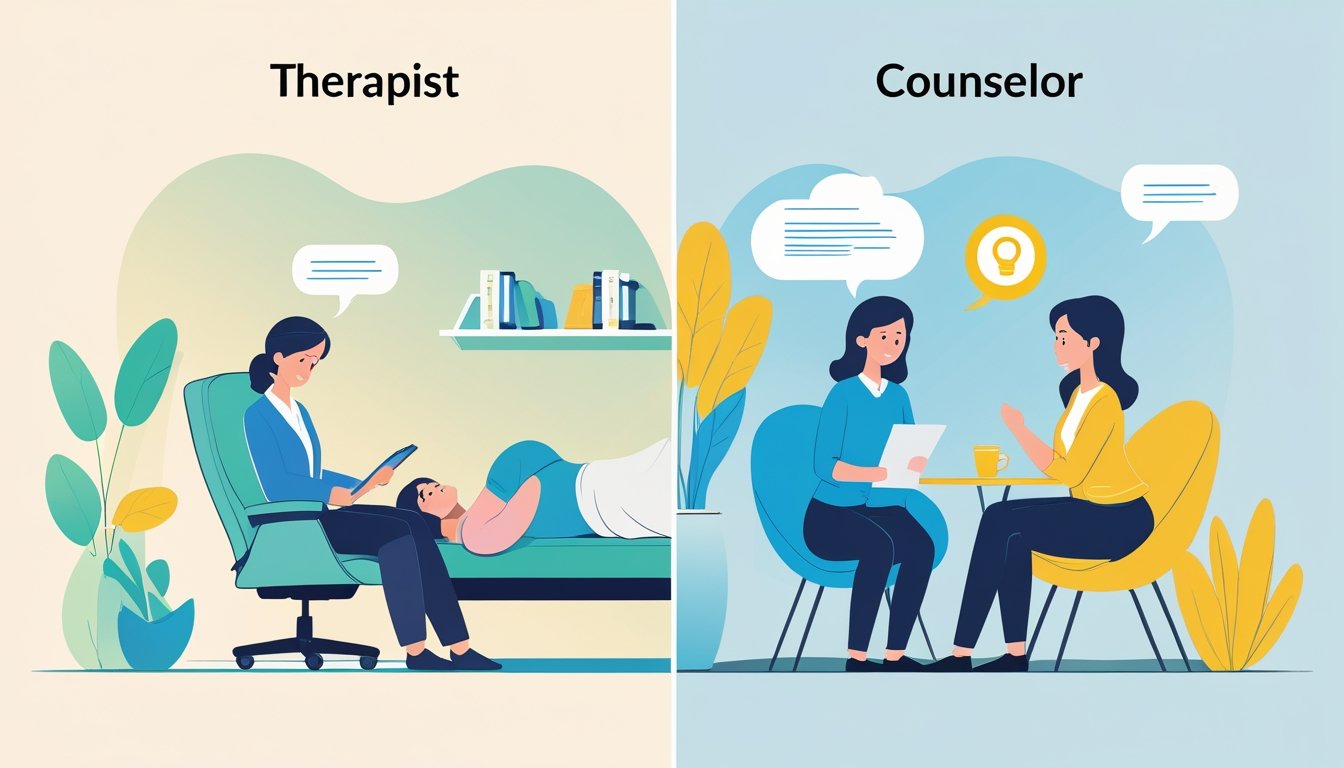
You may feel unsure which professional fits your needs: someone to help with anxiety, depression, life changes, or relationship stress. Therapists and counselors both talk with you and use similar methods, but they often differ in training, focus, and how long they work with you.
A therapist usually handles deeper or longer-term mental health issues, while a counselor often focuses on short-term goals and practical skills.
This article will explain how therapists and counselors differ, where they work, and how to choose the best fit for your situation. If you want virtual or in-person care, Tides Mental Health offers both — mostly virtual appointments and in-person services in the Chicago area — and can help you decide which approach matches your goals.
Defining a Therapist
A therapist helps you work through mental health concerns and life changes using talk-based treatment and clinical tools. You can expect trained professionals to diagnose conditions, teach coping skills, and guide longer-term change.
Types of Therapists
Therapists include licensed psychologists, licensed clinical social workers (LCSWs), marriage and family therapists (MFTs), and licensed professional counselors (LPCs). Each type has different training paths: psychologists usually hold a PhD or PsyD, while LCSWs, MFTs, and LPCs usually hold master’s degrees plus supervised clinical hours.
You will meet therapists who specialize in adult anxiety, depression, life transitions, and couples or family work. Some focus on longer-term psychotherapy; others focus on short-term, skills-based approaches.
Many practices offer both virtual and in-person care—about 60–70% of sessions are virtual and 30–40% in-person, with in-person options available in the Chicago area.
Therapist Credentials
Look for these common credentials and what they mean for your care:
- PhD / PsyD: Advanced doctoral training in assessment and therapy.
- LCSW: Masters-level training with clinical social work focus and independent licensure.
- LPC / LPCC: Masters-level clinical counselors trained in psychotherapy techniques.
- MFT: Specialized masters training in family and couples interventions.
Licensure ensures the therapist completed supervised hours, passed state exams, and follows ethical rules. You should verify state licensure and ask about continuing education, trauma-informed training, and specific work with anxiety, depression, or couples therapy.
Common Practices in Therapy
Therapists use evidence-based methods that match your goals. Common approaches include:
- Cognitive Behavioral Therapy (CBT) — for anxiety and depression.
- Acceptance and Commitment Therapy (ACT) — for values-based change.
- Emotion-Focused Therapy (EFT) — often used in couples work.
- Solution-Focused Brief Therapy — for short-term, goal-oriented care.
Sessions typically last 45–60 minutes. You’ll set goals together, track progress, and use homework like thought records or communication exercises.
About two-thirds of sessions may be virtual, which suits many people balancing work, family, or travel.
Therapist Roles and Responsibilities
A therapist’s core duties focus on assessment, treatment, and client safety. They will:
- Conduct intake assessments and diagnose conditions when appropriate.
- Develop a treatment plan tailored to your anxiety, depression, relationship issues, or life transitions.
- Teach coping skills, communication tools, and relapse prevention strategies.
- Coordinate care with medical providers when needed and maintain confidential records.
Therapists must provide a safe, nonjudgmental space and follow ethical rules, including confidentiality and informed consent.
If you seek care, Tides Mental Health offers adult-focused therapy with both virtual and Chicago-based in-person options, and plans to expand services to children and adolescents.
Defining a Counselor
A counselor helps you work through current problems and build practical skills to cope. You will find different counselor types, credential levels, and therapy methods geared toward adult concerns like anxiety, depression, life changes, and couples or family issues.
Types of Counselors
Counselors come in several common types you might meet:
- Licensed Professional Counselor (LPC / LPCC): Holds a master’s degree in counseling or related fields and completed supervised hours. They provide individual and couples therapy and can diagnose many conditions.
- Clinical Mental Health Counselor: Focuses on mental health conditions such as anxiety and depression. You’ll find these counselors working in clinics and private practices.
- School or College Counselor: Works with students on academic and social issues. Not the primary choice for adult clinical therapy.
- Marriage and Family Therapist (MFT): Specializes in couples and family dynamics. They use relational models to address communication and conflict.
- Addiction or Substance Abuse Counselor: Trained to treat substance use problems and related behaviors.
Most adult therapy you need for anxiety, depression, and life transitions will come from LPCs, clinical mental health counselors, or MFTs. If you want both virtual and in-person care, many counselors now offer a mix of telehealth and Chicago-based office visits.
Counselor Credentials
Credentials tell you what training and limits a counselor has.
- Education: Typically a master’s degree (e.g., M.A., M.S., M.Ed.) in counseling, clinical psychology, or marriage and family therapy.
- Licensure: You should look for state licensure (LPC, LPCC, LMHC, or MFT). Licensure confirms supervised clinical hours and passing of a national or state exam.
- Certification & Specialties: Some counselors hold certifications in trauma, couples therapy, or CBT. These show focused training for issues like anxiety or relationship problems.
- Supervision Status: New counselors may practice under supervision until they meet full licensure requirements. Ask about this if continuity of care matters to you.
If you choose Tides Mental Health, check practitioner profiles for licensure and specialty. Many clinicians offer 60–70% virtual sessions and 30–40% in-person care, with face-to-face options in Chicago.
Common Counseling Approaches
Counselors use practical, evidence-based methods to help you manage symptoms and change habits.
- Cognitive Behavioral Therapy (CBT): Teaches you to identify and change unhelpful thoughts and behaviors. Frequently used for anxiety and depression.
- Solution-Focused Brief Therapy (SFBT): Targets immediate goals and steps you can take now. Good for life transitions and short-term work.
- Emotionally Focused Therapy (EFT): Used mainly in couples work to improve attachment and communication.
- Person-Centered Therapy: Focuses on empathy and creating a safe space for you to explore feelings.
- Family Systems Therapy: Examines patterns within family units to improve relationships and roles.
Counselors often combine methods to fit your needs. You can expect a plan focused on measurable goals for anxiety, mood, or relationship concerns, delivered mainly virtually with in-person options available in Chicago.
Counselor Roles and Duties
A counselor’s duties center on helping you make practical changes and manage current struggles.
- Assessment and Diagnosis: Gather history, screen for conditions, and set goals with you.
- Treatment Planning: Create a step-by-step plan with strategies, homework, and progress checks.
- Therapeutic Sessions: Use talk therapy and structured techniques to build coping skills.
- Crisis Management: Provide short-term support and safety planning if you’re in acute distress.
- Referrals and Collaboration: Refer to psychiatrists, medical providers, or specialists when medication or other services are needed.
You’ll get focused care for adult issues—anxiety, depression, life transitions, and couples or family work—mostly through structured sessions.
Tides Mental Health offers licensed counselors who match these roles and provide both telehealth and Chicago-based in-person appointments.
Key Differences Between Therapists and Counselors
You will learn how therapists and counselors differ in what they treat, how deep the work goes, and what training each requires. These differences affect the types of problems they handle and the kind of care you can expect.
Scope of Practice
Therapists often handle complex, long-term mental health issues. They treat conditions like major depression, various anxiety disorders, trauma-related problems, and personality-related patterns.
Therapists may use deeper, longer-term approaches and work with both individuals and families.
Counselors typically focus on more time-limited concerns and practical problem-solving. They help with life transitions, grief, relationship skills, stress management, and coping strategies.
Counselors often provide short- to mid-term support and concrete tools you can apply quickly.
Tides Mental Health offers both virtual and in-person options in Chicago, so you can choose what fits your schedule and level of care.
Most sessions are virtual now, which makes ongoing work easier to maintain.
Focus of Treatment
Therapists prioritize understanding patterns, root causes, and long-standing emotional dynamics. They use evidence-based therapies like CBT, EMDR, or psychodynamic methods to change thinking patterns and emotional responses.
Therapy often explores past experiences and deeper personality factors to create lasting change.
Counselors focus on present-day issues and practical skills. You’ll work on goal-setting, communication techniques, problem-solving, and coping skills.
Counseling usually targets specific outcomes—improving relationships, managing symptoms of mild to moderate anxiety or depression, or navigating life transitions.
Educational Requirements
Therapists typically hold a master’s or doctorate in psychology, social work, marriage and family therapy, or clinical counseling. They complete supervised clinical hours and must attain state licensure such as LCSW, LPC, LMFT, PsyD, or PhD.
This training supports assessment, diagnosis, and long-term treatment plans.
Counselors often hold a master’s in counseling or a related field and also complete supervised hours and licensure (for example, LPC or NCC).
Their training emphasizes counseling techniques, career and life development, and short-term interventions. Licensure rules vary by state, so ask about credentials when you choose a clinician.
Tides Mental Health clinicians meet state licensure standards and can explain their training and approach before you start.
Settings for Therapy and Counseling
You will find therapy and counseling in places that match the kind of care you need, how you prefer to meet, and whether you want short-term coaching or deeper clinical work. Options range from medical clinics to schools and local community centers.
Clinical Environments
Clinical settings include private practices, outpatient clinics, and hospital behavioral health units. You can meet with licensed psychologists, psychiatrists, clinical social workers, or licensed professional counselors here.
These settings handle more complex diagnoses like major depression, anxiety disorders, medication management, and family therapy for serious relational issues.
Sessions often follow strict privacy, documentation, and billing rules. You may have intake assessments, diagnostic evaluations, and coordinated care with primary care or psychiatry.
Many clinics offer both in-person visits in Chicago and virtual visits; about 60–70% of sessions happen online while 30–40% are face-to-face.
Tides Mental Health can provide both virtual care and in-person appointments if you prefer local Chicago office time.
Community Organizations
Community centers, non-profit agencies, and faith-based groups offer counseling focused on access and practical support. You can find short-term counseling, crisis intervention, support groups, and referrals for housing or employment help.
These programs often emphasize concrete goals like coping skills for anxiety, managing depression symptoms, and navigating life transitions.
Counselors in these settings may use solution-focused or cognitive behavioral approaches and can coordinate with social services. Sliding-scale fees or subsidized slots are common.
Virtual counseling is widely used too, making it easier for you to attend whether you live near Chicago or elsewhere. Tides Mental Health also partners with community programs to expand access.
Schools and Educational Institutions
Colleges and some K–12 schools offer counseling aimed at academic stress, adjustment, and relationship issues. You can access individual counseling, group workshops, crisis response, and family meetings.
School-based providers often treat anxiety, mild to moderate depression, and transition-related concerns like moving campuses or career planning. Services typically prioritize timely access and coordination with academic staff.
Sessions are usually short-term with clear goals. Schools refer students to clinical providers when you need more intensive or long-term therapy.
For adult learners or staff, institutions may offer virtual counseling options consistent with current telehealth trends. Tides Mental Health plans to expand into adolescent therapy if you seek specialized care beyond school services.
Choosing Between a Therapist and a Counselor
Decide based on the problem you want to work on, how deep the help needs to be, and whether you prefer virtual or in-person care. Think about training, treatment length, approach, and logistics like session format and location.
Factors to Consider When Deciding
Consider your main issue first. For short-term, practical concerns—stress at work, life transitions, or coping skills—a counselor often helps with focused plans and tools.
For longer-term or complex issues—chronic depression, trauma, or persistent anxiety—a therapist with advanced training may offer deeper assessment and longer treatment. Check credentials and treatment style.
Look for licensed professionals and ask about their approaches (CBT, EMDR, family therapy). Ask whether they treat adults, couples, or families; if you need child or teen care, confirm that they plan to expand into youth services or can refer you.
Decide on session type and location. If you need flexibility, choose a provider that offers virtual care—many clinicians now use a mostly online model.
If you want in-person sessions, confirm the provider’s Chicago-area availability. Confirm fees, insurance, and whether they offer couple or family slots if that’s needed.
Common Goals in Each Approach
Counseling goals tend to be specific and short-term. You and your counselor set clear targets, like managing panic attacks, coping with job change, or improving communication with a partner.
Sessions focus on practical tools, homework, and measurable progress over weeks to months. Therapy aims for deeper change and diagnosis when needed.
Your therapist may explore patterns, past experiences, and underlying causes of anxiety or depression. You might work longer-term to shift habits, process trauma, or treat recurring mood disorders.
Couples and family therapy target relationship patterns and communication.
Legal and Ethical Considerations
You must know that therapists and counselors follow legal rules and ethical standards that protect your safety and privacy. Both must keep your information private, but limits exist for safety reasons like harm to self or others.
You should get clear informed consent before treatment begins. That means you receive information about fees, session length, limits of confidentiality, and whether sessions are virtual or in person.
Ask questions if anything seems unclear. You have the right to professional competence.
Providers should work within their training and refer you when a different skill set is needed. For instance, if your needs go beyond adult anxiety or depression care, your clinician should discuss options and referrals.
Record-keeping and documentation matter for both legal compliance and continuity of care. Records must be accurate and secure, whether sessions are virtual or in person.
If you attend in-person care in the Chicago area, Tides Mental Health offers local options. Tides also provides virtual care, which currently matches the common split of about 60–70% virtual and 30–40% in-person sessions.
If you worry about ethical behavior, you can report concerns to licensing boards or professional associations. Keep notes of dates and communications to support any review.
Always confirm a provider’s credentials and complaint process before you start therapy or counseling.
Current Trends in Therapy and Counseling
You will find most adult therapy and counseling now focuses on anxiety, depression, life transitions, and couples or family issues. These areas drive demand because they affect daily functioning and relationships.
Telehealth remains a major trend. About 60–70% of sessions are virtual, while 30–40% occur in person.
Virtual care makes scheduling easier and keeps continuity during busy or stressful times.
Many practices plan to expand services for children and adolescents. If you have a young person who needs support, look for clinicians trained in age‑appropriate approaches and family involvement.
You can choose between virtual and local, in‑person care. In‑person options are available in the Chicago area.
Tides Mental Health offers both telehealth and Chicago-based in-person appointments to meet those needs.
Common therapy approaches include short-term, goal‑focused counseling and longer-term therapy for deeper issues.
You’ll often see evidence-based methods like cognitive behavioral techniques used across settings.
If you prefer a mix of formats, ask about hybrid options.
Some clients start virtually and move to occasional in-person sessions for specific goals, such as couples work or family meetings.