
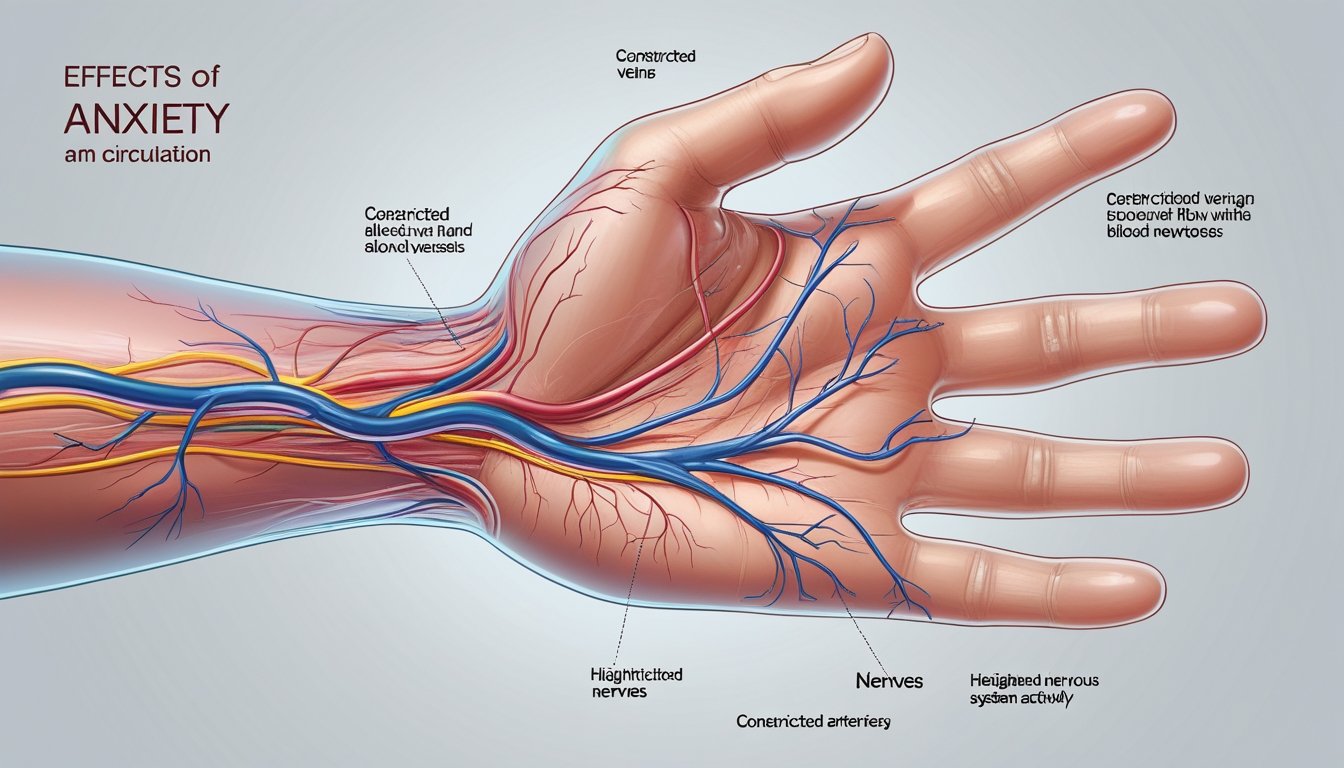
Anxiety can squeeze blood flow to your hands and arms, causing coldness, numbness, tingling, or pain. You may feel these symptoms because stress narrows blood vessels and tenses muscles, which cuts circulation to the extremities and can make normal sensations feel alarming.
You will learn how anxiety triggers these circulation changes and how they show up in the body. Certain signs may mean you should seek medical help.
Tides Mental Health offers therapy options that help you manage anxiety and reduce these physical effects. Care is mostly virtual, with in-person support in the Chicago area when you prefer face-to-face sessions.
Understanding Anxiety and Circulation
Anxiety can change how your body moves blood and how your muscles feel. You may notice cold or numb hands, tightness in your forearms, and a faster heartbeat when anxiety affects circulation.
What Is Anxiety?
Anxiety is your body’s stress response to a real or perceived threat. It raises adrenaline and cortisol, which speed your heart and make you breathe faster.
These hormones prepare you to act, but they also tense muscles and narrow some blood vessels. Anxiety can be short-lived or long-lasting.
Short bursts cause temporary symptoms like shaking or sweaty palms. Chronic anxiety keeps your system on high alert and can make symptoms more frequent.
You can get help through therapy and counseling to learn coping skills. Tides Mental Health offers adult therapy focused on anxiety, depression, life transitions, and relationship work, with mostly virtual sessions and in-person care in the Chicago area.
How Circulation Works in the Body
Your heart pumps blood through arteries, capillaries, and veins to deliver oxygen and nutrients. Arteries carry blood away from the heart under high pressure.
Capillaries exchange oxygen and waste with tissues. Veins return blood to the heart.
Blood flow to hands and arms depends on vessel size and nervous system signals. Small arteries and arterioles widen or narrow to change flow.
Nerves release signals that tell vessels to constrict or relax based on temperature, activity, or stress. Good circulation keeps your skin warm and your muscles working.
If flow drops, you can feel cold, numbness, or weakness in the hands and arms.
Connection Between Anxiety and Blood Flow
When anxiety activates the fight-or-flight response, your body redirects blood to core organs and large muscles. Peripheral vessels in the hands and arms often constrict.
That narrowing reduces blood flow and causes cold, tingling, or numb sensations. Muscle tension from anxiety can compress small vessels, making pain or soreness in the forearm and hands more likely.
Faster heart rate and shallow breathing can add dizziness or lightheadedness by changing overall blood distribution.
Direct Effects of Anxiety on Hand and Arm Circulation
Anxiety can change how blood moves through your arms and hands. These changes cause tight muscles, narrowed vessels, and symptoms like cold fingers, numbness, and pain.
Changes in Blood Flow During Anxiety
When you feel anxious, your body shifts blood toward vital organs. The sympathetic nervous system raises heart rate and directs flow to the chest and core.
That reduces blood sent to your arms and hands, which can make them feel cold or weak. This redirection happens quickly during panic or strong stress.
It can also occur in milder, ongoing anxiety that keeps your body in a low-level fight-or-flight state. Over time, repeated episodes can leave your hands feeling persistently cool or tingly.
Vascular Constriction in Hands and Arms
Anxiety triggers vasoconstriction—small arteries and arterioles in your limbs narrow. Hormones like adrenaline cause smooth muscle around blood vessels to tighten.
Narrower vessels mean less oxygen and fewer nutrients reach muscles and nerves in your forearms and hands. Vasoconstriction also raises local muscle tension.
Tight muscles add pressure to small vessels and nerves, worsening numbness or shooting pain. Simple measures like deep breathing, gentle arm stretches, or warming your hands can reduce vasoconstriction and restore flow.
Symptoms of Poor Circulation Caused by Anxiety
You may notice cold, pale, or bluish fingers during or after anxiety. Numbness, tingling, and a “pins and needles” feeling are common.
Some people report aching, stiffness, or a heavy sensation in the forearm after long stress episodes. If you have repeated symptoms, track when they happen and what you felt before they started.
This helps identify anxiety triggers and shows whether circulation improves with calming exercises. If symptoms persist or include severe pain, sudden weakness, or color change, seek medical evaluation.
Physical Manifestations in Hands and Arms
Anxiety can change how blood flows and how muscles behave in your hands and arms. You may notice sensations, temperature shifts, or color changes that match stress responses and muscle tension.
Numbness and Tingling Sensations
You might feel pins-and-needles, buzzing, or a loss of feeling in your fingers, hand, or forearm. Anxiety triggers rapid breathing and muscle tension, which can alter nerve signals and reduce oxygen to tissues.
That can produce transient numbness or tingling that often comes on during panic or long periods of stress. Check for patterns: symptoms that appear with stress, improve with relaxation, or shift between hands point toward anxiety-related causes.
If numbness is sudden, severe, or tied to weakness, seek medical care to rule out nerve compression or vascular problems. You can try slow diaphragmatic breathing, gentle arm shaking, and progressive muscle relaxation to calm nerves and restore normal sensation.
Cold Extremities
Your body redirects blood to core organs during a stress response, causing vasoconstriction in the hands and forearms. This makes your hands feel cold, clammy, or unusually cool compared with the rest of your body.
Simple steps can help: warm compresses, wearing gloves, and paced breathing reduce vasoconstriction and improve warmth. If coldness is constant, worsens with exertion, or is unequal between limbs, get a medical evaluation to exclude circulatory disease.
Paleness or Color Changes
You may notice your hands or forearms look pale, mottled, or slightly bluish when anxious. Vasoconstriction and reduced peripheral blood flow cause these visible color shifts, especially during panic attacks or intense stress.
Observe triggers and timing: color changes tied to stress and resolving with relaxation usually indicate anxiety. However, persistent or painful color shifts, ulcers, or temperature differences require prompt medical review for vascular or autoimmune issues.
Underlying Mechanisms
Anxiety changes how your body moves blood, tightens muscles, and alters breathing. These shifts can reduce blood flow to your hands and arms, cause tingling, or make your fingers feel cold.
Role of the Autonomic Nervous System
Your autonomic nervous system (ANS) controls automatic body functions like heart rate and blood vessel tone. When anxiety activates the sympathetic branch, it signals blood vessels in the skin and extremities to constrict.
That vasoconstriction redirects blood to vital organs and the core, so your hands and arms get less flow and feel cold or numb. The ANS also increases heart rate and cardiac output.
These changes can be brief during a panic episode or more persistent with chronic anxiety. Repeated sympathetic surges may make you notice frequent hand symptoms during stress.
Stress Hormones and Blood Vessel Response
Stress hormones—mainly adrenaline and noradrenaline—tighten blood vessels and change blood distribution. Adrenaline causes rapid vasoconstriction in peripheral vessels, which cuts flow to the hands and arms and can produce pins-and-needles or aching sensations.
Cortisol, released with prolonged stress, affects blood pressure and can influence vessel stiffness over time. This may make you more likely to feel chronic poor circulation when anxious.
Hormone-driven changes also heighten muscle tension in the shoulders and forearms, adding pressure that can worsen circulation and nerve irritation.
Hyperventilation and Circulation
When you breathe too fast during anxiety, you lower carbon dioxide (CO2) in your blood. Low CO2 causes blood vessels in the brain and periphery to constrict, which reduces oxygen delivery and can create tingling in your hands and forearms.
Hyperventilation also changes blood pH, which can increase muscle tension and make nerves more irritable. Symptoms often come on quickly during panic or high anxiety and can look like numbness or weakness in the arms.
Slowing your breath to a steady, shallow pace raises CO2, eases vasoconstriction, and reduces tingling.
Risk Factors and Populations at Risk
Anxiety can narrow blood vessels, raise heart rate, and change how your body directs blood. These effects matter most for people with long-term anxiety and those who already have circulation problems.
Chronic Anxiety Sufferers
If you have persistent anxiety or panic disorder, repeated surges of adrenaline can tighten arteries in your hands and arms. Over time this can lead to more frequent cold, numb, or tingly fingers, and make episodes of poor circulation last longer.
You may notice symptoms during waking hours, stressful events, or panic attacks. Sleep loss and poor appetite tied to chronic anxiety can also worsen circulation by raising inflammation and blood pressure.
Individuals With Circulatory Disorders
If you already have Raynaud’s phenomenon, peripheral artery disease, diabetes, or high blood pressure, anxiety can make symptoms worse. Narrowing of small arteries during anxiety attacks can trigger or intensify color changes, pain, or numbness in the hands and arms.
People on blood-pressure or vasoconstrictive medications should watch for interactions with anxiety medications and stimulants. Tell your provider about all drugs and supplements you use.
You should aim for coordinated care. Work with your primary care provider and a therapist to manage both the circulatory condition and anxiety.
Long-Term Consequences
Anxiety-driven changes in circulation can gradually affect blood vessels and cause persistent symptoms in your hands and arms. These effects often build over months to years and may need targeted care to reverse or manage.
Impact on Vascular Health
Repeated episodes of stress trigger vasoconstriction — blood vessels narrowing — which reduces blood flow to your hands and arms. Over time, this can increase wear on the inner lining of small arteries and veins, contributing to chronic changes in vessel flexibility and local blood pressure regulation.
Chronic inflammation from ongoing anxiety may also promote tiny structural changes that make vessels less responsive to normal signals to open and close. These changes raise your risk of feeling cold, numbness, or slowed healing after minor cuts or bruises.
If you notice persistent color changes, ulcers, or severe numbness, seek evaluation.
Potential for Chronic Symptoms
Muscle tension, altered blood flow, and nerve sensitivity can combine to create recurring arm and hand symptoms. You might experience chronic ache, tightness in forearms, tingling, or intermittent weakness that flares with stress.
These symptoms often follow the same pattern: they worsen during anxious spells and improve with relaxation or treatment. Left unaddressed, the cycle of anxiety and symptoms can maintain itself.
Diagnosis and Medical Assessment
When you notice cold, numb, or painful hands and arms, start by telling your primary care provider about the symptoms, when they occur, and what makes them better or worse.
Your clinician will ask about your anxiety, mood, and daily stressors, since emotional states can change blood flow and muscle tension.
Your doctor may perform a focused physical exam.
They check pulses, skin color, temperature, and strength in your arms and hands.
Simple tests like capillary refill and sensory checks help rule out nerve or vascular problems.
Expect basic diagnostic tests if needed: blood pressure, blood sugar, and basic blood work can find medical causes.
Your provider might order vascular studies (Doppler ultrasound) or nerve tests (EMG/NCS) when circulation or nerve damage is suspected.
These tests confirm whether symptoms come from anxiety-related changes or from a structural problem.
Be ready to discuss your mental health history and current treatment.
Anxiety, depression, and life stress can worsen physical symptoms, so providers often assess both body and mind.
Tides Mental Health offers adult-focused therapy and counseling options you can consider.
Most care is available virtually, with in-person visits in the Chicago area.
If tests are normal but symptoms persist, your clinician may recommend a trial of stress management, physical therapy, or targeted counseling.
Follow-up visits let your provider track progress and adjust the plan based on how your symptoms respond.
Management Strategies
These steps help lower anxiety and restore blood flow to your hands and arms.
Focus on specific skills you can practice daily and small physical actions that improve circulation.
Anxiety Reduction Techniques
Start with breathing exercises that slow your heart and calm nerves.
Try box breathing: inhale 4 seconds, hold 4, exhale 4, hold 4.
Do this for 3–5 minutes when you feel tense.
Use progressive muscle relaxation to release tightness in your shoulders, forearms, and hands.
Tense each muscle group for 5–7 seconds, then soften and breathe out.
Repeat from your shoulders down to your hands.
Practice grounding when anxiety spikes.
Name 5 things you see, 4 you can touch, 3 you hear, 2 you smell, 1 you taste.
This shifts focus from worry to the present.
Consider talk therapy for persistent anxiety.
Cognitive-behavioral therapy (CBT) and short-term coaching can change patterns that trigger physical symptoms.
Tides Mental Health offers mostly virtual therapy with in-person options in Chicago if you want guided support.
Improving Blood Flow in Extremities
Move regularly to push blood back into your hands and arms.
Do wrist circles, arm swings, and shoulder rolls every 30–60 minutes, especially if you sit a lot.
Aim for brief activity breaks totaling at least 10–15 minutes each hour when possible.
Use simple hand exercises to increase circulation.
Open and close your fist 10–15 times, then spread your fingers wide and hold for 5 seconds.
Repeat this 3–5 times during the day.
Apply warmth to tight muscles to relax vessels and improve flow.
Use a warm compress or soak your hands in warm water for 5–10 minutes.
Avoid smoking and excess caffeine, which constrict blood vessels and worsen symptoms.
If you notice persistent numbness, color change, or severe pain, seek medical evaluation.
A clinician can rule out vascular or nerve conditions and advise on treatment alongside anxiety care.
Preventive Measures
Start by learning to notice stress and anxiety early.
Practice simple breathing or grounding exercises when you feel tension in your hands or arms.
These steps can reduce the quick blood-flow shifts that cause coldness or numbness.
Keep your body active.
Gentle hand and arm stretches, regular walks, and brief exercise sessions improve circulation.
Aim for consistent movement across the day, especially if you sit for long periods.
Dress for warmth when needed.
Wear gloves or layered clothing to protect your hands and wrists in cold environments.
Warmth helps small blood vessels stay open and reduces discomfort.
Adopt daily habits that support circulation and mental health.
Get regular sleep, eat balanced meals, and limit nicotine and excessive caffeine.
These choices reduce anxiety triggers and support steady blood flow.
Consider counseling if anxiety affects your daily life or circulation.
Tides Mental Health offers adult therapy focused on anxiety, depression, life changes, and relationships, with mostly virtual sessions and in-person care in the Chicago area.
Therapy can teach coping skills that directly improve your physical symptoms.
Use practical workplace fixes.
Adjust your desk, take short breaks to move your arms, and avoid gripping tools too tightly.
If you work with vibrating tools, follow safety guidance like keeping hands warm and using proper equipment to lower risk of circulation problems.
When to Seek Medical Attention
If you feel sudden, severe arm or hand pain, get emergency care right away.
Especially call for help if the pain comes with chest pain, shortness of breath, nausea, sweating, dizziness, or fainting.
Those can be signs of a heart attack.
Seek prompt medical evaluation if you notice persistent numbness, weakness, or loss of coordination in one arm or hand.
These symptoms can indicate nerve injury, a circulation problem, or a stroke and need quick testing.
Don’t wait if symptoms worsen over hours or days.
If your hands or arms turn pale, blue, or feel very cold, see a doctor the same day.
Sudden color change or very poor circulation can require urgent treatment.
If pain and tingling follow an injury, get checked to rule out fractures or vascular damage.
For anxiety-related circulation issues—like tightness, shallow breathing, or trembling—consider urgent care when you can’t calm down with breathing or grounding techniques.
If episodes happen often or interfere with work and relationships, arrange professional help.
Tides Mental Health offers virtual therapy and in-person care in the Chicago area to help manage anxiety, depression, and related symptoms.
You can start with a remote session if that fits your needs.
Conclusion
Anxiety can change how blood flows to your hands and arms.
You may notice numbness, tingling, coldness, or aching when your body tenses or you breathe quickly.
These signs often come from muscle tightness, nerve compression, or changes in circulation tied to stress.
You can reduce these symptoms with steady breathing and gentle movement.
Therapy and counseling help you learn tools to manage stress and relax your body.
You can attend most sessions virtually or come in person if you live near Chicago.
If symptoms are sudden, severe, or come with chest pain or weakness, seek medical care right away.
For ongoing or recurring symptoms, combine medical checkups with mental health support.
Tides Mental Health offers adult therapy and counseling focused on anxiety, depression, life transitions, and relationships, with mostly virtual sessions and in-person options in Chicago.