
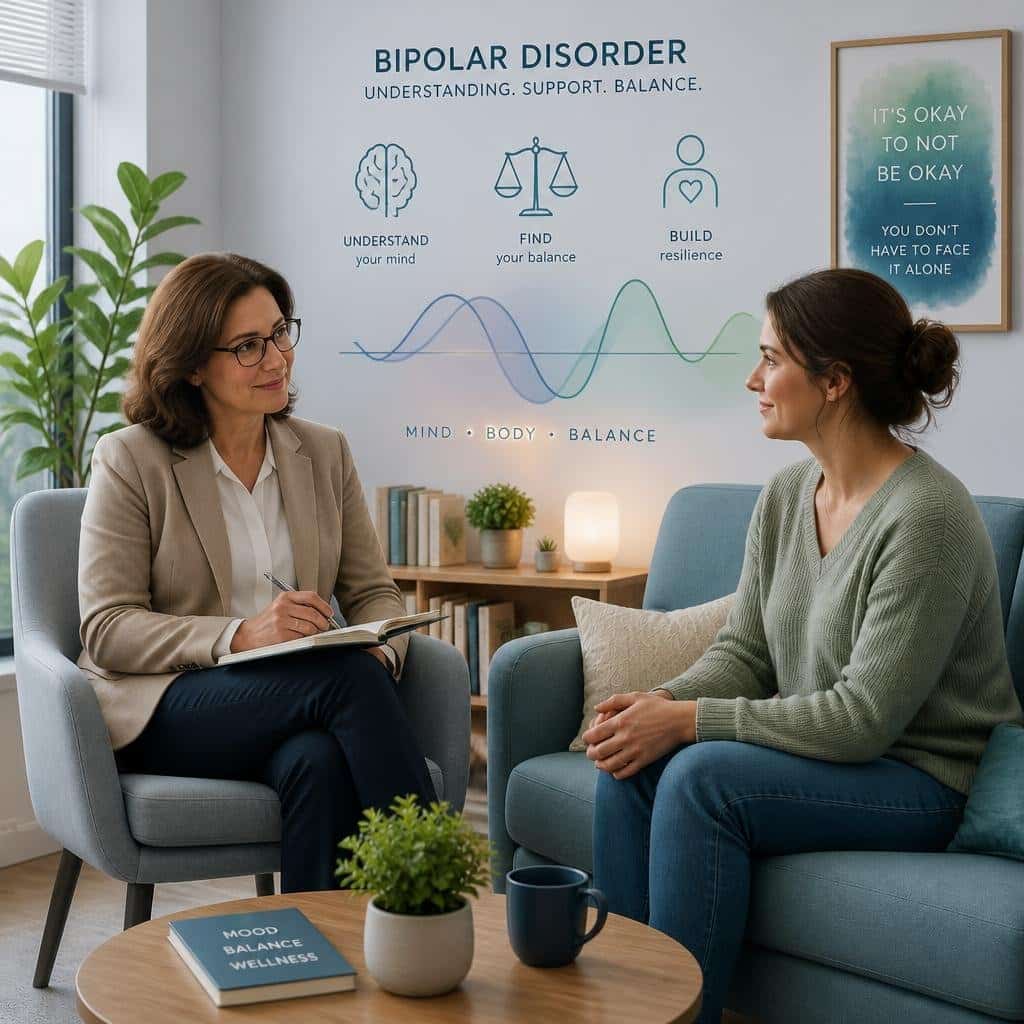
Therapy for bipolar disorder can give you a clear structure for managing mood changes, reducing relapse risk, and staying connected to care. It is not a stand-alone fix for every person, yet it is a key part of long-term bipolar disorder treatment for many adults.
The best results usually come when psychotherapy for bipolar disorder is combined with medication, regular follow-up, and practical support for sleep, routines, and stress.
Talk therapy gives you tools that help between mood episodes, not just during a crisis. It can also help you spot patterns earlier, follow your treatment plan more consistently, and handle the day-to-day strain that often comes with treating bipolar disorder.
How Therapy Fits Into Bipolar Disorder Treatment
Bipolar disorder is a long-term condition with mood episodes that can change how you think, sleep, work, and relate to others. Psychotherapy is one part of mental health care that supports both symptom control and daily functioning.
Research reviews on psychotherapy for bipolar disorder show that evidence-based therapy works best as an add-on to medication for many people, with benefits such as faster remission, fewer relapses, and better functioning. It is also useful for building habits that support treatment over time.
Why Therapy Works Best Alongside Medication
A psychiatrist usually manages medications, while therapy supports the skills that make medication more effective in real life. Medication can help reduce manic symptoms, depressive symptoms, bipolar depression, and mood episode intensity.
Therapy can also support medication adherence, which matters because missed doses often raise the risk of new episodes. In practice, the strongest bipolar disorder treatment plan often pairs medication with psychosocial interventions and evidence-based therapy.
What Therapy Can Help With Between Mood Episodes
Therapy is not only for acute symptoms. Between episodes, you can use it to track triggers, plan for stressors, and keep routines steady.
This matters because subthreshold depressive symptoms or manic symptoms can still affect sleep, judgment, and relationships. Regular sessions can help you respond earlier, before symptoms become a full manic episode or depressive episode.
Building A Personalized Treatment Plan
Your treatment plan should reflect your diagnosis, symptom pattern, and daily life. A psychiatrist, therapist, and in some cases family members can help shape that plan.
For many adults, the best plan includes medication, psychotherapy, sleep support, and relapse prevention. If you are looking for adult therapy and counseling that fits virtual or in-person care, Tides Mental Health offers a practical option for people in the Chicago area and beyond.
Types Of Therapy For Bipolar Disorder
Several types of therapy for bipolar disorder have support from research, especially when used with medication. The most common options focus on thought patterns, daily rhythms, family support, education, and practical life skills.
The right fit depends on your bipolar symptoms, your diagnosis, and whether your main challenge is depression, mania, mixed symptoms, or maintaining stability.
Cognitive Behavioral Therapy For Bipolar Disorder
Cognitive behavioral therapy, or CBT for bipolar disorder, helps you notice how thoughts, feelings, and actions connect. It can be especially helpful when you need tools for bipolar depression, low motivation, or harsh self-criticism.
CBT for bipolar also often includes behavioral therapy steps such as sleep planning, activity scheduling, and relapse prevention. Some clinicians call parts of this cognitive therapy, since the work often starts with changing patterns of thinking.
Interpersonal And Social Rhythm Therapy
Interpersonal and social rhythm therapy, or IPSRT, focuses on steady social rhythms like waking time, meals, work, and bedtime. When your routines shift too much, your mood can shift with them.
IPSRT and social rhythm therapy are useful when sleep changes, travel, work strain, or relationship stress seem to trigger episodes. The goal is to make your daily patterns more stable so your mood has fewer chances to swing.
Family-Focused Therapy
Family-focused therapy teaches you and your loved ones how to reduce conflict, spot warning signs, and respond early to symptoms. It can be especially useful when home stress affects mood stability.
This approach often improves communication, problem-solving, and support for the treatment plan. It can also help family members feel less confused or helpless during mood episodes.
Psychoeducation And Support Groups
Group psychoeducation and individual psychoeducation teach you how bipolar disorder works, what symptoms to watch for, and why treatment consistency matters. Education is not basic, it is often the foundation that helps you use other therapy tools well.
Support groups, including those linked with the Depression and Bipolar Support Alliance, can reduce isolation and give you practical ideas from peers. Many people use support groups alongside formal psychotherapy.
Other Promising Therapy Approaches
Other promising options include mindfulness-based cognitive therapy, functional remediation, illness management and recovery, and interpersonal therapy. These approaches may help with attention, stress tolerance, daily structure, and symptom management.
They are not always first-line for every person, yet they can fit well when you need more support for routines, thinking patterns, or recovery skills. Many evidence-based therapy plans use more than one approach.
Choosing Therapy Based On Bipolar Symptoms And Diagnosis
Your diagnosis shapes the kind of therapy that fits best. Bipolar I, bipolar II, and cyclothymic disorder can look different, especially when manic symptoms and depressive symptoms are not equally strong.
The same therapy for bipolar disorder can be adjusted for episode pattern, severity, and current safety needs.
Therapy Considerations For Bipolar I Disorder
Bipolar I disorder usually involves full manic episodes, so therapy often puts extra focus on relapse prevention, sleep, and early warning signs. It also supports consistent medication use, since mania can carry higher risk.
Therapy may include family support and clear crisis planning. For many people with bipolar I, psychotherapy works best when it is coordinated closely with a psychiatrist and the full bipolar disorder treatment plan.
Therapy Considerations For Bipolar II Disorder
Bipolar II disorder often includes longer periods of bipolar depression and hypomanic shifts that can be missed or minimized. Therapy may focus more on depression, routine building, and mood tracking.
Some people with bipolar II benefit strongly from psychotherapy, especially when symptoms are mild to moderate and daily structure is stable. A good therapist will still screen carefully for manic symptoms and mixed features.
Support For Bipolar Depression And Mixed Symptoms
Bipolar depression often needs special attention because low energy, hopelessness, and slowed thinking can make it harder to stay engaged in care. Therapy can help you break tasks into small steps and keep treatment moving.
Mixed symptoms can be more complex, since depressed symptoms and activated symptoms may show up together. In those cases, therapy usually focuses on safety, pacing, sleep, and close coordination with mental health care providers.
Core Skills Therapy Teaches For Long-Term Stability
Good therapy gives you skills you can use after the session ends. Those skills often become the difference between a small mood shift and a full episode.
The most useful tools tend to be practical, repeatable, and easy to track in daily life.
Recognizing Early Warning Signs
Early warning signs may include less sleep, more spending, racing thoughts, irritability, withdrawal, or a drop in energy. Learning your own pattern can help you act before depressive symptoms or manic symptoms build.
Many therapists ask you to write these signs down and share them with trusted people. That makes it easier to respond quickly when mood starts to change.
Mood Charting And Tracking Patterns
Mood charting helps you see links between sleep, stressors, medication, and mood changes. A simple daily rating system can be enough.
This kind of tracking can also show patterns you might miss in the moment. Over time, it gives your therapist useful data for adjusting your treatment plan.
Sleep Schedule And Social Rhythm Protection
Sleep schedule consistency is one of the most important parts of bipolar care. Even small changes in bedtime or wake time can affect social rhythms and mood stability.
IPSRT and social rhythm therapy often use routine protection as a core strategy. In daily life, steady sleep, meals, and activity timing can support medication adherence and reduce episode risk.
Coping Skills And Interpersonal Effectiveness
Therapy also teaches coping skills for stress, conflict, and emotional overload. These can include problem-solving, grounding, communication tools, and planning ahead for difficult days.
Interpersonal effectiveness matters because relationship strain can worsen symptoms. When you communicate clearly and set limits well, you often protect both your mood and your support system.
Family, Couples, And Lifestyle Support In Therapy
Bipolar disorder affects more than one person in a household or relationship. Family and couples work can reduce confusion, improve support, and make daily life more stable.
Lifestyle support also matters because routine, stress, and substance use can all affect mood.
How Family And Couples Counseling Can Help
Family-focused therapy and couples counseling can improve communication and lower conflict around symptoms, money, sleep, or responsibilities. They can also help loved ones learn what helps during mood episodes.
Interpersonal therapy may be useful when relationship patterns make stress worse. In many cases, a few focused sessions can change how the whole household responds to bipolar disorder.
Addressing Stress, Routines, And Daily Functioning
Stressors often become harder to manage when sleep, work, and home routines are unstable. Therapy helps you build a treatment plan that fits real life, not ideal life.
That may include reminders, calendar systems, time limits, and weekly check-ins. Small lifestyle changes often support steady functioning more than major changes do.
When Substance Use Needs To Be Part Of The Plan
Substance abuse can complicate mood symptoms, sleep, and medication adherence. If alcohol or drugs are part of the picture, they should be addressed directly in care.
Therapy can help you make safer choices, build alternative coping skills, and reduce relapse risk. Your treatment plan should treat substance use as part of mental health care, not as a separate issue.
How To Find The Right Bipolar Therapist
The right clinician should know bipolar disorder, use evidence-based therapy, and work well with your psychiatrist or other prescriber. You want someone who can treat the whole pattern, not just isolated symptoms.
For adults, the best match is often a therapist who can balance structure, flexibility, and clear follow-up.
What To Look For In A Therapist Or Psychiatrist
Look for experience with psychotherapy for bipolar disorder, mood disorders, and medication coordination. A psychiatrist is important if you need medication management, while a therapist can focus on skills and support.
Ask whether they use evidence-based therapy, how they handle crisis planning, and how they support medication adherence. If you want a practical adult-focused option, Tides Mental Health offers virtual care most days, plus in-person sessions in Chicago for people who want local support.
Questions To Ask Before Starting Care
You can ask:
- How much experience do you have with bipolar disorder treatment?
- What therapy methods do you use for bipolar depression or mania?
- How do you coordinate with a psychiatrist?
- How do you track progress and warning signs?
- Do you offer virtual sessions, in-person visits, or both?
Clear answers should help you judge fit fast. You should feel that the plan is structured, specific, and realistic.
Virtual And In-Person Therapy Options
Virtual therapy can be a good fit when you need access, consistency, or privacy.
In-person care can help when you want a stronger routine or prefer face-to-face work.
Many adults do well with a hybrid setup.