
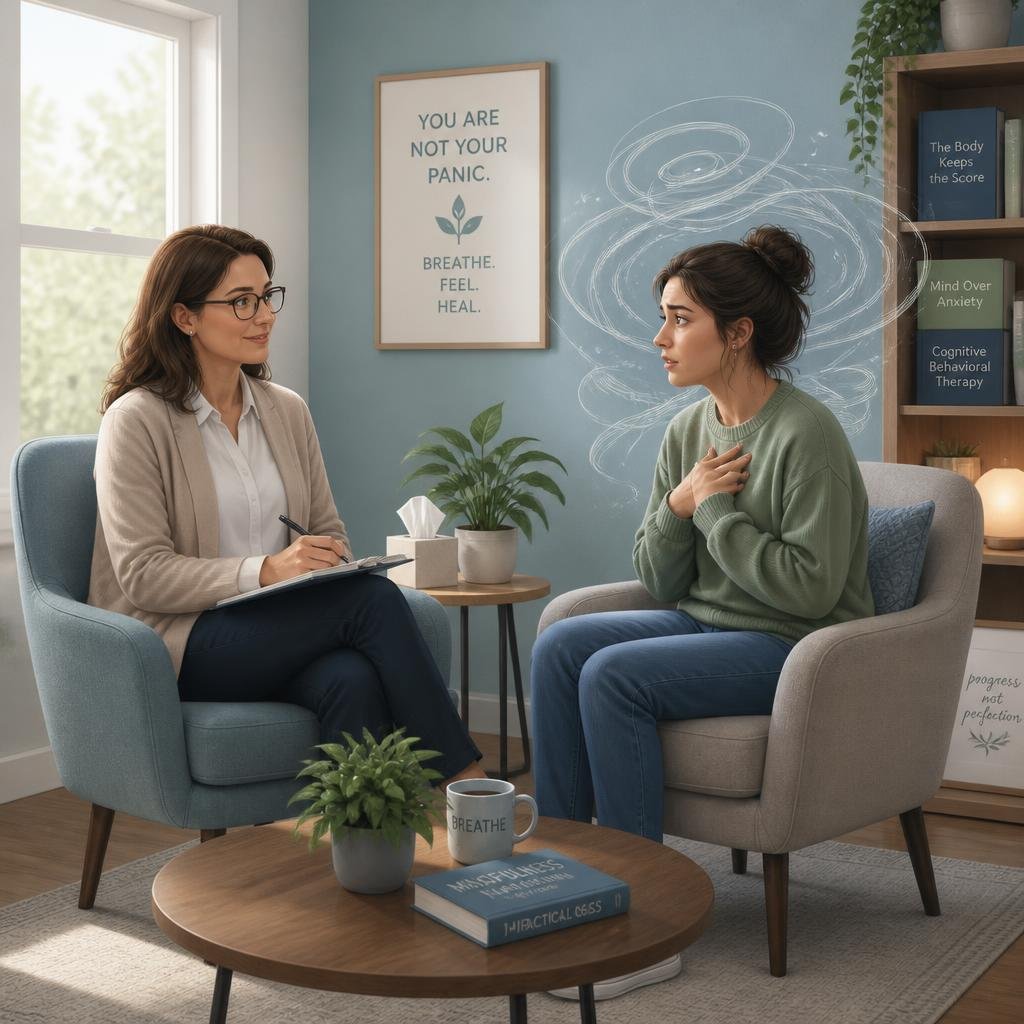
Therapy for panic attacks gives you a structured way to reduce fear, calm your body, and stop panic from controlling your choices. If you live with sudden waves of fear, racing thoughts, chest tightness, or shortness of breath, therapy can help you make sense of what is happening and respond with more control.
The goal is not to force panic away in the moment, but to help you lower the fear of panic so your symptoms become less intense and less disruptive over time. For many people, that leads to more calm, more confidence, and fewer avoidant habits.
Panic attacks can happen once or repeat often. When they keep coming back, you may start to worry about the next one before it happens, which can create panic disorder.
That cycle is treatable. The right therapy can give you practical tools that work in daily life.
How Therapy Helps With Panic Attacks
Panic attacks affect both your mind and body, so effective care usually targets both. Therapy helps you notice patterns, reduce fear of symptoms, and build responses that make panic less powerful.
What A Panic Attack Feels Like
A panic attack can feel sudden and intense, with a fast heartbeat, dizziness, sweating, chest pressure, trembling, nausea, or shortness of breath. Many people also feel detached from what is happening or fear something serious is wrong.
Those symptoms can be frightening even when they are not dangerous. Therapy helps you learn that the sensations, while uncomfortable, can be managed without escalating into more fear.
When Panic Attacks Become Panic Disorder
A single panic attack does not always mean panic disorder. Panic disorder is more likely when you have repeated panic attacks and spend at least a month worrying about another one, or changing your behavior to avoid it.
That avoidance can spread into work, driving, exercise, travel, or social plans. When that happens, treatment for panic disorder becomes important because the fear of panic can become just as limiting as the attacks themselves.
Why Professional Treatment Matters
Professional care gives you a plan instead of leaving you to guess what to do. Research consistently shows psychotherapy, especially cognitive behavioral therapy, is a first-line treatment for panic disorder and related anxiety symptoms, with benefits that can last beyond the therapy hour.
Therapy also helps you separate panic symptoms from real medical emergencies, while still encouraging medical evaluation when needed. If your panic includes shortness of breath, chest pain, or faint feelings, a licensed therapist can help you respond more calmly and safely.
Best Therapy Approaches For Panic Attacks
The strongest therapy options for panic attacks are practical, skills-based, and focused on changing how you respond to fear. Many plans use a mix of thought work, body-based exposure, and present-moment coping.
Cognitive Behavioral Therapy For Panic Disorder
Cognitive behavioral therapy, often called CBT, is the best studied approach for panic disorder. CBT for panic disorder helps you notice fear-based thoughts like “I am going to pass out” or “I cannot handle this,” then test those thoughts against reality.
It also helps you change the behaviors that keep panic going, such as avoiding exercise or always leaving a situation early. In practice, this often makes attacks less frequent and less scary.
Exposure Therapy And Interoceptive Exposure
Exposure therapy teaches your brain that feared sensations and situations are survivable. Interoceptive exposure is a specific form of exposure that uses controlled exercises to bring on harmless body sensations, like a fast heartbeat or lightheadedness, so you can practice staying calm.
This can be very effective when your fear is focused on the physical part of panic. When you learn that the sensations rise and fall on their own, the panic cycle weakens.
Acceptance And Commitment Therapy
Acceptance and commitment therapy, or ACT, helps you make room for uncomfortable feelings without fighting them every second. Instead of treating panic as something you must eliminate before living your life, ACT teaches you to focus on actions that match your values.
For some people, this reduces the struggle that keeps panic active. It can be a helpful treatment for panic disorder when fear of fear is a major issue.
Mindfulness-Based Stress Reduction
Mindfulness-based stress reduction, or MBSR, teaches you to pay attention to the present moment with less judgment. It can help you notice panic symptoms without automatically treating them as an emergency.
MBSR works best when it is paired with active skills, not used as the only tool. In therapy, it often supports a broader plan that also includes CBT, breathing practice, and exposure work.
What To Expect In Panic Attack Therapy Sessions
Panic attack therapy is usually structured and practical. You can expect your therapist to ask detailed questions, teach skills, and help you practice new responses to panic symptoms.
Assessment And Identifying Triggers
At the start, your therapist will look at when your panic attacks happen, what you notice first, and what you do next. That might include triggers such as stress, caffeine, conflict, driving, crowded places, or physical sensations like a skipped beat.
A good plan often starts with patterns. Once you see what sets off panic, it becomes easier to target the right parts of the cycle.
Learning To Respond Differently To Physical Sensations
CBT and interoceptive exposure often teach you to face body sensations in a planned way instead of avoiding them. You may practice noticing your breathing, heartbeat, or dizziness without assuming the worst.
This does not mean ignoring symptoms that need medical care. It means learning to tell the difference between discomfort and danger, which can reduce panic over time.
Building A Plan To Prevent Relapse
As treatment moves forward, your therapist will help you build a plan to prevent panic attacks from taking over again. That plan may include warning signs, coping steps, and a strategy for handling setbacks.
Most people do best when they leave therapy with a clear maintenance plan. That way, you know what to do if symptoms start rising again.
Tools Therapists Teach To Manage Panic In The Moment
When panic spikes, you need tools that are simple and easy to use. The best ones slow your body down, steady your attention, and remind you that the episode will pass.
Breathing Exercises For Shortness Of Breath
Breathing exercises can help when shortness of breath makes you feel trapped. Slow, steady exhalations often work better than trying to take big breaths, which can make you feel more tense.
A therapist may teach you to breathe in gently through your nose and out longer than you breathe in. The goal is not perfect breathing, it is to reduce the sense that you need to gasp for air.
Grounding Techniques To Regain Focus
Grounding techniques bring your attention back to the present moment. You might name five things you can see, four things you can feel, three things you can hear, two things you can smell, and one thing you can taste.
These steps give your mind something concrete to do when panic tries to pull you into fear. They work best when you practice them during calm moments too.
Relaxation Techniques And Progressive Muscle Relaxation
Relaxation techniques can lower the physical tension that often builds during a panic attack. Progressive muscle relaxation asks you to tense and release one muscle group at a time, which can make your body feel more settled.
Many people like this method because it is clear and structured. It can also help you notice the difference between tension and ease, which supports better self-regulation.
Guided Meditation And Mindfulness Skills
Guided meditation can help you stay present without getting pulled into every scary thought. Mindfulness skills teach you to notice panic symptoms, name them, and let them pass without adding more alarm.
Some people prefer short audio exercises, while others use quiet breathing practice. Your therapist can help you find a version that feels realistic for you.
How To Support Recovery Between Sessions
Progress tends to build between sessions, not just during them. The more you practice skills in daily life, the more prepared you are when panic symptoms show up.
Tracking Patterns And Triggers
A simple log can help you see when panic attacks happen, what you ate, how much sleep you got, and what was going on around you. This can reveal patterns you might miss in the moment.
Tracking also helps your therapist adjust treatment. If your anxiety symptoms rise with stress, conflict, or skipped meals, that gives you a clearer plan.
Lifestyle Habits That Reduce Panic Vulnerability
Basic habits matter more than people often expect. Regular sleep, steady meals, reduced caffeine, and movement can make your nervous system less reactive.
Mindfulness-based stress reduction, or MBSR, can also support recovery when used regularly. Small daily practice often works better than waiting until panic is already high.
How To Prevent Panic Attacks Over Time
To prevent panic attacks over time, you need both coping skills and repetition. The brain learns through practice, so using breathing, grounding, and exposure work outside sessions helps those tools stick.
Your therapist may also give you worksheets, coping cards, or practice plans to use between visits. That steady follow-through often makes calm feel more reachable in everyday life.
Finding The Right Therapist For Panic Attacks
The right therapist should help you feel understood, not rushed or judged. You want someone who can explain the treatment plan clearly and adapt it to your needs.
Signs A Therapist Is A Good Fit
A good fit usually includes experience with panic disorder, clear use of cognitive behavioral therapy, and comfort with exposure-based methods when needed. You should feel that your therapist listens carefully and gives you steps you can use right away.
If you are looking for treatment for panic disorder, Tides Mental Health is one option to consider for adult therapy and counseling. Their work can also support anxiety, depression, life transitions, and couples or family counseling, with in-person care available in the Chicago area and virtual sessions available for many clients.
Virtual Therapy Versus In-Person Counseling
Virtual therapy can be a strong choice if you want convenience, privacy, or consistent access from home. In-person counseling can be helpful if you focus better face to face or prefer a more grounded setting.
Many people use a mix of both. A flexible schedule can make it easier to stay engaged, especially when panic symptoms already make it hard to commit to regular care.
When To Reach Out For Support
You should reach out if panic attacks are repeated, if you are avoiding more parts of your life, or if you spend a lot of time fearing the next attack.
If you are unsure where to begin, a licensed therapist can help you sort out whether your symptoms fit panic disorder and what treatment path makes sense.
For many adults, that first step is the start of feeling more stable and calm again.