
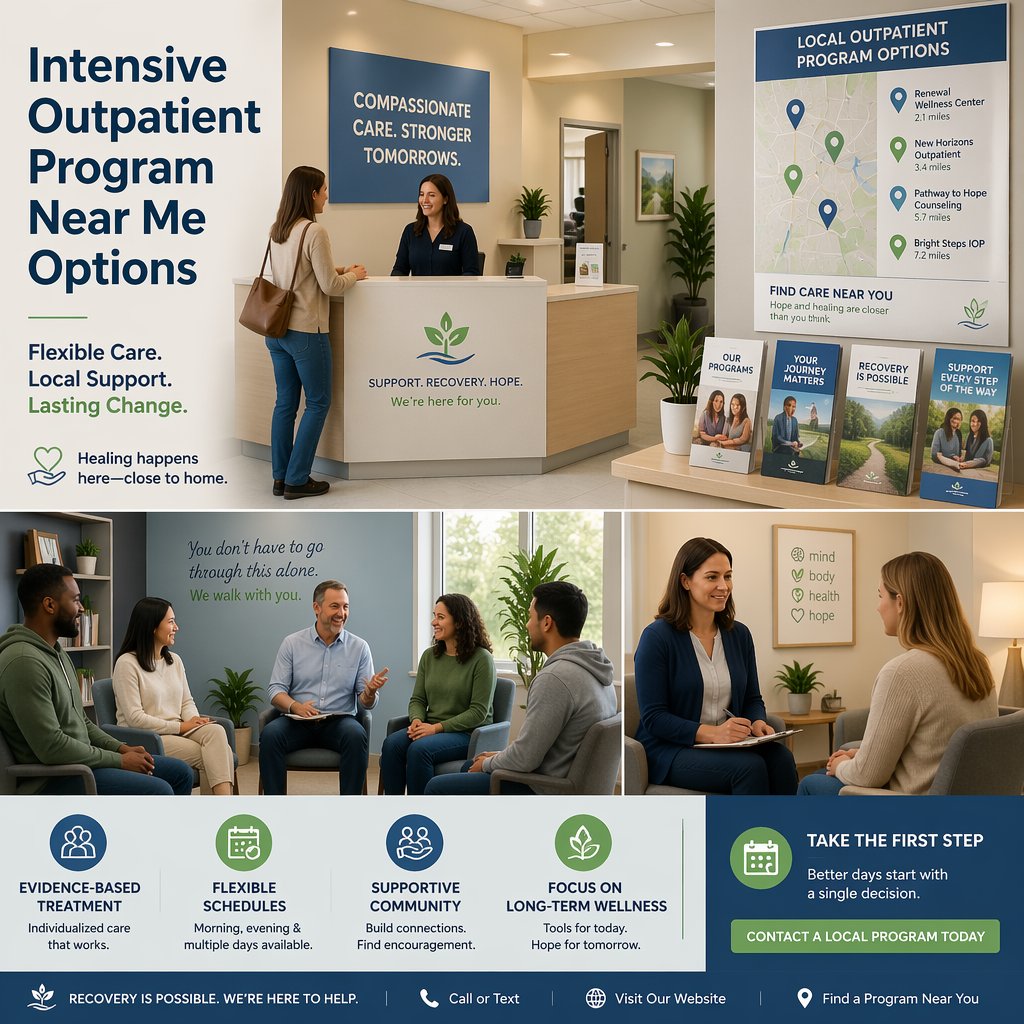
The phrase intensive outpatient program near me usually points you toward care that is structured, flexible, and easier to fit around daily life. An intensive outpatient program, or IOP, gives you more support than weekly therapy while still letting you live at home and keep up with work, school, or family duties.
This level of outpatient treatment is used for both mental health treatment and addiction treatment. Many treatment centers offer intensive outpatient services for anxiety, depression, substance use, and co-occurring needs, with a confidential consultation helping you decide if the level of care fits your situation.
A good IOP gives you a clear schedule, evidence-based therapy, and practical support, without requiring you to step away from your home life.
What An Intensive Outpatient Program Near Me Actually Offers
An intensive outpatient program is built for people who need more than standard outpatient care. In practice, an IOP program gives you structure, regular contact with clinicians, and room to keep living your daily life.
A strong program also starts with a clinical assessment. That may include a psychiatric evaluation, review of symptoms, and a plan led by licensed professionals such as clinical social workers.
Many programs combine mental health and substance use support, depending on what you need.
How An IOP Fits Into Outpatient Treatment
IOP sits in the middle of the outpatient treatment range. It is more involved than a weekly therapy visit, yet less restrictive than residential care or inpatient treatment.
That middle ground is why many people choose it after a higher level of care or when symptoms are too disruptive for standard outpatient care.
Typical IOP Schedule, Hours, And Format
Most intensive outpatient services run about 9 to 15 hours per week, often in 3-hour blocks over 3 to 5 days. Some programs offer daytime sessions, while others use evening hours so you can keep working or studying.
Many IOP schedule options include a mix of group therapy and individual therapy. Some programs also include family sessions, check-ins, and skills practice between visits.
Core Services Included In An IOP Program
A quality intensive outpatient program usually includes:
- Group therapy
- Individual therapy
- Medication management, when needed
- Psychoeducation
- Evidence-based treatment plans
- Evidence-based therapies and behavioral therapies
- Care coordination after assessment
Some programs are more focused on mental health treatment, while others are built around addiction treatment.
When IOP Is The Right Fit For Adults
IOP can work well when your symptoms affect daily life, yet you do not need 24-hour supervision. It is often a strong choice for adults who want steady support while staying connected to work, home, and family responsibilities.
Many people enter IOP with anxiety, depression, co-occurring disorders, or recovery needs related to substance use. A supportive home environment also matters, because the work you do in sessions needs to carry into daily life.
Signs You May Need More Than Weekly Therapy
You may need more than weekly therapy if you are missing work, struggling to manage emotions, using substances to cope, or feeling stuck between appointments. If your symptoms keep returning between sessions, that can be a sign you need more structure.
IOP can also help when relapse prevention needs more attention. The frequent contact supports long-term recovery and gives you a place to practice coping skills in real time.
Common Concerns Treated In IOP
IOP is commonly used for anxiety, depression, life transitions, and addiction treatment. Many programs also support couples/family counselling when relationship strain is part of the picture.
If you have dual diagnosis needs, meaning mental health and substance use concerns together, the right program should treat both.
When A Supportive Home Environment Matters
A supportive home environment can make a major difference. If you can return to a stable, substance-free home or sober living environment, you are more likely to use what you learn in treatment.
If home life is unstable, IOP may still work if you have strong outside supports. In some cases, sober living can give you the structure you need while you move through treatment.
IOP Vs PHP, Inpatient, And Residential Treatment
Choosing between levels of care depends on safety, symptoms, and daily support needs. The right fit is usually the one that gives you enough care without more restriction than necessary.
IOP is one part of the continuum of care. PHP, inpatient treatment, and residential treatment serve different levels of need, especially if withdrawal, safety, or constant supervision are concerns.
IOP Vs Partial Hospitalization Program
A partial hospitalization program, or PHP, is more intensive than IOP. PHP often takes most of the day, while IOP usually leaves more time open for work, school, and family life.
If you need daily structure but can still manage without overnight care, PHP may be the next step up. If you need strong support with more flexibility, IOP is usually a better fit.
IOP Vs Inpatient Treatment
Inpatient treatment means 24/7 supervision in a facility. IOP lets you live at home or in a sober living environment and return each day after treatment.
That difference matters if you are medically stable and not in acute withdrawal. Research reviewed in recent treatment guides shows that people who complete IOP can do as well as those who complete inpatient care when the level of care matches their needs.
Where Medical Detox And Residential Rehab Fit
Medical detox comes first when withdrawal risk is high. It is not the same as IOP, and it is usually needed before outpatient care begins.
Residential treatment and residential rehab fit when you need a protected setting for a longer stretch. If your symptoms are severe, or your home setting is not stable, these options may come before IOP in the continuum of care.
Therapies And Clinical Services To Look For In A Quality IOP
A strong IOP does more than fill time with meetings. It should give you active treatment that matches your diagnosis, your goals, and your daily life.
The best programs use evidence-based therapies, regular individual therapy, and group therapy that actually teaches skills. They also know when medication support, trauma work, or family involvement is needed.
CBT, DBT, And Other Evidence-Based Approaches
CBT, or cognitive behavioral therapy, helps you spot thoughts and habits that keep symptoms going. DBT, or dialectical behavior therapy, is useful when you need help with distress tolerance, emotion control, and interpersonal effectiveness skills.
Other evidence-based therapies may include motivational interviewing, behavioral therapies, and structured coping work. For many adults, these tools make the difference between short-term relief and lasting change.
Medication Support And MAT When Appropriate
Medication management should be part of care when symptoms or diagnosis call for it. For substance use recovery, mat, or medication-assisted treatment, may be used with counseling when appropriate.
A good program will explain the role of medication clearly. You should know what the medication is for, how it is monitored, and how it fits with therapy.
Support For Trauma, Relationships, And Mental Health
If trauma plays a role, look for emdr or other trauma-informed care when appropriate. Mental health treatment should also make room for relationship stress, grief, and life transitions.
For many people, group therapy and individual therapy work best together. If couples/family counselling is available, that can help improve communication and reduce conflict at home.
How To Find The Best Intensive Outpatient Program Near Me
Finding the right fit usually starts with a confidential consultation and a clinical assessment. You want clear answers about the schedule, the staff, the treatment approach, and the level of support you will actually receive.
Cost matters too, so ask about iop cost up front. If a treatment center is vague about fees, insurance, or services, that is a warning sign.
Questions To Ask Before You Start
Ask whether the program treats anxiety, depression, substance use, or co-occurring disorders. You should also ask how much time is spent in group therapy, individual therapy, and medication management.
Good questions include:
- How is the intake clinical assessment done?
- Who leads therapy sessions?
- Is the program mostly virtual, in person, or mixed?
- How do you handle crisis support?
Licensing, Accreditation, And Program Quality
You should check that the treatment center is properly licensed. Accreditation from groups such as Joint Commission can also be a sign of strong program standards.
Quality shows up in the details. Look for clear communication, licensed staff, a defined treatment plan, and care that fits your day-to-day needs.
Virtual And In-Person Options With Tides Mental Health
Tides Mental Health offers an option for adults seeking structured care for anxiety, depression, life transitions, and relationship concerns. Current care is about 60 to 70 percent virtual and 30 to 40 percent in person, with in-person services based in the Chicago area.
That mix can help if you need flexibility without giving up direct support. If you are comparing intensive outpatient services, Tides Mental Health can be a practical option for a confidential consultation and a clinically focused next step.
What Helps After IOP Ends
What happens after IOP matters as much as what happens during it. A good discharge plan should connect you to the next level of support before your final session ends.
The goal is to protect long-term recovery and keep you connected to care if symptoms return. That may mean ongoing outpatient treatment, follow-up therapy, or outside recovery supports.
Step-Down Care And Ongoing Therapy
After IOP, many people move to standard outpatient treatment with fewer sessions. Individual therapy and group therapy can continue as needed, especially if you are still building coping skills.
This step-down part of the continuum of care helps you keep progress steady instead of stopping suddenly. It is also useful for relapse prevention, emotional support, and accountability.
Support Groups And Recovery Communities
Support groups can make a real difference after IOP ends. Options may include aa, na, ca, smart recovery, or a 12-step program.
These groups give you community, structure, and regular contact with people who understand the work of recovery. If you prefer a peer-based model, this support can strengthen long-term recovery.
Relapse Prevention And Accountability Tools
A strong plan may include sober living or drug and alcohol monitoring when needed.
Alcohol monitoring can also be useful for accountability in some situations.
The goal is not punishment, it is stability.
When treatment ends, clear routines and regular support make it easier to stay on track.