
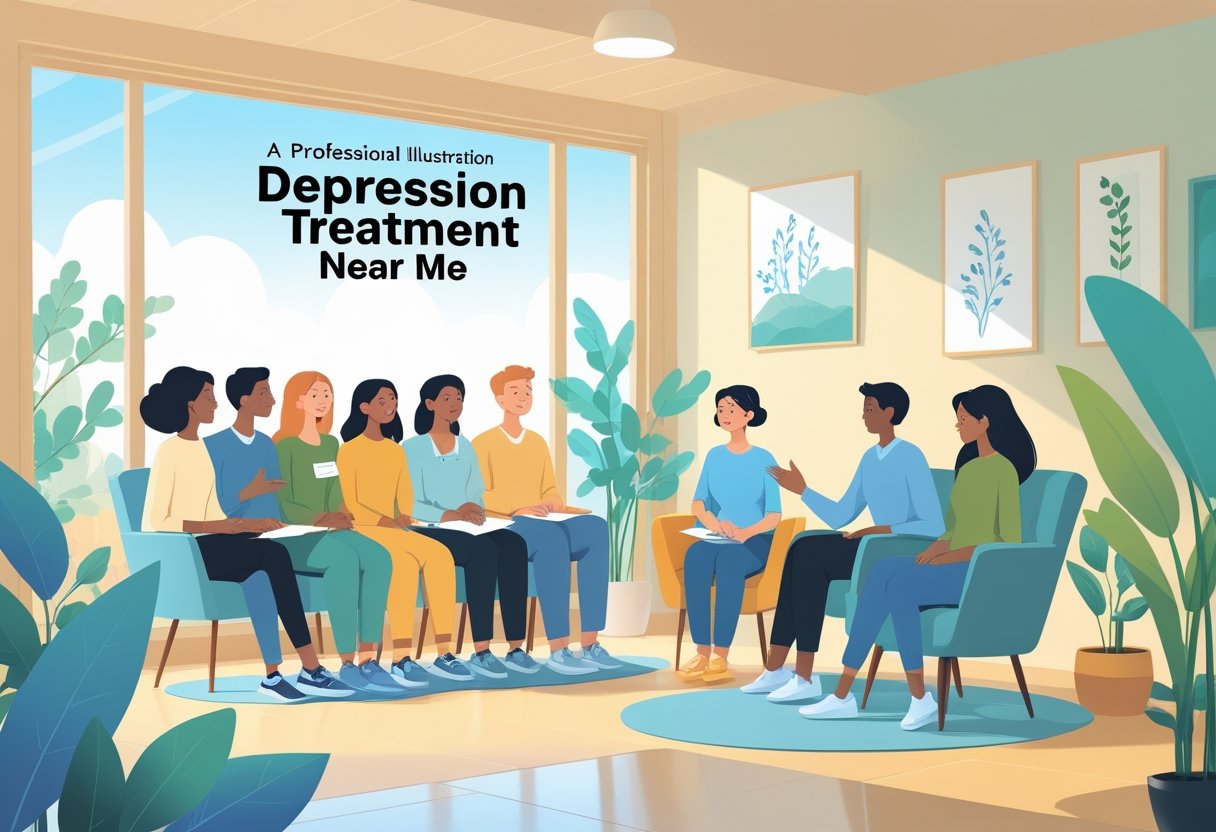
Depression treatment near me is often the phrase you type when you know something feels off and you want help that is close, practical, and real. If you are dealing with depression, you do not need to wait until things get worse before looking for care.
The right depression treatment can help you feel more stable, think more clearly, and handle daily life with more confidence. Care may include therapy for depression, medication, or a combination of both, depending on your symptoms and needs.
Depression affects how you feel, think, sleep, and work. It can also affect relationships, physical health, and motivation.
The good news is that depression help is available. With the right fit, treatment for depression can be effective.
How To Find Depression Treatment Near Me
Start by looking for a licensed provider who regularly treats depression and can build an individualized treatment plan. A good match should feel clear about their training, their approach to therapy, and how they coordinate mental health treatment when symptoms are more complex.
When you search, focus on fit as much as location. You want someone who listens well, explains treatment options clearly, and has experience with therapy for depression, anxiety, life stress, and related concerns.
What To Look For In A Depression Therapist
Look for a therapist, psychologist, counselor, or psychiatrist who lists depression treatment as a core service. Training in evidence-based care matters, along with experience supporting adults through work stress, relationship strain, grief, and major life changes.
A strong first impression includes:
- Clear licensure and credentials
- Experience with therapy for depression
- A style that feels calm, direct, and respectful
- Willingness to adjust treatment over time
- A focus on individualized treatment planning
If you want care that fits a busy schedule, ask whether the practice offers online therapy, in-person sessions, or both. At Tides Mental Health, you can find therapy that is mostly virtual with some in-person care in the Chicago area.
When Virtual Therapy Vs In-Person Care Makes Sense
Virtual therapy often works well if you want convenience, privacy, or flexible scheduling. It can be a strong fit when transportation, childcare, work hours, or mobility make travel harder.
In-person care may feel better if you prefer face-to-face contact, want a more structured setting, or feel more focused in the office. Many people use a mix of both.
Questions To Ask Before Booking A First Session
Before you book, ask:
- Do you treat depression often?
- What therapy methods do you use?
- Do you offer online therapy and in-person sessions?
- How do you create an individualized treatment plan?
- Do you work with anxiety, relationship concerns, or life transitions too?
- What should I expect in the first visit?
Clear answers help you judge whether the provider is a good fit for your goals and comfort level.
Common Symptoms And Signs That It Is Time To Seek Help
Depression does not always look like constant sadness. You may notice changes in energy, sleep, motivation, focus, or interest in things you used to enjoy.
If symptoms last for more than a short time or start affecting work, home life, or relationships, it is a good time to reach out for depression help.
Symptoms That May Point To Clinical Depression
Common symptoms of depression include:
- Persistent sad, empty, or hopeless mood
- Fatigue or low energy
- Loss of interest in hobbies
- Sleep changes
- Appetite or weight changes
- Trouble focusing
- Feeling slowed down or restless
- Guilt, worthlessness, or helplessness
- Withdrawal from others
According to the National Institute of Mental Health, clinical depression can affect sleep, eating, and daily tasks. It can also show up as irritability, isolation, or physical complaints such as headaches or stomach issues.
How Depression Can Affect Work Relationships And Daily Life
Depression can make routine tasks feel harder. You may miss deadlines, avoid calls, cancel plans, or lose patience faster than usual.
It can also strain relationships. Friends and family may notice that you are less engaged, more withdrawn, or quicker to shut down.
When Suicidal Thoughts Need Immediate Support
If you have suicidal thoughts, need immediate help. Call or text 988 in the United States, or call 911 in a life-threatening emergency.
If you are worried about yourself or someone else, treat it as urgent. Immediate support can make a real difference.
Types Of Depression That Treatment May Address
Different types of depression can look similar at first, yet they may need different treatment plans. A careful assessment helps sort out whether symptoms fit major depressive disorder, chronic depression, seasonal patterns, postpartum changes, or another condition.
Your provider may also check for related concerns such as bipolar disorder or substance use disorder, since these can change treatment choices.
Major Depressive Disorder And Persistent Depressive Disorder
Major depressive disorder, or MDD, usually involves symptoms most days for at least 2 weeks, with clear effects on daily life. Persistent depressive disorder, also called dysthymia or PDD, often lasts much longer and may feel less intense day to day, yet it can still be deeply disruptive.
Chronic depression may describe long-lasting symptoms that do not fully lift. These patterns need consistent care, not just short-term support.
Seasonal And Postpartum Forms Of Depression
Seasonal affective disorder, or SAD, often appears in late fall and winter. Postpartum depression can develop after childbirth and is more serious than the baby blues.
Premenstrual dysphoric disorder, or PMDD, is tied to the menstrual cycle and can bring strong mood symptoms before a period. These types of depression may need care that takes timing and hormone-related changes into account.
Related Conditions That Can Change Treatment Needs
Bipolar disorder can include depressive episodes along with manic or hypomanic episodes. Psychotic depression includes depression with delusions or hallucinations.
Substance use disorder can also overlap with depression. In those cases, treatment needs to address both concerns together for care to work well.
Therapy And Treatment Options For Depression
Depression treatment often starts with therapy, medication, or both. The best treatment options depend on symptom severity, your history, and what you can realistically keep up with.
For many adults, therapy for depression is the core of care, especially when stress, anxiety, or life transitions are part of the picture.
Cognitive Behavioral Therapy And Behavioral Activation
Cognitive behavioral therapy, or CBT, helps you notice unhelpful thoughts and replace them with more accurate ones. It also teaches practical skills for managing mood, routines, and stress.
Behavioral activation is often used with CBT. It focuses on rebuilding structure, activity, and meaningful action when depression has reduced motivation.
Interpersonal Psychodynamic And Dialectical Approaches
Interpersonal therapy focuses on relationship patterns, grief, conflict, and role changes. It can be useful when depression is linked to life events or social stress.
Psychodynamic therapy may help you explore deeper patterns, past experiences, and recurring emotional themes. Dialectical behavior therapy, or DBT, is not a standard first-line depression treatment for everyone, yet its skills can help with emotion regulation, distress tolerance, and coping.
Individual Couples Family And Group Support
Individual therapy is the most common starting point. Couples therapy can help when depression affects communication, trust, or intimacy.
Family therapy may be useful when home stress, caregiving strain, or conflict adds to symptoms. Group therapy can also help reduce isolation and give you practical support from others facing similar issues.
Choosing The Right Level Of Care For Your Needs
The right level of care depends on how severe your symptoms are and how much they are affecting daily function. Some people do well with weekly outpatient therapy, while others need more structure or medical support.
Your provider should build an individualized treatment plan around your symptoms, risks, goals, and any related conditions.
How An Individualized Treatment Plan Is Built
A good plan starts with a full review of symptoms, history, sleep, substance use, stressors, and safety concerns. It should also consider whether anxiety, bipolar disorder, or psychotic depression may be part of the picture.
The plan may include therapy, medication coordination, routine changes, and regular check-ins. It should change as your needs change.
When Outpatient Support May Be Enough
Outpatient therapy may be enough when you can still manage basic routines, stay safe, and keep working or studying with some support. It can work well for mild to moderate depression, or for symptoms that improve with steady care.
This level of care is often a good fit for people who want flexible scheduling, including virtual sessions.
When To Consider More Intensive Mental Health Treatment
More intensive care may be needed if symptoms are severe, long-lasting, or not improving. It is also important when there are suicidal thoughts, psychosis, major substance use concerns, or major impairment at home or work.
A provider may suggest a higher level of mental health treatment if weekly therapy alone is not enough. Faster support can prevent symptoms from getting worse.
Getting Started With Tides Mental Health
If you want to find a therapist who understands adult depression, anxiety, and life transitions, Tides Mental Health offers focused support for those needs. Care is available mostly through online therapy, with in-person options in the Chicago area.
The practice also supports couples therapy and family therapy, which can be helpful when depression affects communication, parenting, or shared stress.
Depression Therapy For Adults In Chicago And Online
Tides Mental Health provides therapy for depression for adults who want practical, structured support. You can use online therapy for convenience or choose in-person sessions if that feels like a better fit.
This can work well if you want depression treatment near me without losing access to flexible scheduling.
Support For Anxiety Life Transitions And Relationships
Depression often shows up alongside anxiety, burnout, grief, career change, or relationship strain. Tides Mental Health focuses on these real-life pressures as part of mental wellness care.
That means your treatment can address more than symptoms alone. It can also support the patterns, stressors, and relationship issues that keep symptoms going.
What To Expect From Your First Appointment
Your first appointment usually focuses on your symptoms, goals, history, and what daily life feels like right now.
You may talk about sleep, energy, relationships, work, coping habits, and any safety concerns.