
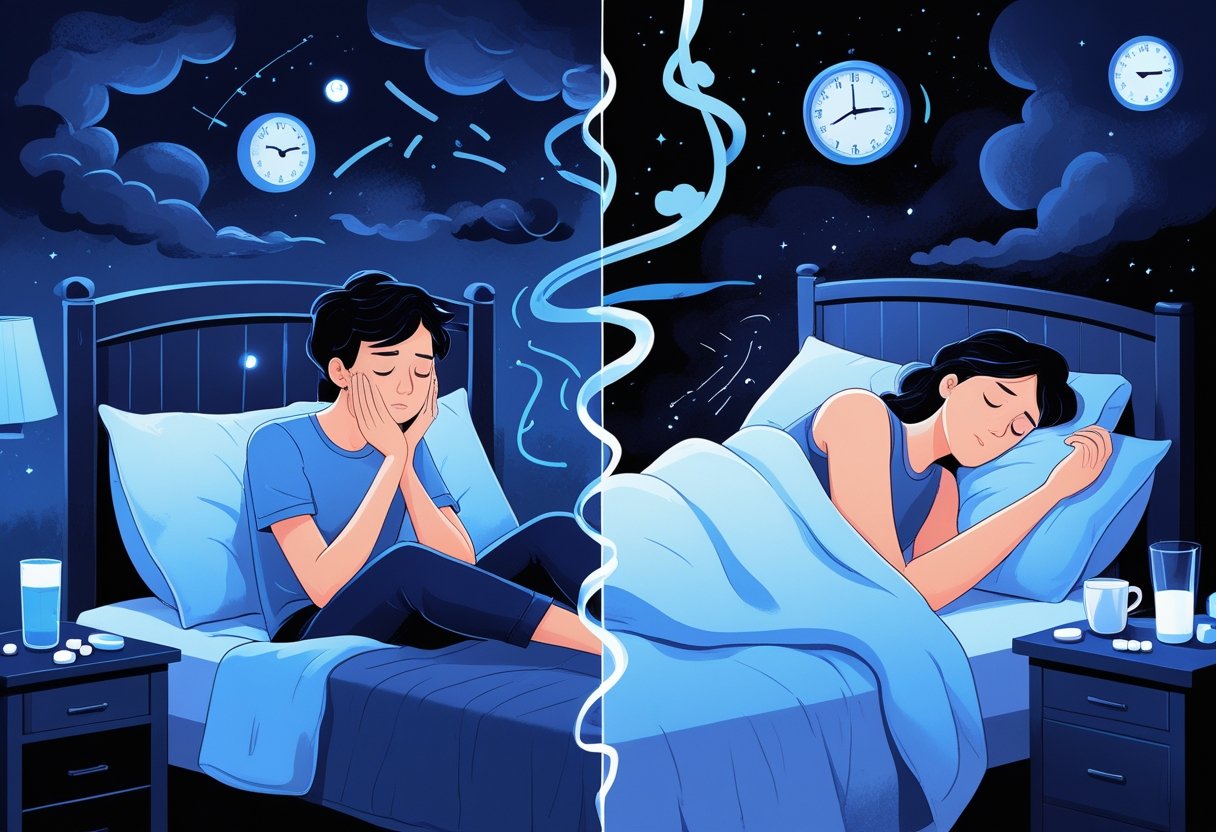
You might feel trapped by a loop where worry keeps you up and poor sleep makes your anxiety worse. This cycle is common: anxiety often disrupts sleep, and lack of sleep heightens emotional reactivity and stress.
This article will help you spot how anxiety and sleep disorders connect, what factors deepen the cycle, and practical paths forward — from assessment to treatment and long-term strategies. If you want therapy options that work with your life, Tides Mental Health offers virtual and Chicago-area in-person care focused on anxiety, mood, life changes, and relationships to help break the cycle and restore better sleep and daily functioning.
Understanding Anxiety and Sleep Disorders
Anxiety and sleep problems often feed each other. Worry can make it hard to fall or stay asleep, and poor sleep can make anxiety worse the next day.
Defining Anxiety Disorders
Anxiety disorders are more than normal stress. They include patterns of persistent worry, panic, or fear that interfere with daily life.
You might notice racing thoughts, constant tension, or a sense that something bad will happen even when there’s no clear danger. Common anxiety diagnoses include generalized anxiety disorder (excessive daily worry), panic disorder (recurrent panic attacks), social anxiety (fear of social situations), and posttraumatic stress disorder (intrusive memories and hypervigilance after trauma).
Each type affects your sleep differently, but all can raise heart rate, muscle tension, and nighttime rumination. If you’re seeking help, therapy can teach skills to manage worry, and many therapists offer virtual sessions.
Tides Mental Health provides adult therapy focused on anxiety, depression, life transitions, and couples or family counseling, with options for in-person care in the Chicago area.
Types of Sleep Disorders
Sleep disorders cover many problems that change how you sleep or how rested you feel. Insomnia is the most common and means trouble falling asleep, staying asleep, or waking too early.
Other disorders include sleep apnea (breathing pauses that fragment sleep), restless legs syndrome (uncomfortable urges to move your legs), and circadian rhythm disorders (misaligned sleep schedules). Each disorder has specific signs: insomnia gives you reduced total sleep and daytime tiredness; sleep apnea causes loud snoring and daytime sleepiness; restless legs wakes you with discomfort; circadian issues make it hard to sleep at usual times.
Treatment varies: behavioral sleep techniques help insomnia, breathing devices help some apnea cases, and timing strategies help circadian problems. Tides Mental Health can guide you toward the right next steps, whether that means behavioral therapy, sleep hygiene coaching, or referrals for medical evaluation.
Common Symptoms of Both Conditions
Anxiety and sleep disorders share many symptoms that make them hard to separate. You may feel fatigued, irritable, and have trouble concentrating.
Nighttime symptoms include racing thoughts, sudden awakenings, nightmares, or physical tension that prevents restful sleep. During the day, poor sleep increases anxious feelings, lowers mood, and reduces coping skills.
You might also notice increased heart rate, muscle aches, and reduced work or relationship functioning. You can access therapy that targets both issues.
Tides Mental Health offers mostly virtual therapy with some in-person appointments in Chicago to help you build better sleep routines and anxiety management skills.
The Bi-Directional Relationship Between Anxiety and Sleep Disorders
Anxiety and sleep problems feed each other in clear ways. Worry, night wakings, and racing thoughts can break your sleep, while poor sleep raises your stress and lowers your ability to cope.
How Anxiety Impacts Sleep Quality
Anxiety activates your body’s stress response. Your heart rate rises, breathing becomes shallow, and your brain stays alert.
This makes it hard to fall asleep and leads to frequent awakenings. Mental habits matter too.
If you replay worries at night, you train your brain to link bed with stress. That can cause conditioned insomnia where just lying down triggers arousal.
Nighttime rumination also shortens deep sleep and REM sleep, which you need to process emotions. Practical note: therapy and skills that reduce nighttime worry—like cognitive techniques and sleep routines—can restore better sleep.
Tides Mental Health offers virtual and Chicago-area in-person therapy that targets these patterns.
Effects of Sleep Disorders on Anxiety Levels
Chronic sleep loss raises emotional reactivity. When you miss sleep, the amygdala reacts more strongly to threats and the prefrontal cortex struggles to regulate emotion.
You then feel more anxious, irritable, and less able to use coping skills. Specific sleep disorders can worsen anxiety.
Insomnia increases the chance of developing an anxiety disorder. Sleep apnea fragments sleep and can produce daytime panic or concentration problems.
Shift work and irregular sleep schedules also boost anxiety risk by disturbing your circadian rhythm. Treatment that improves sleep often lowers anxiety.
Behavioral sleep treatments, continuous positive airway pressure (CPAP) for sleep apnea, and stabilizing sleep schedules help reduce anxious symptoms over time.
Shared Biological Mechanisms
Several body systems link anxiety and sleep. The HPA axis (stress hormone system) releases cortisol when you are stressed or sleep-deprived.
Elevated cortisol both increases worry and disrupts sleep architecture. Neurotransmitters overlap too.
Serotonin and GABA help regulate mood and sleep; imbalances can cause both anxiety and insomnia. Inflammation markers rise with poor sleep and can affect mood circuits, worsening anxiety.
Genetics and temperament also play roles. People with high baseline arousal or a family history of anxiety are more likely to develop persistent sleep problems.
Addressing these shared mechanisms—through therapy, medication when appropriate, and consistent sleep habits—reduces both sleep symptoms and anxiety. Tides Mental Health provides targeted approaches that combine anxiety treatment with sleep-focused strategies in virtual and Chicago-area in-person care.
Contributing Factors to the Anxiety and Sleep Disorders Connection
Multiple forces work together to link anxiety and sleep problems. You will learn how your body’s stress response drives wakefulness and how genes plus life experiences shape your risk.
These factors point to clear targets for therapy and self-care.
Stress Response and Hyperarousal
When you feel threatened, your body releases adrenaline and cortisol. These hormones raise your heart rate, tighten muscles, and make your mind race.
That reaction helps in short bursts but keeps you awake when it becomes chronic. Nighttime worry often focuses on sleep itself — you may watch the clock or fear not falling asleep.
That leads to conditioned arousal: your bed and bedroom become linked with alertness, not rest. Over time, the brain learns to stay alert at night, making insomnia and anxiety feed each other.
Practical steps target this loop. You can use relaxation, stimulus control (only using bed for sleep and sex), and cognitive strategies to reduce bedtime worry.
Tides Mental Health offers therapy options that work with these techniques, including virtual and Chicago-area in-person sessions.
Genetic and Environmental Influences
Some people inherit a higher sensitivity to stress. Genes can affect how strongly your nervous system reacts and how well you recover after stress.
That inherited sensitivity raises your chance of both anxiety disorders and sleep problems. Life events shape risk too.
Chronic stress at work, relationship problems, or big transitions like moving or a job change increase both anxiety and poor sleep. Early life experiences — unstable home life or trauma — can also set up lifelong sleep-wake and emotional regulation patterns.
You can change many of these risks through therapy and behavioral shifts. Counseling helps you learn coping skills, change thought patterns, and build routines that support sleep.
Tides Mental Health provides focused adult therapy for anxiety and life transitions, mostly virtual with in-person care in Chicago, to help you address both inherited and life-linked contributors.
Recognizing Signs of Co-Occurring Anxiety and Sleep Disorders
You may notice both thinking and body signs that point to anxiety and sleep problems happening at the same time. Look for changes in behavior, thoughts about sleep, and physical symptoms that repeat night after night.
Behavioral and Cognitive Indicators
You might dread bedtime because you worry about not falling asleep or waking up too early. These worries often lead to behaviors like staying in bed while checking the clock, napping late in the day, or using screens to try to distract yourself.
Those actions can make your sleep schedule worse. Your thinking patterns can also change.
You may ruminate on the day’s events or imagine worst-case outcomes while trying to sleep. This mental replay raises alertness and reduces the brain’s ability to shift into rest.
Avoidant behaviors—skipping social plans or work tasks because you feel too tired or anxious—can show the two problems are linked. If you track your habits, look for repeated bedtimes spent awake, a growing fear of sleep, and daytime attempts to “catch up.”
These are practical signs that therapy or treatment might help.
Physical Manifestations
Your body often signals co-occurring anxiety and sleep disorders through tension and heart-rate changes. You may feel a tight chest, muscle stiffness, or persistent headaches that seem worse after a poor night’s sleep.
These symptoms can appear in the evening and keep you from relaxing. Sleep-related physical signs include frequent nighttime awakenings, restless legs, or gasping episodes that interrupt sleep.
Daytime fatigue, trouble concentrating, and increased irritability also point to the physical cost of poor sleep combined with anxiety. Watch for changes in appetite and weight; these can shift when sleep and stress are both out of balance.
If you experience several of these physical warnings consistently, consider reaching out for help. Tides Mental Health offers therapy for adults dealing with anxiety, depression, and life transitions, with most sessions available virtually and in-person care in the Chicago area.
Diagnosis and Assessment Approaches
You will learn how clinicians gather medical history, observe symptoms, use brief tests, and order sleep studies when needed. These steps help pinpoint whether anxiety causes sleep problems, sleep problems cause anxiety, or both exist together.
Clinical Evaluation Methods
Start with a detailed interview about your sleep patterns, daily routine, and specific anxiety symptoms. Clinicians ask about bedtime, wake time, naps, caffeine, alcohol, medication, nightmares, and night wakings.
They also assess mood, panic attacks, avoidance, and trauma-related sleep disturbance. Your medical history and physical exam check for medical causes such as sleep apnea, thyroid issues, or medication side effects.
Clinicians often review sleep diaries kept for 1–2 weeks to spot patterns. When signs suggest another sleep disorder or risk to safety, they may order an overnight polysomnography or a home sleep apnea test.
Tides Mental Health offers both virtual assessments and in-person evaluations in the Chicago area. If you need specialized testing, your clinician will explain options and next steps clearly.
Use of Sleep and Anxiety Questionnaires
Clinicians use validated questionnaires to quantify symptoms and track change over time. Common tools include the Insomnia Severity Index (ISI) for sleep, the Pittsburgh Sleep Quality Index (PSQI), and the Generalized Anxiety Disorder 7-item scale (GAD-7).
These short forms help measure severity and guide treatment choices. You may be asked to complete scales before your appointment or during virtual sessions.
Results help decide whether to start cognitive behavioral therapy for insomnia (CBT-I), anxiety-focused therapy, or combined treatment. Questionnaires also flag when a referral to a sleep specialist or medical workup is needed.
Tides Mental Health uses these tools routinely to tailor treatment plans for adults, with options for virtual follow-up and in-person care in Chicago.
Impact on Daily Functioning and Quality of Life
Anxiety and poor sleep often show up in ways you notice every day: trouble thinking clearly, trouble managing emotions, and strained relationships. These effects can make work, school, and family life harder and reduce your sense of well-being.
Cognitive Impairment
When you don’t sleep well because of anxiety, your attention and memory suffer. You may find it hard to focus during meetings, follow conversations, or remember simple tasks.
Reaction time slows, so tasks that used to feel automatic — like driving or typing — become riskier or more error-prone. Decision-making becomes harder.
You might hesitate on choices or rely on shortcuts that reduce accuracy. At work or school, this can lower productivity and raise stress.
Tides Mental Health offers targeted therapy to help rebuild sleep routines and reduce anxious thoughts that interrupt cognition. You can access most care virtually, or visit our Chicago-area offices for in-person support.
Emotional and Social Effects
Lack of sleep and persistent anxiety heighten irritability and mood swings. You may feel more pessimistic, quick to anger, or emotionally drained.
This makes it harder to enjoy activities you once liked. It also reduces emotional resilience when problems arise.
Social life can suffer. You might cancel plans, avoid social contact, or withdraw from family roles because you feel too tired or anxious.
Couples and family relationships can strain when partners misunderstand sleep-related withdrawal or mood changes. Therapy can teach skills for emotional regulation and communication so you restore trust and connection.
Tides Mental Health supports adults with individual and couples counseling. Most sessions are virtual, with in-person options in Chicago.
Treatment Strategies for Coexisting Anxiety and Sleep Disorders
You can use targeted therapy, medicine, and daily habit changes to reduce both anxiety and sleep problems. Each approach aims to break the cycle where worry disrupts sleep and poor sleep worsens anxiety.
Cognitive Behavioral Therapy
Cognitive Behavioral Therapy (CBT) treats anxious thoughts and sleep habits at the same time. You learn to identify and challenge worry patterns, then replace them with realistic thoughts.
For insomnia, CBT-I teaches stimulus control (use the bed only for sleep and sex), sleep restriction (limit time in bed to build sleep drive), and relaxation techniques like progressive muscle relaxation. Typical plans run 6–12 weekly sessions and can be done in person or virtually.
Tides Mental Health offers adult-focused CBT for anxiety and insomnia. Services are available primarily virtually and in-person in the Chicago area.
Pharmacological Interventions
Medications can help short-term or when symptoms are severe. For anxiety, common options include SSRIs and SNRIs, which reduce chronic worry but may take 4–6 weeks to work.
For sleep, doctors may prescribe short-term sedative-hypnotics or low-dose sedating antidepressants to help re-establish sleep patterns. Use medications alongside therapy, not as the only strategy.
Monitor side effects like morning grogginess, dependence risk with some sleep meds, and interactions with other drugs. Your prescriber should review your history and adjust dosages.
Tides Mental Health coordinates with prescribers when pharmacologic care is needed. Follow-up is supported during mostly virtual sessions.
Lifestyle and Behavioral Changes
Daily routines strongly affect both anxiety and sleep. Keep a consistent sleep-wake schedule, avoid caffeine after mid-afternoon, and limit alcohol, which fragments sleep.
Create a pre-sleep routine: dim lights, stop screens 60 minutes before bed, and practice 10–20 minutes of calming breathing or meditation. Make your bedroom cool, dark, and quiet, and reserve the bed for sleep and intimacy only.
Exercise regularly, ideally earlier in the day, and get daylight exposure each morning to set your circadian rhythm. If life transitions or relationship stress fuel your anxiety, consider short-term counseling with Tides Mental Health to address those issues alongside sleep-focused strategies.
Prevention and Long-Term Management
You can reduce the chance that anxiety and sleep problems become long-term by acting early and keeping healthy sleep habits. Targeted steps and routine changes help you break the cycle of worry and sleeplessness.
Early Intervention Techniques
Start therapy soon after you notice persistent anxiety or sleep trouble. Cognitive Behavioral Therapy for Insomnia (CBT-I) and CBT for anxiety teach skills to change thoughts and behaviors that keep you awake.
These treatments usually take weekly sessions over 6–12 weeks and can be done virtually or in person. Use brief, guided breathing and grounding exercises when anxiety spikes at night.
Practice a 4-4-8 breathing pattern (inhale 4 seconds, hold 4, exhale 8) before bed and after waking. Track sleep and anxiety for 2–4 weeks so you and your therapist can spot patterns and adjust treatment.
If medication is considered, use it short-term while building therapy skills. Work with a clinician to review benefits, side effects, and taper plans.
For local in-person care, Tides Mental Health offers adult therapy in the Chicago area and virtual sessions for ongoing support.
Healthy Sleep Hygiene Practices
Create a consistent sleep schedule: wake and sleep at the same times every day, even weekends. This stabilizes your circadian rhythm and reduces nighttime anxiety.
Design a sleep-friendly bedroom: keep it cool (around 65°F), dark, and quiet. Remove phones and screens at least 30–60 minutes before bed.
If you use devices, enable night mode and place them out of reach. Build a wind-down routine: 20–30 minutes of low-stimulation activities like reading, stretching, or a warm shower.
Avoid caffeine after mid-afternoon and heavy meals close to bedtime. If racing thoughts wake you, write a short worry list for tomorrow and place it away from the bed.
Tides Mental Health supports primarily adult therapy for anxiety, depression, life transitions, and couples/family work. Services are delivered about 60–70% virtually and 30–40% in person in Chicago.
Emerging Research and Future Directions
New studies point to a two-way link between sleep and anxiety. Researchers are investigating how poor sleep worsens worry, and how anxiety fragments sleep.
This work aims to find biological and behavioral targets for treatment. Slow-wave sleep and REM sleep get particular attention as possible targets.
Early findings suggest boosting deep sleep may reduce anxious arousal. Clinical trials will test whether sleep-focused therapies lower anxiety symptoms over time.
Researchers call for more long-term studies to sort cause and effect. You’ll see more longitudinal designs and brain-imaging work to trace how sleep changes relate to mood.
Clinical research is also testing combined treatments. Trials pair cognitive-behavioral therapy for insomnia with anxiety-focused therapy to see if addressing both helps faster.
Expect growing interest in telehealth delivery because it increases access. If you’re seeking care, consider integrated options that treat sleep and anxiety together.
Tides Mental Health offers adult therapy and counseling focused on anxiety, depression, life transitions, and couples or family work. About 60–70% of sessions are virtual, and 30–40% are in person in the Chicago area.
Areas for future practice include expanding services to children and teens. Other focuses are refining remote protocols and measuring long-term outcomes.