
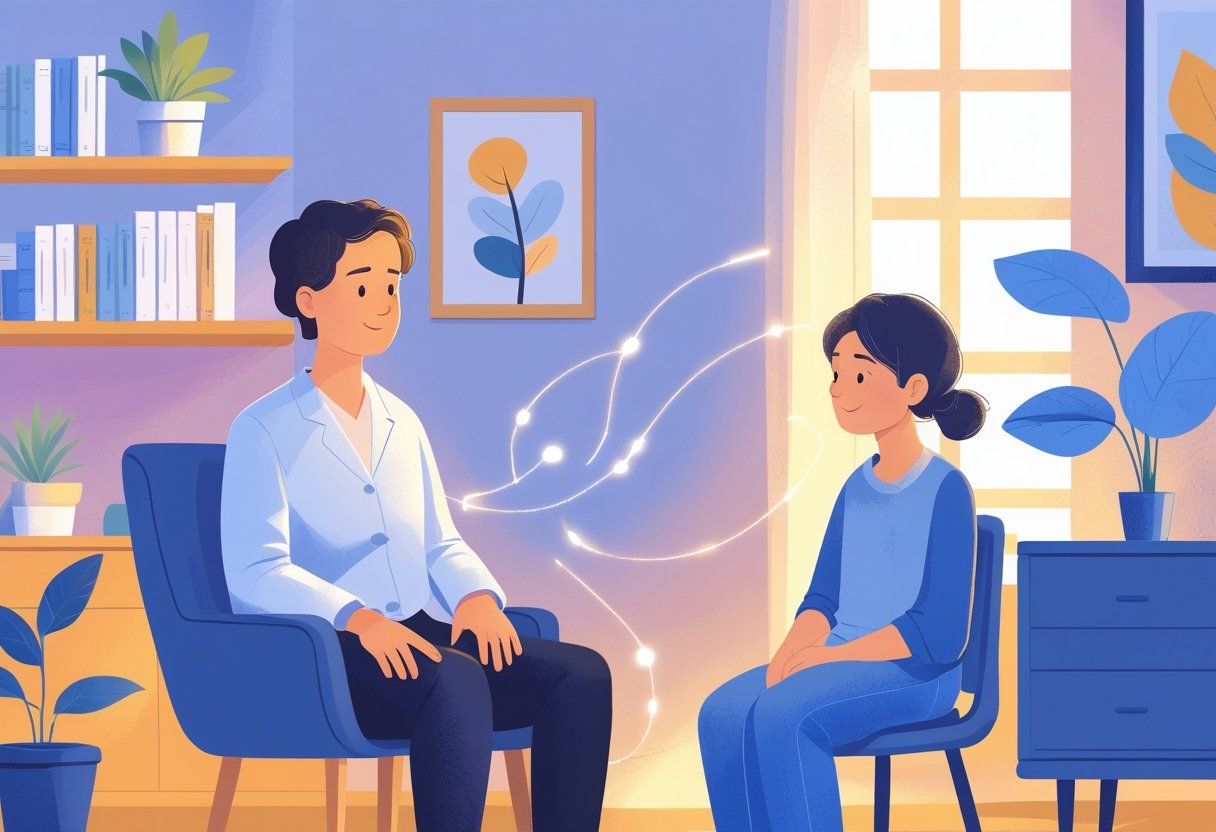
You might feel stuck by old relationship patterns, anxiety, or low mood and not know where to start. Attachment-based therapy looks at how your early bonds shape the way you connect now and gives you tools to build more secure, trusting relationships and calmer days.
It helps you understand your attachment style, heal past wounds, and form healthier connections in your relationships and daily life.
This post will explain how attachment-based therapy works, who it helps, common issues it treats (like anxiety, depression, and relationship strain), and what to expect when you choose a therapist. If you want practical, evidence-informed support delivered mostly online with in-person options in Chicago, Tides Mental Health offers specialized attachment work for adults, couples, and families as you explore change.
Defining Attachment-Based Therapy
Attachment-based therapy helps you understand how early caregiver relationships shape your feelings, thoughts, and behavior now. It focuses on repairing emotional wounds, improving how you connect with others, and building trust in relationships.
History and Origins
Attachment-based therapy grew from research on how infants bond with caregivers. In the 1950s and 1960s, researchers like John Bowlby and Mary Ainsworth studied how safe, predictable care leads to secure attachment.
Their work showed that early patterns often repeat in adult relationships. Therapists adapted these ideas to treat adults with anxiety, depression, trauma, and relationship problems.
Early clinical models integrated psychoanalytic and developmental views. Over time, therapists added structured methods to assess attachment style and to reshape relational expectations.
Today, many therapists use attachment principles in individual, couples, and family work. You can access most care virtually, with in-person options available in the Chicago area through Tides Mental Health.
Core Principles
Attachment-based therapy rests on a few clear ideas. First, your early relationships form internal models of safety and trust.
Those models guide how you seek support, manage stress, and handle closeness. Second, the therapeutic relationship itself becomes a corrective experience.
Your therapist offers consistent, attuned responses so you can relearn secure ways of relating. Third, the work targets emotion regulation, communication patterns, and unmet attachment needs.
Treatment often combines talk therapy with exercises that practice new ways of connecting. The approach fits adults facing anxiety, depression, life transitions, and couples or family conflict.
Many find it effective delivered virtually, with occasional in-person sessions if you prefer face-to-face care.
Foundational Theories
The therapy draws mainly from attachment theory and developmental psychology. Bowlby proposed that attachment behaviors evolved to keep vulnerable children safe.
Ainsworth’s stranger-situation studies identified secure, anxious, and avoidant patterns that predict later behavior. Clinicians also draw on trauma-informed care and emotion-focused therapy.
Trauma-informed practice highlights how early neglect or loss disrupts attachment and regulation. Emotion-focused methods give you tools to identify, express, and shift core emotional responses during sessions.
Together, these theories guide assessment and treatment planning. Your therapist will identify attachment patterns, link them to current symptoms, and use relational experiences in therapy to create lasting change.
How Attachment-Based Therapy Works
Attachment-based therapy helps you understand how early relationships shape your emotions and behaviors now. It uses a steady therapeutic relationship, careful assessment, and targeted interventions to reduce anxiety, ease depression, improve relationships, and guide life transitions.
Therapeutic Process
The therapy begins with an intake where you share your history and current struggles. Sessions often last 45–60 minutes and run weekly or biweekly, with the first few focused on safety and trust.
You track patterns that repeat in your relationships, such as withdrawal, clinginess, or fear of abandonment. The therapist helps you link those patterns to childhood experiences and shows how they trigger anxiety or depression today.
Treatment is goal-oriented. You and the therapist set specific goals—like lowering relationship conflict, managing panic, or improving mood—and measure progress through symptom check-ins and behavior logs.
Many clients use a mix of virtual and in-person sessions. If you are near Chicago, you can book face-to-face work; otherwise, remote sessions cover most needs while keeping continuity and convenience.
Client-Therapist Relationship
Your relationship with the therapist becomes the main tool for change. The therapist offers a stable, predictable presence so you can safely explore hard emotions and attachment wounds.
Therapists practice active listening and reflect your feelings back, helping you notice patterns you might miss. They maintain clear boundaries and consistent scheduling to model secure attachment behaviors.
You can expect gentle challenges to unhelpful beliefs, such as “I’m unlovable” or “People always leave.” The therapist mirrors healthier responses and helps you experiment with new ways to connect in real time.
Trust builds gradually. As you test new interactions with the therapist, you learn to apply those responses in relationships outside therapy, which reduces anxiety and improves communication with partners and family.
Assessment Techniques
Assessment starts with a clinical interview that covers your childhood attachments, major relationships, and current symptoms. You’ll often complete standardized questionnaires to track anxiety, depression, or relationship patterns.
Therapists use timeline work to map key events and caregiving patterns that shaped your attachment style. They note moments of neglect, inconsistency, or trauma and link these to present behaviors and feelings.
Session recordings, homework logs, and mood charts help measure change between visits. For couples or family work, therapists may use structured assessments of interaction cycles, showing how each person’s attachment style affects the other.
These assessments guide treatment choices and help your therapist decide whether to include emotion-focused techniques, cognitive work, or behavioral experiments in your plan.
Common Intervention Strategies
Therapists use clear, practical techniques to change how you relate to others. Interventions include emotion-focused work, where you learn to name, tolerate, and share feelings without shutting down or attacking.
They teach skills for emotion regulation—breathing, grounding, and short behavioral experiments—to reduce panic or depressive pulls in the moment. You practice these skills in sessions and apply them to real-life stressors.
Therapists also use corrective relational experiences. That means they respond differently than past caregivers did, helping you learn that relationships can be reliable and safe.
Role-playing and in-session feedback let you try new ways of asking for support. For couples and families, therapists guide structured communication exercises and boundary-setting tasks.
They assign targeted homework, like safe disclosure and repair steps, to change interaction patterns between sessions. If you want help, Tides Mental Health offers attachment-based therapy options, mostly via telehealth with in-person services in Chicago.
Benefits of Attachment-Based Therapy
Attachment-based therapy helps you manage strong emotions, build closer relationships, and create lasting changes in how you handle stress and conflict. It focuses on safe, trusting connections and practical skills you can use in daily life.
Emotional Regulation
Attachment-based therapy teaches you how to notice and name emotions without feeling overwhelmed. You learn techniques to slow down strong reactions — such as grounding exercises, paced breathing, and simple self-talk — so you can choose how to respond instead of reacting out of habit.
Therapists help you trace where intense feelings come from, often linked to early relationship patterns. By reworking those patterns in a safe therapeutic relationship, you form new ways to calm yourself.
This reduces panic, rumination, and emotional flooding that fuel anxiety and depression. You practice small, concrete steps in session and between sessions.
Over time, you gain more consistent control over mood swings, sleep disruption from worry, and impulsive behavior tied to stress.
Improved Interpersonal Relationships
You learn to recognize your attachment style and how it shows up in romantic, family, and work relationships. That clarity helps you change specific behaviors: asking for needs clearly, tolerating closeness, or holding appropriate boundaries.
Therapy focuses on repair skills after conflicts. You practice admitting mistakes, making clear requests, and accepting apologies.
These skills lower arguments, build trust, and increase closeness. If you come as a couple or family, sessions provide guided moments to try new interactions while your therapist coaches.
Long-Term Outcomes
Attachment-based therapy aims for changes that last beyond the therapy room. You gain tools you can use years later: emotion regulation strategies, communication templates, and ways to rebuild trust after setbacks.
Those gains often reduce symptoms of anxiety and depression and ease transitions like new parenting, job changes, or relationship shifts. You’ll likely notice fewer relapses into old patterns and more resilience when life becomes stressful.
Attachment Styles in Therapy
Attachment styles shape how you relate to others, handle emotions, and trust a therapist. Knowing your style helps guide treatment choices, session goals, and the pace of work on anxiety, depression, or relationship issues.
Secure Attachment
If you have a secure attachment, you tend to trust others and ask for help when needed. In therapy, you usually form a steady working relationship with your therapist and respond well to direct interventions like behavioral strategies or emotion-focused work.
You can tolerate exploring painful memories and try new coping skills between sessions. A secure attachment lets you use both virtual and in-person sessions effectively.
You may prefer flexible scheduling and a mix of session types—remote for convenience and in-person in Chicago for deeper relational work.
Insecure Attachment Types
Insecure styles break into three common types: anxious (preoccupied), avoidant (dismissive), and disorganized (frightened). If you’re anxiously attached, you worry about abandonment and seek constant reassurance.
You may become clingy in therapy and need steady, predictable contact and clear therapist responses. If you’re avoidant, you downplay emotions and push for independence.
You might resist discussing feelings and need gradual trust-building and concrete coping skills. Disorganized attachment mixes fear and confusion; you may switch between clinging and withdrawing.
Therapy for disorganized attachment focuses on safety, stabilization, and small, consistent relational experiences.
Impact on Treatment
Your attachment style influences how quickly you trust a therapist, what interventions work, and how you practice skills outside sessions. For anxious attachment, therapists emphasize validation, predictable routines, and skills to reduce checking behaviors.
For avoidant attachment, therapists offer gentle pacing, psychoeducation, and behavioral experiments to build openness. Therapists adapt methods for depression, anxiety, or couples work based on your style.
Virtual sessions suit many attachment profiles, but some people benefit from in-person sessions in Chicago to practice new relational patterns.
Who Can Benefit From Attachment-Based Therapy
Attachment-based therapy helps with trust, emotional regulation, and relationship patterns rooted in early caregiving. It applies to people of different ages and to family groups.
You can use it for anxiety, depression, life transitions, and relationship repair, with options for virtual or in-person care in Chicago through Tides Mental Health.
Children and Adolescents
If your child shows strong clinginess, withdrawal, or extreme tantrums after changes like divorce or school moves, attachment work can help. Therapists focus on building safety and predictability in the caregiver-child bond.
Sessions may use play, family tasks, and coaching so you can learn to respond in ways that calm stress and build trust. Therapists track progress by watching behavior, sleep, and school functioning.
You will get tools to set routines, soothe intense emotions, and repair moments of disconnection. Tides Mental Health plans to expand child and teen services and currently offers virtual sessions for many families, with some in-person options in Chicago.
Adults and Couples
If you feel stuck in repeating relationship patterns, struggle with intimacy, or face anxiety and depression tied to past caregiving, attachment-based therapy can help you change how you relate.
Therapy examines your early attachments and teaches skills for emotional regulation, clearer communication, and building trust in present relationships.
Couple work focuses on recognizing each partner’s attachment style and responding differently during conflicts.
You will practice specific exercises to reduce reactivity and increase connection.
Tides Mental Health offers primarily virtual sessions for adults and couples.
In-person appointments are available in Chicago when you prefer face-to-face care.
Families
When family cycles include blame, avoidance, or repeated conflict after events like separation, grief, or a child’s behavioral issues, attachment-based therapy helps reorganize interactions.
Therapists guide family members to notice triggers, repair ruptures, and set consistent roles that support emotional safety.
You will learn structured exercises to improve listening and validate feelings.
Family sessions often combine joint work and guided coaching so caregivers can maintain changes at home.
Tides Mental Health provides family services mainly via telehealth.
In-person family sessions are available in the Chicago area for those who want local support.
Common Issues Addressed
Attachment-based work helps you uncover how past relationships shape how you feel, think, and act now.
It focuses on patterns that cause pain in current relationships, mood, and daily functioning.
Trauma and Abuse
If you experienced neglect, physical harm, sexual abuse, or repeated emotional invalidation as a child, attachment-based therapy helps you name those events and their effects.
You learn how early safety breaches taught your brain to expect danger or to shut down, and you practice new ways to feel safer in relationships.
Therapists use the client-therapist bond to rebuild trust.
You will practice expressing emotions, tolerating distress, and changing automatic reactions that come from old wounds.
This work often includes gentle exposure to painful memories, regulation skills for intense feelings, and new relational experiments with partners or family.
Tides Mental Health offers both virtual and in-person sessions in the Chicago area to support this work.
Many people find virtual sessions (60–70% of our practice) work well for safety-focused trauma work.
In-person meetings can help when body-based regulation is needed.
Anxiety and Depression
Attachment patterns often show up as worry, panic, low mood, or persistent self-criticism.
If you tend to cling, withdraw, or expect rejection, these styles fuel anxiety and depression by keeping you stuck in repetitive thoughts or isolating behaviors.
You and your therapist map how your attachment style keeps symptoms going.
Then you practice specific skills: grounding and breathing for panic, activity scheduling for low mood, and communication exercises to ask for support without pushing people away.
The therapy also targets core beliefs like “I’m unlovable” or “I can’t trust others” and replaces them with tested, balanced views.
Tides Mental Health integrates these strategies into short- and long-term plans you can use in daily life.
Virtual sessions let you apply skills in your real-world settings.
Chicago in-person care is available if hands-on coaching helps.
Attachment Disorders
When attachment problems are severe, you might have rigid patterns like extreme avoidance, clinginess, or disorganized behavior that harm relationships and work life.
In adults, these often come from prolonged early caregiving disruptions.
Therapy assesses your attachment history, current triggers, and relational roles.
Treatment combines emotion-focused work, corrective relational experiences with the therapist, and practical behavior changes—like boundary setting, consistent routines, and stepwise exposure to intimacy.
You will practice new relationship habits in safe, guided ways so they generalize to partners, family, and coworkers.
Tides Mental Health provides tailored plans that consider whether you need individual work, couples counseling, or family sessions.
Most clients start virtually and add in-person Chicago sessions when deeper, body-based interventions are needed.
Therapeutic Techniques and Modalities
Attachment-based therapy uses focused techniques to change how you relate to others, manage emotions, and heal past wounds.
Methods range from one-on-one work to family sessions and blended practices that include trauma processing and skill building.
Individual Therapy Methods
In one-on-one sessions, your therapist helps you map your attachment style and the patterns that cause anxiety, depression, or relationship stress.
Expect talk therapy plus targeted interventions like emotion-focused exercises that help you name and sit with feelings safely.
You may do guided relational experiments where you practice new ways to ask for support or set boundaries.
Therapists often use timeline or life-history work to connect childhood events to current triggers.
For trauma-linked attachment wounds, controlled exposure or EMDR-style approaches can reduce distress while keeping you anchored in the present.
Most individual work at Tides Mental Health is available virtually.
In-person options are available in Chicago.
Your therapist will set clear goals, track progress, and teach skills you can use between sessions.
Family and Group Approaches
Family and couples sessions focus on changing interaction patterns, not assigning blame.
Your clinician helps each person describe needs clearly and respond without escalating.
Therapists use role play, communication drills, and structured feedback to rebuild trust.
For parents, therapists teach responsive caregiving techniques and how to repair ruptures after conflict.
In couple work, interventions target cycles of withdrawal or criticism and replace them with predictable repair moves.
Group formats let you practice new behaviors with peers while receiving therapist guidance.
Tides Mental Health offers both virtual family sessions and in-person couples work in Chicago.
These settings help you shift family dynamics that maintain anxiety, depression, or relational distance.
Integrative Practices
Integrative work blends attachment methods with skills training and trauma care to match your needs.
You may get mindfulness and grounding exercises to manage panic and depressive loops.
Therapists often combine attachment repair with cognitive restructuring to change unhelpful beliefs about yourself and others.
Somatic techniques address body-held stress—simple breathing, progressive muscle relaxation, or movement to reset your nervous system.
When trauma is present, therapists layer trauma-focused tools (like phased exposure or EMDR-informed protocols) with relational repair so you stay connected while processing pain.
Tides Mental Health integrates these practices in mostly virtual sessions.
In-person availability in Chicago is offered when hands-on or family-based work helps.
Your care plan will list which modalities to use and why, so you know what to expect each step of the way.
Choosing an Attachment-Based Therapist
You want a therapist who understands attachment work and fits your needs for anxiety, depression, life transitions, or relationship issues.
Look for clear credentials, training in attachment methods, and a match on how you prefer remote or in-person care.
Credentials and Training
Check for a licensed clinician: LCSW, LMFT, LPC, PsyD, or PhD.
These licenses show they finished graduate training and meet state rules.
Ask if they have extra training in attachment-based interventions, such as courses in Adult Attachment Interview use, Emotionally Focused Therapy (EFT), or attachment-focused CBT.
Confirm experience with adults and couples, since most work here focuses on anxiety, depression, and relationship issues.
Ask how long they’ve worked with attachment wounds and whether they treat life transitions.
Verify whether they plan to work with children or teens in the future if that matters to you.
Also ask about telehealth experience.
Many therapists now offer mostly virtual sessions.
Tides Mental Health provides both virtual care and in-person sessions in the Chicago area if you prefer face-to-face work.
What to Expect in Sessions
Sessions begin with an intake to map your relationship history and symptoms.
Expect questions about childhood care, current close relationships, and patterns that cause distress.
The therapist will help you notice how you form bonds and how that affects anxiety, mood, or conflict.
Therapy will combine talk, new interaction patterns, and emotion work.
Your therapist may guide you to name feelings, practice safer ways of asking for support, and test small changes in real life.
Frequency often starts weekly and shifts to biweekly as you make progress.
If you prefer virtual sessions, most clinicians use secure video platforms.
If you want in-person care, Tides Mental Health offers Chicago-based appointments.
Ask up front about session length, fees, and insurance or sliding scale options.
Potential Challenges and Limitations
Attachment-based therapy can help you with relationship patterns, trust, and emotional regulation.
But some factors can slow progress or make the approach less suitable for certain problems.
Barriers to Effective Treatment
Therapy works best when you can attend regularly and build trust with a therapist.
If you miss sessions or switch therapists often, re-establishing safety slows progress.
Virtual sessions (60–70% of our practice) help with access, yet some work—like exploring nonverbal attachment cues—may feel less clear online.
Severe symptoms such as active psychosis, uncontrolled substance use, or urgent suicidal thoughts usually need specialized or higher-level care first.
Attachment work can help once these issues stabilize.
Insurance limits, cost, and time constraints also shape what you can do.
Tides Mental Health offers both virtual and Chicago-area in-person options to fit many schedules and budgets.
Suitability for Different Clients
Attachment-based therapy focuses on patterns formed in early relationships, so it fits well if you struggle with trust, intimacy, or repeated conflict.
It often pairs with treatment for anxiety, depression, life transitions, and couples or family counseling.
If your main issue is a single, clear skill deficit—like specific phobias or acute behavioral problems—other therapies may produce faster results.
For children and adolescents, attachment work requires caregivers’ involvement and specialized training.
We plan to expand child and teen services and can refer you to appropriate care when needed.
Future Directions in Attachment-Based Therapy
You can expect attachment-based therapy to keep growing for adults facing anxiety, depression, life transitions, and relationship problems. Therapists will use more focused methods that link childhood patterns to current issues, helping you change how you relate to others.
More therapy will move online. About 60–70% of sessions are now virtual, making care easier to fit into your life.
If you prefer face-to-face work, in-person options remain available in the Chicago area through Tides Mental Health.
Researchers and clinicians plan to refine techniques so they work better for couples and families. This will mean clearer steps for rebuilding trust, improving communication, and easing conflict in close relationships.
You’ll likely see more short, goal-focused programs alongside longer therapy.
Services will expand to include children and teens. That shift will adapt adult-informed methods for younger clients and their caregivers.
Early intervention could reduce long-term anxiety and relationship problems by addressing attachment wounds sooner.
Expect more integration with other evidence-based approaches, such as trauma-informed care and emotion-focused methods. Therapists will use blended plans that match your needs and goals.
Key trends to watch:
- Greater use of virtual care for convenience and access
- Continued in-person services in Chicago through Tides Mental Health
- Expanded services for children and adolescents
- Stronger focus on couples, family work, and clear treatment steps