
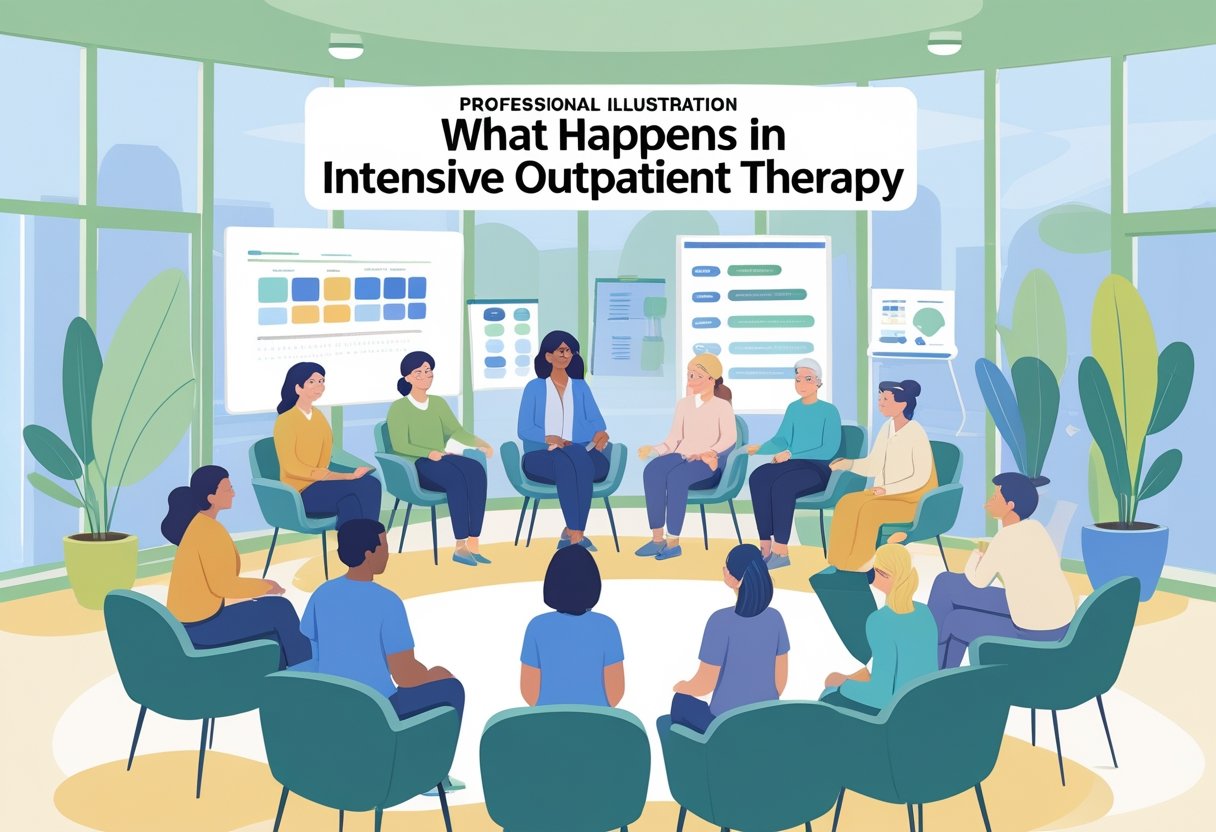
You will move through focused therapy sessions several days a week while keeping your normal life.
Intensive outpatient therapy gives you structured, evidence-based care for anxiety, depression, relationship strain, or big life changes without an overnight stay—so you get stronger skills and steady support while living at home.
Expect a mix of individual and group work, skill-building exercises, and regular check-ins that track your progress and adjust your plan as needed.
Many sessions happen virtually with in-person options in the Chicago area, and Tides Mental Health can help you find the right balance of support for your situation.
Understanding Intensive Outpatient Therapy
Intensive outpatient therapy gives structured, frequent care while you keep living at home.
You can expect regular therapy sessions, skill-building groups, and flexible scheduling that fits work or family life.
Definition and Core Principles
Intensive outpatient therapy (IOP) provides multiple therapy sessions per week without overnight stays.
Sessions usually run several hours each visit and combine group therapy, individual counseling, and skill workshops.
You meet with licensed clinicians who use proven methods like cognitive-behavioral therapy, relapse prevention, and emotional regulation training.
Treatment focuses on practical skills you can use day to day.
Clinicians track progress with clear goals, written plans, and regular reviews.
At Tides Mental Health, most care is virtual (60–70%) with in-person options in the Chicago area (30–40%), so you can get consistent support while keeping your routine.
Differences from Inpatient and Outpatient Treatment
IOP sits between full inpatient care and weekly outpatient therapy.
Unlike inpatient programs, you do not stay at a facility overnight.
That keeps you at home and lets you keep work or family responsibilities.
Compared with standard outpatient therapy, IOP offers more hours and structure each week.
You get a higher level of monitoring and more group time, which helps with peer support and skill practice.
In cases of moderate anxiety, depression, substance use, or major life transitions, IOP can replace inpatient care when you do not need 24-hour supervision.
Who Can Benefit from IOP
You may benefit from IOP if you need more support than weekly therapy but do not require hospitalization.
People with anxiety disorders, major depression, early-stage substance use issues, or stress from life transitions often do well in IOP.
Couples and family counseling can also fit into IOP formats when relational issues affect mental health.
If you want flexible care, Tides Mental Health offers mostly virtual options and Chicago-based in-person sessions to match your schedule.
Providers will assess safety, symptom severity, and home support to decide if IOP fits your needs.
What to Expect During Intensive Outpatient Therapy
You will get structured, regular care that fits around work or family.
Sessions blend individual and group work, use proven therapies, and can be virtual or in-person depending on your needs.
Typical Program Structure
An IOP usually starts with an intake assessment to set goals and a treatment plan tailored to anxiety, depression, life transitions, or relationship issues.
Expect a mix of individual therapy to focus on personal history and goals, plus group sessions for skill practice and peer support.
Programs run several days a week for a few hours per visit.
Many people attend three times weekly for about three hours.
Tides Mental Health offers both virtual and Chicago-area in-person options so you can keep working or caring for family while in treatment.
You’ll review progress regularly.
Clinicians track symptoms and adjust the plan.
Family or couples sessions are available when relationship work is part of your goals.
Common Therapeutic Modalities
Cognitive Behavioral Therapy (CBT) is common for anxiety and depression.
It helps you identify unhelpful thoughts and test new behaviors.
Expect homework, worksheets, and skill drills.
Dialectical Behavior Therapy (DBT) skills may appear if emotional regulation or strong mood swings affect you.
DBT covers mindfulness, distress tolerance, emotion regulation, and interpersonal effectiveness.
Other approaches include solution-focused therapy for life transitions and structured couples or family therapy when relationship patterns matter.
Therapists at Tides Mental Health use evidence-based methods and adapt techniques to your needs.
Group therapy gives practice and feedback; individual sessions go deeper into your history and goals.
Daily and Weekly Schedules
A typical week includes 3–5 sessions.
Each session often lasts 2–4 hours, mixing group and individual time.
For example:
- Monday: 3-hour group skills session (CBT/DBT focus)
- Wednesday: 1-hour individual therapy
- Friday: 2-hour group process or couples session
Most contacts happen virtually (about 60–70%), so you can join from home.
In-person days (30–40%) are held at the Chicago-area clinic for deeper work like family sessions or assessments.
Expect check-ins with a clinician weekly or biweekly to measure symptom change and update goals.
You may also get referrals for medication evaluation if needed.
Key Components of Intensive Outpatient Therapy
Intensive outpatient therapy gives you structured, regular care while you keep living at home.
You’ll work in groups, meet one-on-one with a clinician, and practice new skills in focused workshops.
Group Therapy Sessions
Group sessions bring together 6–12 adults facing similar issues like anxiety, depression, life changes, or family stress.
You meet with a licensed group therapist who guides discussion, teaches coping strategies, and monitors progress.
Sessions often use evidence-based approaches such as cognitive-behavioral techniques, mindfulness exercises, and relapse-prevention planning.
Groups are a place to practice social skills and get honest feedback.
You’ll learn to name triggers, use grounding techniques, and role-play difficult conversations.
Tides Mental Health runs groups both virtually and in-person in the Chicago area, so you can join the format that fits your schedule.
Individual Counseling
Individual counseling gives you focused time with a licensed clinician to assess goals, adjust treatment, and work through personal issues.
Sessions typically last 45–60 minutes and occur weekly or several times per week, depending on your plan.
Your therapist will use diagnostic assessment, tailor interventions, and coordinate care with any prescribers if medication management is needed.
This one-on-one work lets you explore trauma, relationship patterns, and the root causes of symptoms.
You’ll set measurable goals, track progress, and get personalized homework between sessions.
Tides Mental Health offers 60–70% of individual visits virtually, with in-person options in Chicago when you prefer face-to-face care.
Skill-Building Workshops
Workshops focus on practical skills you can use daily: emotion regulation, stress management, communication, and problem-solving.
They run 1–3 hours and combine brief teaching, hands-on practice, and take-home exercises.
Topics often include breathing and grounding techniques, scheduling activity to reduce depression, and assertive communication for family or couples.
Workshops help you transfer therapy gains into real life.
You’ll leave with concrete tools—step-by-step breathing exercises, a plan to handle panic attacks, or scripts to improve a tough conversation.
Tides Mental Health includes workshops in both virtual and Chicago-area in-person formats so you can practice skills in the setting that works best for you.
Family Involvement and Support
Family can be a major part of your progress.
They can join therapy, learn how to support you, and help change routines at home to reduce stress and triggers.
Family Therapy Sessions
Family therapy brings you and your loved ones into structured sessions that focus on real problems, like communication breakdowns or conflict about care.
Sessions often include goal setting, role practice, and clear guidelines for supporting daily routines.
You and your family will work on skills such as active listening, setting healthy boundaries, and responding to anxiety or depressive episodes without enabling avoidance.
At Tides Mental Health, family sessions run both virtually and in person in Chicago.
A typical plan includes weekly 60–90 minute sessions for several weeks, combined with individual IOP work.
Therapists may assign short home practice tasks to help you apply new skills between sessions.
Education and Resources for Loved Ones
Your family will get practical information about your diagnosis, treatment steps, and relapse warning signs.
Education covers coping tools they can use to help you—like prompting grounding skills during panic, encouraging behavioral activation when you feel depressed, and avoiding power struggles during life transitions.
Resources may include handouts, short video lessons, and guided practice exercises you can complete together.
Tides Mental Health offers most resources online so you and your loved ones can access them before or after sessions.
This helps families stay consistent when treatment is partly virtual.
Monitoring Progress and Adjusting Treatment
You will see clear goals, regular checks, and changes to your plan based on measurable signs.
Clinicians use short tests, session notes, and your feedback to guide decisions about therapy frequency, skills training, or stepping up care.
Goal Setting in IOP
You and your clinician set specific, time-based goals for anxiety, depression, or life changes.
Goals might include reducing panic attacks from daily to twice a week in six weeks, sleeping seven hours most nights, or improving communication with a partner during conflict.
Goals break into small steps.
For example:
- Skill goal: practice a breathing or grounding exercise three times per day.
- Behavioral goal: attend two social activities this month.
- Relationship goal: use a calm-script in three difficult conversations.
Your therapist reviews goals weekly and asks for your rating of progress.
If you reach a goal, they set a new one.
If you do not, they adjust techniques, add homework, or increase session intensity.
Tides Mental Health offers these steps in both virtual and Chicago-area in-person formats.
Assessment Tools and Progress Tracking
Clinicians use short, repeatable tools to measure symptoms and function.
Common items include 7- to 10-question scales for anxiety or depression, sleep logs, and weekly mood ratings you complete before sessions.
Tracking is visual and simple.
Providers chart scores over time so you see trends.
They also collect session notes, attendance, homework completion, and self-report on coping skills.
These data inform changes such as switching therapy focus, adding couples work, or moving from virtual to in-person sessions when needed.
You should expect feedback every 1–2 weeks and a formal review about every month.
If your scores worsen or safety concerns appear, your clinician increases contact, updates safety plans, or recommends a higher level of care.
Tides Mental Health will guide those steps and coordinate follow-up.
Transitioning from Intensive Outpatient Therapy
You will move from structured sessions to more independent care while keeping steady support.
Expect clear next steps, a set schedule for follow-up, and tools you can use daily to manage symptoms.
Aftercare Planning
Aftercare planning sets the next steps you will follow after IOP ends.
Your therapist will help you create a concrete plan that lists appointments, contact info, and goals.
That plan usually includes weekly or biweekly therapy, medication check-ins if needed, and support groups.
Write down specific names, days, and times for continuing care.
If you prefer virtual sessions, most follow-up options can be remote; about 60–70% of our sessions are virtual.
For in-person care, ask about local Chicago clinic hours and locations.
Your plan will also note who to call in a crisis and any community resources such as peer groups or vocational supports.
Keep a printed and digital copy of the plan and review it at each follow-up visit.
Relapse Prevention Strategies
Relapse prevention gives you tools to handle triggers and maintain progress. You and your clinician will identify your top triggers—work stress, relationship conflict, or sleep loss—and make step-by-step responses for each.
You will build a daily routine that includes sleep, exercise, and mood-checks. Learn and practice coping skills from therapy, like grounding, breathing, and thought-challenging.
Set short-term goals (e.g., three sober days, one difficult conversation) and track them in a simple chart or app.
Plan regular check-ins with your therapist and a relapse action plan that names who to call, which coping skills to try first, and when to increase care.
Tides Mental Health can be an option for ongoing support, offering both virtual care and Chicago-based in-person sessions.
Potential Benefits and Challenges of IOP
Intensive outpatient therapy gives structured care while you keep living at home. It often blends group work, individual counseling, and skills training so you can practice new habits in real life.
Advantages of Intensive Outpatient Therapy
IOP lets you keep work, school, and family routines while getting frequent therapy. You typically attend several sessions per week, which helps build steady progress without a hospital stay.
You get a mix of group therapy, individual sessions, and skill-focused classes. Group work helps you learn from others and practice communication.
Individual therapy targets your specific needs like anxiety, depression, or relationship issues.
Many programs, including Tides Mental Health, offer mostly virtual care (about 60–70%) with some in-person options in the Chicago area.
This makes scheduling easier and keeps travel time low. You also get tools—CBT skills, relapse prevention, or emotion regulation—that you can use right away.
Common Obstacles and Solutions
Balancing IOP hours with daily life can be hard, especially if your job or family demands are high. Ask about flexible scheduling and virtual sessions to reduce missed appointments.
Group settings might feel intimidating at first. Start with smaller groups or more one-on-one time until you feel comfortable.
Therapists can help you set boundaries and rehearse sharing.
Insurance and cost can be confusing. Confirm coverage before starting and ask about sliding scales or payment plans.
If you live near Chicago, you can choose in-person care. Otherwise, virtual sessions let you continue consistent treatment with Tides Mental Health.