
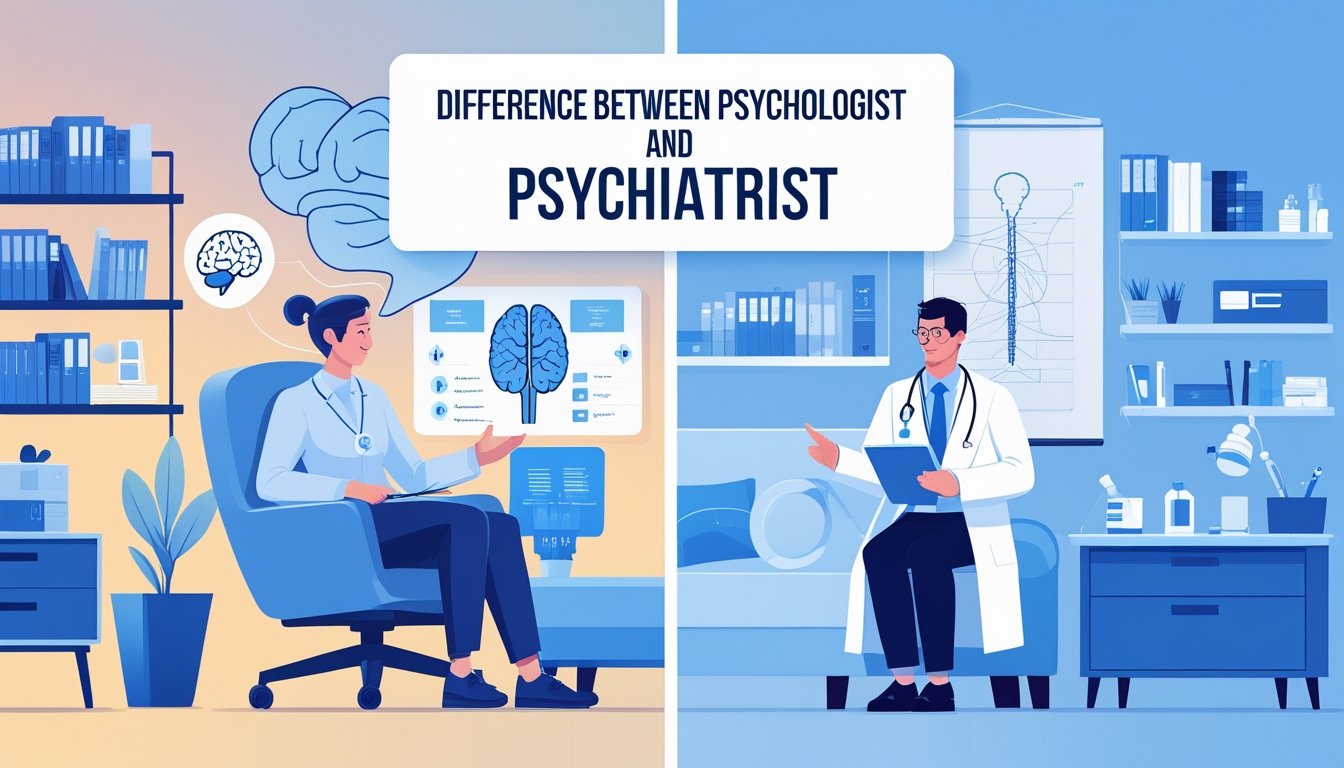
You might feel unsure whether to seek therapy, medication, or both.
A psychologist offers talk therapy and testing, while a psychiatrist is a medical doctor who can prescribe medication—so your needs (therapy, medication, or a mix) guide which professional to choose.
If you want focused help for anxiety, depression, life transitions, or couples and family concerns, a psychologist can give structured therapy and assessments.
If medication or a medical review is likely needed, a psychiatrist will handle prescriptions and medical care.
Tides Mental Health offers adult therapy services mostly online with some in-person care in Chicago.
You can get therapy that fits your schedule and needs while exploring whether a psychologist, psychiatrist, or both are right for you.
Definition of Psychologist and Psychiatrist
Psychologists and psychiatrists both treat mental health but do so with different training, methods, and tools.
You’ll learn how each profession approaches diagnosis, therapy, and medication so you can decide which fits your needs.
What Is a Psychologist?
A psychologist holds an advanced degree in psychology (PhD or PsyD) and focuses on testing, assessment, and talk-based therapy.
You can expect psychological testing for learning issues or personality assessment, and structured therapies like cognitive behavioral therapy (CBT) for anxiety and depression.
Psychologists do not prescribe most medications in most states.
They work with medication prescribers when needed and often provide longer psychotherapy sessions to address life transitions, relationship problems, and coping skills.
Many psychologists offer virtual therapy.
If you prefer in-person care, Tides Mental Health provides adult-focused counseling in the Chicago area and mixes virtual and in-person visits to fit your schedule.
What Is a Psychiatrist?
A psychiatrist is a medical doctor (MD or DO) who specializes in mental health.
You can expect a medical evaluation, diagnosis, and the authority to prescribe psychiatric medications such as antidepressants, mood stabilizers, or antipsychotics.
Psychiatrists combine medical knowledge with psychotherapy when appropriate.
They often treat complex or severe conditions, manage medication plans, and coordinate care with therapists or primary care doctors.
Psychiatry appointments are commonly a mix of virtual and in-person visits.
Tides Mental Health offers psychiatric medication management alongside therapy services, with in-person options available in the Chicago area and most sessions offered virtually.
Education and Training Requirements
You need different schooling and supervised experience depending on whether you choose psychology or psychiatry.
One path leads to a medical degree and residency; the other leads to a doctoral degree in psychology and supervised clinical hours.
Academic Pathways
Psychiatrists complete a 4-year undergraduate degree, 4 years of medical school (MD or DO), and a 4-year psychiatric residency.
During residency you gain experience in inpatient and outpatient care, psychopharmacology, and medical comorbidities.
Many psychiatrists add fellowships (child/adolescent, geriatric, or addiction) that last 1–2 years.
Psychologists typically earn a 4-year undergraduate degree followed by a doctoral program (PhD or PsyD) that takes 4–7 years.
Doctoral training includes coursework, clinical practica, and a year-long internship.
You then complete a supervised postdoctoral period in many states before full licensure.
Clinical training focuses on psychotherapy, assessment, and research methods.
Licensing and Certification
Psychiatrists become licensed physicians by passing the USMLE or COMLEX exams and then obtain board certification in psychiatry through the American Board of Psychiatry and Neurology (ABPN).
State medical boards license psychiatrists to prescribe medication and perform medical exams.
Psychologists must pass an exam such as the EPPP (Examination for Professional Practice in Psychology) plus any state-specific jurisprudence tests.
States issue psychology licenses after verifying doctoral credentials, supervised hours, and exam passage.
You can pursue specialty certifications (e.g., clinical neuropsychology) from professional boards after meeting extra requirements.
Continuing Education Differences
Both careers require ongoing education, but the focus differs.
Psychiatrists complete CME (continuing medical education) credits that emphasize new medications, medical treatments, and integrated medical-psychiatric care.
Many CMEs cover psychopharmacology updates and medical risk management.
Psychologists earn CE (continuing education) credits centered on therapy approaches, assessment tools, and ethics.
You’ll find workshops on evidence-based therapies for anxiety, depression, couples work, and trauma.
If you want in-person training or local supervision in the Chicago area, Tides Mental Health offers both virtual and in-person options tailored to adult therapy and plans expanding into child and adolescent care.
Approach to Mental Health Treatment
You will see clear differences in how each profession treats mental health.
One focuses on therapy, testing, and behavioral change while the other can add medications and medical tests when needed.
Methods Used by Psychologists
Psychologists use talk therapy and structured interventions to treat anxiety, depression, relationship problems, and life transitions.
You might get cognitive-behavioral therapy (CBT) to change unhelpful thoughts, dialectical behavior therapy (DBT) for emotional regulation, or couples and family therapy to improve communication and patterns.
They also perform psychological testing to measure attention, memory, mood, and personality.
Results guide therapy plans and help track progress.
Most sessions are therapy-focused and aimed at building skills, solving problems, and changing behavior over weeks to months.
Tides Mental Health offers adult-focused therapy and counseling, with plans to expand into child and adolescent care.
About 60–70% of sessions are virtual and 30–40% are in-person in the Chicago area, so you can choose the format that fits your life.
Methods Used by Psychiatrists
Psychiatrists are medical doctors who can prescribe and manage medications for conditions like major depression, bipolar disorder, severe anxiety, and psychosis.
You will receive a medical evaluation that can include lab tests, medication history, and a medication plan when appropriate.
Many psychiatrists also provide brief psychotherapy or coordinate with a psychologist who delivers ongoing therapy.
They monitor side effects, adjust doses, and assess how medication affects mood, sleep, and functioning.
For complex cases, psychiatrists may combine medicine with psychotherapy to give you both symptom control and skill-based therapy.
Tides Mental Health can connect you with psychiatric services when medication management is needed alongside therapy, using virtual or in-person visits in Chicago.
Role of Diagnosis
Diagnosis helps pinpoint what is causing your symptoms and guides treatment choices.
Psychologists use clinical interviews and standardized tests to assess anxiety, depression, personality patterns, and cognitive function.
This information shapes a therapy plan and shows what skills or therapies you need.
Psychiatrists look at diagnostic criteria, medical history, and physical health to decide if medication, medical tests, or a referral is needed.
They consider interactions with other medicines and physical conditions that affect mental health.
Accurate diagnosis supports safe medication use, coordinated care, and clearer goals for therapy at Tides Mental Health.
Prescribing Medication
Psychiatric medication can help when symptoms come from biological or chemical causes, and access to a prescriber affects your treatment options.
Psychiatrists can start, adjust, and stop psychiatric drugs; psychologists usually cannot, with a few exceptions in certain states.
Psychiatrists and Medication Management
Psychiatrists are medical doctors who can prescribe psychiatric medications like antidepressants, mood stabilizers, antipsychotics, and stimulants.
You can expect them to review your medical history, run or order physical tests when needed, and consider interactions with other medicines or health problems before prescribing.
They often combine medication with psychotherapy or coordinate with therapists.
For adults with anxiety, depression, bipolar disorder, or severe symptoms, psychiatrists manage dosing, monitor side effects, and change treatment if you don’t improve.
If you prefer mostly virtual care, many psychiatrists offer telepsychiatry; in-person visits remain available for exams or complex cases in the Chicago area.
Tides Mental Health can connect you with psychiatric medication management alongside therapy, whether you want virtual care or local in-person visits.
Restrictions for Psychologists
Most psychologists hold doctoral degrees (PhD or PsyD) and focus on therapy, testing, and behavioral treatments.
In almost all U.S. states, they cannot prescribe medication.
You would see a psychologist for talk therapy, cognitive-behavioral techniques, couples or family counseling, and psychological assessments.
A few states allow specially trained psychologists to prescribe after extra education and supervised practice, but this is rare.
If you need medication, your psychologist will refer you to a psychiatrist, nurse practitioner, or physician.
For adult therapy focused on anxiety, depression, life transitions, or couples work, you can get most care from a psychologist and still coordinate medication through Tides Mental Health or a local psychiatrist in Chicago.
Therapeutic Techniques
You will find methods that use talking, assessment, and skills practice to treat anxiety, depression, life transitions, and relationship issues.
Some approaches focus on insight and patterns, while others target specific behaviors and habits.
Psychotherapy Practices
Psychotherapy uses structured talk sessions to explore thoughts, feelings, and relationships.
You might get cognitive-behavioral therapy (CBT) to change unhelpful thinking tied to anxiety or depression.
CBT sessions include identifying thought patterns, testing beliefs, and practicing new responses between appointments.
Other common approaches include interpersonal therapy for relationship and role changes, and emotion-focused therapy for couples.
Psychologists often provide detailed psychological testing when you need assessment of mood, personality, or cognitive function.
Sessions are usually weekly and can be virtual or in-person in Chicago.
Tides Mental Health offers both virtual therapy (60–70% of sessions) and in-person care (30–40%) to match how you prefer to meet.
Behavioral Interventions
Behavioral techniques focus on changing specific actions that keep problems going.
For anxiety, you may do exposure exercises that gradually face feared situations.
For depression, behavioral activation schedules daily activities to rebuild positive routines and increase pleasure.
Therapists teach concrete skills like relaxation training, problem-solving steps, and activity planning.
You will get homework—practice tasks between sessions—to strengthen new habits.
When couples or families struggle, therapists use structured behavior plans and communication exercises to shift interaction patterns.
Tides Mental Health integrates these interventions into personalized plans for adults, and is preparing to expand services for children and adolescents.
Scope of Practice
You can expect clear differences in what each provider can do, and where they usually work.
One treats mental health with talk therapy and testing, while the other can also use medical exams and prescribe medication.
Types of Conditions Treated
Psychologists focus on therapy for adults.
They commonly treat anxiety, depression, stress from life transitions, and relationship issues like couples or family counseling.
They use talk therapies, behavioral techniques, and psychological testing to assess memory, mood, and behavior.
Psychologists often help you learn coping skills, manage emotions, and change unhelpful thought patterns.
Psychiatrists treat the same mood and anxiety disorders but also handle severe mental illnesses such as bipolar disorder, schizophrenia, and cases needing medical evaluation.
They can prescribe and monitor medications, order lab tests, and manage physical side effects of drugs.
If you need both therapy and medication, you may see a psychologist and a psychiatrist together for coordinated care.
Settings Where They Work
You will find most sessions delivered virtually: about 60–70% of care happens online.
That lets you schedule therapy from home for regular visits and check-ins.
In-person services are available mainly in the Chicago area.
Those in-person visits suit intake exams, medication management, or deeper testing that requires a clinic setting.
Psychiatrists often work in medical clinics, hospitals, or private practices where they can run exams and order tests.
Psychologists practice in private clinics, counseling centers, schools, and telehealth platforms.
Tides Mental Health is an option you can choose for virtual and Chicago-area in-person care.
Collaboration Between Psychologists and Psychiatrists
Psychologists and psychiatrists work together to give you both talk‑based care and medical treatment.
They share information, set clear treatment goals, and adjust plans so you get the right mix of therapy and medication when you need it.
Integrated Care Models
Integrated care teams put you at the center of treatment. A psychologist may provide weekly cognitive‑behavioral therapy for anxiety or depression while a psychiatrist handles medication checks every 4–8 weeks.
Teams often use shared records and brief case meetings to track symptoms, side effects, and progress. This model fits well when you need both psychotherapy and medication for mood disorders, severe anxiety, or complex life transitions.
For couples or family work, a psychologist leads therapy while the psychiatrist advises on medication for one or more members. Many practices, including Tides Mental Health, offer mostly virtual sessions (60–70%) with in‑person options in Chicago (30–40%).
You can access integrated care from home or locally.
Referral Processes
Referrals aim to match your needs to the right provider quickly. Your psychologist may refer you to a psychiatrist if therapy alone does not reduce symptoms, if you need an initial diagnostic medication trial, or if medication interactions are a concern.
A psychiatrist may refer you to a psychologist for ongoing psychotherapy, skills training, or family work. Referrals include a focused summary: diagnosis, treatment history, current meds, and therapy goals.
Expect clear next steps—who will monitor meds, who will lead therapy, and how often you’ll have follow‑ups. Tides Mental Health coordinates referrals within its team to keep your care smooth and consistent.
When to See a Psychologist vs Psychiatrist
If you want talk therapy for anxiety, depression, life changes, or relationship issues, a psychologist is a good place to start. Psychologists focus on therapy, assessments, and coping skills.
You will likely meet with them for regular sessions, and many of these are virtual. See a psychiatrist when you think medication might help or when symptoms are severe.
Psychiatrists are medical doctors who can prescribe medicine and check for medical causes of symptoms. They often work with you alongside a therapist.
A psychologist can provide ongoing counseling while a psychiatrist manages medications. Tides Mental Health can coordinate care for adults and expand into child and adolescent services as needed.
If you need in-person care in the Chicago area, ask about local sessions. Around 30–40% of sessions are in person, with the rest offered virtually.
This mix lets you choose what fits your life and schedule. If you are unsure, start with an intake consultation to discuss your needs and the best path forward with Tides Mental Health.
Summary of Key Differences
Psychiatrists are medical doctors who can prescribe medication and order medical tests. They often treat conditions that may need medication, such as severe depression, bipolar disorder, or complex psychiatric cases.
Psychologists hold doctoral degrees in psychology and focus on therapy, testing, and behavior change. They use talk therapy and psychological assessments to help with anxiety, depression, life transitions, and relationship concerns.
You can expect psychiatrists to evaluate biological and medical causes of symptoms. They may combine medication with brief therapy or refer you for ongoing counseling.
You can expect psychologists to provide regular therapy sessions and detailed assessments. They often work with adults on coping skills, emotional processing, and relationship issues.
Key practical points:
- Medication: Psychiatrists — yes; Psychologists — generally no.
- Therapy focus: Psychologists emphasize psychotherapy; psychiatrists balance medical and psychiatric care.
- Training: Psychiatrists train as physicians; psychologists train in psychological science and therapy.
Tides Mental Health offers both virtual and in-person options. Most care is virtual (about 60–70%), with 30–40% available in person at Chicago-area locations.
You can choose therapy for anxiety, depression, life transitions, or couples and family work. There are plans to expand into child and adolescent services.