
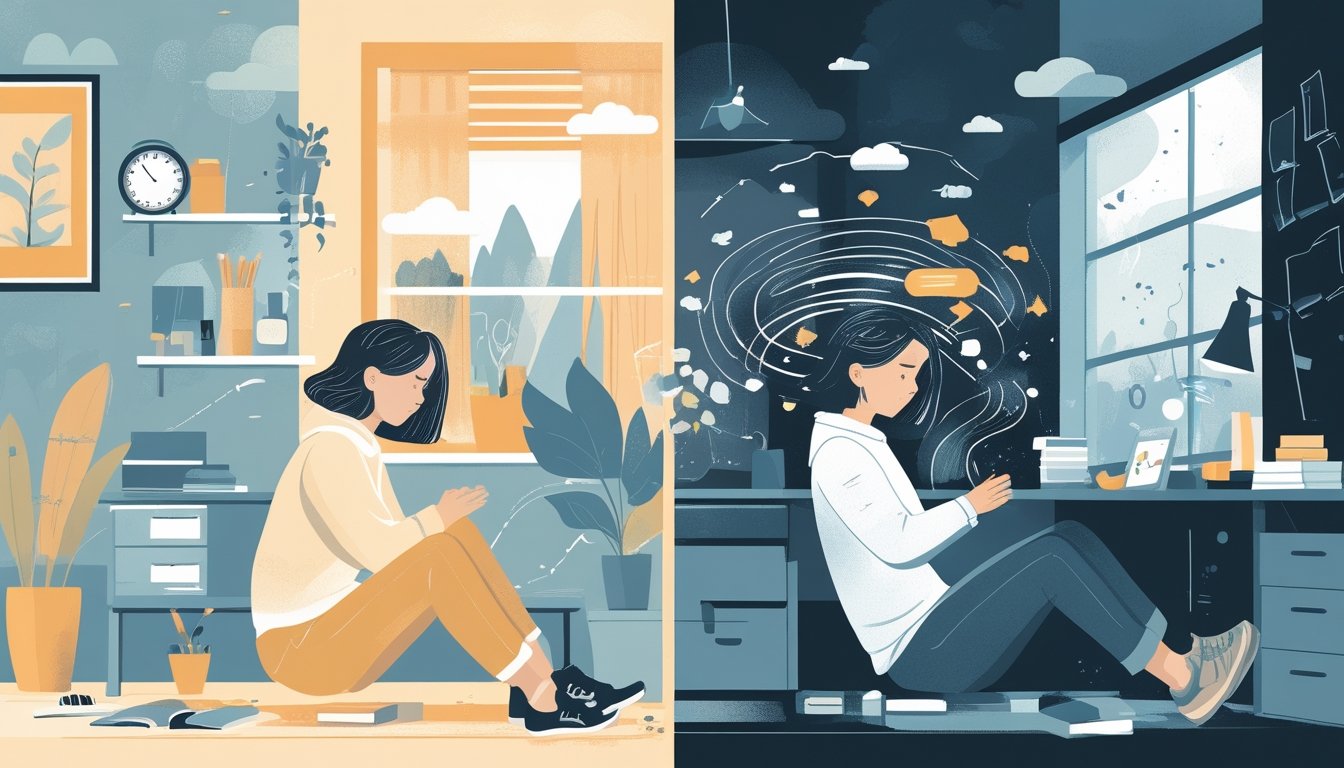
Anxiety does not look the same for everyone. Some days you feel jittery and on edge, other days your thoughts spiral into worst-case scenarios.
Sometimes your body reacts before your mind catches up. Living with anxiety differs by what triggers you, how your body responds, and how you cope, so your experience will be unique even when others seem to face the same problem.
You will notice differences in emotions, body sensations, relationships, and work or school performance. This article will help you spot those differences and find practical paths toward support, whether you prefer virtual care or in-person help near Chicago.
Understanding Anxiety Disorders
Anxiety disorders change how you think, feel, and act. They can make daily tasks harder and affect work, relationships, and sleep.
Defining Anxiety vs. Everyday Worry
Everyday worry is short-lived and tied to a clear event, like a job interview or bill payment. It usually eases after the event ends and does not stop you from working or sleeping.
Anxiety disorders involve persistent worry, fear, or physical symptoms that last weeks or months. Symptoms can include racing heart, trouble breathing, constant rumination, and avoidance of places or people.
These reactions come with little control and often occur even without a clear trigger. If your worry disrupts work, family life, or sleep for most days over several weeks, it likely moves beyond normal stress into a disorder.
Seeking assessment and targeted treatment helps most people regain daily functioning.
Types of Anxiety Disorders
Generalized Anxiety Disorder (GAD) causes constant, excessive worry about many parts of life — money, health, work — that’s hard to control. Panic Disorder brings sudden, intense panic attacks with chest pain, dizziness, and fear of losing control.
Social Anxiety Disorder centers on fear of being judged in social or work settings; it can stop you from speaking up or attending events. Specific phobias cause strong fear tied to a single object or situation, like flying or needles.
Separation Anxiety Disorder involves severe distress when away from loved ones, and can affect adults as well as children. You can have more than one anxiety disorder at once, and symptoms often overlap with depression or life-transition stress.
Prevalence and Demographics
Anxiety disorders are common. Many adults experience them at some point, and they affect all genders and backgrounds.
Women are diagnosed more often than men, but men also suffer and may underreport symptoms. People who experienced trauma, abuse, or major life changes have higher risk.
Most people benefit from treatment, especially when started early. You can access care virtually for convenience or in person if you live near Chicago.
Tides Mental Health offers adult therapy and counseling focused on anxiety, depression, life transitions, and couples or family work, with plans to add child and adolescent therapy.
Core Differences in Living With Anxiety
Anxiety changes how you think, act, and feel day to day. It also shapes the ways you cope and can affect your long-term health if you don’t get help.
Daily Life Impact
Anxiety can make routine tasks harder. You might avoid phone calls, skip social events, or overprepare for work meetings.
Sleep often suffers; you may lie awake replaying conversations or worrying about tomorrow. Physical symptoms appear too.
Muscle tension, headaches, and stomach upset can pop up during common activities. You may notice concentration problems that slow your work and make small errors more common.
Relationships and family life can strain. You might cancel plans or seem distant, which confuses partners or children.
If you’re juggling caregiving or parenting, anxiety can make daily schedules and transitions feel overwhelming.
Coping Mechanisms and Strategies
You likely use a mix of short-term and long-term coping methods. Short-term tactics include deep breathing, stepping away from a stressful situation, or using distraction.
These help immediately but don’t always reduce overall anxiety. Long-term strategies work better for lasting change.
Therapy, such as cognitive behavioral techniques, teaches you to challenge worry patterns and build new habits. Regular exercise, sleep routines, and limiting caffeine also reduce symptoms.
You can access care in different ways. Many people find virtual sessions fit their schedule; around 60–70% of sessions can be remote with continued in-person options if you live near Chicago.
Tides Mental Health offers adult therapy for anxiety, depression, life transitions, and couples or family counseling, and plans to expand into therapy for children and teens.
Long-Term Health Effects
If anxiety stays untreated, it can raise your risk for other health problems. Chronic stress can worsen heart disease risk factors like high blood pressure and poor sleep.
It also increases the chance of developing depression or substance misuse. Cognitive effects may persist over time.
Persistent worry can reduce memory and decision-making ability, making work and daily planning harder. Social isolation and strained relationships can lead to fewer supports when you need help.
Early treatment lowers these risks. Regular therapy, lifestyle changes, and, when appropriate, medication can prevent many long-term problems.
You can start with virtual sessions or visit in person at Chicago-area clinics to get consistent care.
Emotional and Cognitive Experiences
Anxiety often changes how you feel and how you think. You may notice stronger emotional reactions, trouble calming down, and repetitive worrying that affects daily choices.
Emotional Regulation Challenges
You might feel emotions more intensely and have trouble calming yourself. Stress can make sadness, irritability, or panic come on quickly and stay longer than you expect.
That can make social situations, work tasks, or family interactions harder. You may use avoidance to cope, such as skipping events or delaying difficult conversations.
Avoidance reduces short-term stress but increases long-term anxiety and isolation. Learning small, repeatable skills—like focused breathing, grounding, and brief self-talk—helps lower emotional spikes during transitions or conflicts.
If you want support, Tides Mental Health offers therapy for adults that focuses on emotional regulation during life changes, relationship strain, and co-occurring depression. You can choose virtual sessions for convenience or in-person care in the Chicago area.
Thought Patterns and Rumination
Anxiety often shows up as repetitive thoughts that loop for hours. You might replay conversations, predict worst-case outcomes, or fixate on mistakes.
This rumination saps energy and makes decision-making harder. You may also notice a bias toward threat: neutral events feel risky and small problems seem catastrophic.
Cognitive tools like labeling thoughts, testing their accuracy, and setting short “worry windows” reduce rumination. Behavioral steps—breaking tasks into tiny actions and scheduling decisions—cut through overthinking.
Tides Mental Health teaches practical CBT-based techniques in most adult therapy sessions to interrupt rumination and rebuild clearer thinking. You can work virtually or in person in Chicago to learn these skills.
Physical Manifestations of Anxiety
Anxiety often shows up in the body as clear, specific signs you can track and address. You may notice changes in breathing, heart rate, digestion, muscle tension, and daily energy that affect work, relationships, and sleep.
Somatic Symptoms
You might feel your heart racing, shortness of breath, or chest tightness during anxious moments. These sensations can mimic medical problems, so check with a doctor when new or severe symptoms appear.
Sweating, trembling, and dizziness are common. They can spike during panic attacks or when stress peaks, and they often pass as breathing and focus return to normal.
Digestive issues—stomach pain, nausea, diarrhea, or constipation—are frequent. Anxiety alters gut motility and can make meals feel risky, which feeds more worry.
Muscle tension shows up as tight shoulders, jaw clenching, or headaches. Regular tension can cause chronic pain and reduce your ability to relax.
If physical symptoms persist, seek medical and mental health support. Tides Mental Health offers adult therapy virtually and in-person in Chicago to help you sort medical concerns from anxiety and build coping skills.
Energy Levels and Fatigue
Anxiety can drain you or make you feel wired and exhausted at once. You may have trouble falling asleep because thoughts race, then wake tired because sleep was light.
Daytime fatigue can reduce focus, lower motivation, and make routine tasks feel overwhelming. You might need more breaks, or you may overwork to compensate, which worsens burnout.
Sometimes anxiety triggers a constant low-level alertness that uses up your energy reserve. Other times, the body’s stress response collapses into fatigue after prolonged worry.
Addressing sleep routines, pacing activity, and leaning on therapy can restore energy. Tides Mental Health provides counseling focused on anxiety, depression, and life transitions, with mostly virtual sessions and in-person care in the Chicago area to fit your needs.
Social Interactions and Relationships
Anxiety changes how you talk, listen, and show up with others. It can make small interactions feel risky and push you toward avoidance or over-preparing for social moments.
Impact on Communication
You may find it hard to speak up, even when you have something important to say. Worry about judgment can make your voice quieter, your answers shorter, and your eye contact limited.
That can lead others to misread you as uninterested or distant. On the flip side, anxiety can cause you to over-explain or repeat yourself to feel safe.
You might rehearse conversations before they happen or replay them afterwards. These patterns can tire you and make genuine back-and-forth harder.
Practical steps help. Try short scripts for common situations, set a small goal—like asking one question in a meeting—and use breathing to pause before replying.
If you work with a therapist, you can practice these skills in session and in virtual or in-person role plays with Tides Mental Health.
Family Dynamics
Anxiety often shifts roles at home. You might avoid family gatherings, cancel plans, or rely on a partner to take on social tasks.
That can create frustration, guilt, or extra workload for others. Families sometimes respond by being overprotective or by minimizing your worry.
Both reactions can feel invalidating and increase tension. Clear, short statements about what you can handle help reduce guesswork.
For example: “I can join for one hour” or “I need a break after dinner.” Couples and family counseling can target these patterns.
Therapy helps you practice asking for what you need and negotiating support without blaming. Tides Mental Health offers virtual sessions statewide and in-person care in the Chicago area to help you build routines and boundaries that fit your life.
Work and Academic Performance
Anxiety can make tasks feel harder and create patterns that lower grades or job output. You may notice changes in focus, memory, attendance, and work quality that affect your daily responsibilities.
Productivity and Focus
Anxiety often reduces working memory and concentration. You might struggle to hold facts during meetings or exams, miss steps in multi-part tasks, or find reading and note-taking slower than before.
This can make tasks take longer and increase mistakes. Physical symptoms like racing thoughts or muscle tension distract you.
Worry drains energy, so you may avoid complex tasks or procrastinate until stress spikes. Small supports help: short breaks, clear written checklists, and single-tasking instead of multitasking.
If you use therapy, targeting cognitive strategies and time-management can restore focus. Tides Mental Health offers virtual sessions that teach practical skills for planning, study routines, and on-the-spot calming techniques.
In-person coaching is also available in the Chicago area.
Absenteeism and Presenteeism
Anxiety can cause both missed days and reduced on-the-job or in-class performance. You may skip work or class on high-anxiety days, which harms continuity and learning.
Frequent absences can lower grades, reduce project influence, and slow career progress. Presenteeism—being physically present but mentally disengaged—often looks like zoning out in meetings, failing to contribute, or turning in lower-quality work.
This shows up in exam performance too: you might sit through an exam but miss answers because of panic. Therapy focuses on predictable routines and coping plans to reduce both problems.
Tides Mental Health provides strategies for anxiety-triggered avoidance and for pacing yourself on high-demand days, with most care available virtually and in-person support in Chicago.
Adaptation and Resilience Development
You can learn ways to cope with anxiety and grow stronger over time. Small changes in relationships and treatment choices often make the biggest difference.
Building Support Networks
Create a small circle of trusted people who know about your anxiety and how it shows up. Tell one or two close friends or family members what helps you calm down, such as a short walk, a grounding phrase, or time alone.
This makes it easier for them to respond in a helpful way when you feel overwhelmed. Join a peer group or choose regular check-ins with someone who understands anxiety.
Weekly or biweekly contact helps you practice new skills and reduces isolation. If you prefer in-person meetings, consider options in the Chicago area; if you need flexibility, schedule virtual check-ins that fit your routine.
Keep communication simple and specific. Use short requests like “Can we talk for five minutes?” or “I need a quiet hour.”
Clear boundaries protect your energy and let others support you without stress.
Utilizing Professional Help
You should consider therapy that focuses on anxiety, depression, and life transitions. Start with an initial intake that maps your main triggers and daily routines.
That helps your clinician create a treatment plan with clear steps, such as CBT techniques, exposure practices, or skills for managing panic. Choose a provider who offers both virtual and in-person sessions if you need flexibility.
About 60–70% of sessions can be virtual, which works well if you have a busy schedule or live outside Chicago. In-person sessions are available in Chicago for deeper work like couples or family counseling.
If you want a named option, contact Tides Mental Health for adult therapy focused on anxiety and related concerns. They offer tailored plans and can expand care to adolescents as their services grow.
Misconceptions and Stigma Surrounding Anxiety
Many people think anxiety is just worry or a personality flaw. This section explains common false beliefs and the real barriers that stop people from getting help.
Common Stereotypes
People often say you’re “just stressed” or “overreacting” when you describe persistent anxiety. That ignores symptoms like racing thoughts, panic attacks, sleep loss, and physical tension that can last months or years.
Another stereotype casts anxiety as weakness. This makes you feel you should cope alone instead of seeking therapy or medication.
You might also hear that therapy is unnecessary if you can “try harder” or meditate more. While self-care helps, effective treatment usually combines therapy, skills training, and sometimes medication.
Tides Mental Health offers adult therapy for anxiety and related depression. Most sessions are available virtually, with in-person care in Chicago.
Barriers to Understanding
Stigma makes you hide symptoms and delay help, often until problems worsen. Employers and family members may misread anxiety as laziness or moodiness, which reduces support at work and home.
Lack of clear information leads to myths about treatment — for example, that therapy takes years or that medicines always change your personality. Practical barriers include fear of cost and time, and uncertainty about where to find qualified care.
If you want short-term, focused work on anxiety, Tides Mental Health provides adult counseling for anxiety, life transitions, and couples or family issues. Most sessions are virtual, with some in-person options in Chicago.
Comparisons With Other Mental Health Conditions
Anxiety often shows up with clear physical and behavioral signs. Other conditions bring different patterns of mood, thinking, and daily function.
You’ll want to notice what symptoms dominate, how long they last, and whether they get better with therapy or medication.
Anxiety Versus Depression
Anxiety centers on persistent worry, restlessness, and physical tension. You may experience rapid heartbeat, insomnia, and constant “what if” thoughts that make routine tasks feel risky or unsafe.
Depression centers on low mood, loss of interest, and slowed thinking or movement. You might feel numb, have little energy, or stop enjoying activities you once liked.
Sleep and appetite change in both conditions. With anxiety, sleep is often restless; with depression you may sleep too much or not at all.
Cognitive-behavioral therapy and exposure strategies target anxious thoughts and avoidance. For depression, behavioral activation and mood-focused therapy help rebuild interest and routine.
Medication choices also vary, so discuss options with a clinician.
Anxiety in Comorbid Presentations
Anxiety commonly occurs with other diagnoses, such as depression, PTSD, or substance use. When conditions overlap, symptoms can amplify one another: worry can deepen low mood, and mood problems can worsen avoidance and panic.
You may see mixed symptoms like racing thoughts plus hopelessness. This combination often makes daily tasks harder and slows progress in single-focus therapy.
Treatment should address both conditions together—integrated therapy plans, combined medication strategies, and consistent monitoring work best.
Tides Mental Health offers adult therapy that treats anxiety with attention to other co-occurring issues. You can access most care virtually (60–70% virtual) or attend in-person sessions in the Chicago area (30–40%), where clinicians tailor plans for anxiety plus other diagnoses.
Lived Experiences Across Life Stages
Anxiety shows up differently as you move through life. Treatment needs, daily impacts, and supports change with age and life roles.
Childhood and Adolescence
You may notice anxiety in school avoidance, constant worry about grades, or fears about fitting in. Physical signs can include stomachaches, headaches, and restless sleep.
Social anxiety often appears as intense fear of speaking or playing with peers. Separation anxiety can look like frequent calls home or refusal to attend events.
Parents and caregivers play a key role. Early therapy, skill-building, and school coordination reduce long-term problems.
Tides Mental Health plans to expand child and adolescent services, and can guide you on next steps. If you seek in-person care nearby, our Chicago-based clinicians offer assessments and family-focused approaches.
Adulthood and Later Life
Your anxiety in adulthood often ties to work stress, relationships, parenting, or health changes. Panic attacks, persistent worry about finances or caregiving, and sleep disruption are common.
Life transitions—job loss, divorce, retirement—can trigger new or returning symptoms. Older adults may face added worries about memory, mobility, or loss.
You benefit from therapies that focus on coping skills, problem solving, and relationship patterns. Couples or family counseling can help when anxiety affects partners or children.
Most sessions with Tides Mental Health are virtual (60–70%), with 30–40% offered in person in Chicago. You can choose what fits your routine.
Conclusion
Living with anxiety looks different for everyone.
Your symptoms, triggers, and needs may change over time, and that is normal.
You can manage anxiety with clear steps.
Therapy, medication when appropriate, skills training, and routine changes all help.
Tides Mental Health offers adult therapy and counseling focused on anxiety, depression, life transitions, and couples or family work.
You can choose virtual or in-person care.
About 60–70% of sessions are virtual, which keeps care convenient and private.
If you prefer meeting face-to-face, in-person options are available in the Chicago area.
If you want tailored help, reach out to Tides Mental Health.
A short intake can clarify your needs and point you to the right mix of care, whether virtual or in-person.