
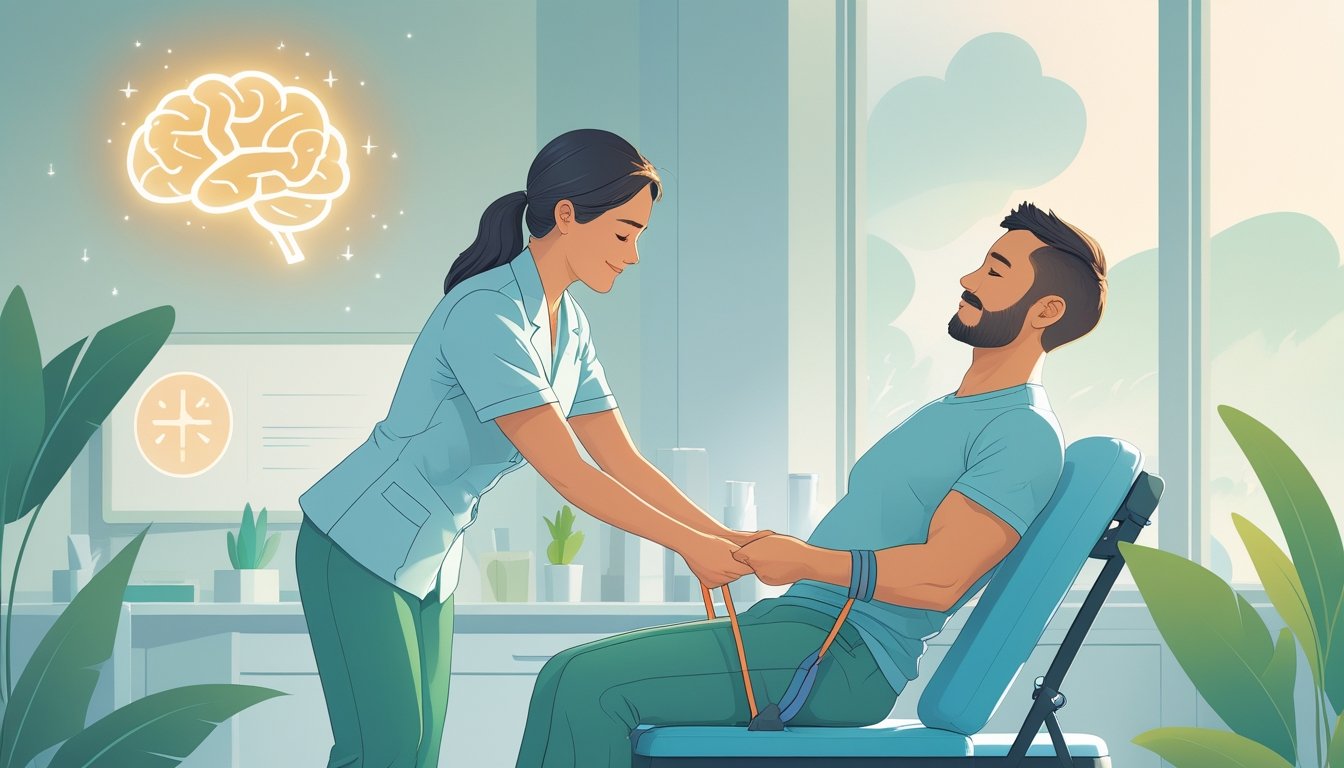
You may not think of physical therapy as part of mental health care, but it can change how you feel, move, and cope during recovery. Physical therapy helps reduce pain, improve sleep, and boost energy — all things that lower anxiety and lift mood while you work through depression or life transitions.
When you pair physical therapy with counseling, you get a practical, body-based path to better mental health that supports motivation, resilience, and daily function. Expect clear techniques, coordinated care with therapists, and options that fit your life — including virtual visits and in-person care in the Chicago area through Tides Mental Health.
The Link Between Physical Therapy and Mental Health Recovery
Physical therapy can reduce symptoms, improve daily function, and support coping skills. It often fits with therapy for anxiety, depression, life changes, and family stress by improving sleep, movement, and confidence.
Understanding the Mind-Body Connection
Physical problems change how you think and feel. Chronic pain or limited movement raises stress hormones and keeps you from activities that lift mood.
A targeted PT plan—strength work, mobility drills, and paced activity—lowers pain signals and gives you measurable wins you can track. You also retrain your nervous system.
Techniques like graded exposure and breathing work reduce avoidance and panic during movement. That helps when anxiety or depression make you avoid exercise or social outings.
Tides Mental Health offers integrated care that links your PT goals with therapy goals. Many clients use virtual sessions for continuity and in-person visits in Chicago when hands-on care or equipment work is needed.
Scientific Evidence Supporting Integration
Research shows exercise and movement-based rehab lower symptoms of depression and anxiety. Studies report improvements in mood, sleep, and self-esteem after regular, supervised physical therapy or exercise programs.
Effect sizes vary by condition, but benefits are consistent for adults with chronic pain and mood disorders. Physical therapy also improves function that directly affects mental health.
Better balance, reduced pain, and increased independence let you resume work and relationships. When PT and psychotherapy coordinate, outcomes improve more quickly than when each works alone.
If you want integrated care, Tides Mental Health coordinates PT referrals and delivers many services virtually. In-person PT care and collaborative meetings are available in Chicago to align your physical and mental treatment plans.
Holistic Approaches to Healing
Holistic PT blends physical rehab with stress management and lifestyle changes. A plan often includes exercise prescription, sleep hygiene, paced activity, and breathing or relaxation training.
These elements target pain pathways and reduce the mental burden of illness. You’ll get goal-based plans that track small gains—steps walked, minutes of activity, or pain scores.
That objective feedback supports motivation during therapy for life transitions, couples work, or depression. When appropriate, PT teams join case meetings with your counselor to adapt plans together.
Tides Mental Health offers this coordinated approach and can match you with PT-focused care that supports your therapy goals. You can choose mostly virtual follow-up with in-person sessions in Chicago as needed.
Physical Therapy’s Impact on Mental Health Conditions
Physical therapy can reduce symptoms, improve daily function, and support long-term coping skills. It uses targeted movement, breath work, and behavior-based strategies to help you feel more stable, active, and in control.
Physical Therapy for Depression
Physical therapy often uses structured, progressive exercise to lift mood and restore energy. Your therapist can prescribe strength and aerobic routines tailored to your fitness and pain limits.
These routines increase activity levels, which helps regulate sleep and appetite—common problems in depression. Therapists also teach pacing and goal-setting to prevent overwhelm.
Small, achievable milestones build confidence and counter the inertia that keeps you inactive. If pain or mobility issues limit exercise, manual therapy and adaptive strategies let you move more comfortably.
Tides Mental Health supports integrated care: your physical therapist can coordinate with your counselor or psychiatrist when needed. You can access most services virtually, with in-person sessions available in Chicago for hands-on treatment.
Managing Anxiety Through Physical Rehabilitation
Physical therapy reduces physical tension and lowers physiological arousal linked to anxiety. Your therapist may use diaphragmatic breathing, progressive muscle relaxation, and guided movement to calm your nervous system during sessions.
These skills transfer to daily life when panic or worry spikes. Exposure-based movement work helps you face activities you’ve avoided because of fear.
Graded activity progressively rebuilds confidence in movement and reduces bodily hypervigilance. Education on the body’s stress response teaches you why symptoms occur and what to do when they start.
Tides Mental Health offers virtual visits that teach these techniques step-by-step, plus in-person options in Chicago for hands-on guidance. Coordination with your therapist or counselor can make progress faster and safer.
Addressing Trauma and PTSD with Physical Interventions
Physical therapy for trauma focuses on regulating the body and reclaiming a sense of safety in movement. Your therapist uses grounding techniques, gentle mobilization, and movement that respects your tolerance for touch and proximity.
The pace prioritizes safety and consent. Somatic approaches help you notice and release held tension without forcing exposure.
Techniques include paced breathing, mindful movement, and gradual reintroduction to activities tied to traumatic memories. These methods reduce hyperarousal and bodily startle responses over time.
When trauma-related dissociation or severe symptoms appear, coordination with your mental health clinician is essential. Tides Mental Health can work with your physical therapist to align plans, and you can choose virtual sessions for stepwise progress or in-person care in Chicago when hands-on work fits your needs.
Therapeutic Techniques Used in Physical Therapy for Mental Health
Physical therapy can reduce symptoms like anxiety and low mood, improve sleep, and help you move without pain. Techniques include active movement, hands-on approaches, breathing work, and tailored exercise plans that fit your daily life and mental health goals.
Movement-Based Therapies
Movement-based therapies use planned body activity to change how your brain and body respond to stress. You may work on walking patterns, balance drills, or guided dance and movement sequences to increase body awareness and reduce muscle tension.
These activities stimulate the nervous system, improve posture, and release endorphins that can lift mood. A typical session might include posture training, guided gait work, and progressive movement skills that match your current fitness and anxiety levels.
The therapist will measure progress with simple tests, then increase challenge safely to build confidence and reduce fear of movement.
Manual Therapy Approaches
Manual therapy means hands-on treatment to reduce pain and improve mobility. Your therapist may use soft-tissue massage, joint mobilizations, or myofascial release to ease tightness tied to stress or depression.
These techniques can reduce physical symptoms that feed into mental distress. Sessions focus on specific areas such as the neck, shoulders, or low back where tension concentrates.
Manual work often pairs with breathing and movement to reinforce relaxation. Expect brief assessments, targeted treatment, and home-care instructions like self-massage or gentle stretches.
Relaxation and Breathing Techniques
Breathing and relaxation skills give you tools to manage anxiety and panic in the moment. Therapists teach paced breathing, belly breathing, and box breathing to down-regulate an overactive nervous system.
You learn simple progressions that start in session and move to short daily practice. Therapists also use guided relaxation and progressive muscle relaxation to reduce body tension before sleep or social events.
These practices take a few minutes and can be combined with virtual sessions, making them easy to use wherever you are.
Exercise Prescription and Program Design
Exercise prescription customizes frequency, intensity, time, and type to match your mood, pain, and life routine. Your plan may include aerobic work (walking, cycling), strength training for major muscle groups, and flexibility tasks.
The therapist sets clear, attainable goals like three 20-minute walks per week or two light strength sessions. Programs adapt to your mental health needs: lower intensity on bad days, progressive overload when you improve, and paced return after setbacks.
You’ll get measurable targets, simple tracking methods, and modifications for both virtual check-ins and in-person sessions in the Chicago area through Tides Mental Health.
Collaborative Care: Integrating Physical Therapy into Mental Health Treatment Plans
Physical therapy should fit into your mental health plan through clear team communication, shared goals, and measurable progress. This helps you get coordinated care that targets anxiety, depression, life transitions, and relationship stress while supporting daily function and activity.
Interdisciplinary Team Communication
Share concise, relevant information with each team member. Provide your PT with recent mental health diagnoses, medication changes, therapy focus, and any safety concerns.
Ask your therapist or psychiatrist to share functional goals and key mental health symptoms that affect movement, sleep, or motivation. Use regular, scheduled updates.
Weekly or biweekly briefs—via secure message or short case notes—keep everyone aligned. For virtual care, confirm preferred platforms and consent for information sharing.
When you come to in-person sessions in Chicago, request brief face-to-face care conferences if needed. Define roles up front.
The PT focuses on mobility, graded activity, and sleep-friendly exercise. Your mental health clinician manages mood, coping skills, and medication.
A care manager or coordinator can track tasks, appointments, and follow-ups so nothing falls through the cracks.
Patient-Centered Goal Setting
Set goals that matter to you and relate directly to daily life. Choose clear, measurable targets such as “walk 20 minutes without panic,” “sleep 6 hours three nights a week,” or “reduce muscle tension before work.”
Write them down and share them with your whole care team. Use short- and long-term steps.
A short-term goal might be completing three gentle cardio sessions per week. A long-term goal might be returning to social activities without avoidance.
Make goals specific, time-bound, and revisable based on mood or symptom changes. Prioritize function over perfect performance.
If you struggle with anxiety or low mood, aim for gradual gains that build confidence. Your clinician and PT should each suggest actions you can take between sessions, like simple breathing exercises before walks or a 10-minute stretching routine after work.
Monitoring Progress and Outcomes
Track both physical and mental signs regularly. Use simple logs or apps to record steps, exercise minutes, sleep hours, mood ratings (0–10), and panic episodes.
Share these records with your team at set intervals—weekly for active changes, monthly for broader trends. Use objective measures when possible.
The PT can use the 6-minute walk, timed up-and-go, or range-of-motion tests. Your therapist can use brief symptom scales for depression or anxiety.
Combine these scores in one shared progress note so you and your team see the link between body gains and mental health improvements. Adjust treatment based on data.
If your activity increases but anxiety spikes, slow the pace and add coping strategies. If sleep and mood improve but pain persists, modify exercise load or introduce relaxation techniques.
Tides Mental Health can coordinate virtual sessions and connect you with in-person PT in Chicago when you need hands-on care.
Special Populations and Unique Considerations
You will find practical steps to adapt physical therapy for different ages and long-term conditions. Each group needs tailored goals, screening, and ways to deliver care that fit your life and symptoms.
Children and Adolescents
Children and teens often face anxiety, school stress, and body-image issues alongside physical injury. Screen for mood symptoms and school or family stress before starting therapy.
Use play-based or activity-focused sessions to keep them engaged and to teach coping skills like breath work and progressive muscle relaxation. Involve caregivers in goal-setting and homework so exercises continue at home and at school.
Keep sessions short and concrete, with visual aids and frequent praise. If your teen has severe depression or self-harm risk, coordinate with a child mental health specialist and consider more frequent check-ins.
Tides Mental Health offers virtual options that let teens attend sessions from home and connect caregivers and clinicians. For in-person visits, Chicago-area clinics can provide hands-on support and community referrals.
Older Adults
Older adults often have comorbid physical and mental conditions such as chronic pain and depression. Start with a mobility and fall-risk screen plus a brief mood screen.
Emphasize balance, strength, and paced activity to reduce pain-related fear and improve mood. Use simple exercise routines, set clear short-term goals, and monitor fatigue and cognition.
Slow progression and frequent reassessment help maintain safety. Address social isolation by recommending group classes or supervised walks when possible.
You can use virtual sessions for regular check-ins and home exercise supervision. If you prefer hands-on treatment, schedule in-person visits at Tides Mental Health’s Chicago-area clinics for targeted manual therapy and functional training.
Individuals with Chronic Illness
Chronic conditions like diabetes, fibromyalgia, or long COVID require careful pacing and symptom tracking. Begin with a medical review and a graded activity plan that limits flare-ups.
Teach energy-conservation techniques and symptom journals to guide intensity. Focus on small, measurable gains: increase daily steps by set increments, add 2–3 short strength exercises, or practice 10 minutes of guided movement daily.
Coordinate with your primary care or specialty providers to avoid conflicting treatments. Address mood symptoms directly; integrate brief cognitive strategies or breathing exercises into sessions.
Most monitoring and education work well virtually, allowing frequent follow-up. For hands-on assessment or complex cases, book an in-person appointment at Tides Mental Health’s Chicago-area clinics.
Barriers and Challenges in Implementing Physical Therapy for Mental Health Recovery
Physical therapy can help reduce depression and anxiety symptoms, improve function, and support life transitions. The main obstacles are limited integrated care, stigma about mental health and rehab, and gaps in insurance or policy that block access to coordinated treatment.
Access to Integrated Care
Many clinics separate physical therapy from mental health services. You may find few programs that share treatment plans, screening tools, or progress notes between PTs and therapists.
This forces you to attend multiple providers who may not communicate, which slows recovery and can cause mixed messages about goals and exercises. In Chicago, in-person PT teams that coordinate with mental health providers are limited.
Tides Mental Health offers combined care options, with most sessions delivered virtually and in-person work focused locally, which can help bridge these gaps. You can ask about shared care plans, joint intake sessions, and regular team meetings to improve coordination.
Referral pathways also matter. If your primary therapist or counselor does not know how to refer you to a PT trained in mental health needs, you might miss timely intervention.
Look for services that use standardized screening for anxiety, depression, and pain, and that have clear referral steps you can follow.
Stigma and Misconceptions
People often see physical therapy as only for wounds or sports injuries, not for treating mood or anxiety disorders. You may worry that using PT for mental health will be dismissed by family or coworkers, or you might doubt its legitimacy yourself.
This can stop you from asking for or accepting combined care. Clinicians can also hold misconceptions: some physical therapists may feel unprepared to address emotional symptoms, while some therapists may undervalue the role of movement and pain management.
You should choose providers who openly discuss mental health, use validated screening tools, and explain how exercise, breathing, and graded activity support mood and resilience. Ask providers to explain evidence for exercise and rehab in treating depression or anxiety, and request clear examples of interventions used in joint care.
Insurance and Policy Limitations
Insurance plans often separate mental health and physical health benefits. You may face limits on the number of PT visits, strict medical-necessity rules, or separate pre-authorization processes that delay care.
This makes coordinated, long-term treatment harder to maintain. Some plans deny coverage when the primary diagnosis is a mental health disorder, even if pain and function are the reasons you need PT.
You can ask for documentation that links physical impairments to functional goals and request appeals when benefits are denied. Telehealth reimbursement also varies by state and insurer.
Since 60–70% of sessions at Tides are virtual, check your plan’s telehealth coverage. If coverage is limited, discuss hybrid plans that combine virtual counseling with local in-person PT in Chicago to reduce out-of-pocket costs.
Future Directions in Physical Therapy and Mental Health Integration
You will see more blended care models that combine physical therapy with mental health support. Tides Mental Health offers mostly virtual care (about 60–70%) and in-person options in the Chicago area (30–40%), so you can choose what fits your needs.
Clinicians will use more evidence-based, whole-person assessments to screen for anxiety, depression, life transitions, and family or couples concerns. You can expect routine mental health screening within physical therapy visits so issues are caught early and addressed within your care plan.
Technology will play a larger role in tailoring treatment. Expect telehealth, remote monitoring, and digital exercise programs to support your progress between sessions.
These tools keep you engaged and help clinicians adjust plans quickly. Training and interdisciplinary teams will expand to improve coordination of care.
Physical therapists will gain more skills in behavioral strategies. You will see closer collaboration with counselors and psychiatrists for complex cases.
Access will broaden to include more adult-focused services and plans to add child and adolescent care. If you need help now, consider Tides Mental Health for integrated services that focus on anxiety, depression, life changes, and family or couples counseling.
- Key focus areas:
- Anxiety and depression screening and treatment
- Life transitions and relationship support
- Hybrid virtual and in-person care options