
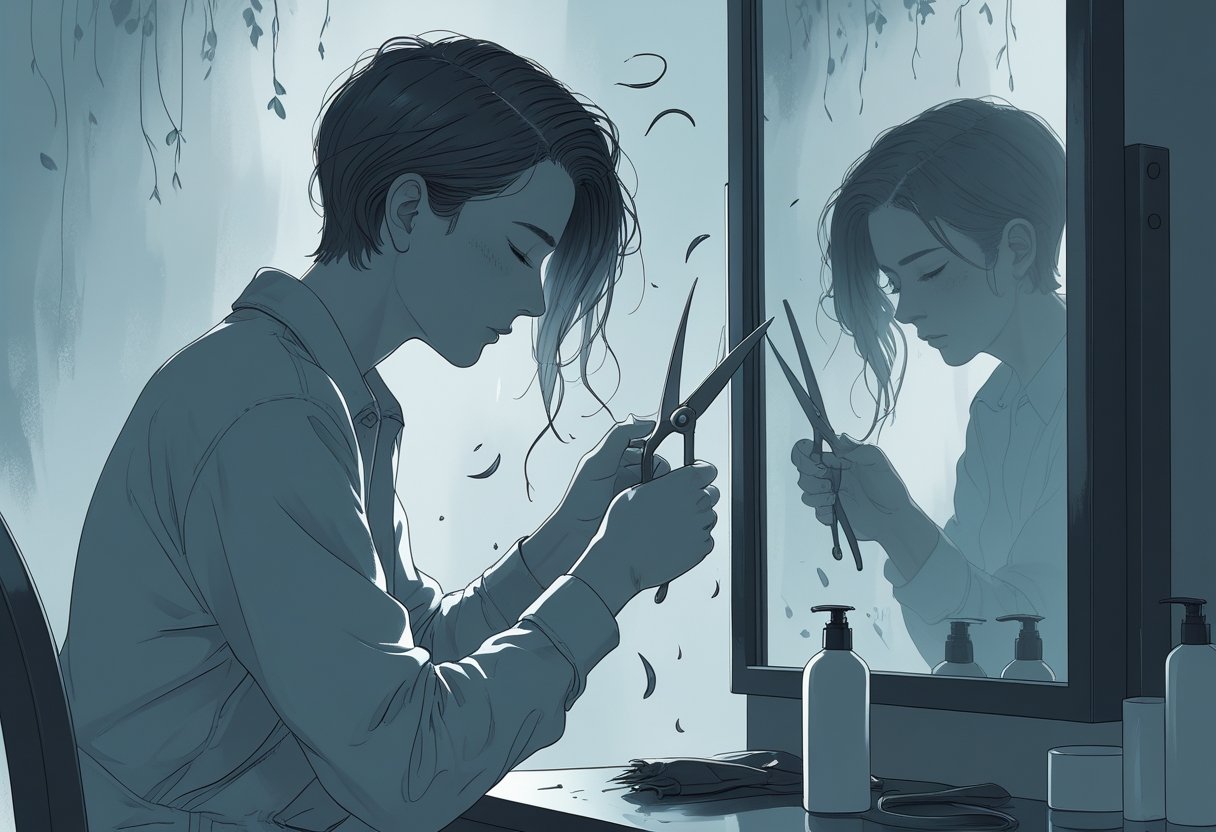
You might have cut your hair during a low point and wondered why it felt so urgent or freeing. Haircutting during depression often works as a visible way to mark a change, an attempt to regain control, or a symbolic shedding of what feels heavy.
Cutting your hair can serve as a powerful symbolic act that signals control, identity shift, or a step toward emotional renewal. This piece explores why that happens and how culture and personal history shape the meaning.
Psychological Significance Of Haircutting During Depression
Cutting your hair during a depressive episode can serve several psychological functions at once. It often mixes emotional release, a need for control, attempts at transformation, and shifts in how you see yourself.
Emotional Expression And Release
Cutting your hair can act as a physical way to show inner pain when words feel hard to find. You might feel a sudden urge to change your hair during a cry or panic, and the act itself can provide immediate relief.
That release comes from doing something tangible—snipping a few inches can feel like letting go of heavy emotions for a short time. For some people, the haircut is a nonverbal message to themselves or others: “I’m hurting” or “I need change.”
This can be safer than risky behaviors, but it can also be impulsive. If the urge comes from deep sadness or is followed by regret, consider talking with a therapist at Tides Mental Health.
You can do most sessions virtually, or find in-person support in the Chicago area.
Desire For Control Amid Chaos
Depression often makes daily life feel unpredictable and overwhelming. Changing your hair gives you a clear choice you can make immediately.
That choice restores a small but real sense of control when other parts of life feel chaotic—bills, relationships, work, sleep. You decide the length, style, and timing, which provides structure.
That control can reduce anxiety in the moment. If you find yourself repeatedly cutting hair to cope, a therapist can help you build safer, repeatable strategies for regaining control.
Symbolic Acts Of Transformation
Cutting hair often holds symbolic meaning: starting over, leaving pain behind, or marking a life change. You might chop your hair after a break-up, loss, or a diagnosis.
The change signals to you and others that something important has shifted. Symbolic action helps make internal shifts feel real and visible.
It can help you set a mental boundary between “before” and “after.” Therapists at Tides Mental Health can help you explore whether the haircut serves a healthy transition or masks unresolved feelings.
Connection To Self-Image
Hair affects how you view yourself and how you think others see you. When depression makes you feel less like yourself, changing your hair can be a way to test a different identity.
You might try a bolder look to feel stronger or a simpler style to reduce daily grooming stress. This change can improve mood briefly, but it also raises questions about identity and authenticity.
If you notice repeated dramatic style shifts or distress about appearance, professional support can help you reconnect with stable parts of your identity.
Cultural Interpretations Of Haircutting In Times Of Distress
Cutting hair in distress often ties to control, identity shifts, and public messages. Different cultures and media give this act clear meanings that shape how you and others read the gesture.
Historical Rituals And Symbolism
Many cultures use hair removal to mark grief or change. In Hindu and Buddhist rites, shaving the head can signal renunciation, cleansing, or devotion.
That act creates a visible break from past roles and can ease the sense of burden. In some Middle Eastern and Central Asian traditions, cutting hair appears during mourning as a raw sign of loss.
Recent protests in Iran saw women cutting hair publicly to register political grief and resistance. These examples show hair acts as both personal coping and communal statement.
If you feel drawn to cut your hair, framed this way it can be ritualized—an intentional step to mark an inner shift or release.
Haircutting In Popular Media Depictions
Films and TV often use haircuts to show a character’s turning point. Think of scenes where a character shaves or cuts their hair after trauma, heartbreak, or a big life change.
These moments signal new identity, recovery, or rebellion to the audience. Media also links quick hair changes to impulsive coping.
That portrayal can normalize sudden haircuts during depression, but it simplifies motivation. Real life mixes symbolic intent, desire for control, and emotional relief.
If you relate to these portrayals, consider how media shapes your expectations and what the act would mean for you personally.
Societal Perceptions Of Physical Change
People judge haircuts in distress by context. Close friends may see it as a cry for help or a step toward healing.
Strangers often read it as a style choice or a sign of instability, depending on social norms where you live. Workplaces can react differently: some accept bold changes, while others see them as unprofessional.
That reaction affects social support and stigma. If you’re thinking about cutting hair, plan for likely responses and decide whether you want the change public or private.
If you want support processing the change, Tides Mental Health offers therapy focused on depression, anxiety, and life transitions.
Personal Identity And Self-Perception
Cutting your hair during depression often ties to how you see yourself and how you want others to see you. Changes can signal a shift in identity, a bid for control, or a break from past roles you no longer feel fit.
Impact On Sense Of Self
You may feel disconnected from who you were before depression. A new haircut can mark that gap—shorter hair might feel like shedding an old self, while dramatic changes can reflect a need to stop being recognized in the same way.
This act can also bring mixed emotions. Some people report relief and clarity, while others feel regret or a sense of loss if the hairstyle clashes with their pre-depression identity.
If your sense of self is fragile, small changes in appearance can have outsized effects on mood. Notice how you react to the change; it can reveal whether the cut helped you align with your current feelings or added to confusion.
Reclaiming Autonomy Through Appearance
When depression makes you feel powerless, choosing your look gives back agency. You decide the length, color, or style—simple acts that can restore a sense of control over your life.
This can be meaningful even if it’s temporary. You might use a haircut as a concrete step in building routines, like scheduling an appointment or caring for your appearance afterward.
If you want structured support while making these choices, Tides Mental Health offers adult therapy focused on depression and life transitions.
Contrasts With Motivations In Non-Depressive States
In non-depressive times, you might change your hair for fashion, seasonal trends, or wanting novelty. Those choices often come from curiosity or external influences like events or social norms.
During depression, motivations tend to be internal and symbolic—coping, distancing, or testing identity. The cut might not aim to please others; it often aims to address an internal need.
Understanding this difference helps you decide if a haircut is a healthy step or a sign you need more support. If the change is impulsive or tied to self-harm urges, reach out to a therapist.
Therapeutic Perspectives On Haircutting Behavior
Cutting your hair during depression can mean many things: a search for control, a way to cope with loss, or a signal that you need support. Below are practical views from clinicians, cautionary points to watch for, and hands-on support options you can try.
Insights From Mental Health Professionals
Therapists often see haircutting as a symbolic act tied to emotion regulation. You might cut hair to mark an identity shift, release grief, or reclaim control after feeling helpless.
Clinicians link this behavior to coping strategies used in anxiety and depression, not always to self-harm intent. When you talk with a therapist, they assess your mood, triggers, and any history of self-injury.
They may explore underlying issues like low self-worth, relationship stress, or major life transitions. In adult therapy, clinicians use short-term skills (grounding, distress tolerance) and deeper work (CBT, trauma-focused therapy) depending on your needs.
Potential Risks And Concerns
Haircutting can be harmless symbolic change or a red flag for worsening mood. Repeated, impulsive, or secretive cutting may signal increasing distress or impaired judgment.
Watch for escalating behavior, social withdrawal, sleep changes, or talk of hopelessness. Physical risks include infection from tools or injury from sharp objects.
Emotional risks include regret, intensified shame, or worsening self-image. If haircutting co-occurs with self-harm, suicidal thoughts, or a loss of daily functioning, seek urgent professional help.
If you notice risky patterns, book an appointment with a clinician.
Support Strategies And Coping Alternatives
Immediate steps you can use: practice grounding (5-4-3-2-1), deep breathing for 5–10 minutes, or call a trusted friend before acting. Replace impulsive cutting with safer symbolic acts: change your part, try a temporary wig, or use a bold hair accessory.
These give visible change without permanent harm. Longer-term supports include therapy focused on emotion regulation, couples or family sessions to address relational triggers, and structured plans for transitions.
You can use weekly virtual therapy with Tides Mental Health to build skills and monitor progress. In Chicago, schedule in-person sessions for hands-on techniques like mindfulness-based haircut appointments or reality-based exposure to changing routines.
If you need immediate guidance, contact a clinician or book a virtual session with Tides Mental Health for a safety assessment and tailored coping plan.
Comparisons With Other Symbolic Coping Mechanisms
Cutting your hair can act as a clear, visible change that you control. It often stands apart from other symbolic acts because it is reversible, socially acceptable, and tied to identity and life events.
Contrast With Self-Harm Behaviors
Cutting hair differs from self-harm in purpose and harm. Self-harm like skin cutting usually aims to relieve intense emotional pain through physical injury.
It creates immediate bodily damage, higher medical risk, and often signals urgent need for clinical care. Haircutting typically seeks change, control, or a fresh start rather than pain relief.
You get a visual, public sign of change without permanent physical injury. That makes it safer and easier to discuss with others or a therapist.
If you notice haircuts are part of a pattern that includes isolation, suicidal talk, or escalating risk, seek professional help.
Differences From Other Forms Of Physical Change
Other physical changes include clothing shifts, tattoos, or dramatic weight changes. Clothing shifts are temporary and social; they let you test identity without lasting change.
Tattoos are permanent, often planned, and carry cultural or personal symbolism. Weight change can reflect health issues and carry medical consequences.
Haircuts sit between these options. They can be impulsive or planned, symbolic but reversible, and visible to others quickly.
You can use a haircut to mark a breakup, loss, or new start while keeping the option to grow your hair back. In therapy, you can explore the meaning behind the change and build healthier coping skills.
Long-Term Implications And Recovery
A haircut during depression can mark a turning point or a momentary reaction. Over time, that haircut may become a reminder of what you were feeling and how you responded.
Looking after your mental health helps with more than hair. Therapy and counseling can address underlying anxiety, depression, and life transitions that often drive sudden changes to your appearance.
Tides Mental Health offers adult therapy focused on these areas, with most care available virtually and in-person appointments in the Chicago area. You may feel relief or regret about the change.
Those feelings can shift as you work through emotions in sessions with a counselor. Couples and family counseling can help if the haircut affected close relationships.
Recovery often includes practical steps you can take at home. Try simple routines like regular self-care, setting small goals, and tracking mood changes alongside therapy.
If you want to explore options, contact Tides Mental Health to discuss virtual or Chicago-area in-person appointments tailored to anxiety, depression, life transitions, or family concerns.