
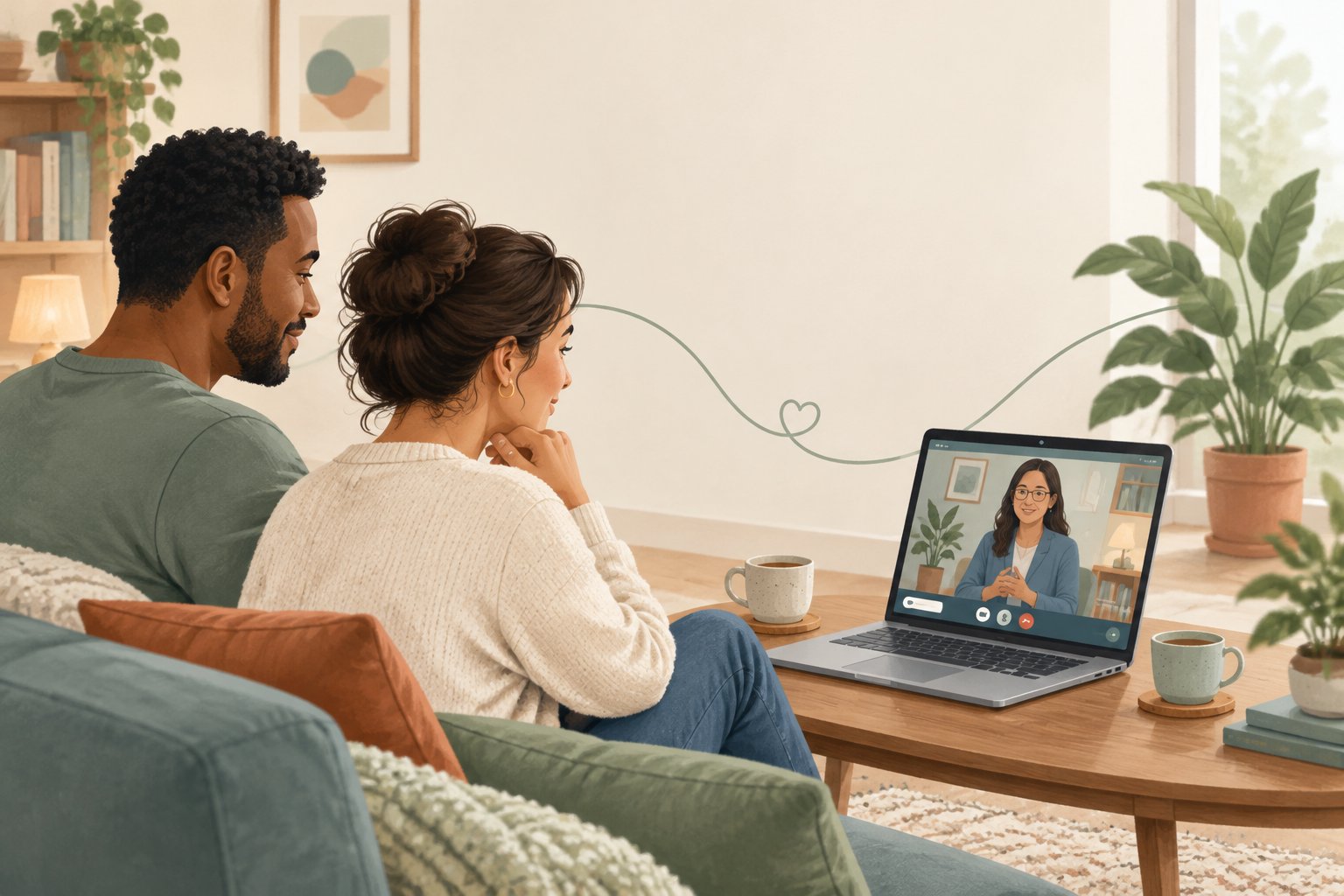
Relationships take real work, and sometimes you just need a little outside support to get back on track. Whether you and your partner are working through ongoing conflict, rebuilding trust, or just hoping to communicate better, therapy for relationship counseling online makes it easier than ever to find help—without having to upend your daily life.
Online relationship counseling connects you with a licensed therapist through video sessions, messaging, or virtual check-ins, so you can work on your relationship from wherever you feel most comfortable. Studies show that virtual therapy can be just as effective as in-person sessions, especially when it comes to building a solid working relationship with your counselor.
Mental health care has changed a lot lately. Telehealth and online counseling have opened doors for couples and individuals to get real, meaningful help—no more long commutes or struggling to fit sessions into packed schedules. And if you’re in the Chicago area, in-person sessions are still on the table if you want that face-to-face connection.
Key Takeaways
- Online couples therapy gives you flexible, accessible ways to work through relationship challenges with a licensed professional.
- There are a variety of therapeutic approaches and session formats to fit your relationship’s needs and goals.
- Picking a qualified therapist and setting realistic expectations are two of the biggest steps toward making real progress.
How Online Relationship Support Works
Online therapy for couples works a lot like in-person counseling, just through a screen or app. You and your partner can join sessions together from the same room or log in from different places. Your therapist will guide you both, with a plan tailored to your relationship.
What Happens In A First Session
Your first session in couples counseling usually focuses on getting to know each other. The therapist will ask about your relationship history, what brought you in, and what you both hope to get out of the process. No need to spill everything right away—it’s more about building comfort and trust so you can go deeper over time.
They’ll likely explain their approach, what sessions look like, and how they measure progress. For many couples, that first session feels like a relief—structured, safe, and not as intimidating as you might expect.
How Video, Messaging, And Virtual Check-Ins Differ
Most virtual couples therapy happens through live video sessions, which feel closest to sitting in a therapist’s office. These last about 45 to 60 minutes and are scheduled ahead of time. Some therapy apps also let you and your partner message your therapist between sessions and get thoughtful written replies.
Virtual check-ins are shorter, more informal touchpoints some providers offer to help you stay on track between full sessions. Each format serves a different purpose, and a lot of couples mix and match depending on what works for them.
When Couples Attend Together Or Individually
Most couples attend together, but individual counseling alongside couples work is common too. Sometimes one partner wants to explore their own patterns or history in a separate space, and that individual work can really support the couples process.
Some therapists actually recommend both partners have individual sessions, especially if personal trauma or past experiences play a role. This gives each person space to grow on their own while still working together as a couple.
When Virtual Care Can Help Most
Online couples counseling covers a wide range of challenges—from daily communication struggles to bigger trust issues or major life changes. Conflict resolution, affair recovery, and premarital counseling are some of the most common reasons couples look for virtual support.
Communication Breakdowns And Recurring Conflict
If you keep having the same arguments with no real resolution, it’s usually a sign the underlying pattern needs attention. Online marriage counseling helps you identify the cycle you’re stuck in, learn new ways to express needs, listen better, and repair after conflict.
Therapy that focuses on communication gives couples practical tools to use right away. That’s especially helpful when tension’s been building and every conversation feels like it ends in frustration.
Trust Ruptures, Distance, And Affair Recovery
Affair recovery is one of the toughest, most emotional forms of couples counseling. Having a skilled therapist to guide you through betrayal and rebuilding trust is essential. Online counseling creates a private, accessible space to work through these challenges and decide, together, what the future looks like.
Emotional distance can creep in quietly. Sometimes partners just drift apart. Online marriage counseling can help both people reconnect with what brought them together and address the patterns that created distance.
Premarital Preparation And Major Life Changes
Online premarital counseling gives couples a structured way to talk through expectations—finances, family, communication, conflict—before these become sources of friction. It’s a proactive investment before marriage.
Major life changes—having a child, changing jobs, moving—can put strain on any relationship. Premarital counseling and ongoing online couples therapy help you navigate these transitions with a bit more clarity (and hopefully less stress).
Types Of Support For Different Relationship Goals
The best kind of support depends on where you are in your relationship and what you want to achieve. Couples therapy, marriage counseling, and premarital counseling each have their own focus, though they often use similar tools.
Couples Work For Repair And Reconnection
Couples therapy is a broad umbrella. Whether you’re dating, living together, or have been together for decades, a licensed couples therapist can help you rebuild connection, improve communication, and work through issues that feel stuck.
Relationship counseling isn’t just for couples in crisis. Many seek support when things feel flat or distant, or to build better habits before problems grow.
Marriage-Focused Care For Ongoing Partnership Strain
Marriage counseling is designed for married couples and often looks at issues that have built up over time. It’s a space where both partners can voice concerns that might feel too loaded to bring up at home, with a therapist who can keep things balanced and guide constructive conversations.
Therapists may also help you explore how roles, expectations, and responsibilities have shifted over the years—and how to renegotiate those in a way that feels fair to both people.
Premarital Support For Future Planning
Premarital counseling is all about looking ahead. Instead of focusing on existing problems, it helps couples build a shared framework for their future. You’ll talk about conflict styles, family planning, finances, and how you each handle stress.
Working with a licensed couples therapist before marriage can really strengthen your foundation. Even couples who feel solid often find premarital counseling surprisingly helpful.
Therapy Approaches You May See Mentioned
When you start searching for a therapist, you’ll probably see a bunch of different therapy approaches. Most licensed therapists working with couples are trained in at least one evidence-based model, and knowing the basics can make the process less intimidating.
Emotionally Focused Therapy And Attachment-Based Work
Emotionally focused therapy (EFT) is one of the most well-researched approaches for couples. It zeroes in on the emotional bond between partners and helps you spot the negative cycles that create distance. EFT is rooted in attachment theory, which looks at how early experiences shape the way you connect today.
This approach works especially well for couples dealing with emotional disconnection, recurring conflict, or trust issues. Sessions tend to get to the heart of things, focusing on the deeper feelings under the surface.
CBT Skills For Patterns, Reactions, And Stress
Cognitive behavioral therapy (CBT) is a bit more practical. It helps you spot unhelpful thought patterns and behaviors that are getting in the way, and swap them for better ones. For couples dealing with stress, anxiety, or quick-trigger arguments, CBT-based work can offer clear, actionable skills.
IRT, or integrative relational therapy, blends multiple approaches to fit your situation. Therapists might use CBT for day-to-day communication and emotionally focused methods for deeper attachment wounds.
Integrative Care Based On Your Needs
Most skilled therapists don’t stick to just one approach. They mix and match from different evidence-based models depending on what’s actually going on in your sessions. This makes your care more flexible and responsive.
When you talk to a potential therapist, it’s totally okay to ask about their approach. A good therapist will be glad to explain how they work and why they think it fits your goals.
How To Choose A Qualified Therapist
Finding the right therapist takes a bit of research, but it doesn’t have to be overwhelming. Credentials, experience with relationship work, and the sense of genuine fit between you, your partner, and your therapist matter most.
Credentials To Look For
When you’re searching through an online platform or directory, check for these credentials:
- Licensed Marriage and Family Therapist (LMFT): specifically trained in relationship and family systems
- Licensed Clinical Social Worker (LCSW): trained in mental health, often with couples and family experience
- Licensed Professional Counselor (LPC): qualified to provide therapy, including relationship care
- Clinical Psychologist (PhD or PsyD): doctoral-level training with broad clinical background
Licensed therapists meet state-specific education and supervised practice requirements. Always double-check that your therapist is currently licensed in your state.
Questions To Ask About Experience And Fit
Before you commit, try asking a few questions during an initial consultation:
- How long have you worked with couples?
- What approaches do you usually use for relationship issues?
- Have you helped couples dealing with our concerns?
- What does progress usually look like in your work?
The relationship with your therapist really matters. If something doesn’t feel right after a few sessions, it’s okay to look for someone who feels like a better fit.
Privacy, Scheduling, And Practical Considerations
Make sure any platform or therapist you use follows HIPAA privacy standards to protect your info. Ask about session frequency, cancellation policies, and whether both partners need to attend every time.
One of the biggest perks of virtual therapy is scheduling flexibility. Many therapists offer evening or weekend slots, which makes it much easier for both partners to show up consistently.
Making Care Feel Sustainable
Starting couples therapy is a big step, but sticking with it over time is where the real changes happen. Virtual therapy, telehealth access, and more flexible scheduling have made it easier than ever to stay consistent.
Setting Expectations For Progress
Progress in relationship counseling isn’t always linear. Some sessions feel like breakthroughs, others might stir up tough emotions that take time to process. That’s normal—it’s part of the work.
Most couples start to notice changes in communication and emotional safety after a few months of regular sessions. Setting realistic expectations up front helps both partners stay engaged, even when things feel slow or uncomfortable.
Balancing Virtual Convenience With In-Person Preference
Video sessions are super convenient, especially for busy couples or those with different work hours. Still, for some, being physically present with a therapist adds something that video can’t replace.
If you’re in the Chicago area, in-person sessions can be a great complement to virtual care. Tides Mental Health offers both, so you can pick what fits your life without sacrificing quality.
Finding Ongoing Support That Fits Real Life
Platforms like Talkspace and Regain offer ongoing couples therapy with video and messaging options. These can be a good place to start, especially if you’re still figuring out what kind of support feels right.
Talkspace couples therapy and similar services have made mental health care more accessible for people who might not have reached out otherwise. Whether you choose a dedicated platform or a private practice therapist, the goal is to find something that fits your life—not just something that works for a few weeks.
Frequently Asked Questions
Can couples counseling be done effectively over video calls?
Yes, research shows that video-based couples counseling can be just as effective as in-person sessions. The quality of the relationship between you, your partner, and the therapist—called the therapeutic alliance—remains strong in virtual formats and is one of the biggest predictors of good outcomes.
How do I choose the best online couples counselor for our situation?
Start by looking for a licensed therapist with real experience in couples or relationship work. After that, you might want to set up a brief consultation—just to get a feel for how they communicate and whether both you and your partner feel comfortable with them. Sometimes, that initial vibe tells you a lot.
Will my insurance cover online couples counseling sessions?
Insurance coverage really depends on your plan and the therapist. Some plans include telehealth therapy, even for couples, but plenty don’t. Honestly, the best move is to call your insurance provider and ask about your specific benefits before you book anything.
What are some affordable online options if we’re on a tight budget?
There are platforms out there with sliding scale fees or lower-cost memberships for couples wanting virtual therapy. Messaging-based options like Talkspace or Regain usually cost less than weekly video sessions. Some private practice therapists also offer reduced rates if money’s tight—so it’s worth asking.
Is online couples counseling a good fit for long-distance relationships?
Online couples counseling can be a lifesaver for long-distance couples. Both of you can join from wherever you are, so you don’t have to worry about finding a therapist in the same city. It makes it way easier to keep sessions regular, no matter where life takes you.
What should we expect in our first online couples counseling session?
The first session usually starts with some simple introductions and a bit of background about your relationship. Your therapist might ask each of you to talk about why you’re seeking counseling and share your own perspective. They’ll probably explain their approach and give you a sense of what the next few sessions could look like. It’s normal to feel a little uncertain at first, but you’ll get a chance to settle in and just talk things through together.