
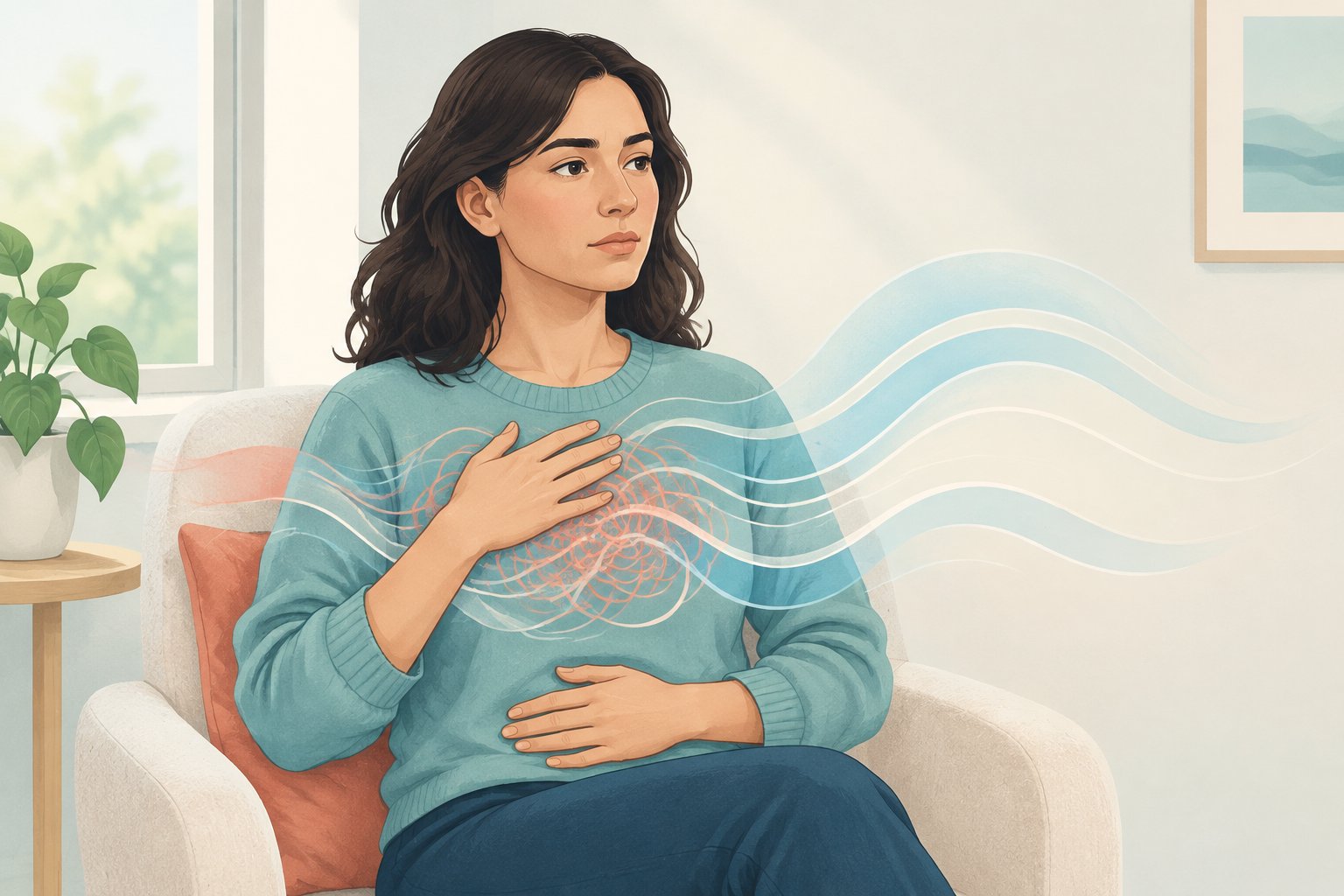
Anxiety can cause shortness of breath. When your body senses stress or danger, real or imagined, it triggers a physical response that changes how you breathe.
This can lead to rapid, shallow breathing or a tight, smothered feeling in your chest, even when nothing is physically wrong with your lungs or heart. This sensation is common and is called anxiety-related shortness of breath.
Anxiety activates the same body systems designed to help you survive a physical threat, even when the “threat” is a work deadline, a crowded room, or a worried thought. For many people, this breathlessness feels frightening enough to send them to the emergency room, only to be told their heart and lungs are healthy.
If you’re dealing with shortness of breath that is new, severe, or doesn’t fit a clear anxiety pattern, a doctor or mental health professional can help you understand what’s happening in your specific case.
How the Stress Response Changes Breathing
Anxiety and shortness of breath are connected through your nervous system’s built-in alarm system. When your brain senses a threat, it releases stress hormones that speed up your breathing and heart rate, preparing your body to react quickly.
Fight-or-Flight Response, Adrenaline, and Cortisol
The fight-or-flight response is your body’s automatic reaction to perceived danger. It floods your system with adrenaline and cortisol, two stress hormones that raise your heart rate, tense your muscles, and change your breathing pattern.
Adrenaline in particular causes rapid breathing and can tighten the airway between your nose and lungs, which produces that breathless, air-hungry feeling. This response evolved to protect humans from physical danger, but it activates just as strongly when the “danger” is a stressful email or an anxious thought.
Hyperventilation, Carbon Dioxide, and Air Hunger
When breathing speeds up too much, you can end up hyperventilating, taking in more air than your body needs. This lowers the carbon dioxide level in your blood, a shift called respiratory alkalosis.
Lower carbon dioxide can cause dizziness, tingling, and a stronger sensation of not getting enough air, known as air hunger. This feeling often pushes people to breathe even faster, which makes the breathlessness worse instead of better.
Recognizing this pattern is the first step toward calming it down.
Recognizing Anxiety-Related Breathing Symptoms
Anxiety rarely shows up as shortness of breath alone. It typically arrives alongside other physical and emotional symptoms that build quickly and can feel overwhelming, especially during a panic attack.
Common Physical Sensations During Panic
During an anxiety attack or panic attack, people often notice chest tightness or chest pain, a racing heart, and heart palpitations. Sweating, trembling, muscle tension, dizziness, lightheadedness, and nausea are also common.
Some people feel like they might faint, while others describe confusion or a wave of fatigue and irritability afterward. These symptoms tend to peak within minutes and then gradually ease.
The Cycle of Fear
Anxiety symptoms often trigger fear about the symptoms themselves. Feeling short of breath can cause a surge of fear that something is seriously wrong, which then releases more stress hormones and makes the breathing problem worse.
This feedback loop is especially common in chronic anxiety and diagnosed anxiety disorders, where the body has learned to react strongly to physical sensations that feel unsafe.
Breathlessness and Panic
Breathlessness and panic often feed each other in both directions. Anxiety can trigger rapid, shallow breathing, but struggling to breathe for any reason, anxious or physical, can also spark anxiety and panic.
This two-way relationship is one reason anxiety-related breathing issues can feel confusing and hard to interrupt without the right tools.
When to Seek Medical Evaluation or Emergency Care
Shortness of breath should never be assumed to be anxiety without ruling out other causes, especially the first time it happens or if the pattern changes. Persistent shortness of breath, or breathlessness that comes with certain warning signs, needs prompt medical attention.
Warning Signs That Need Urgent Attention
Call 911 if shortness of breath comes with chest pain or tightness, blue or pale lips or skin, coughing up blood, choking or an inability to speak, confusion, or fainting. Numbness or pain spreading to the arms, jaw, back, or neck also needs immediate emergency care.
If you are ever unsure whether what you’re feeling is anxiety or something more serious, it is always safer to seek emergency medical care and let a professional evaluate you.
Other Heart and Lung Causes to Rule Out
Many physical conditions cause shortness of breath, including asthma, COPD, heart problems, pneumonia, and other lung conditions. Breathlessness that worsens with activity, gets worse when lying down, or comes with a persistent cough, wheezing, or swollen ankles should be evaluated by a doctor.
Anxiety can cause real, physical shortness of breath, but a medical provider can confirm there isn’t also a heart or lung issue contributing. A psychiatrist or therapist can help address the anxiety component once physical causes are ruled out.
Calming Breathing and Grounding in the Moment
Slowing down an anxiety-driven breathing episode usually works best when you focus on gentle, steady breathing rather than forcing in a big gasp of air. Simple techniques that bring your attention back to your body and surroundings can help.
Slowing the Breath Without Forcing a Deep Breath
Trying to take one huge deep breath during shortness of breath can sometimes make hyperventilation worse. Diaphragmatic breathing, also called belly breathing, encourages slow, controlled breaths using your diaphragm.
Box breathing, where you inhale, hold, exhale, and hold again for a count of four each, and pursed-lip breathing, where you exhale slowly through pursed lips, can help regulate your breathing rate and ease air hunger within a few minutes.
Grounding the Body During an Anxiety Surge
Grounding techniques help shift your focus away from frightening physical sensations. The 5-4-3-2-1 exercise, where you name things you can see, touch, hear, smell, and taste, can interrupt a panic spiral.
Progressive muscle relaxation, where you tense and release muscle groups one at a time, along with mindfulness or a short mindfulness meditation practice, can also calm the nervous system and support these coping techniques as regular self-care.
Building Long-Term Relief and Support
Calming techniques help in the moment, but lasting relief from anxiety-related shortness of breath usually comes from addressing the anxiety itself. A combination of therapy, lifestyle changes, and sometimes medication tends to offer the most stable long-term results.
Therapy for Panic, Health Worry, and Chronic Anxiety
Cognitive behavioral therapy, or CBT, is a well-studied treatment for panic attacks, health-related anxiety, and chronic anxiety disorders. A therapist can help you identify the thought patterns that fuel the fear-breathlessness cycle and teach you specific breathing and coping strategies for the moments when anxiety spikes.
Talk therapy also gives you a space to work through the worry and fatigue that ongoing anxiety can create.
Lifestyle Supports and Medication Conversations
Regular exercise, yoga, and tai chi can lower baseline stress and improve how your body handles the fight-or-flight response over time. Some people also benefit from medication conversations with a psychiatrist or prescriber, which may include SSRIs or other antidepressants for ongoing anxiety, or short-term options like benzodiazepines for acute symptoms.
A mental health professional can help you weigh these options alongside therapy and stress management, especially if anxiety overlaps with depression or other anxiety disorders.
Frequently Asked Questions
What does anxiety-related shortness of breath feel like?
It often feels like you can’t get a full, satisfying breath, or like your chest is tight and restricted. It may come on suddenly with a racing heart, sweating, or a sense of fear, and it typically builds quickly before easing over several minutes.
How can I tell whether shortness of breath is caused by anxiety or a heart or lung problem?
Anxiety-related breathlessness tends to come on suddenly during stress, ease with relaxation techniques, and resolve once the stressor passes. Breathlessness from a heart or lung condition more often worsens with physical activity, persists regardless of relaxation, or comes with symptoms like a persistent cough, wheezing, or swelling, which need medical evaluation.
How long can shortness of breath from anxiety last?
Anxiety-related shortness of breath commonly resolves within 10 to 30 minutes, matching the typical length of a panic attack. Shortness of breath that lasts much longer or happens constantly throughout the day is worth discussing with a doctor to rule out other causes.
How can I relieve shortness of breath during an anxiety episode?
Slow, controlled breathing techniques like diaphragmatic breathing, box breathing, or pursed-lip breathing can help regulate your breath without forcing a large gasp of air. Grounding exercises, such as the 5-4-3-2-1 technique, and progressive muscle relaxation can also calm the nervous system and ease the sensation.
Can anxiety-related shortness of breath happen without hyperventilating?
Yes. Some people experience chest tightness or a smothered feeling from muscle tension and stress hormones without breathing unusually fast.
Anxiety can affect breathing through several mechanisms, not hyperventilation alone, which is one reason symptoms can vary from person to person.
When should shortness of breath be treated as a medical emergency?
Call 911 if shortness of breath comes with chest pain, blue or pale lips, confusion, fainting, coughing up blood, or trouble speaking.
If you’re ever unsure whether your symptoms are anxiety or something more serious, get medical care right away. A mental health professional can help with anxiety once you’ve been medically cleared.
If shortness of breath often happens with worry, panic, or a racing heart, you don’t have to handle it alone. Reaching out for support is a strong and normal step.