
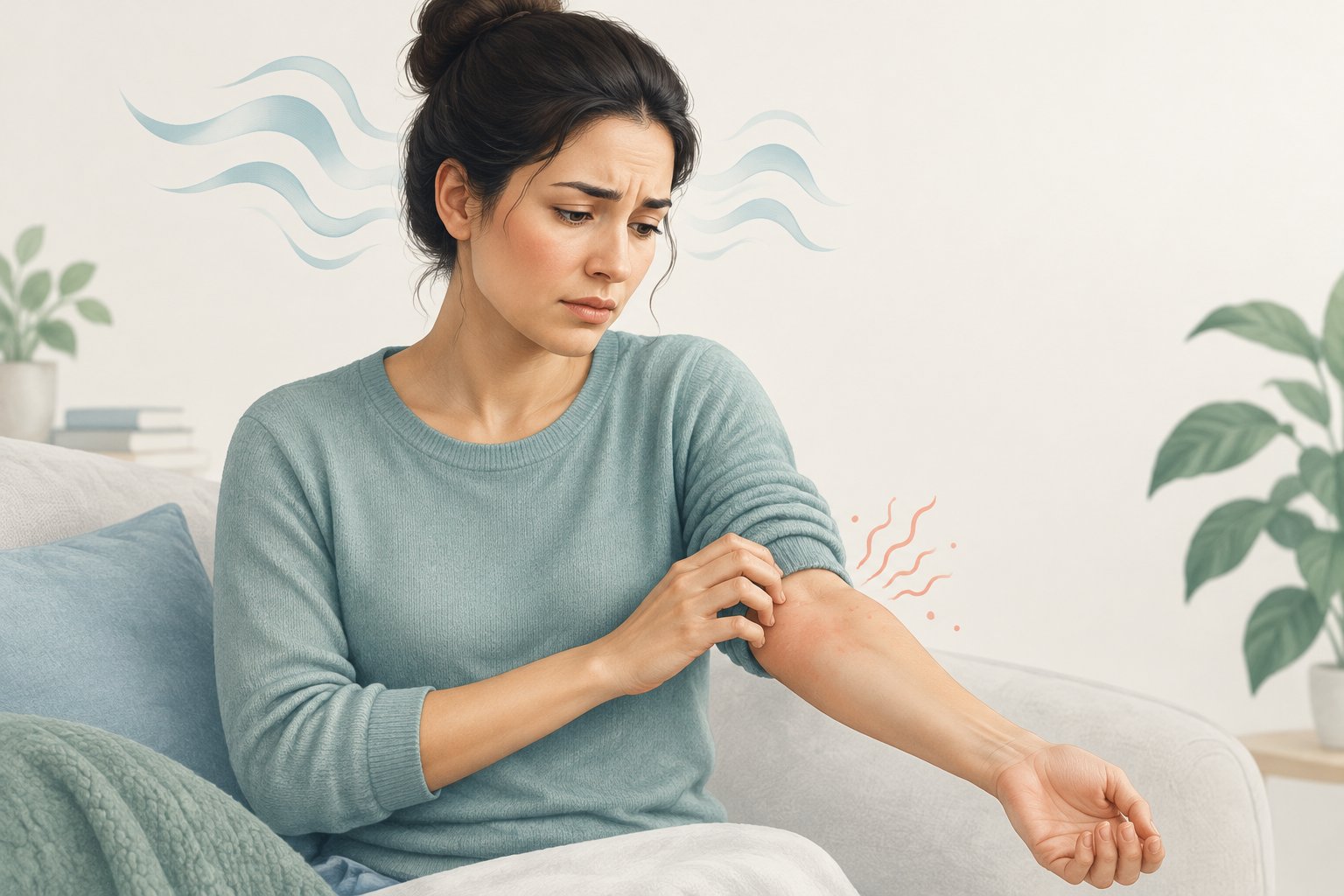
Anxiety can cause itching. This happens because of the connection between the nervous system and the skin.
Stress hormones and nerve signals can trigger an itchy sensation even when there’s no rash or skin condition. The experience is real, not imagined.
This type of itch is called psychogenic itch, or stress-related pruritus. It can show up anywhere on the body and often comes and goes with anxiety levels.
If your skin feels itchy but looks normal, there are practical explanations. You’re not alone in experiencing this.
Persistent or severe itching deserves a proper evaluation from a health care provider.
How Anxiety Can Affect the Skin
Anxiety and stress cause hormone shifts and changes in the nervous system. These can directly produce sensations like itching, burning, or tingling.
Skin can become more sensitive or reactive under stress. This may lead to redness or irritation, even without a clear medical cause.
The Stress Response and Itch Signals
When you feel anxious, your body releases stress hormones like cortisol and adrenaline. These hormones affect the nerves in your skin.
This can cause unusual sensations along nerve pathways, including itching or a crawling feeling. Skin symptoms are common during periods of high stress or major life changes.
Why Symptoms May Occur Without a Visible Rash
Stress-related itching often happens even when the skin looks normal. The itch starts in the nervous system, not on the skin’s surface.
Your brain misreads or amplifies signals from nerve endings, creating a real itching sensation. This is called psychogenic itch and is a recognized response to psychological distress.
The Itch-Anxiety-Scratching Cycle
Anxiety can cause itching, and itching can increase anxiety. This can create a cycle that feels hard to break.
Scratching can irritate the skin, which adds to stress. This cycle can make both the itching and anxiety feel more intense.
Signs That Stress May Be Amplifying Itching
Itching that flares during stressful moments, gets worse at bedtime, or appears with fatigue and disrupted sleep may be linked to stress. Noticing these patterns can help you and your provider understand what’s happening.
Patterns Around Worry, Tension, and Overwhelm
Stress-related itching often aligns with emotional states rather than physical triggers. You might notice itching increases during stressful times or when worries are on your mind.
If the itching rises and falls with your stress levels, anxiety may be a factor.
Sleep Disruption and Nighttime Symptoms
Itching can feel worse at night. This may be due to fewer distractions and natural shifts in cortisol.
Anxiety can also cause night sweats, which may irritate the skin and disturb sleep. Poor sleep can then make the itching feel more intense.
Tracking Symptoms Without Becoming Hypervigilant
A brief log of when itching happens and what else is going on, like stress level or sleep, can help spot patterns. Avoid constantly checking your skin, as this can increase anxiety and itch sensations.
A few notes a day are enough.
Other Common Causes to Consider
Itching has many possible causes beyond anxiety. These include dry skin, skin conditions, allergies, infections, medications, and underlying medical issues.
Dry Skin, Eczema, and Psoriasis
Dry skin is a common cause of itching, especially in cold weather. Skin conditions like eczema and psoriasis can also cause persistent itching.
Stress can make these conditions flare up or worsen. If you have one of these conditions, anxiety may intensify your symptoms.
Allergies, Contact Reactions, and Everyday Irritants
Allergic reactions and contact with irritants often cause itchy skin. New detergents, lotions, fabrics, or skincare products can trigger irritation.
Seasonal or food allergies can also cause itching, sometimes with sneezing or hives.
Infections and Medication-Related Itching
Fungal infections like ringworm cause localized itching, often with a distinct rash. Some medications, including antibiotics, can cause itching as a side effect.
If you started a new medication around the same time itching began, mention this to your provider or pharmacist.
Medical Conditions That May Require Evaluation
Some health conditions can cause persistent itching, including thyroid disorders and diabetes. These often come with other symptoms, such as fatigue, weight changes, or night sweats.
Persistent, unexplained itching should be evaluated by a health care provider.
When to Seek Medical Care Promptly
Most itching is not an emergency, but some symptoms need prompt attention. Recognizing these signs can help you get the right care.
Emergency Symptoms of a Severe Allergic Reaction
Seek emergency care if itching comes with swelling of the face, lips, or throat, trouble breathing, dizziness, or a rapidly spreading rash. These may be signs of a severe allergic reaction.
Do not wait to see if these symptoms improve on their own.
Persistent Itching and Concerning Changes
Itching that lasts for several weeks, spreads widely, or comes with fatigue, night sweats, unexplained weight loss, or skin color changes should be evaluated by a provider. These symptoms need a medical workup.
Preparing for a Conversation With a Health Care Provider or Pharmacist
Before your appointment, note when the itching started, where it happens, what affects it, and any new medications or products you’ve used. Mention your stress or anxiety levels, as this helps your provider consider the full picture.
A pharmacist can also help if you suspect a medication side effect.
Supporting Both Anxiety and Physical Comfort
Addressing stress-related itching usually works best when you care for your skin and manage anxiety. Gentle skincare and evidence-based anxiety treatment can help break the itch-anxiety cycle.
Gentle Skin-Care and Trigger-Reduction Steps
Use fragrance-free lotion, wear soft breathable fabrics, and avoid hot showers that dry out the skin. Keep fingernails trimmed to reduce damage from scratching.
Reducing exposure to known irritants, like harsh detergents, can help calm skin irritation.
Evidence-Based Mental Health Support for Anxiety
Cognitive behavioral therapy (CBT) helps people recognize and change thought patterns that fuel anxiety. This can reduce stress-related physical symptoms like itching.
Relaxation practices such as breathing exercises, mindfulness, and regular movement have also been shown to lower stress levels. Sometimes, medication options are discussed alongside therapy.
Finding Collaborative Care
Stress-related itching often benefits from coordinated care between your therapist, doctor, and pharmacist. Group therapy and telehealth options can offer support for anxiety and related concerns.
Frequently Asked Questions
Can stress cause itching without a rash?
Yes. Stress and anxiety can trigger real itching through changes in hormones and nerve signals, even when the skin looks normal. This is called psychogenic itch.
What does anxiety-related itching feel like?
People describe it as a crawling sensation, tingling, burning, or a persistent urge to scratch. It can appear anywhere on the body and often comes and goes with stress levels.
Can anxiety cause itching and tingling?
Yes. Anxiety affects the nervous system, which can produce sensations like itching, tingling, numbness, or skin crawling. These are uncomfortable but recognized physical symptoms of anxiety.
Can stress trigger hives or a rash?
Stress can trigger hives or worsen conditions like eczema or psoriasis in some people. Stress hormones affect immune response and skin sensitivity.
A new or widespread rash still deserves a medical evaluation.
Why does itching get worse at night when stressed?
Cortisol levels shift throughout the day, and nighttime brings fewer distractions, making itching more noticeable. Anxiety can also disrupt sleep and cause night sweats, which can intensify itching after dark.
How can stress-related itching be relieved?
Gentle skin care, such as using fragrance-free lotion and avoiding harsh soaps, can help ease discomfort.
Therapy, relaxation techniques, or professional support can reduce the frequency and intensity of stress-related itching.