
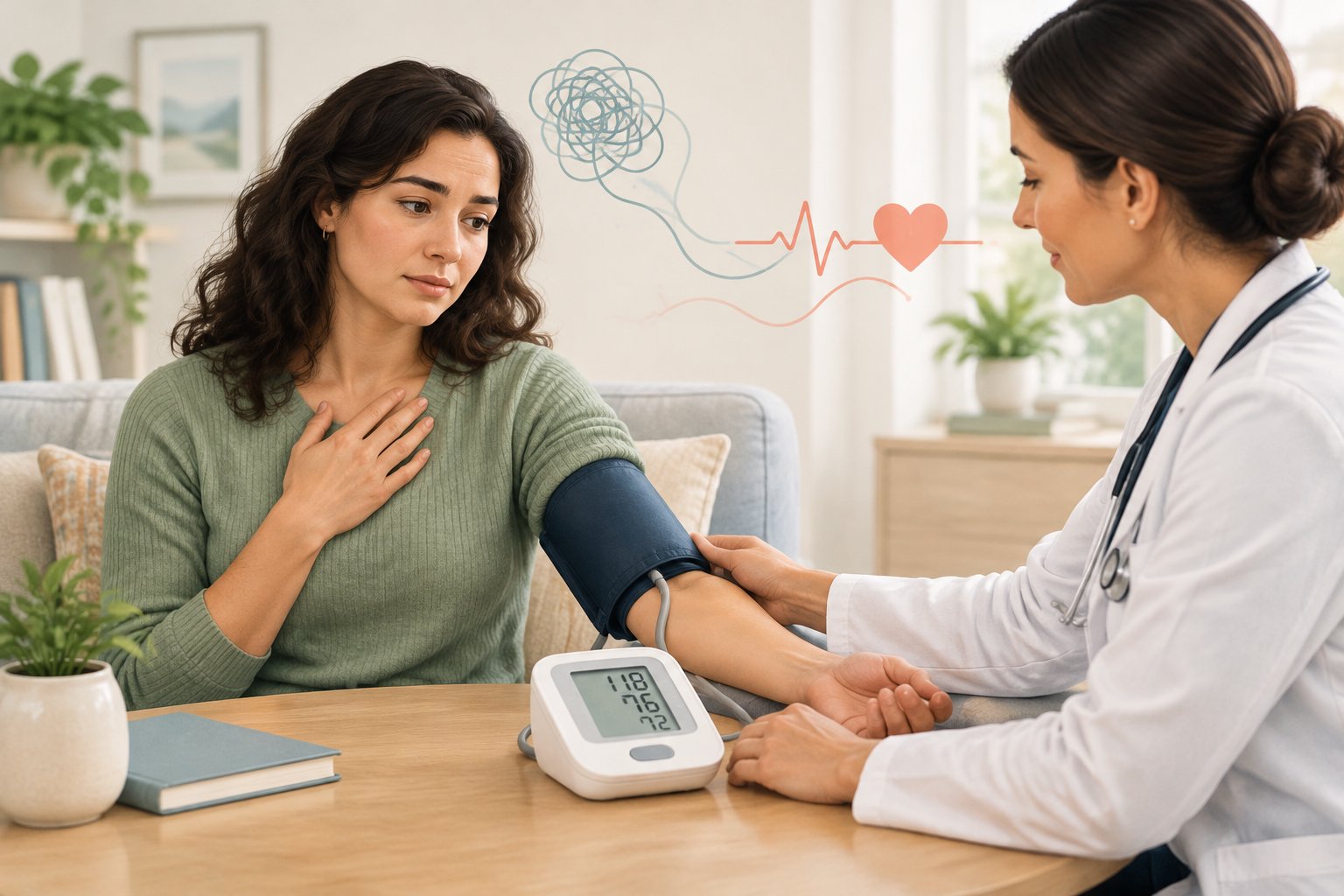
Anxiety can cause high blood pressure, at least for a short time. When you feel anxious, your body releases stress hormones that make your heart beat faster and your blood vessels tighten.
This can push your blood pressure up quickly, sometimes to noticeably high numbers. This kind of spike is usually temporary.
Anxiety on its own is not typically the cause of chronic high blood pressure (hypertension). Ongoing anxiety, poor sleep, and habits like drinking alcohol or skipping exercise can add up over time and affect your cardiovascular system.
What Happens in the Body During Anxiety
When anxiety hits, your body reacts as if there is a real physical threat. This response happens quickly and involves several systems working together.
Your body has a built-in alarm system called the fight-or-flight response. It activates whenever your brain senses danger, whether the danger is real or just a worry.
Your sympathetic nervous system, which controls automatic reactions like heart rate and breathing, switches into high gear. This stress response helped early humans survive threats, and it still activates today even when the “threat” is a racing thought.
During this response, your body releases stress hormones, including adrenaline, noradrenaline, and cortisol. These hormones tell your heart to beat faster and your blood vessels to narrow.
Both changes work together to raise your systolic pressure, the top number in a blood pressure reading. This is your body preparing to act quickly, even if there is nothing to physically run from or fight.
Once the anxious moment passes, your body typically calms back down. Heart rate slows, blood vessels relax, and blood pressure readings return toward your normal baseline.
A single stressful event, like a doctor’s visit or a tense conversation, usually does not cause lasting harm on its own. Acute anxiety causes a real but short-lived change in your cardiovascular system, not a permanent one.
Temporary Spikes Versus Ongoing Hypertension
A single anxious moment and long-term high blood pressure are very different, even though they can feel connected. Knowing the difference can help you figure out whether you need to talk with a doctor, a mental health professional, or both.
A blood pressure spike during a panic attack or stressful event is usually short and tied directly to that moment. Chronic hypertension means your blood pressure stays elevated consistently, even when you are calm and not feeling anxious.
Doctors diagnose chronic high blood pressure based on repeated readings over time, not a single number taken during a stressful moment. Research on whether chronic anxiety directly causes long-term hypertension is still developing, and results have been mixed.
Some studies suggest ongoing anxiety may contribute to sustained high blood pressure over time, possibly through repeated activation of the stress response and low-grade inflammation. Anxiety that goes untreated for months or years may take a toll on cardiovascular health, even if the exact mechanism is not fully settled in the research.
Anxiety and high blood pressure often show up together because they share common risk factors. Smoking, heavy alcohol use, too much caffeine, poor diet, overeating, and poor sleep can all raise blood pressure and worsen anxiety.
Sleep apnea and chronic kidney disease are also linked to both conditions. These overlapping habits and health issues, rather than anxiety alone, may explain much of the connection between anxiety and cardiovascular disease.
Symptoms That Need Medical Attention
Anxiety and high blood pressure can produce some overlapping physical symptoms, which makes it hard to know what is causing what without help from a professional. Some symptoms are common and manageable, while others signal a medical emergency.
Anxiety symptoms often include shortness of breath, dizziness, chest tightness, headaches, and fatigue. Panic attacks can bring on sudden chest pain, a racing heart, trembling, and a strong fear that something is seriously wrong.
These symptoms are frightening but usually pass within minutes as the panic subsides. Certain symptoms should never be brushed off as “just anxiety.”
Severe headache, chest pain that does not ease up, vision changes, sudden weakness or numbness, slurred speech, or fainting could point to a hypertensive emergency, stroke, or heart attack. If you or someone with you experiences these symptoms, call 911 or go to the nearest emergency room right away.
A high number on a home blood pressure cuff during an anxious moment does not automatically mean you have hypertension. Blood pressure fluctuations are normal and can be influenced by posture, recent activity, caffeine, or the “white coat effect,” where readings run higher in a medical setting due to nerves.
Only a healthcare provider, using repeated readings and a full picture of your health, can determine whether what you are experiencing is anxiety, high blood pressure, or both.
Getting an Accurate Assessment and Coordinated Care
Sorting out whether anxiety, blood pressure, or another condition is behind your symptoms takes more than a single reading. Working with both a medical provider and a mental health professional gives you a clearer picture and a plan that fits your needs.
Bring a log of your blood pressure readings, along with notes on when they happened and how you were feeling, to your next medical appointment. This helps your doctor tell the difference between situational spikes and a pattern of chronic hypertension.
It also helps rule out other causes, since certain medical conditions and medications can affect blood pressure independent of anxiety. If you find yourself frequently worried about your blood pressure, your heart, or your health in general, this may point to generalized anxiety disorder or health anxiety.
A mental health professional can help you understand whether your anxiety disorder is driving physical symptoms, health worries, or both. Anxiety treatment and blood pressure management often work best together.
Your primary care provider can monitor your cardiovascular health, while a therapist helps you build skills to manage anxiety through therapy. Coordinated care between your providers can support both your mental and physical health.
Approaches That Support Mental and Cardiovascular Health
Many of the same strategies that calm anxiety also support a healthier cardiovascular system. The right combination depends on your symptoms, your health history, and what feels sustainable for your daily life.
Cognitive behavioral therapy (CBT) is a well-studied treatment for anxiety disorders. It helps you notice anxious thought patterns and replace them with more balanced, realistic ones.
Mindfulness and mindfulness meditation are also used alongside therapy to reduce the intensity of the stress response over time. Deep breathing, relaxation exercises, and progressive muscle relaxation can calm your nervous system in the moment.
Yoga combines movement with stress management and is linked to both lower anxiety and better blood pressure numbers. Regular exercise, quality sleep, and a heart-healthy diet built around whole grains, lower sodium, and balanced meals all support a moderate weight and steadier blood pressure over time.
Some people benefit from anti-anxiety medication or antidepressants, including SSRIs or SNRIs, alongside therapy. Blood pressure medications such as diuretics, calcium channel blockers, ARBs, and beta-blockers are prescribed based on your specific health needs.
Because some medications can affect both conditions, decisions about starting or adjusting medication should always involve a qualified prescriber who knows your full health history.
Frequently Asked Questions
How much can anxiety temporarily raise blood pressure?
Anxiety can raise blood pressure by roughly 10 to 20 mmHg or more during an intense moment, though the exact amount varies from person to person. This happens because stress hormones cause your heart to beat faster and your blood vessels to narrow.
The increase is usually temporary and tends to ease as your anxiety settles.
How long does elevated blood pressure from anxiety last?
In most cases, blood pressure returns to baseline within a few minutes to an hour after the anxious moment passes. If your anxiety is ongoing throughout the day, your blood pressure may stay elevated for longer stretches.
Consistently high readings over time, regardless of how you feel, should be evaluated by a medical provider.
Can a panic attack cause a blood pressure reading of 180 or higher?
A severe panic attack can push blood pressure into a high range for some people, especially if there is an underlying cardiovascular condition. This kind of reading still needs to be taken seriously, since very high numbers can sometimes signal a medical emergency rather than anxiety alone.
If you or someone else has a reading this high along with chest pain, severe headache, or vision changes, seek emergency care right away.
Can anxiety cause both high blood pressure and a rapid heart rate?
Anxiety commonly raises both blood pressure and heart rate at the same time, since both are controlled by the same stress response. This is a normal part of the fight-or-flight reaction and usually resolves as anxiety fades.
If a rapid heart rate feels irregular, does not settle down, or comes with chest pain, it is worth getting checked by a doctor.
Is high blood pressure caused by anxiety dangerous?
A brief, anxiety-related spike is generally not dangerous on its own, especially if it resolves once you calm down. Repeated or prolonged high readings, or spikes that reach very high numbers, deserve medical attention since they can strain your cardiovascular system over time.
A healthcare provider can help you understand your personal risk based on your full health picture.
Learning what counts as a normal fluctuation versus a concerning pattern can help ease worry. A doctor can explain your specific numbers.
If worry about your health feels frequent or hard to manage, a mental health professional can help. Reaching out for support is a practical step toward feeling calmer.