
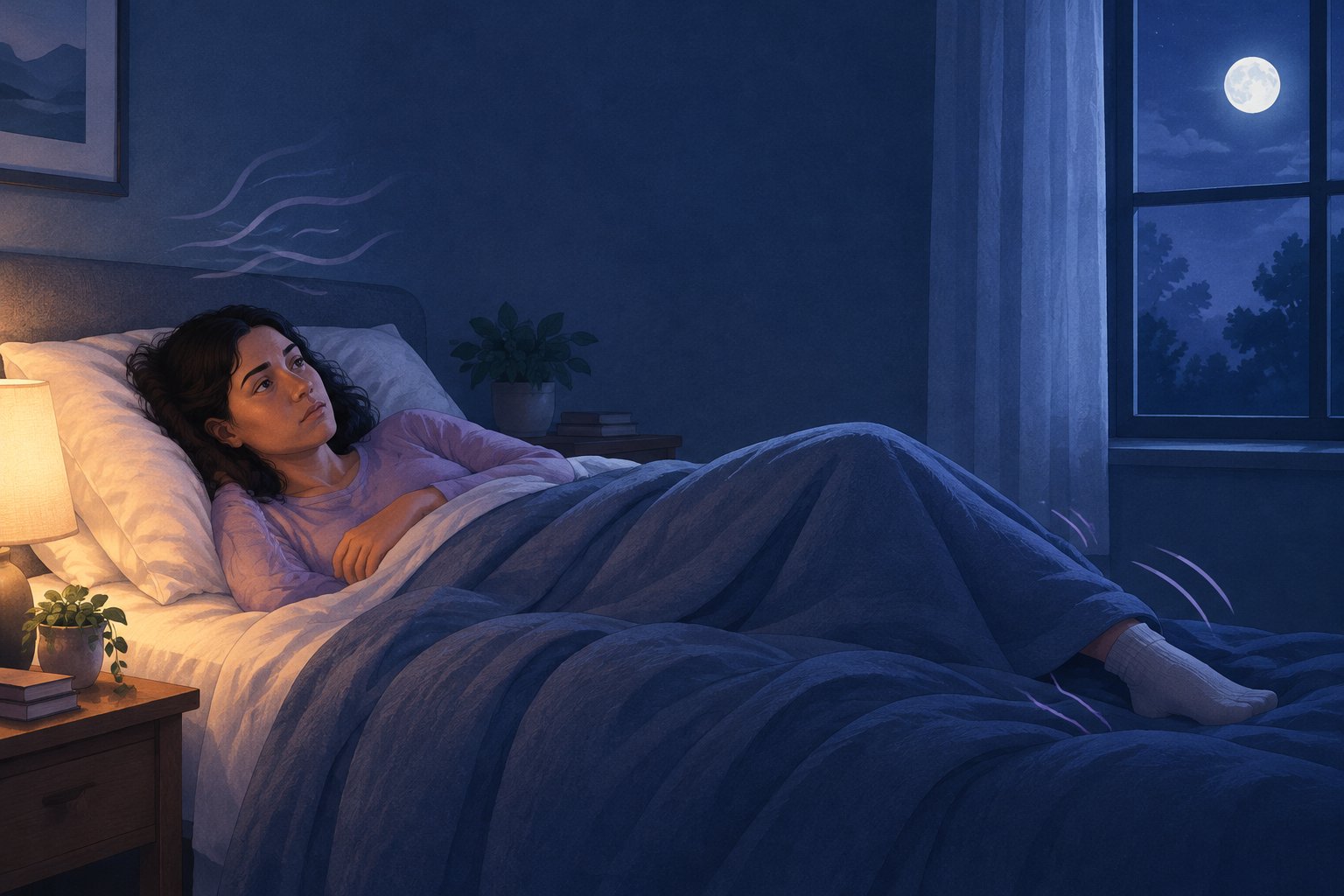
Lying in bed with legs that won’t settle down while your mind races through worries is exhausting. Anxiety and restless legs at night often show up together, and research suggests a real connection between the two: chronic stress can heighten nervous system activity in ways that make leg discomfort worse, while restless legs syndrome itself can trigger frustration and worry that feeds anxiety.
Neither experience means something is wrong with you, and neither has to be permanent. If symptoms are persistent or severe, a medical or mental health professional can help you sort out what’s really going on.
Recognizing the Nighttime Pattern
Restless legs syndrome and anxiety can look similar at first glance, but they involve different sensations and different root causes. Knowing what each one feels like, and how they can overlap, helps you describe your symptoms more clearly to a doctor or therapist.
Hallmarks of Restless Legs Syndrome
Restless legs syndrome, also called Willis-Ekbom disease, is a neurological condition marked by an uncomfortable urge to move the legs. People describe RLS symptoms as tingling, itching, aching, or a “creeping” sensation deep inside the legs.
Moving, stretching, walking, or pacing often brings temporary relief, which is why many people with RLS find themselves getting up repeatedly at night. Twitching or jerking movements can also occur, sometimes without the person fully realizing it.
How Anxiety-Related Restlessness Can Feel
Anxiety-driven restlessness tends to come with a different set of signals. Racing thoughts, feeling on edge, a pounding heart, sweating, and trembling are common anxiety symptoms that can make it hard to sit still or relax into sleep.
This kind of nervous energy can feel like agitation or irritability throughout the body rather than a sensation localized to the legs. It may build toward panic in more intense moments.
When Both May Be Present
Some people experience both patterns at once. Anxiety can heighten awareness of physical sensations, making RLS symptoms feel more intense or distressing.
The frustration of unresolved leg discomfort can spark new anxiety about ever getting a good night’s sleep. This overlap doesn’t mean one condition caused the other; it simply reflects how closely the mind and body are connected during sleep disturbances.
Why Symptoms Can Intensify After Dark
Both anxiety and restless legs syndrome follow patterns tied to the body’s stress response and internal clock. Evenings and nighttime hours often feel worse than the rest of the day.
Fatigue, hormone shifts, and brain chemistry changes all play a role in this nighttime intensification.
The Stress Response and Physical Arousal
When the body perceives a threat, real or imagined, it activates the fight-or-flight response through the sympathetic nervous system. This releases stress hormones like adrenaline and cortisol, which increase muscle tension, heart rate, and hypervigilance.
Chronic stress or chronic anxiety can keep this system in a semi-activated state, sometimes described as hyperstimulation. That ongoing arousal has been linked to a “restless” or “nervous energy” feeling in the legs and body.
Sleep Loss, Fatigue, and a Self-Reinforcing Cycle
Poor sleep quality and lack of sleep can worsen both anxiety and restless legs symptoms, creating a cycle that’s hard to break. Fatigue lowers your ability to cope with stress during the day, which can raise anxiety levels at night.
Heightened anxiety in turn disrupts sleep further. Over time, this pattern can wear down overall quality of life if it isn’t addressed.
Circadian Rhythm and Dopamine Signaling
Restless legs syndrome has its own circadian rhythm, meaning symptoms tend to intensify in the evening and nighttime regardless of whether a person is lying down or sitting still. This pattern is thought to relate to natural shifts in dopamine, a neurotransmitter involved in muscle control, that occur throughout the day.
Depression and unresolved trauma have also been associated with both worsened RLS symptoms and nighttime anxiety. Physical and emotional health are closely connected.
Medical Factors and Triggers Worth Checking
Restless legs syndrome sometimes develops on its own, but it can also be tied to specific health conditions, nutrient levels, or substances. Reviewing these possibilities with a doctor can help identify what’s driving your symptoms.
Iron Levels and Secondary Causes
Iron deficiency and anemia are among the most well-established contributors to secondary RLS, since iron plays a role in dopamine production. Pregnancy, kidney disease, diabetes, peripheral neuropathy, and venous insufficiency have also been linked to restless legs symptoms.
A family history of RLS raises the likelihood of developing it. Low magnesium or other nutrition gaps may play a supporting role for some people.
Medications and Substances That May Aggravate Symptoms
Certain medications, including some antidepressants like selective serotonin reuptake inhibitors (SSRIs), beta-blockers, and stimulants, have been associated with new or worsened RLS symptoms in some people. Caffeine, alcohol, and nicotine are common triggers too, especially when used close to bedtime.
Chronic pain conditions can also intensify restlessness by keeping the nervous system on alert.
Why a Professional Evaluation Matters
Because so many factors can contribute to restless legs and nighttime anxiety, self-diagnosing rarely gives the full picture. A doctor can check iron levels, review your medications, and rule out other medical conditions.
A mental health professional can assess whether an anxiety disorder is part of the pattern. Getting both perspectives often leads to a more complete and effective treatment plan.
Practical Steps for Calmer Evenings
Small, consistent changes to your evening routine can ease both restless legs and anxious arousal. Combining body-based relief with sleep-supportive habits and calming mental strategies tends to work better than relying on just one approach.
Gentle Movement and Body-Based Relief
Light to moderate exercise earlier in the day, along with stretching, yoga, or a short walk before bed, can reduce the urge to move that comes with RLS. Massage and warm baths may also ease muscle tension and improve circulation in the legs.
These body-based strategies work well alongside relaxation techniques. Calming the muscles often calms the mind too.
Sleep-Supportive Habits and Trigger Tracking
Good sleep hygiene, such as a consistent bedtime and a cool, comfortable room, supports better sleep quality over time. Cutting back on caffeine, alcohol, and nicotine, especially in the evening, can reduce flare-ups for many people.
Keeping a simple log of when symptoms happen and what you ate, drank, or did that day can help you and your provider spot patterns worth addressing.
Tools for Settling Anxious Arousal
Deep breathing, mindfulness, and meditation are practical tools for settling the nervous system when racing thoughts or physical restlessness show up at night. Gentle distraction, such as listening to a calm podcast or practicing a body scan, can redirect attention away from anxious thoughts long enough for the body to relax.
Stress management practiced consistently during the day, not just at bedtime, tends to have the biggest impact on nighttime symptoms.
Treatment and Support Options
When lifestyle changes aren’t enough, medical and therapeutic treatments can offer meaningful relief for both restless legs syndrome and anxiety. The right combination depends on which condition is present, or whether both need attention.
Medical Treatment for Confirmed RLS
For diagnosed restless legs syndrome, doctors sometimes prescribe dopamine agonists such as pramipexole or ropinirole, particularly when symptoms are frequent or severe. Treating an underlying cause, like correcting iron deficiency, can also resolve secondary RLS in many cases.
Any medication decision should happen with a physician who can weigh the benefits and possible side effects for your specific situation.
Therapy for Anxiety and Sleep-Related Worry
Cognitive behavioral therapy (CBT) is a well-supported approach for anxiety disorders, including generalized anxiety disorder (GAD) and panic disorder, and it can be adapted to target sleep-related worry specifically. Therapy helps people identify the thought patterns that fuel nighttime anxiety and build practical coping skills.
For people whose anxiety and depression overlap with sleep disturbances, addressing the mental health side often improves quality of life.
When to Reach Out for Care
If restless legs, anxiety, or both are disrupting your sleep on a regular basis, it’s worth reaching out for professional support. Reaching out is a sign of self-care, not a last resort.
Frequently Asked Questions
How can I stop restless legs immediately at night?
Getting up to walk, stretch, or gently massage your legs often brings quick, temporary relief from the urge to move. A warm bath or a cool compress can also help calm the sensation in the moment.
If restless legs happen often, addressing the underlying cause with a doctor offers more lasting relief than short-term fixes alone.
Can anxiety make restless legs worse at bedtime?
Anxiety can intensify restless legs symptoms for many people, even though anxiety isn’t considered a direct cause of RLS itself. The stress response increases nervous system arousal, which can heighten muscle tension and awareness of uncomfortable leg sensations.
Managing anxiety through relaxation techniques or therapy may reduce how intense RLS feels at night.
What causes restless legs when I am trying to sleep?
Restless legs syndrome has a natural circadian pattern that causes symptoms to intensify in the evening and nighttime, related to shifts in dopamine activity in the brain. Iron deficiency, certain medications, pregnancy, and conditions like kidney disease or diabetes can also contribute.
Stress and anxiety often make existing symptoms feel more noticeable right when you’re trying to fall asleep.
What does restless leg syndrome feel like?
People with RLS commonly describe a deep, uncomfortable urge to move the legs along with sensations like tingling, itching, aching, or a “creeping” feeling under the skin. These sensations typically ease temporarily with movement, such as walking or stretching, and return once you’re still again.
Symptoms are usually felt in the legs but can occasionally affect the arms too.
What vitamin or mineral deficiency can cause restless legs?
Iron deficiency is the most well-documented nutritional cause linked to restless legs syndrome, since iron is needed for healthy dopamine function in the brain. Anemia, which often results from low iron, has also been closely tied to secondary RLS.
A simple blood test can check iron levels, so it’s worth asking a doctor if you suspect this might be part of your symptoms.
Which medications can trigger or worsen restless legs?
Some antidepressants, including SSRIs, as well as beta-blockers, antihistamines, and certain anti-nausea medications, have been linked to new or worsened restless legs symptoms in some people.
Stimulant medications can also play a role.
If you think a medication may be affecting your symptoms, talk with your doctor or pharmacist before making any changes.