
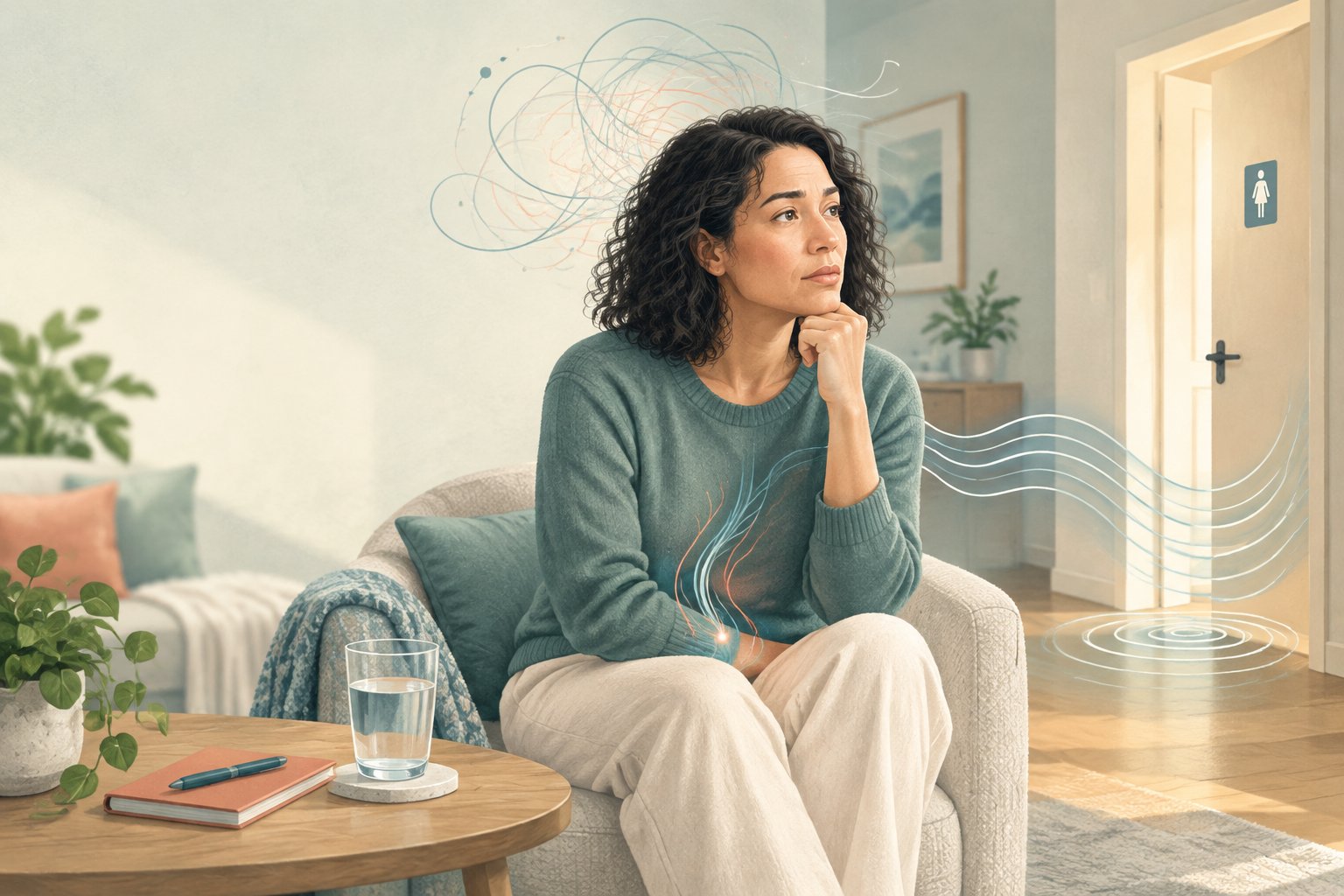
If you feel like you need to pee constantly when you’re stressed or worried, you’re not imagining it. Anxiety and frequent urination are closely linked, and this is a well-documented experience for many people.
Your body’s stress response can directly affect your bladder, making you feel a strong urge to go even when you just used the bathroom minutes ago. This connection between anxiety urination and your nervous system is real and physical, not “all in your head.”
Frequent urination anxiety can show up as a sudden urge before a big meeting, repeated bathroom trips during a stressful week, or a nagging worry that you’ll need a bathroom when none is nearby. These are recognized physical symptoms of anxiety, similar to a racing heart or an upset stomach.
How Anxiety Can Affect Bladder Signals
Your brain and bladder are in constant communication, and anxiety can disrupt that conversation in ways that feel confusing or alarming. Stress hormones, muscle tension, and changes in how your nervous system reads bladder signals all play a role in why anxious moments often come with an urgent need to find a bathroom.
The Brain-Bladder Connection
Your brain and bladder send signals back and forth constantly, letting you know when your bladder is filling and when it’s time to go. Anxiety can interfere with these signals, making your brain interpret a partly full bladder as urgent, even when there isn’t much urine to release.
This miscommunication helps explain why stress can make bathroom urges feel much stronger than they really are.
Fight-Or-Flight Response and Stress Hormones
When you feel anxious, your autonomic nervous system activates the fight-or-flight response through the sympathetic nervous system. This triggers a flood of stress hormones like adrenaline and cortisol.
These hormones can affect kidney function and how quickly your body processes fluids. Sometimes this increases urine production and makes the bladder more reactive to even small amounts of urine.
Pelvic Floor Tension and Bladder Sensitivity
Anxiety often causes muscle tension throughout the body, including in the pelvic floor muscles. Pelvic floor tension can put extra pressure on the bladder, making it feel fuller than it actually is.
This added pressure can create a persistent urge to urinate, along with a feeling that your bladder never fully empties, even right after a bathroom trip.
Why Chronic Stress Can Sustain Urinary Symptoms
Occasional anxiety may cause a temporary urge to go, but chronic stress and chronic anxiety can keep these urinary symptoms going day after day. When your nervous system stays in a heightened state for weeks or months, your bladder and urinary system may stay more sensitive than usual.
Recognizing Anxiety-Linked Urinary Patterns
Anxiety-related bathroom urges tend to follow certain patterns that set them apart from other causes. Urinary frequency and urgency often show up alongside other anxiety symptoms, and paying attention to when these urges happen can help you understand what’s driving them.
Urgency, Frequency, and the Feeling of Incomplete Emptying
Anxiety-related frequent urination often includes a strong urge to urinate that returns shortly after your last bathroom trip. Many people describe a nagging feeling that they haven’t fully emptied their bladder, even though very little urine comes out.
This pattern can happen multiple times within a short window, especially during periods of high stress.
Overactive Bladder and Urge Incontinence
Research has found a real connection between anxiety and overactive bladder syndrome (OAB). People with OAB report higher rates of anxiety, and those with both conditions tend to have more severe symptoms.
Anxiety-related OAB can include bladder spasms, urge incontinence, and moments where bladder control feels harder to manage. True urinary incontinence should still be checked by a medical provider.
Situational Symptoms During Panic or Social Stress
Instant urination urges often appear during specific triggers, like a panic attack, a big presentation, or a socially stressful event. Social anxiety can bring on a sudden need to find a bathroom, paired with nervousness, heart palpitations, shortness of breath, or fatigue.
These situational symptoms tend to ease once the stressful moment passes.
The Feedback Loop Between Bathroom Worry and Anxiety
Worrying about needing a bathroom can itself become a source of anxiety, creating a frustrating feedback loop. The more you fear an urgent bathroom trip, the more your nervous system stays on alert, which can trigger the very urge you’re trying to avoid.
This cycle can add to difficulties at work, school, or in social situations.
When Medical Evaluation Matters
Anxiety can explain many urinary symptoms, but it’s not the only possible cause. Ruling out other conditions matters for your health and peace of mind.
A medical evaluation from a doctor or urologist can confirm whether your symptoms stem from anxiety, a physical condition, or some combination of both.
Common Physical Causes That Can Mimic Anxiety
Several physical conditions can cause symptoms similar to anxiety-driven urination. A urinary tract infection (UTI), cystitis, diabetes, dehydration, and constipation can all lead to frequent urination or urgency.
Nocturia, or waking at night to urinate, can also stem from these causes rather than anxiety alone.
Warning Signs That Need Prompt Care
Certain symptoms call for prompt medical attention. Pain or burning during urination, blood in the urine, fever, or urinary symptoms that come on suddenly and severely should be checked by a doctor right away.
These signs may point to a urinary tract infection or another condition that needs direct treatment.
What a Medical Workup May Include
A typical workup for urinary symptoms may include a urine test, a review of your fluid intake and medications, and questions about your urinary tract and overall health. Some prescriptions can increase urination as a side effect.
This evaluation helps rule out infection, diabetes, or other issues before focusing on anxiety as the main cause.
Why Stress Incontinence Is Different From Emotional Stress
Stress incontinence is a distinct medical condition where physical pressure on the bladder, such as from coughing, sneezing, or exercise, causes leakage. This is different from emotional stress or anxiety, even though the names sound similar.
A doctor can help you tell the difference, since stress incontinence often involves pelvic floor weakness rather than the nervous system changes tied to anxiety.
Practical Steps to Ease Urgency and Stress
Calming your nervous system and adjusting a few daily habits can ease both anxiety and the bladder urgency that comes with it. These strategies work best when used consistently.
Many people find relief by combining in-the-moment coping skills with longer-term lifestyle changes.
Use Calming Skills During a Sudden Urge
When a sudden urge hits, deep breathing exercises or diaphragmatic breathing can help calm your nervous system in the moment. Slow, steady breaths signal to your body that it’s safe, which can reduce the intensity of the urge.
Mindfulness and brief meditation practices can also help you notice the urge without immediately reacting to it.
Adjust Caffeine, Alcohol, Hydration, and Sleep Habits
Caffeine, coffee, and alcohol can all irritate the bladder and increase urination, so cutting back may reduce symptoms. Staying properly hydrated matters too, since both dehydration and drinking too much fluid at once can affect your bladder.
Sleep deprivation can raise overall stress levels. Protecting your sleep supports both anxiety management and bladder health.
Approach Pelvic Floor and Bladder Training Carefully
Pelvic floor exercises, including Kegel exercises, can help some people strengthen or relax the muscles around the bladder, but they should be learned correctly to avoid making tension worse. Bladder training involves gradually increasing the time between bathroom trips to help your bladder tolerate more urine before urgency hits.
A pelvic health specialist or your doctor can guide you on which approach fits your specific symptoms.
Reduce Catastrophic Thinking About Symptoms
Anxiety often pushes people toward worst-case explanations for physical symptoms, a pattern known as catastrophic thinking. Reminding yourself that anxiety-related bladder symptoms are common and rarely dangerous can lower the fear that fuels the cycle.
Yoga and aerobic exercise can also support overall stress reduction, making it easier to manage both anxiety and urinary urgency over time.
Getting Coordinated Support for Lasting Relief
Long-term relief from anxiety-related urinary symptoms often comes from addressing both the physical and emotional sides of the issue together. Working with the right professionals can help you build lasting coping skills.
How Cognitive Behavioral Therapy Can Help
Cognitive behavioral therapy (CBT) is a well-researched approach for anxiety disorders, and it can directly address anxiety-driven urinary symptoms. A therapist trained in CBT helps you notice and challenge catastrophic thoughts about bladder urges, replacing them with more balanced, realistic thinking.
This approach can reduce the anxious thought patterns that keep the bladder-anxiety cycle going.
Working With Medical and Mental Health Professionals
Anxiety-related urinary symptoms often respond best when a therapist and a medical provider, such as a urologist, work together. Your doctor can rule out or treat physical causes, while your therapist focuses on the anxiety management skills that ease the nervous system’s role in your symptoms.
This coordinated care supports your quality of life more effectively than addressing only one side of the issue.
When Anxiety Treatment May Be Especially Helpful
Anxiety treatment may be especially helpful if urinary symptoms show up mainly during stressful situations, worsen with worry about needing a bathroom, or come with other anxiety symptoms like a racing heart or restlessness.
If bathroom worry is starting to limit your daily activities or social life, that’s a sign it’s time to bring in extra support rather than trying to manage it alone.
Finding Compassionate Support in Chicago and Across Illinois
Reaching out for help with anxiety and its physical symptoms is a normal and courageous step. Tides Mental Health offers evidence-based care for anxiety and related concerns, with in-person appointments in Chicago and secure telehealth available across Illinois.
If bathroom worry and anxiety are affecting your daily life, consider reaching out to schedule an appointment or a free consultation.
Frequently Asked Questions
Can anxiety make you feel like you need to pee more often?
Yes, anxiety can trigger stress hormones and muscle tension that make your bladder feel fuller and more urgent than it really is. This is a recognized physical symptom of anxiety.
Persistent symptoms are still worth checking with a doctor to rule out other causes.
Can anxiety cause frequent urination at night?
Anxiety can contribute to nocturia, or waking up at night to urinate, especially during periods of high stress or when anxious thoughts keep you awake. Poor sleep and anxiety often feed into each other, which can make nighttime bathroom trips feel more frequent.
If nighttime urination is frequent or severe, a medical evaluation can help rule out other causes like diabetes.
How can I stop anxiety-related frequent urination?
Calming techniques like deep breathing, mindfulness, and reducing caffeine and alcohol can ease symptoms in the short term. Longer-term relief often comes from anxiety treatment, such as cognitive behavioral therapy, paired with healthy sleep and hydration habits.
A therapist can help you build these skills in a way that fits your specific triggers.
Can anxiety cause an overactive bladder?
Research shows a clear link between anxiety and overactive bladder syndrome, with many OAB patients also experiencing anxiety symptoms. Anxiety can increase bladder muscle activity and lower the threshold for feeling urgency.
Treating both the anxiety and the bladder symptoms together tends to bring better results than treating just one.
Why do I feel like I need to pee every 10 minutes when I am anxious?
This can happen because anxiety heightens your nervous system’s sensitivity to bladder signals, making even a small amount of urine feel urgent. Pelvic floor tension from anxiety can add pressure on the bladder, intensifying this sensation.
While uncomfortable, this pattern is a known anxiety-related symptom and not a sign that something is seriously wrong.
Some medications for overactive bladder, such as solifenacin or mirabegron, may help reduce frequent urination.
A doctor can help decide if these medications are right for you.
Sometimes, anxiety medications are also considered as part of a treatment plan, often alongside therapy.
Any decisions about medication should be made with a healthcare provider who knows your full health history.