
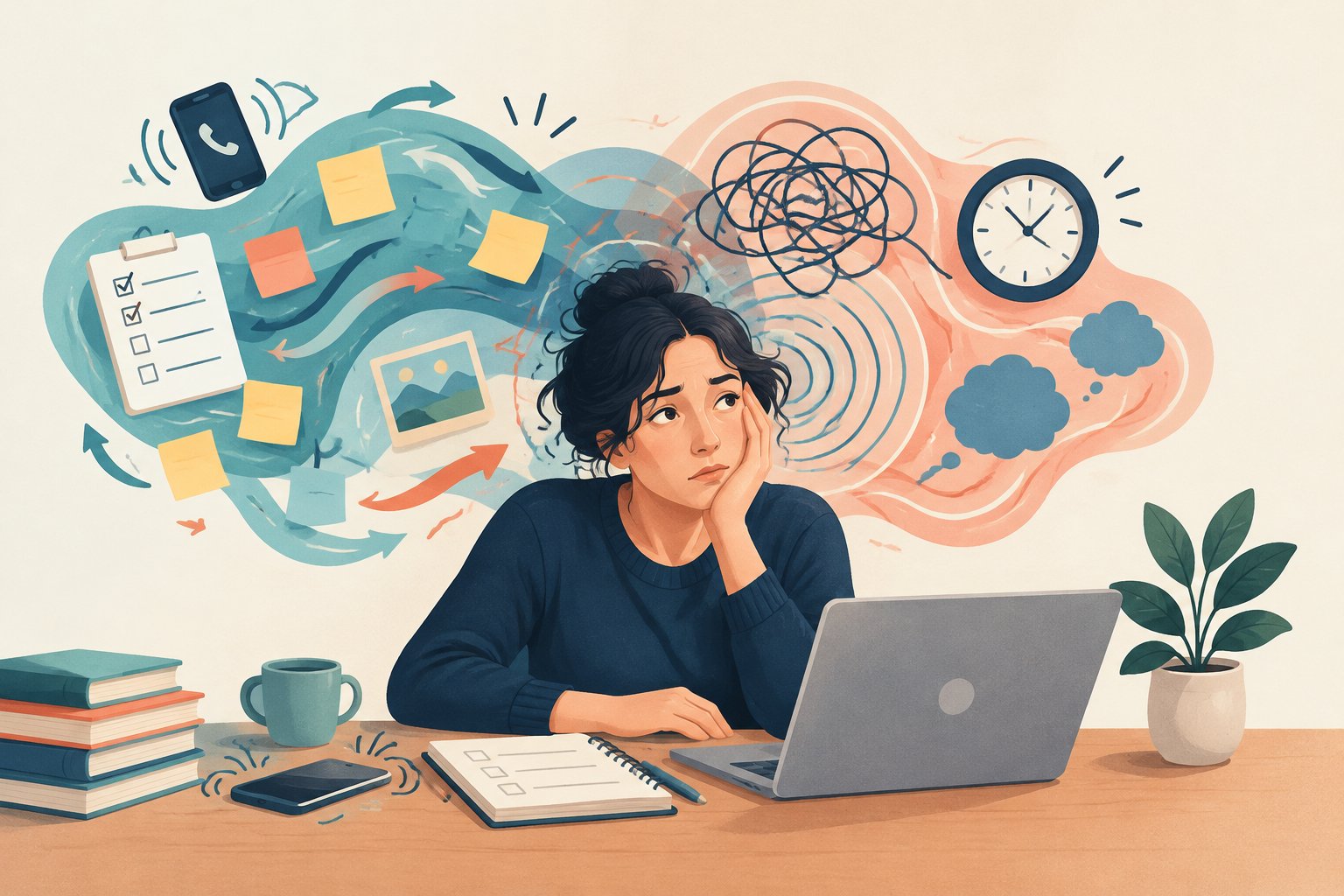
If you find yourself wondering whether your racing thoughts and trouble focusing point to anxiety, ADHD, or both, you’re not alone. Anxiety and ADHD are closely linked, and having one often raises your chances of having the other.
Research shows that close to half of adults with ADHD also experience a diagnosable anxiety disorder. Many more feel anxious even when they don’t meet the full criteria for a diagnosis.
Attention deficit hyperactivity disorder can create daily stress through missed deadlines, forgotten tasks, and strained relationships. That stress can grow into an anxiety disorder over time.
Anxiety can make ADHD symptoms worse by clouding attention and draining the energy needed to stay organized. The two conditions can look similar, which makes accurate diagnosis tricky without professional support.
How the Two Conditions Can Reinforce Each Other
ADHD and anxiety often feed off each other in a cycle that can feel hard to break. Executive function challenges like poor working memory and weak time management create repeated stress, which can turn into ongoing worry and make it even harder to concentrate or follow through on tasks.
When Executive Function Challenges Create Chronic Stress
Executive functioning covers skills like planning, organizing, and remembering details. When these tasks are harder, missed deadlines and forgotten responsibilities pile up.
Over time, this pattern creates chronic stress and a nagging sense of overwhelm. The person often can’t predict when their focus will hold up and when it won’t.
How Worry Further Disrupts Attention and Follow-Through
Excessive worry takes up mental space that would otherwise go toward sustained attention. Rumination and overthinking pull focus away from the task at hand, which worsens distractibility and inattention.
This creates a frustrating loop: worry about falling behind actually makes it harder to catch up.
The Roles of Emotional Regulation and Social Pressure
Emotional dysregulation is common in ADHD and can intensify feelings of anxiety in social or high-stakes situations. Impulsivity and impulse control struggles sometimes lead to awkward moments in relationships, which can spark hypervigilance about future interactions.
Perfectionism often develops as a way to manage this fear of repeating past mistakes, but it usually adds more pressure instead of relief.
Shared Symptoms and Important Differences
Many ADHD symptoms and anxiety symptoms look alike, including restlessness, fidgeting, and difficulty concentrating. Looking closely at when and why these symptoms show up helps tell the two conditions apart.
Signs More Often Associated With ADHD
Hyperactivity, impulsivity, and difficulty focusing that shows up even when a person feels calm and relaxed tend to point toward ADHD. Distractibility that happens regardless of stress level, along with a long-standing pattern of disorganization since childhood, also lines up more with ADHD than with an anxiety disorder.
Signs More Often Associated With Anxiety Disorders
Constant worry that centers on specific fears, along with panic attacks, social anxiety, or a specific phobia, points more toward an anxiety disorder. Difficulty concentrating that only appears when someone feels worried or fearful, rather than in calm moments, is a hallmark of generalized anxiety disorder or social anxiety disorder.
Avoidance behaviors tied to feared situations, along with irritability, fatigue, and sleep disturbances linked to racing thoughts at night, also suggest anxiety is playing a leading role.
Patterns That May Suggest Both Are Present
When restlessness, sleep problems, and trouble focusing show up in combination with both long-standing attention struggles and clear, persistent worry, both ADHD and anxiety may be present. A licensed clinician can look at the full pattern, including when symptoms started and what triggers them, to sort out which condition is driving which symptom.
Why a Comprehensive Evaluation Matters
Because ADHD symptoms and anxiety symptoms overlap so much, a professional evaluation is the most reliable way to get an accurate diagnosis. Without one, it’s easy for one condition to mask the other, which can lead to treatment that only addresses part of the picture.
Looking at Symptom History Across Settings and Life Stages
A thorough evaluation looks at how symptoms show up across different settings, like school, work, and home, and across different life stages. Family history also matters, since both ADHD and anxiety disorders tend to run in families.
This bigger picture helps a clinician see patterns that a single conversation might miss.
Avoiding Misdiagnosis When Symptoms Mask Each Other
Misdiagnosis is a real risk when anxiety hides ADHD or ADHD hides anxiety. For example, a child who seems inattentive might actually be preoccupied with worry, while an adult who seems anxious might be reacting to years of unmanaged ADHD-related setbacks.
Early intervention and behavioral interventions work best when they’re aimed at the condition that’s actually driving the symptoms.
Considerations for Children, Adults, and Women With ADHD
Symptoms can present differently depending on age and gender. Women with ADHD are often diagnosed later in life because their symptoms, like inattentiveness or internalized anxiety, are less disruptive to others and easier to overlook.
Children may show more visible hyperactivity, while adults often describe more internal restlessness and worry. Professional support that considers these differences leads to more accurate treatment plans.
Evidence-Based Paths to Managing Both
Effective care for ADHD and anxiety usually combines therapy, and sometimes medication, tailored to the individual. Cognitive behavioral therapy has strong research support for anxiety and can also help with ADHD-related challenges like impulsivity and follow-through.
Therapy That Builds Skills for Worry and Follow-Through
Cognitive behavioral therapy, or CBT, helps people notice unhelpful thought patterns and replace them with more balanced ones. Behavioral therapy and talk therapy can also build practical coping strategies for managing worry while strengthening follow-through skills.
Medication Discussions With a Qualified Prescriber
Some people benefit from medication alongside therapy. Stimulant medications like methylphenidate and amphetamine are common first-line ADHD options, while atomoxetine is a non-stimulant alternative.
Anxiety medication often includes SSRIs or SNRIs, such as sertraline, which work by adjusting neurotransmitters linked to mood and worry. A qualified prescriber can help sort out which combination, if any, makes sense, since stimulants can sometimes affect anxiety symptoms differently from person to person.
Collaborative Care for Individual Needs
Because ADHD and anxiety interact in personal ways, care works best when therapists and prescribers coordinate closely. This approach allows treatment to shift as symptoms change, rather than locking someone into a single plan that doesn’t account for how the two conditions affect each other over time.
Practical Supports for Everyday Stability
Small, steady changes in daily life can ease symptoms of both ADHD and anxiety. Structured routines, organizational tools, and basic lifestyle changes give the brain more predictability, which lowers stress and supports better focus.
Creating External Structure Without Chasing Perfection
Routine and organizational tools, like calendars, reminders, and checklists, take pressure off working memory. The goal isn’t a flawless system, since chasing perfection often backfires and adds more stress.
A simple, forgiving structure that can bend when life gets busy tends to work better long-term.
Supporting Sleep, Movement, and Basic Needs
Adequate sleep, regular exercise, and a balanced diet all support emotional regulation and attention. Sleep hygiene habits, like a consistent bedtime and less screen time before bed, can ease both ADHD-related sleep issues and anxiety-driven racing thoughts at night.
Using Calming Skills During Moments of Overload
Mindfulness, meditation, and relaxation techniques like deep breathing can help during moments of overwhelm. These tools won’t erase symptoms, but they offer a way to pause and reset when stress builds up quickly.
When to Reach Out for Professional Help
If anxiety or ADHD symptoms are getting in the way of relationships, work, or daily functioning, it’s a good time to seek professional support. Reaching out is a normal step toward feeling more steady and in control.
Signs Symptoms Are Affecting Daily Life
Ongoing sleep problems, avoidance behaviors that limit daily activities, or relationships that keep suffering because of missed commitments or unpredictable moods are all signs worth paying attention to. If you notice these patterns in yourself or in someone you care about, a professional evaluation can offer clarity.
Finding Compassionate Care in Chicago or Through Illinois Telehealth
Support is available in Chicago and throughout Illinois, both in person and through telehealth. Tides Mental Health offers therapy for anxiety and ADHD-related concerns with a team that understands how these conditions overlap and affect daily life.
Frequently Asked Questions
How can you tell the difference between ADHD symptoms and anxiety symptoms?
ADHD symptoms like distractibility and restlessness tend to show up even when someone feels calm, while anxiety symptoms usually intensify during moments of worry or fear. Looking at when symptoms started, whether in early childhood or later in life, also helps clarify which condition is the main driver.
A professional evaluation is the most reliable way to sort this out.
Can ADHD cause anxiety or make anxiety worse?
Yes. The daily stress created by ADHD, like missed deadlines and disorganization, can build into ongoing worry and, over time, a diagnosable anxiety disorder. This happens because repeated setbacks create real reasons to feel anxious about future performance.
What are the best treatment options for adults with both ADHD and anxiety?
A combination of cognitive behavioral therapy and, in some cases, medication tends to work best. Treatment usually needs to be personalized, since some approaches that help one condition can affect the other differently.
Working with a clinician who treats both conditions together often leads to a more complete plan.
Which medications are commonly used when someone has both ADHD and anxiety?
Stimulant medications like methylphenidate and amphetamine are common ADHD treatments, while atomoxetine offers a non-stimulant option. For anxiety, SSRIs and SNRIs, such as sertraline, are frequently used.
A prescriber will consider how these medications might interact before recommending a specific combination.
How do ADHD and anxiety symptoms present differently in women?
Women with ADHD are often diagnosed later because their symptoms, like inattentiveness or internalized worry, are less visible than hyperactivity. This can lead to years of unrecognized anxiety that develops alongside undiagnosed ADHD.
A thorough evaluation that considers gender differences helps catch these patterns sooner.
Can anxiety cause hyperactivity, poor focus, or restlessness that looks like ADHD?
Anxiety can cause restlessness, fidgeting, and trouble concentrating. These symptoms can look similar to ADHD, especially during times of high stress.
Focus problems from anxiety often improve when worry decreases. With ADHD, attention struggles tend to continue even when stress is lower.