
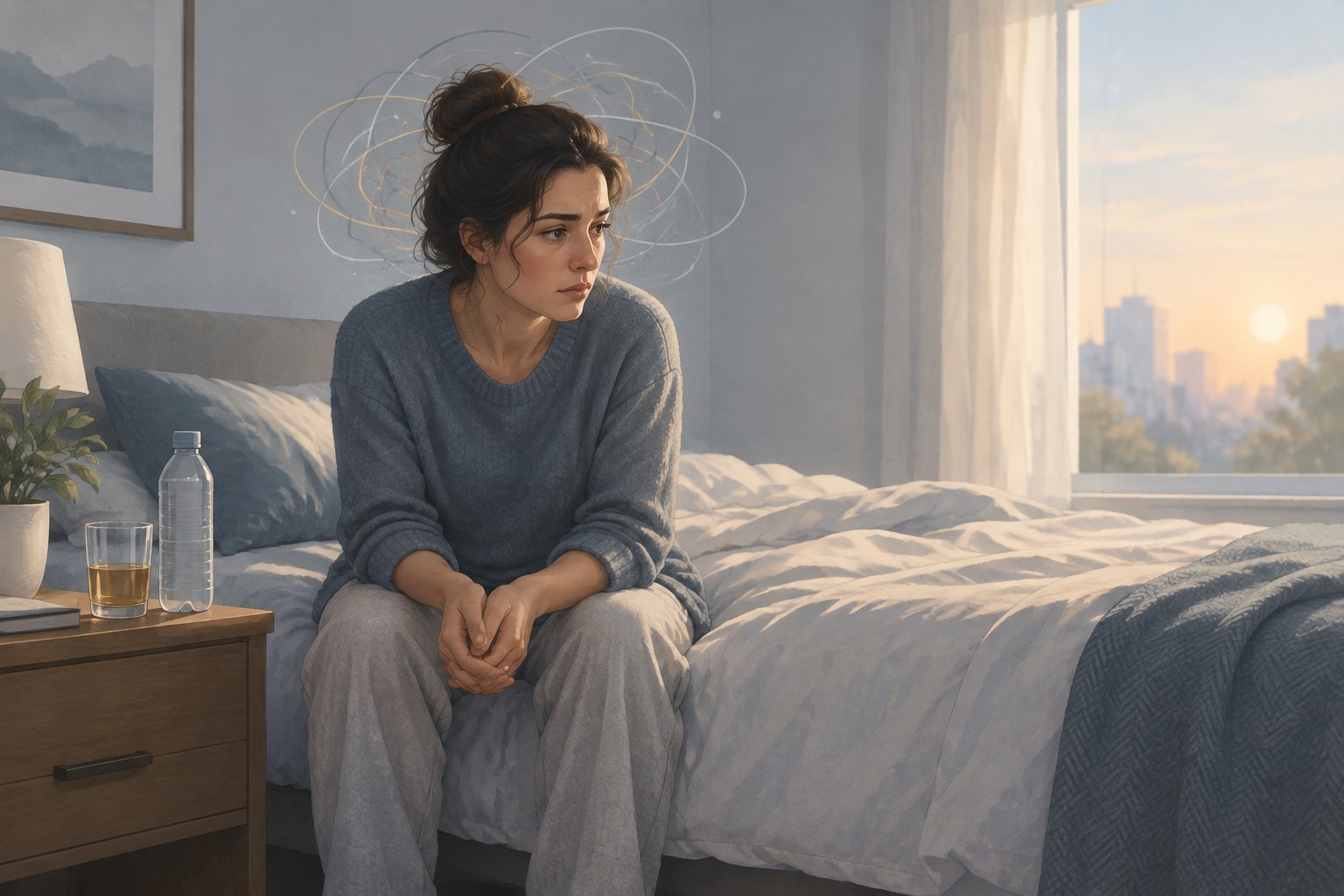
That anxious, jittery feeling after drinking is sometimes called hangxiety. Alcohol changes your brain chemistry, calming you at first but then causing a rebound that can leave you feeling on edge, worried, or panicky hours later or the next day.
If you have ever woken up after drinking with your heart racing and your mind replaying the night before, you are not imagining it and you are not alone. Anxiety after drinking is a real, documented response tied to how alcohol affects your nervous system, sleep, and stress hormones.
This information is educational and cannot diagnose you. If your anxiety feels severe, does not improve, or comes with thoughts of self-harm, please reach out to a doctor or mental health provider, or contact the 988 Suicide & Crisis Lifeline.
What Hangxiety Can Feel Like
Hangover anxiety can affect your mind and body, and these often feed into each other. Some people notice emotional distress like guilt or dread, while others feel it more physically with a racing heart or shaky hands.
Many people experience a mix of both emotional and physical symptoms. These feelings are often intense in the moment but usually reflect alcohol’s effect on brain chemistry, not a true picture of what actually happened.
Emotional and Cognitive Signs
Hangxiety may bring brain fog, trouble concentrating, and a sense of doom that feels out of proportion. Irritability, sadness, regret, guilt, and shame are also common, especially when replaying conversations or decisions from the night before.
Physical Anxiety Symptoms
The body often reacts with a racing or pounding heart, sweating, jitteriness, and restlessness. These symptoms can overlap with hangover effects like nausea, headache, and dizziness, making the experience more overwhelming.
Typical Timing and Duration
Hangxiety usually starts as blood alcohol level drops, often the morning after drinking, and tends to peak within the first 24 hours. For some, symptoms linger into a second day, especially after poor sleep or heavier drinking.
In most cases, hangxiety fades within a day or two as the body recovers.
Why Alcohol Can Trigger a Rebound in Anxiety
Alcohol calms the brain and body at first but sets up a rebound as its effects wear off. This shift involves changes in neurotransmitters, stress hormones, sleep quality, hydration, and blood sugar, all of which can affect mood and anxiety.
Short-Term Calming Effects and Brain Chemistry
Alcohol is a central nervous system depressant. It increases GABA, a calming neurotransmitter, and decreases glutamate, which excites the nervous system.
This can feel relaxing at first, along with a temporary rise in dopamine, serotonin, and endorphins that boost mood early in the night.
The Nervous System Rebound as Alcohol Wears Off
As alcohol leaves your system, GABA activity drops and glutamate rises, sometimes overshooting normal levels. This makes the nervous system more excitable, which can cause anxiety, a racing heart, and jitteriness.
Stress hormones like cortisol also increase during this rebound, adding to the sense of unease.
Sleep, Hydration, and Blood Sugar Effects
Alcohol disrupts sleep, especially REM sleep, which can lead to restless or fragmented sleep. Dehydration and drops in blood sugar from drinking can also affect mood and energy.
Disrupted sleep, dehydration, and blood sugar swings can intensify the anxiety already caused by changing brain chemistry.
Who May Be More Vulnerable to Alcohol-Related Anxiety
Not everyone who drinks experiences hangxiety, and some people notice it more often or more intensely. Drinking patterns, mental health history, genetics, and social habits all play a part.
Amount, Pattern, and Context of Drinking
Binge and heavy drinking raise the chances of anxiety after drinking more than moderate drinking does. Drinking on an empty stomach, after poor sleep, or during a stressful time can also make hangxiety more likely.
Frequent heavy drinking can raise baseline anxiety over time.
Existing Mental Health and Family History Factors
People with anxiety disorders, depression, or past trauma tend to notice stronger rebound anxiety after drinking. Genetics also play a role; a family history of anxiety disorders or alcohol use disorder may increase the risk.
The Social Anxiety and Avoidance Cycle
Alcohol is often used to ease nerves in social settings, which can help short term but can lead to a harder crash afterward. Over time, some people start drinking specifically to manage social anxiety, which can create a cycle of avoidance and reliance on alcohol that makes anxiety worse.
What May Help You Feel Better in the Short Term
Recovery from hangxiety involves supporting your body while it resets and calming your nervous system. These steps are not a cure, but they can ease symptoms as your body clears the alcohol.
Support Physical Recovery Without Drinking More
Rest, hydration, and a balanced meal can help steady blood sugar and support recovery. Avoiding another drink is important, as it only delays the rebound and can make anxiety worse.
Go easy on caffeine, since it can worsen jitteriness for some people.
Settle the Body When Anxiety Feels Intense
Deep breathing, mindfulness meditation, and other simple relaxation techniques can help calm a racing heart and restlessness. Slowing your breath, even briefly, can signal safety to your nervous system.
Gentle movement, like a short walk, may also help release physical tension.
Respond to Regret With Perspective and Self-Compassion
Feelings of regret, guilt, or shame after drinking are common, but are often amplified by alcohol’s rebound effect. Remind yourself that these feelings will pass as your brain chemistry levels out.
Speaking kindly to yourself, as you would to a friend, can make the experience less overwhelming.
When to Seek Professional or Urgent Support
Occasional hangxiety after drinking is common and usually not a cause for concern. Repeated or worsening anxiety tied to alcohol may be a sign to talk with a healthcare provider or therapist.
Signs a Pattern May Need More Support
If anxiety after drinking happens most times you drink, gets worse, or interferes with sleep, relationships, or daily life, it may be more than a typical hangover. Struggling to cut back on alcohol, or noticing anxiety that persists even on days you do not drink, are also signs to discuss with a professional.
These patterns can sometimes reflect alcohol-induced anxiety, an underlying anxiety disorder, or early signs of alcohol use disorder.
Alcohol Withdrawal and Detox Safety
For people who drink heavily or often, stopping alcohol can trigger withdrawal symptoms, including significant anxiety, that go beyond hangxiety. Alcohol withdrawal can be medically serious, so anyone with a history of heavy or long-term drinking should talk with a healthcare provider before cutting back or stopping.
This is different from occasional hangover anxiety and may require medical supervision.
Therapy and Ongoing Care for Anxiety and Alcohol Use
Therapy can help address both anxiety disorders and alcohol use patterns, especially when they are connected. Treating both together often leads to better long-term relief.
A licensed therapist can help you build coping tools that do not rely on alcohol and work with a medical provider if withdrawal management or addiction treatment is needed.
Frequently Asked Questions
How long does anxiety last after drinking alcohol?
For most people, hangxiety peaks within the first 24 hours after drinking and fades within a day or two. Some people notice symptoms into a second day, especially after heavy drinking or poor sleep.
Anxiety that continues for many days or worsens may point to something more and is worth discussing with a professional.
Why does alcohol make anxiety worse the next day?
Alcohol initially boosts calming brain chemicals like GABA while lowering glutamate, creating a relaxed feeling. As alcohol leaves your system, this reverses: GABA drops and glutamate rises, making the nervous system more excitable and anxious the next day.
How can I calm anxiety after drinking?
Rest, hydration, and a balanced meal support your body’s recovery. Deep breathing or mindfulness meditation can help calm a racing heart and restlessness.
Avoiding more alcohol or excess caffeine also helps, since both can intensify jitteriness. Gentle movement and self-compassion can ease the experience while your body resets.
What are the symptoms of alcohol-induced anxiety or panic attacks?
Common symptoms include a racing heart, sweating, trembling, restlessness, and a sense of impending doom. Some people also experience chest tightness or shortness of breath.
Emotional symptoms like irritability, guilt, and brain fog often show up alongside the physical ones. Panic attacks tied to alcohol tend to happen during withdrawal or as blood alcohol levels drop sharply.
Is anxiety after drinking a sign of alcohol withdrawal?
Mild anxiety after drinking is usually hangxiety, a temporary rebound effect, not full withdrawal. True alcohol withdrawal tends to happen with heavier or more frequent drinking and can include more intense symptoms like tremors, sweating, and a rapid heartbeat that may need medical attention.
If you drink heavily on a regular basis, talk with a healthcare provider before cutting back, since withdrawal can be medically serious.
How can I sleep when I have hangover anxiety?
Keep your room cool, dark, and quiet to support better sleep while your body recovers from alcohol. Stay hydrated throughout the day.
Try slow, deep breathing before bed to help calm your mind and body. If anxiety often disrupts your sleep, consider talking with a therapist about strategies that fit your needs.