
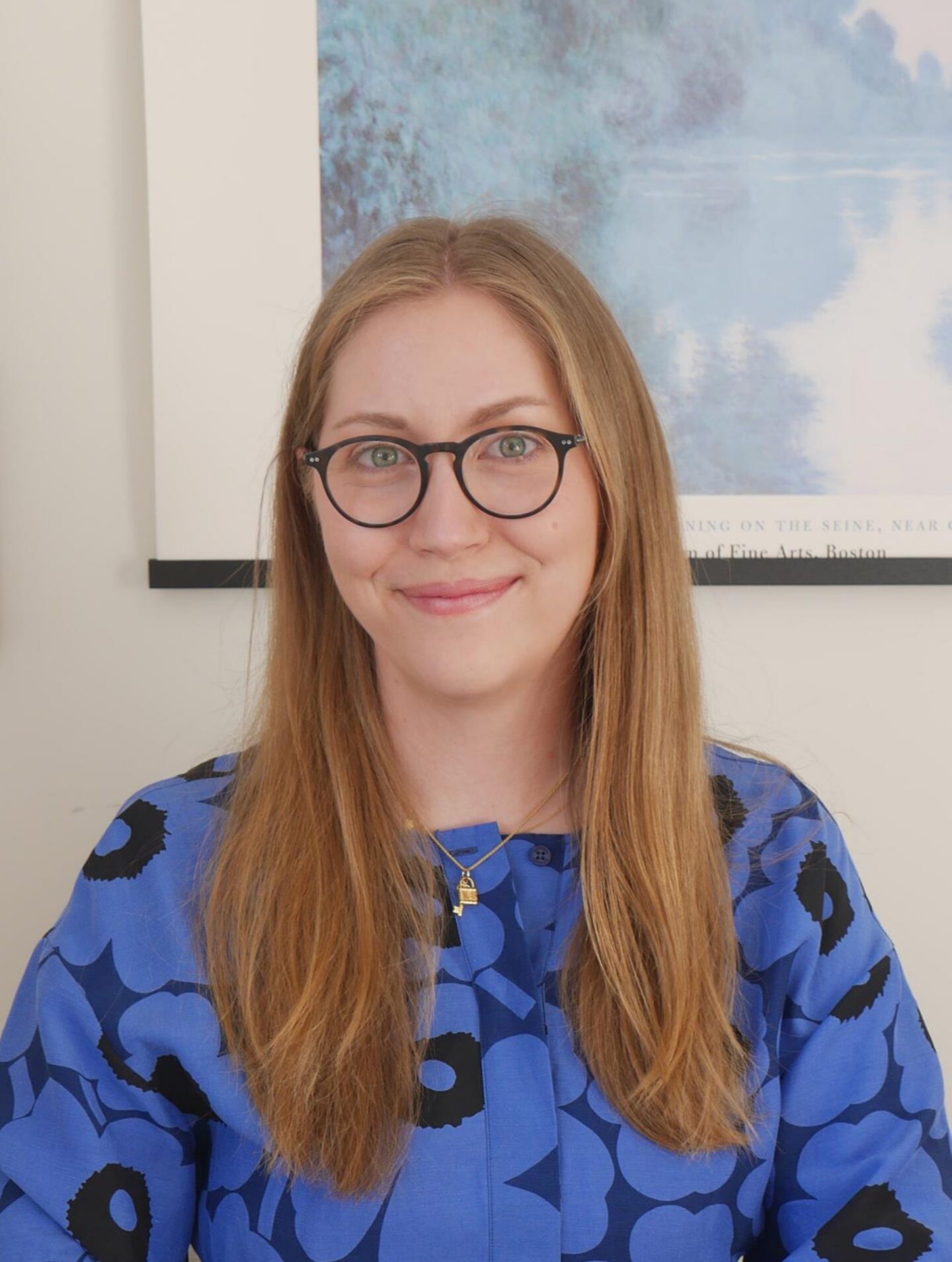
Jenna Greig
LCPC Licensed Clinical Professional Counselor
Pronouns: She/Her
Offering in-person sessions at Tides' Wilmette location and telehealth for clients across Illinois
Therapy for Eating Concerns, Identity & the Cost of Not Being Yourself .
Warm, liberatory support to help you understand where you've come from — and build a life that actually belongs to you.
Let’s Start Here
You might be someone who's been in a quiet battle with yourself for a while — with your body, with food, with the parts of your identity you're still figuring out how to hold. It doesn't always look like a crisis from the outside. Sometimes it just feels like exhaustion, or a persistent sense that something isn't quite right, or the weight of keeping certain things carefully to yourself. Maybe you're ready to actually look at it — not just manage it. Maybe a recent shift has made something harder to ignore, or you've just decided that the way things have been doesn't have to be the way things stay. Whatever brought you here, this is a space for the full picture — including the parts that are complicated, contradictory, or hard to explain.
What would you say to someone who’s nervous or unsure about starting therapy?
A lot of the people I work with have spent years living by rules they didn't choose — about their bodies, their identities, or who they're allowed to be. I'm Jenna Greig, a counselor at Tides Mental Health. If you're ready to start questioning some of those rules, I'd be glad to be part of that.
What would you say to someone who’s nervous or unsure about starting therapy?
A lot of the people I work with have spent years living by rules they didn't choose — about their bodies, their identities, or who they're allowed to be. I'm Jenna Greig, a counselor at Tides Mental Health. If you're ready to start questioning some of those rules, I'd be glad to be part of that.
What It’s Like to Work Together
Sessions with Jenna are collaborative and genuinely client-led — you bring what's most present, and we follow it. There's no fixed agenda and no pressure to perform wellness or progress. The work moves at whatever pace makes sense for you, shaped entirely by what you need from the space. A significant part of what we'll do together is trace where things came from. Using a psychodynamic lens, we'll look at how your past experiences — in relationships, in family systems, in the larger world — have shaped the beliefs you carry about yourself, your body, and what you deserve. Feminist and liberation therapy adds another layer: we'll name the external systems and social pressures that have influenced your experience, because so much of what feels personal is also political. When you can see those forces clearly, you gain real choice about how to respond to them — rather than simply repeating what you were taught. We'll also draw on Cognitive Behavioral Therapy (CBT) when it's useful — to notice the thought patterns that keep you stuck — and Dialectical Behavior Therapy (DBT) skills when you need concrete tools for riding out hard emotions. But the foundation is always the relationship: a space where your innate wisdom is centered, the power dynamic is actively minimized, and you are unambiguously the expert on your own life.
What can clients expect it to feel like in a session with you?
Sessions with me are pretty open — you bring what's on your mind and we follow it. I ask a lot of questions, and I'm genuinely curious about the answers. There's room for humor here, and there's room for the harder stuff too. What I care most about is that you leave feeling like the session was actually useful for your life — not just something you got through.
What’s one reason you’re passionate about the work you do?
I do this work because I believe everyone deserves a space where they don't have to earn the right to exist as they are. A lot of my clients have spent years in systems — families, institutions, communities — that asked them to be smaller or different. Getting to witness someone reclaim their own story is the most meaningful work I can imagine doing.
Clinical Specialties
- Eating disorder recovery and disordered eating — including body image, relationship with food and movement, and the identity work that often runs alongside it
- Anxiety and the particular pressure of having to hold it all together
- Depression and persistent low mood
- Trauma and complex trauma — especially relational trauma, religious trauma, and the effects of systemic oppression
- Sexuality and gender identity exploration — LGBTQ+ affirming, with a shared-identity option for clients who value that
- Grief and loss
- Life transitions and identity shifts
- Relationship patterns, people-pleasing, and chronic self-silencing
- Self-esteem and learning to trust your own reality
Treatment Modalities
- Feminist & Liberation Therapy – identify and examine the systems, messages, and social forces that have shaped your sense of self, so you can respond from genuine choice rather than inherited conditioning
- Psychodynamic Therapy – trace the roots of your beliefs, patterns, and relationships to understand where they came from and decide which ones still belong to you
- Person-Centered Therapy - you lead; the session takes its shape from what you bring, not a predetermined structure
- Cognitive Behavioral Therapy (CBT) – notice how the stories you tell yourself affect your feelings and choices, and start to shift the ones that no longer serve you.
- Dialectical Behavior Therapy (DBT) – practical skills for tolerating intense emotions without acting in ways you later regret
- Trauma-Informed Care – safety, collaboration, and deep respect for your nervous system throughout all of our work
Populations Served
- Adolescents (ages 12 and up)
- Young adults navigating college, identity, or early adulthood
- Adults at any life stage
- LGBTQ+ community members — affirming care, with an option to work with a therapist who shares that identity
- Women and girls across the lifespan
- People in eating disorder recovery or navigating disordered eating and body image concerns
- Clients healing from religious trauma, relational trauma, or the effects of systemic oppression
- Those new to therapy or returning after a gap
Training & Credentials
- Education: M.S.Ed., Counseling & Mental Health Services — University of Pennsylvania Graduate School of Education, M.Phil.Ed., Professional Counseling — University of Pennsylvania Graduate School of Education
- Licensure:Licensed Clinical Professional Counselor (LCPC), Illinois — License #180.017771
- Clinical training: The Renfrew Center (eating disorder recovery, partial hospitalization & intensive outpatient levels of care), Grounding in feminist, psychodynamic, trauma-informed, and liberation-based approaches
- Languages Spoken: English
- Availability: Offering in-person sessions at Tides' Wilmette location and telehealth for clients across Illinois
If you've spent a long time managing how you appear — to the world, to the people around you, maybe even to yourself — and you're ready to start peeling some of that back, this is a space built for exactly that work. Jenna's approach is rooted in the belief that your struggles make sense given everything that shaped you, and that understanding that context is the first step toward real change. If you're ready to explore whether we might be a good fit, Brandon would be honored to connect with you.
You don't need a polished explanation of what's wrong. A first conversation is enough to start.
Insurance We Accept
We accept most major insurance providers and offer several convenient payment methods to ensure accessibility for your care. We also offer various payment methods, including credit cards, bank transfers, and electronic payments.


